You do not need to be an expert birder to enjoy Galicia’s birdlife. The simple habit of pausing, looking beyond the path, and listening before reaching for a phone can change the texture of a Camino day.
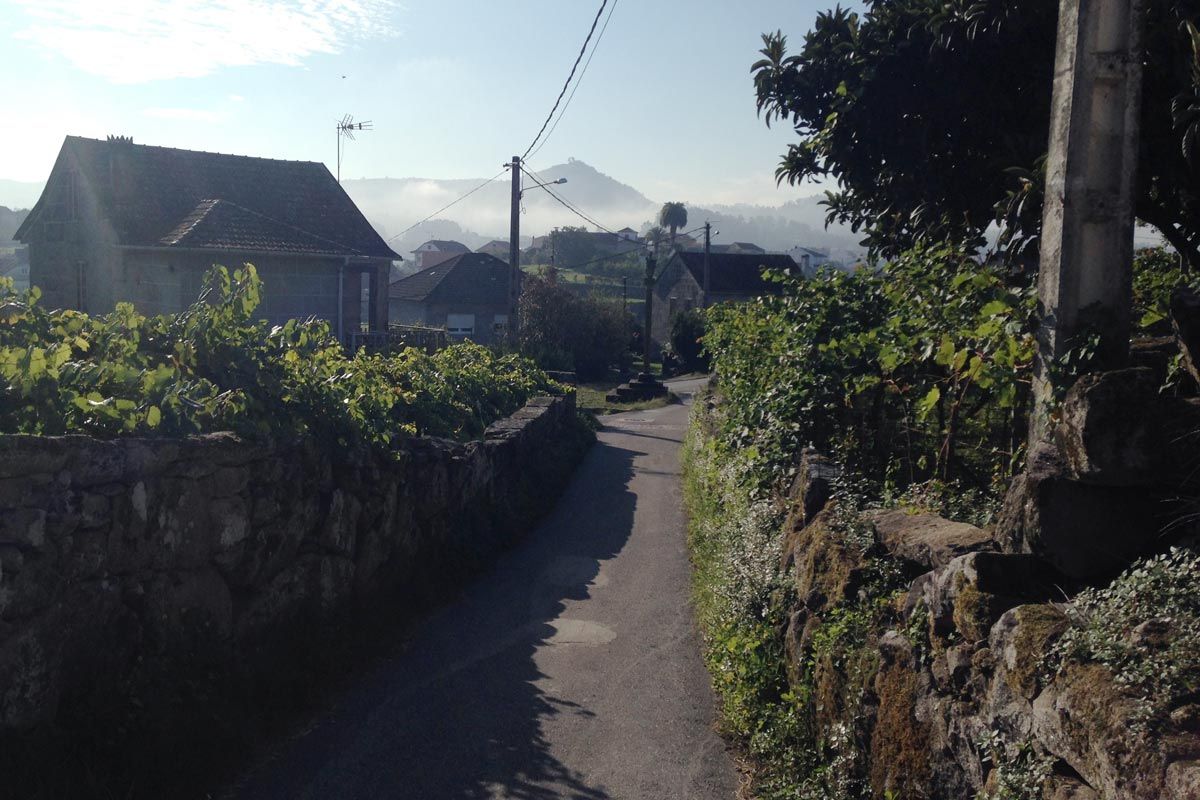
Galicia brings several landscapes into a relatively compact area. Depending on the route, pilgrims pass hedged farmland, eucalyptus and native woodland, river valleys, reservoirs, coastal cliffs, beaches, and tidal estuaries. Each habitat creates a different soundscape. Swallows and swifts animate towns in warmer months; finches and robins move through lanes and gardens; herons stand almost motionless beside water; gulls become more present near the Atlantic; and birds of prey may appear above open country.
Where the routes differ
The Portuguese Coastal Way offers the clearest maritime character. Estuaries and shorelines can hold wading birds and waterfowl, particularly where the route approaches protected wetland habitats. The central Portuguese route feels greener and more enclosed, with river corridors, vineyards, and woodland.
The French Way across Galicia alternates between agricultural country, forest, and villages. Its birdlife is often encountered incidentally: a call from a stone wall, a shadow crossing a field, or a cluster of birds following newly worked ground.
The Finisterre Way gradually opens toward the Atlantic. Weather, headlands, and coastal vegetation become part of the experience. The Winter and Sanabrés Ways cross quieter territory where longer stretches away from towns can reward patient observation.
Birds you may recognize along the Camino
A short list is more useful when it tells you where to look. These are representative possibilities, not a checklist or a promise of sightings.
Around villages, farms, and open fields
Barn swallows sweep low over fields and often nest in farm buildings, while house martins build mud nests beneath eaves. Common swifts spend warmer months racing and calling above towns; their sickle-shaped wings distinguish them from swallows. On paths and roadsides, look for the constantly moving tail of a white wagtail, the orange breast of a European robin, European goldfinches feeding on seed heads, and common blackbirds turning leaf litter beneath hedges.
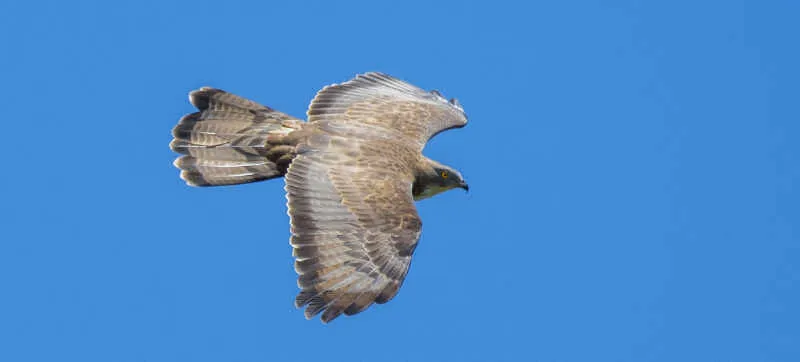
Open fields and fence lines may reveal a hovering common kestrel. Larger common buzzards often circle on broad wings or watch from roadside poles. Red kites, with long wings and a forked tail, are possible in some inland areas but should not be expected on every route.
In woodland and beside rivers
Woodland edges hold familiar small birds such as great tits, blue tits, Eurasian nuthatches, short-toed treecreepers, and great spotted woodpeckers. They are frequently easier to hear than to see when leaves are dense. The liquid song of the Eurasian blackcap is another characteristic spring and summer sound.
Beside clear, fast-moving water, a white-throated dipper may stand on a rock, bob repeatedly, and then fly low along the channel. A flash of electric blue can be a common kingfisher. Slower rivers, ponds, and reservoirs are more likely to hold grey herons, little egrets, mallards, and great cormorants.
Near estuaries and the Atlantic
Coastal sections bring yellow-legged gulls, great black-backed gulls, sandwich terns, and, offshore, the possibility of northern gannets. Mudflats and estuary edges may attract dunlins, common sandpipers, Eurasian curlews, ruddy turnstones, and Eurasian spoonbills. In migration seasons, the cast can change quickly; tide and weather are as important as the location.
Coast, estuaries, and migration
Galicia’s coastline is not one continuous habitat. Rocky headlands, beaches, salt marshes, reedbeds, fishing ports, and the great rías each attract different birds. Around the Miño estuary near A Guarda, travelers on the Portuguese Coastal Way may notice egrets, herons, waders, gulls, and terns. The estuary is especially important during migration and winter, when birds use its mudflats and sheltered water to feed and rest.
Farther north, the Ría de Muros e Noia lies close to the country crossed on the way toward Finisterre and Muxía. Official Galician birding information records wintering ducks, dunlins, spoonbills, loons, and terns there, with reedbeds becoming particularly important during the breeding season. From exposed Atlantic viewpoints, northern gannets and shearwaters may pass offshore. These are possibilities, not promises: tide, wind, visibility, and season can transform the same place from one day to the next.
The wider coast becomes most dramatic during migration. Estaca de Bares is one of Europe’s notable seawatching points, while Costa da Morte, Corrubedo, O Grove, and the Atlantic Islands offer very different combinations of cliff, dune, wetland, and open water. They are not all on a walking stage, but they explain why a gull over a Camino town is only the beginning of Galicia’s coastal birdlife.
Mountains, canyons, and inland country
Galicia’s birding geography extends beyond the best-known Camino stages to the mountain chains of Os Ancares, O Courel, and the Macizo Central. Spring and summer bring greater activity to forest edges and scrubland, where raptors can be seen using thermals above the slopes. In southeastern Galicia, the drier, more Mediterranean influence around Verín and Serra da Enciña da Lastra supports a different mix of birds, including colorful summer visitors such as the European bee-eater.
River landscapes create another transition. The Sil and Bibei canyons combine cliffs, woodland, vineyards, and open sky. Travelers approaching Galicia on the Winter Way pass through the Ribeira Sacra, where patient scanning may reveal a buzzard, kite, or other raptor circling above the valley. Along quieter rivers, listen for the sharp call of a kingfisher or watch for the bobbing movement of a white-throated dipper near fast water.
What changes with the season
Spring brings song, courtship, and returning migrants. Swallows and house martins become part of village streets, while warblers are often heard before they are seen. Summer mornings can be lively, although midday heat quiets both birds and walkers. Autumn is a season of movement along the Atlantic coast and estuaries. Winter concentrates ducks, waders, and other water birds in sheltered coastal areas, even while inland Camino stages are outside Ultreya Tours’ operating season.
Less expected sightings include ospreys, Balearic shearwaters, Montagu’s harriers, and Kentish plovers. These birds are localized, seasonal, scarce, threatened, or some combination of those conditions. Their inclusion here should never become an expectation that every traveler will see them.
A few useful habits
Carry compact binoculars only if you will genuinely use them; they should not become another burden. A small field guide or reputable identification app can help, but identification is not the point. Notice shape, movement, habitat, and call before trying to name a bird.
Early morning is often the liveliest time, conveniently overlapping with a pilgrim’s departure. Move quietly, stay on the established path, and never approach nests or play recorded calls to draw birds closer. Dogs, livestock, and wildlife all need distance.
Photography should follow the same principle. A distant, imperfect photograph is better than disturbing an animal for a clearer one. Protected areas may have additional rules, and posted restrictions always take precedence.
Birdwatching offers something the Camino already teaches well: attention without urgency. You may finish without a long species list, yet remember the kestrel holding still in the wind or the sound of swallows above a village square. That is enough.
The same attentive approach shapes our guide to responsible travel on the Camino. Travelers deciding which landscapes they most want to cross can also compare the main routes Ultreya Tours offers.