A Romanesque doorway in a village and a great monastery in Santiago belong to the same Camino landscape, but they ask for different kinds of attention. One may be open only briefly; another may contain a museum, church, guest accommodation, or active religious community.
Churches helped define settlements and the sacred geography of pilgrimage. Monasteries maintained worship, land, libraries, hospitals, and hospitality. Former pilgrim hospitals remind us that welcoming travelers once included shelter and care in a broader sense than the modern word “hospital.”
A route written in stone
The French Way
Monumental buildings punctuate the French Way without telling only one architectural story:
- The Collegiate Church at Roncesvalles was built in the early thirteenth century in a French Gothic style rare in the region. Its association with Charlemagne and Roland adds epic legend to a site created to receive people crossing the Pyrenees.
- Burgos Cathedral, begun in 1221, fills a major Camino city with pinnacles, sculpture and royal tombs. León Cathedral, begun in the thirteenth century, is celebrated for walls that almost dissolve into stained glass. Both deserve time beyond a photograph of the façade.
- Santa María la Real in O Cebreiro is a compact pre-Romanesque church traditionally dated to the ninth century. Its Eucharistic miracle legend made the chalice and paten famous, and the church feels especially powerful in the fog and stone of the mountain village.
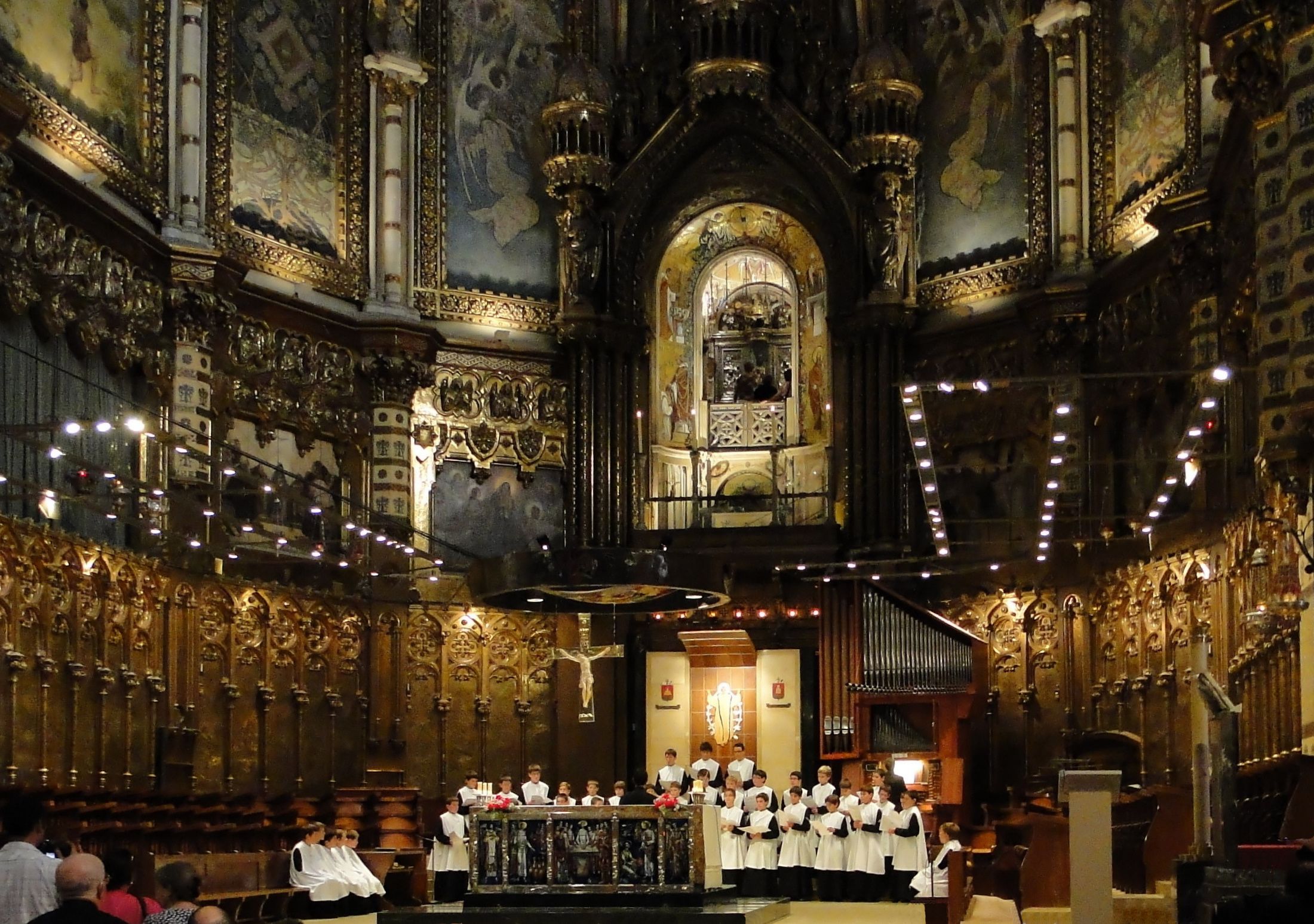
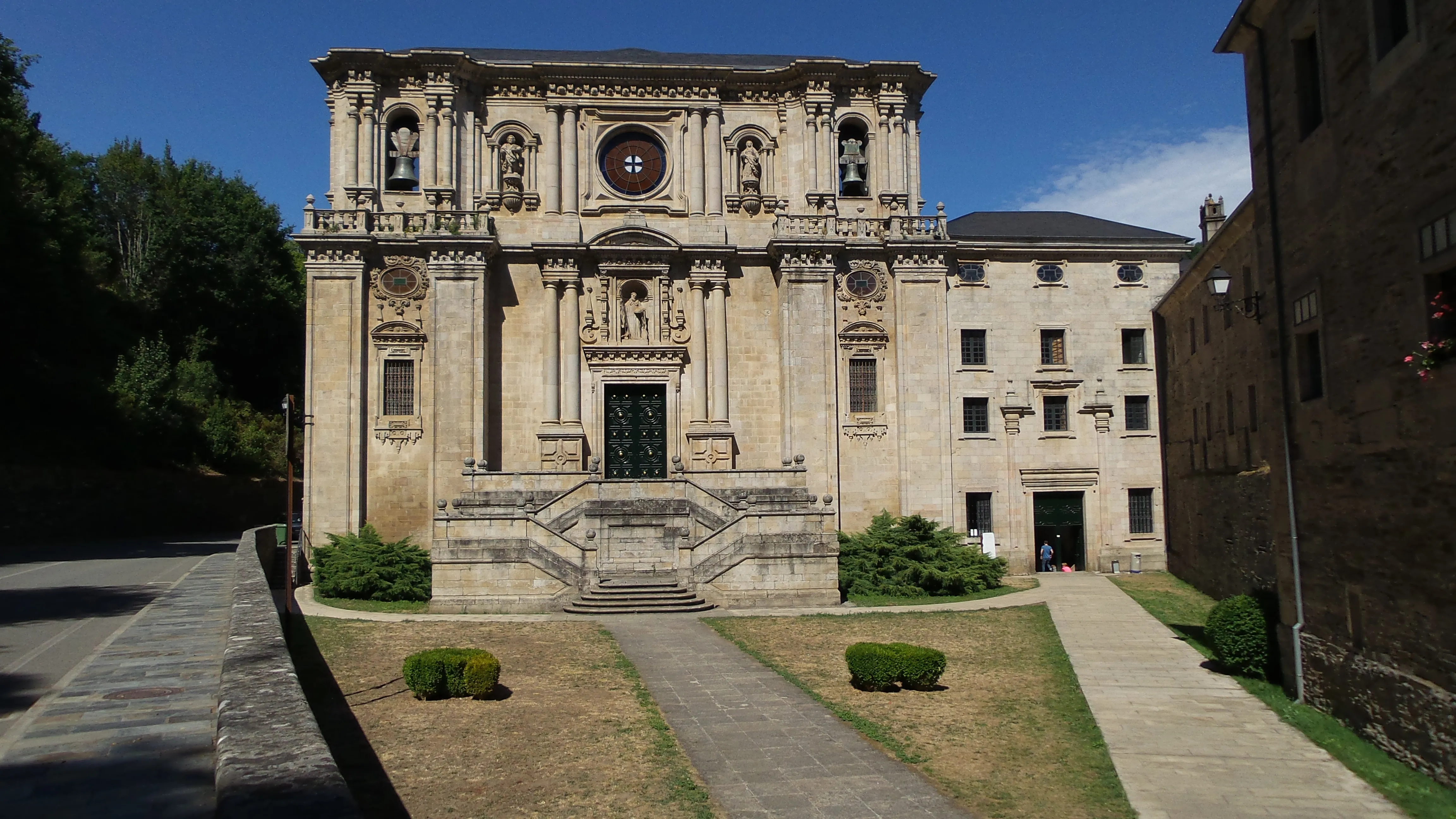
- The Monastery of Samos has roots in the early Middle Ages and a vast complex rebuilt across centuries. Its two cloisters, Renaissance and Baroque fabric and long Benedictine history reward the beautiful alternative route beside the River Sarria.
- The Church of San Nicolás in Portomarín was dismantled and rebuilt stone by stone when the old town was flooded by the Belesar reservoir.
Between these landmarks, smaller churches and former hospitals show how worship and hospitality extended far beyond royal foundations. Each building expresses a different relationship between pilgrimage and place.
The Portuguese Ways
The Portuguese routes have their own sequence of sacred architecture:
- Oporto Cathedral began as a Romanesque fortress church in the twelfth century. Its rose window, Gothic cloister and later Baroque additions make departure from the cathedral square feel like walking out of several Portos at once.
- São Pedro de Rates was rebuilt in the twelfth and thirteenth centuries and became one of northern Portugal’s important Romanesque churches. The legend of Saint Peter of Rates connects its monastery with the earliest Christianity in the region.
- Tui Cathedral was begun in the twelfth century with fortress-like Romanesque walls and completed with a magnificent Gothic western porch. Its cloister looks across the Miño toward Portugal, making the border landscape part of the visit.
- Santa María de Oia, founded in the twelfth century, is the rare monastery that looks directly over the Atlantic. Its monks farmed, traded and helped defend the coast; the church’s austere Cistercian lines are striking against sea and mountain.
- The Church of the Pilgrim Virgin in Pontevedra, begun in 1778, uses a scallop-shaped floor plan. Its curved Baroque façade and image of the Virgin dressed as a pilgrim turn Camino symbols into architecture.
The Sanabrés, Winter, and Finisterre Ways
- The Monastery of Oseira, founded in the twelfth century, became a major Cistercian house. Its enormous church, ribbed vaults and multiple cloisters appear almost impossibly grand in their isolated valley off the Sanabrés route near Cea.
- The Winter Way crosses Ribeira Sacra, home to Galicia’s greatest concentration of rural Romanesque churches. Santo Estevo de Ribas de Sil grew into a vast Benedictine monastery with three cloisters; San Pedro de Rocas incorporates tombs and chapels cut directly into rock.
- Santa María das Areas in Finisterre preserves the medieval image of Santo Cristo da Barba Dourada, surrounded by legends of miraculous hair and growth. At Nosa Señora da Barca in Muxía, enormous coastal rocks became, in local tradition, the stone boat in which the Virgin came to encourage Saint James.
Staying inside history
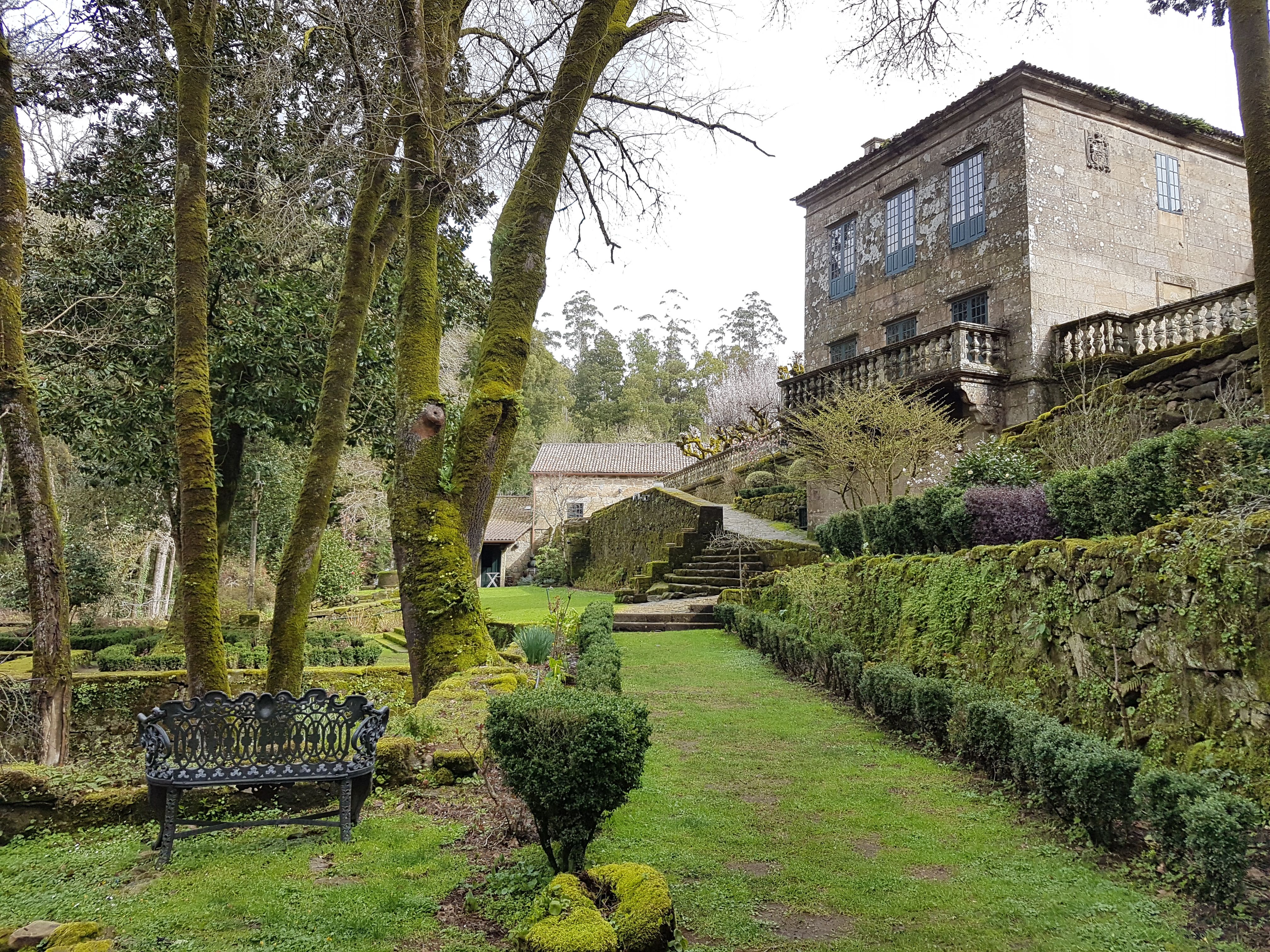
Some historic buildings now operate as hotels or guesthouses. The Hostal dos Reis Católicos on Praza do Obradoiro is the most famous example, transformed from a royal pilgrim hospital into a Parador. Elsewhere, pazos, monasteries, convent buildings, and carefully restored houses allow travelers to encounter regional architecture through an overnight stay.
Other Paradores along the broader French Way occupy buildings with similarly layered histories, including the former pilgrim hospital of San Marcos in León and the hospital founded by Santo Domingo de la Calzada. A night in a converted monastery or pazo can offer cloisters, masonry, gardens, and a tangible sense of continuity. It can also mean an irregular floor plan or protected structure that cannot behave like a newly built hotel.
That distinction matters when comparing Classic and Premium arrangements. Classic and Premium journeys use different accommodation selections, but historic character alone does not determine the category. Setting, room character, hospitality, and suitability for the traveler matter alongside the formal hotel classification.
Historic character does not create one standardized comfort level. Thick walls, protected layouts, stairs, room sizes, heating, elevators, and accessibility can differ significantly. Ultreya Tours considers the actual property and room arrangement rather than assuming an impressive façade answers every practical question.
What to notice along the way
Look beyond the scale of a building. A Romanesque doorway is thick, rounded and heavily carved; Gothic builders sought height, pointed arches and larger windows; Baroque Galicia loved movement, theatrical stone façades and towers that transform in changing light. Inside, worn thresholds, scallop shells, saints dressed as pilgrims and hospital courtyards show how architecture responded to people arriving on foot.
Ultreya can build time for the places that deserve more than a hurried stop, including the Samos alternative, Oseira, a private Ribeira Sacra visit or an extra night in León and Santiago. When a historic property is available, the overnight experience continues the story through cloisters, gardens, old masonry and rooms within buildings that once received pilgrims.
The former royal hospital on Obradoiro deserves its own closer look in our history of the Hostal dos Reis Católicos. To place these buildings along the journeys themselves, compare the main Camino routes.