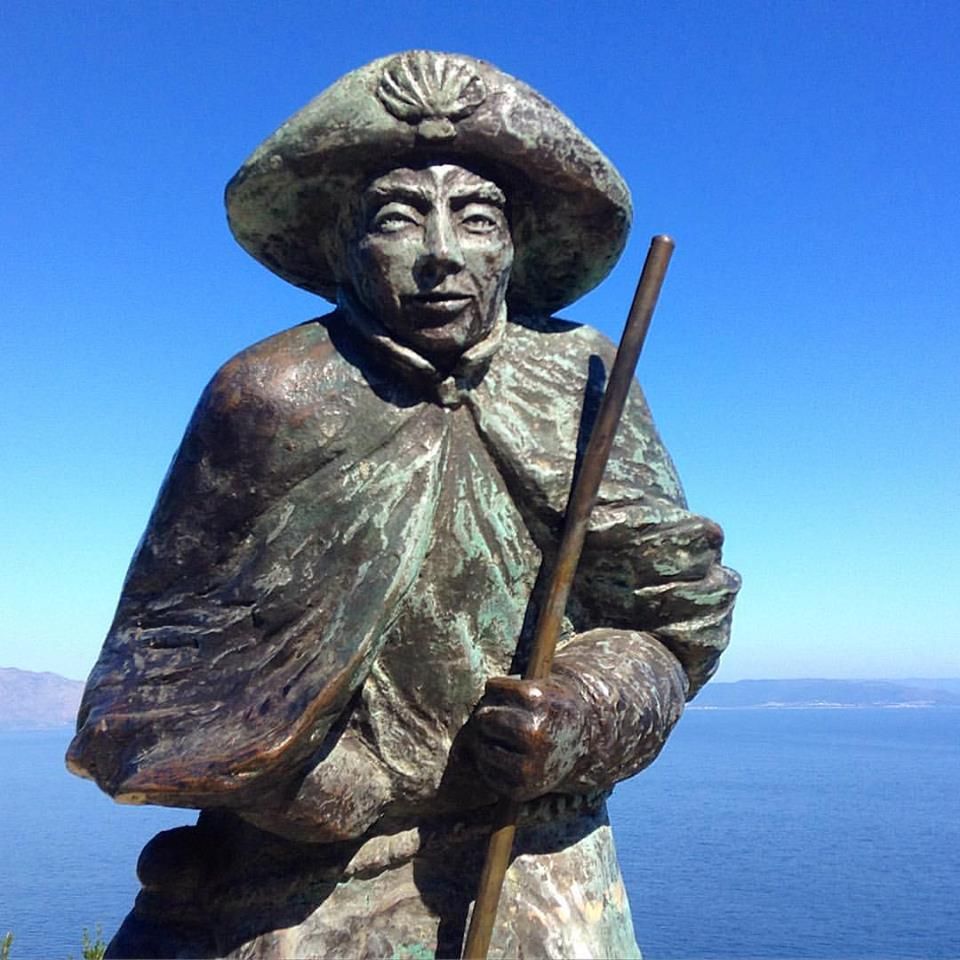
The idea that an authentic pilgrim must sleep in a bunk room is modern. Medieval pilgrims did not share one standard of accommodation, clothing or transport. They included poor penitents, craftspeople, merchants, priests, nobles and rulers. Some walked without resources and depended on charity. Others traveled with servants, horses, money and letters of introduction.
What a medieval hospital provided
The word hospital referred to hospitality before it described only medical care. Camino hospitals could offer a roof, warmth, food, worship and attention to the sick. Many were small and austere. Some had twelve beds in reference to the Apostles; others could do little beyond providing shelter.
Monasteries and religious houses received travelers according to their rules and resources. Towns also contained inns, private houses and commercial lodging. A wealthy pilgrim was not expected to reject a secure private room merely to imitate somebody without the means to obtain one.
Royal hospitality at Santiago
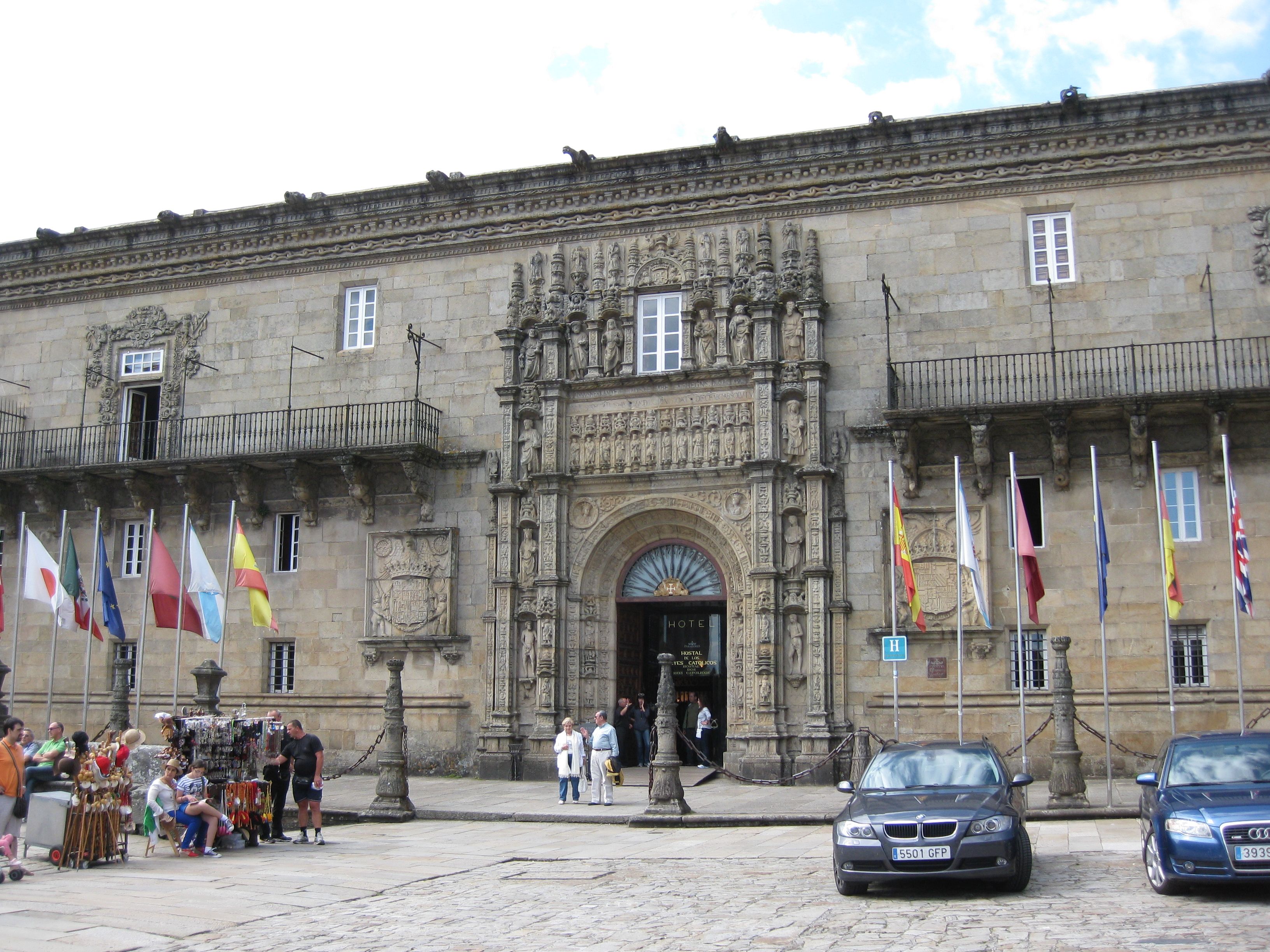
The Hostal dos Reis Católicos provides the clearest example. The Catholic Monarchs ordered a royal hospital after their pilgrimage to Santiago in 1486. The great building beside the Cathedral was intended to receive pilgrims, with medical and religious functions supported by royal patronage.
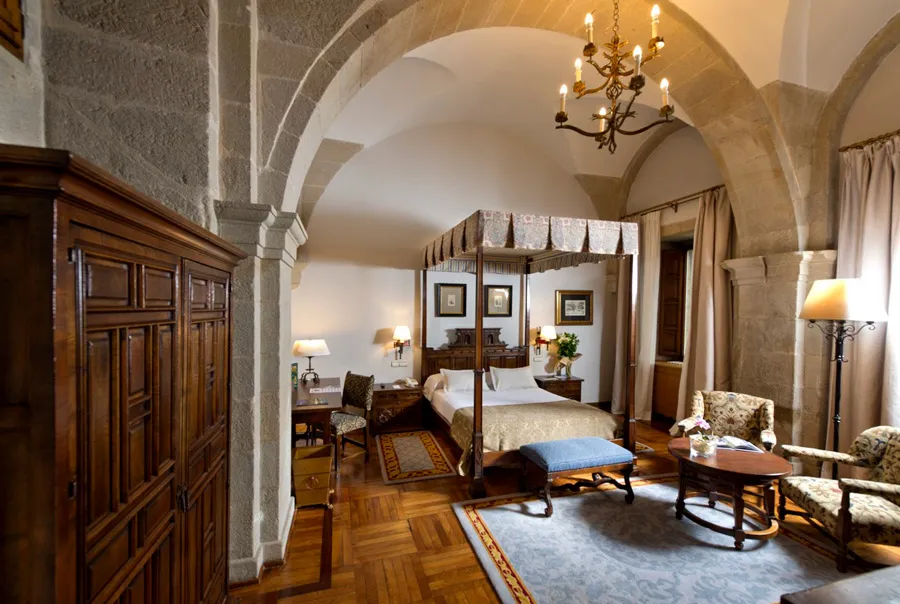
It is now the Parador de Santiago, one of Spain’s most prestigious historic hotels. Sleeping there does not introduce luxury into a place previously detached from it. It continues, in a different economic form, a building created through royal expenditure at the end of the pilgrimage.
Where modern albergues enter the story
The network familiar to today’s walkers belongs largely to the twentieth-century Camino revival. Route marking gathered force in the 1970s and 1980s. Associations, parishes and municipalities then opened refuges and albergues as foot pilgrimage returned. The Spanish Federation’s volunteer hospitalero programme was organised around 1990.
Calling albergues a “1970s experience” is close but incomplete. The first revival infrastructure began in that period, while the recognisable network expanded mainly from the late 1980s onwards. Its ideal of simple shared hospitality draws consciously on medieval tradition, but the bunk-bed system, credential rules and modern network are not an unchanged medieval institution.
Authenticity is not a room category
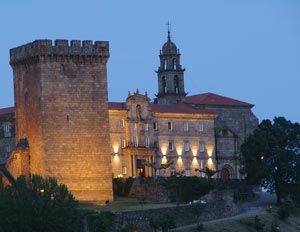
A pilgrim staying in a pazo still walks the same climb, crosses the same bridge and enters Santiago through the same streets. A comfortable room does not issue the Compostela; the completed route and the pilgrim’s purpose do.
Albergues have their own value: community, simplicity, affordability and volunteer welcome. Historic hotels offer privacy, architectural interest, food, rest and continuity of service. Neither choice gives its guest ownership of the word pilgrim.
Ultreya Tours designs self-guided and private journeys for travelers who want the Camino with reserved en-suite accommodation, luggage transfer and local support. Our Camino collection includes Classic, Premium, Signature and At Your Pace options so that the level of comfort can match the traveler rather than a modern stereotype.