The state-owned Paradores network opened its first hotel in 1928. Its purpose was to place high-standard accommodation in important landscapes and historic buildings that private investment often overlooked. Some Paradors occupy castles, convents or palaces; others are purpose-built hotels. The name describes the network, not one architectural style.
This guide includes only properties that stand on the French Way itself. Monforte de Lemos appears separately because Ultreya uses it as a planned Ribeira Sacra extension. Paradors in Sos del Rey Católico, Olite, Bielsa, Calahorra and Lerma may appear in broad Camino marketing, but they are not hotels on the continuous French Way.
Santo Domingo de la Calzada: two very different historic stays
The Parador de Santo Domingo de la Calzada occupies the former pilgrim hospital opposite the Cathedral. Santo Domingo founded a hospital here in the twelfth century as part of his practical work on the road. The present hotel keeps the stone courtyard and the unusual privilege of sleeping at the centre of the saint’s own Camino town.
The Parador de Santo Domingo Bernardo de Fresneda occupies part of the sixteenth-century Convent of San Francisco, founded by Fray Bernardo de Fresneda, confessor to Philip II. Its cloister and quieter position give it a more monastic atmosphere. Your final travel vouchers give the name, address and contact details of the confirmed hotel.
Riojan cooking is part of the stay. The principal Parador restaurant serves dishes such as potatoes a la riojana, stuffed piquillo peppers, vegetable menestra and salt cod in tomato and pepper sauce, with the local wine list doing exactly what one hopes in Rioja.
León: Hostal de San Marcos
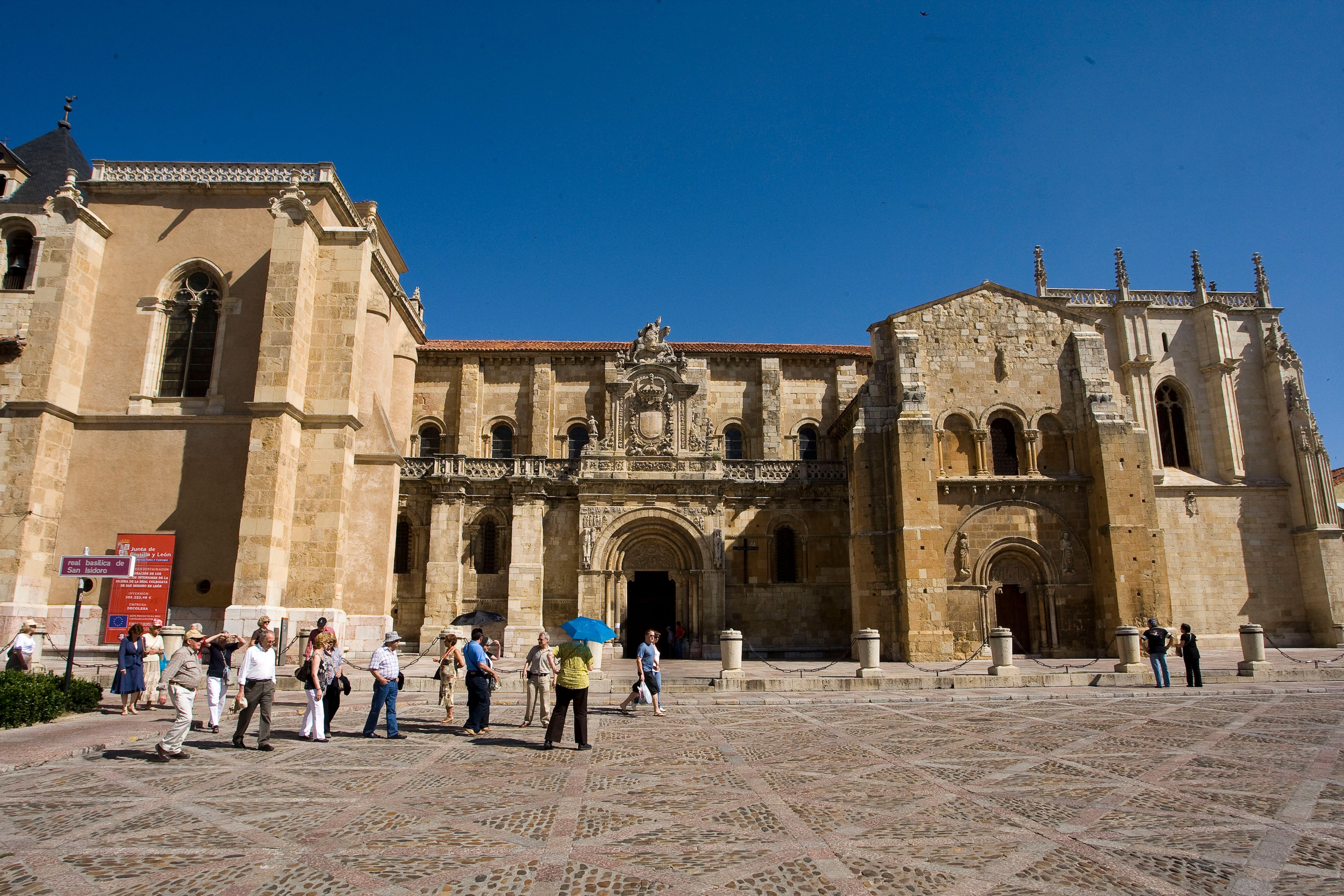
San Marcos began in the twelfth century as a convent and hospital for pilgrims. The great building seen today was begun in the sixteenth century for the Order of Santiago, producing one of Spain’s finest Plateresque façades. Its later uses included a prison, military functions and, during the Civil War and early dictatorship, a brutal concentration camp. Paradores does not hide that history.
The hotel reopened after a major restoration completed in 2021. Nearly 500 works form part of its collection, while the chapter house, choir stalls, cloister and sculpture by Juan de Juni make it feel like a museum in which one can sleep. At dinner, expect updated Leonese cooking: cecina, black pudding, local legumes, lamb and wines from León and Bierzo.
Villafranca del Bierzo: a modern Parador in the right place
The Parador de Villafranca del Bierzo is a purpose-built twentieth-century hotel rather than a converted monument. Its large windows look towards the Ancares foothills, and its pools are valuable after the hot vineyard stages through Cacabelos. Villafranca itself supplies the history: Calle del Agua, the castle and the Romanesque church of Santiago with its Puerta del Perdón.
The restaurant is firmly Berciano. Botillo with cabbage and potatoes is the defining dish, accompanied by vegetables from the basin, local peppers and Mencía or Godello wines. This is a useful place to taste the region before the climb towards O Cebreiro.
Monforte de Lemos: our Ribeira Sacra extension
The Parador de Monforte de Lemos occupies the former Benedictine monastery of San Vicente do Pino beside the medieval keep and the palace of the Counts of Lemos. Much of the monastery dates from the sixteenth and seventeenth centuries. The hilltop view immediately explains Monforte’s strategic position.
Monforte is not on the French Way. We use it deliberately as the opening stay on our French Way Signature Private Group, allowing time for the Ribeira Sacra before the group joins the Camino. The restaurant introduces inland Galicia through empanada, river fish, Galician beef and Ribeira Sacra wines.
Santiago: the Hostal dos Reis Católicos
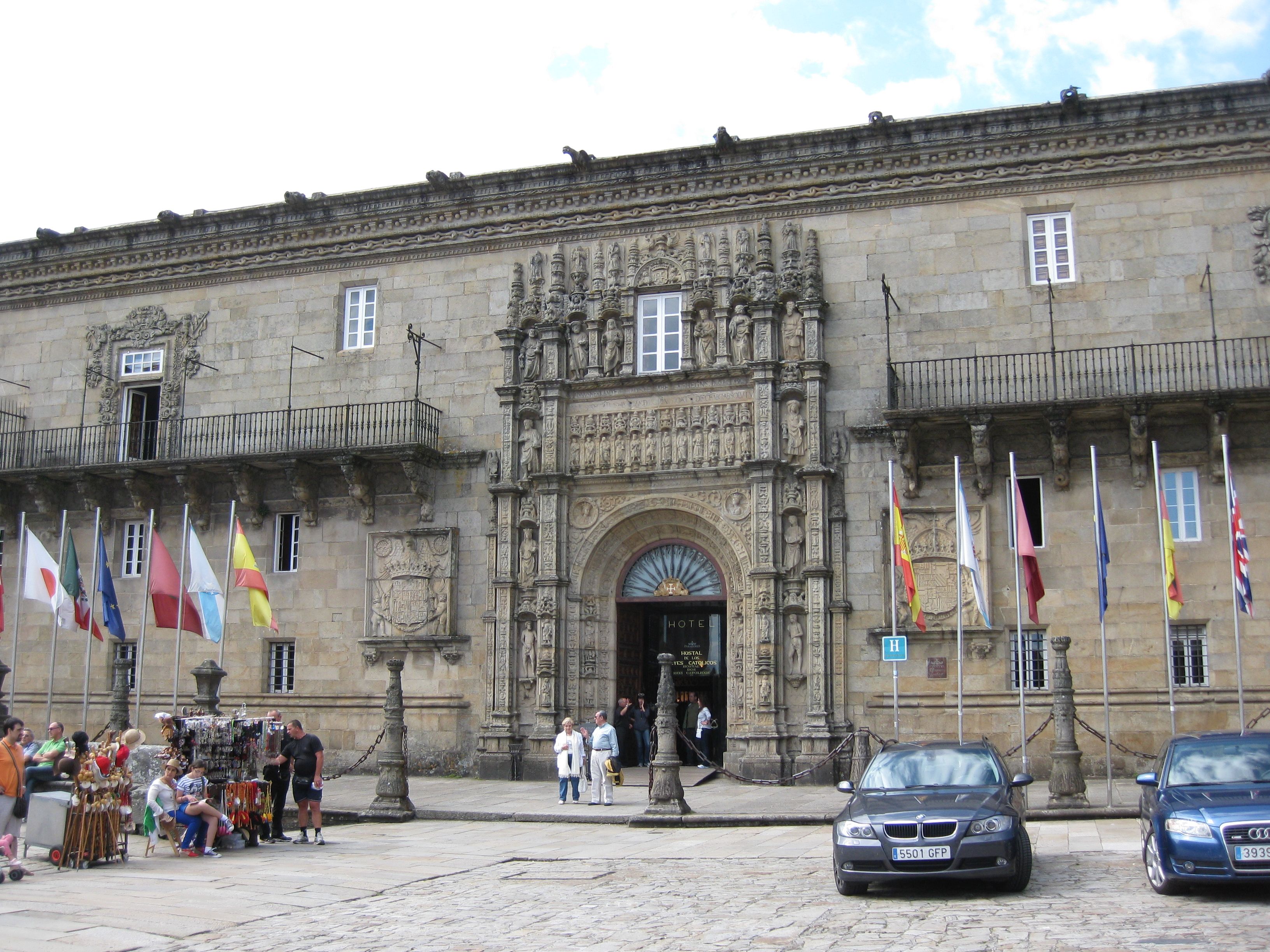
The Parador de Santiago, better known as the Hostal dos Reis Católicos, stands on the Plaza del Obradoiro beside the Cathedral. The Catholic Monarchs ordered the hospital in 1499; work began in the opening years of the sixteenth century. Its Plateresque doorway, four cloisters, chapel and stone corridors preserve the scale of an institution built to receive pilgrims.
Our detailed history of the building is in The Hostal dos Reis Católicos. Its restaurants serve formal Galician cuisine and a more informal Enxebre menu, with market fish, seafood, empanada, octopus, Galician beef and regional desserts.
It is a memorable choice for the final night of a Camino, especially when an extra day leaves time to explore its cloisters and dine in the building. Holy Years, feast days and major events make early booking particularly important.
How we use Paradors
We inspect geography before prestige. On a continuous walk, Santo Domingo, León, Villafranca and Santiago fit the route naturally. Monforte belongs to a designed cultural extension with private transport.
See our Best of the French Way and French Way private group journeys, or ask us to build a Parador-led itinerary through Start Planning.