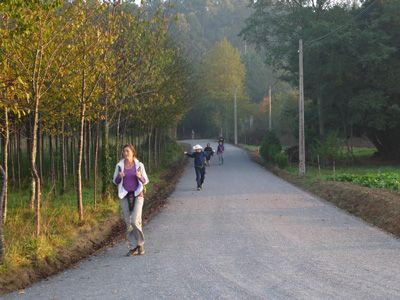
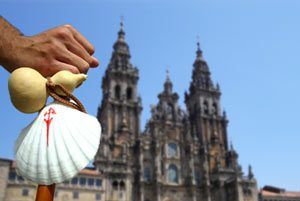
Choose this journey if…
An exceptional journey across northern Spain
For travelers seeking a first, far-reaching taste of the Camino, from the Pyrenees all the way to Santiago.

All the wonder of the French Way.In one extraordinary journey.
Walk the best of the French Way over 24 days / 23 nights in carefully selected 2 to 4 star hotels.
Discover the journeyDiscover the remarkable variety of the French Way on an extraordinary 24-day journey from Saint-Jean-Pied-de-Port to Santiago. Cross the Pyrenees into Navarra, walk among the vineyards of Rioja and experience the vast horizons of the Meseta before continuing through the mountains of León, the valleys of El Bierzo and the green countryside of Galicia. Along the way, medieval villages, historic cities, Romanesque churches and regional food reveal the changing character of northern Spain. Carefully planned transfers connect the most rewarding sections of the route. You walk independently, staying in selected 2 to 4 star hotels and high-quality guesthouses, with daily luggage transfers, local support and one exceptional stay in each main part of the journey.
Share your dates and priorities, and we will shape the next step with you.
Download brochure
From €4,950 per traveler
Base price per person for two people sharing a twin or double room. Subject to availability and final confirmation.
“We completed a superb 15-day walk on the French Way. Nellie understood our needs and expectations very well and met them completely.”
Why this Camino
An extraordinary journey across northern Spain, from the Pyrenees to Santiago de Compostela. Carefully selected walks and transfers reveal the changing landscapes, historic cities and rich traditions of the French Way, while we take care of the details behind the scenes.
Journey highlights
Cross the Pyrenees and experience the changing landscapes of the French Way from Navarra to Galicia
Reach Santiago on foot and receive your Compostela
Walk at your own pace, with trusted local support behind the scenesChoose this journey if…
For travelers seeking a first, far-reaching taste of the Camino, from the Pyrenees all the way to Santiago.
Consider another journey if…
The published itinerary covers 9 to 22 km on active days. Tell us if you would like to adapt the stages and we will explain what is possible on this route.
The experience
This is a self-guided journey through carefully selected sections of the French Way, connected by planned transfers. Daily stages are balanced, with time to rest, explore and connect with the remarkable places you pass through. There is no set walking schedule, you decide when to start, where to pause and how to enjoy each day on the Camino.
Stay in welcoming guesthouses and carefully selected 2 to 4 star hotels, chosen for their character, comfort and location. Each main part of the journey includes an exceptional historic stay, perhaps in a Parador, medieval monastery or converted palace. Where your accommodation is not directly on the Camino, the necessary transfers are included.
Each morning, a hearty breakfast is included to fuel your walk. Dinners are not included, giving you the freedom to discover local restaurants and the changing cuisine of the regions crossed along the Way. Please advise us of any dietary requirements in advance so we can inform your accommodations and recommend suitable places to eat.

A clear picture of the walking, the terrain and how to reach the start of your Camino.
Selected walks range from 9 to 22 kilometers (6 to 14 miles), with planned transfers connecting the most rewarding parts of the French Way. The varied schedule balances shorter walks with fuller stages and time to explore each region.
The journey crosses mountain paths, vineyard tracks, open Meseta trails, country lanes and woodland. Surfaces and gradients change significantly from the Pyrenees to Galicia.
Regular walking before departure is the best preparation. Build gradually toward walking on successive days and test the footwear, daypack and clothing you plan to bring.
Via Biarritz: Biarritz is the closest airport; continue to Saint-Jean-Pied-de-Port by rail, taxi or private transfer.
Via Madrid: Travel by train toward Pamplona, then continue by bus, taxi or private transfer.
Your journey ends after breakfast in Santiago.
We can advise on the most suitable option for your plans and quote a private transfer where available.
Price & extras
Base price per person for two people sharing a twin or double room. Subject to availability and final confirmation.
Add extra nights in Pamplona, Logroño, Burgos, León or Santiago. We can also arrange guided visits, wine experiences, a journey to Finisterre or other special additions to make this remarkable adventure entirely your own.
Explore guided visits, day tours and activities that can be added to your Camino.

Inclusions
Itinerary
370 kilometers from Saint-Jean-Pied-de-Port to Santiago de Compostela.

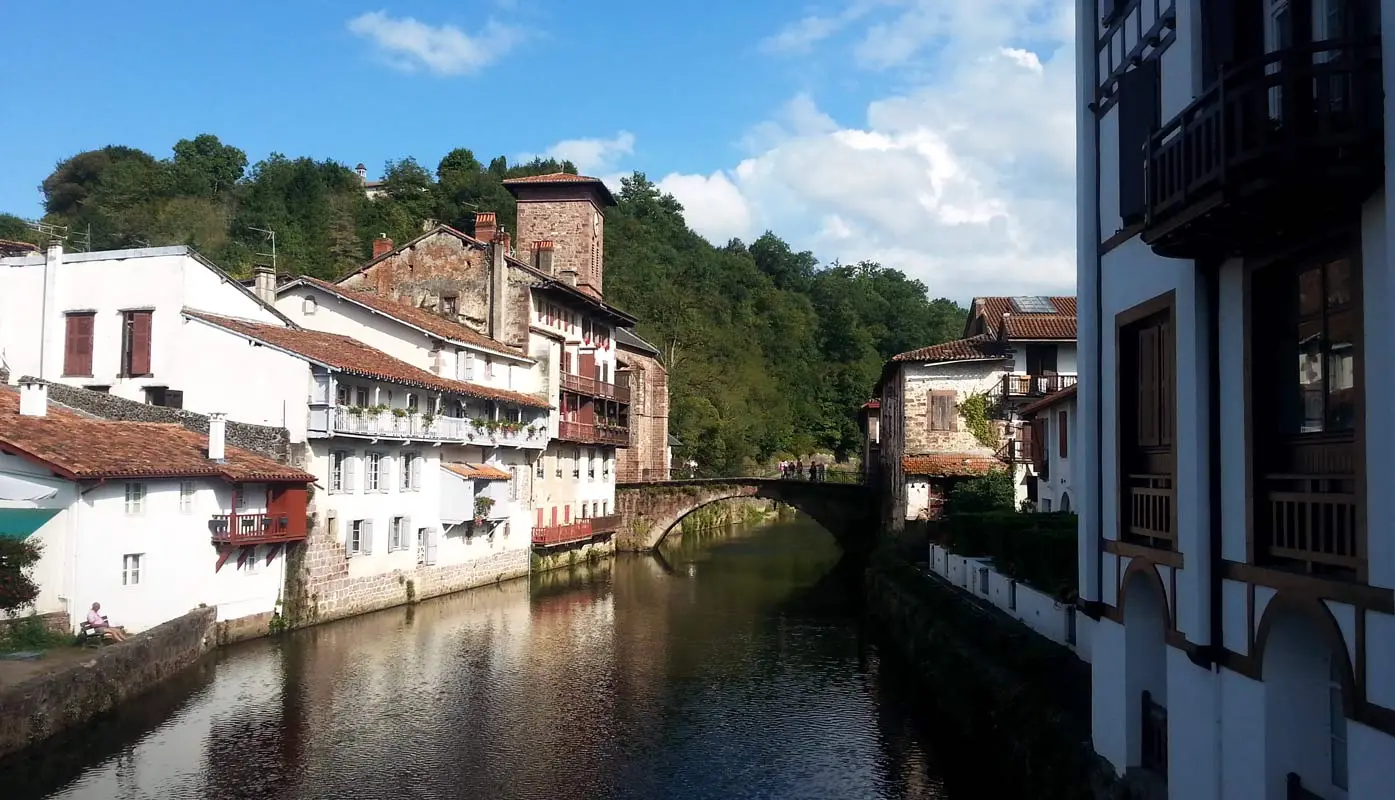
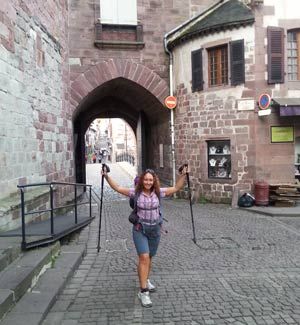
The most famous of all Caminos to Santiago de Compostela, the French Way, starts in the historic town of Saint-Jean-Pied-de-Port just before the Spanish border. And what a place to start: the narrow and steep cobblestone streets of St-Jean and the old bridges crossing the Nive River make it one of the prettiest villages in France!
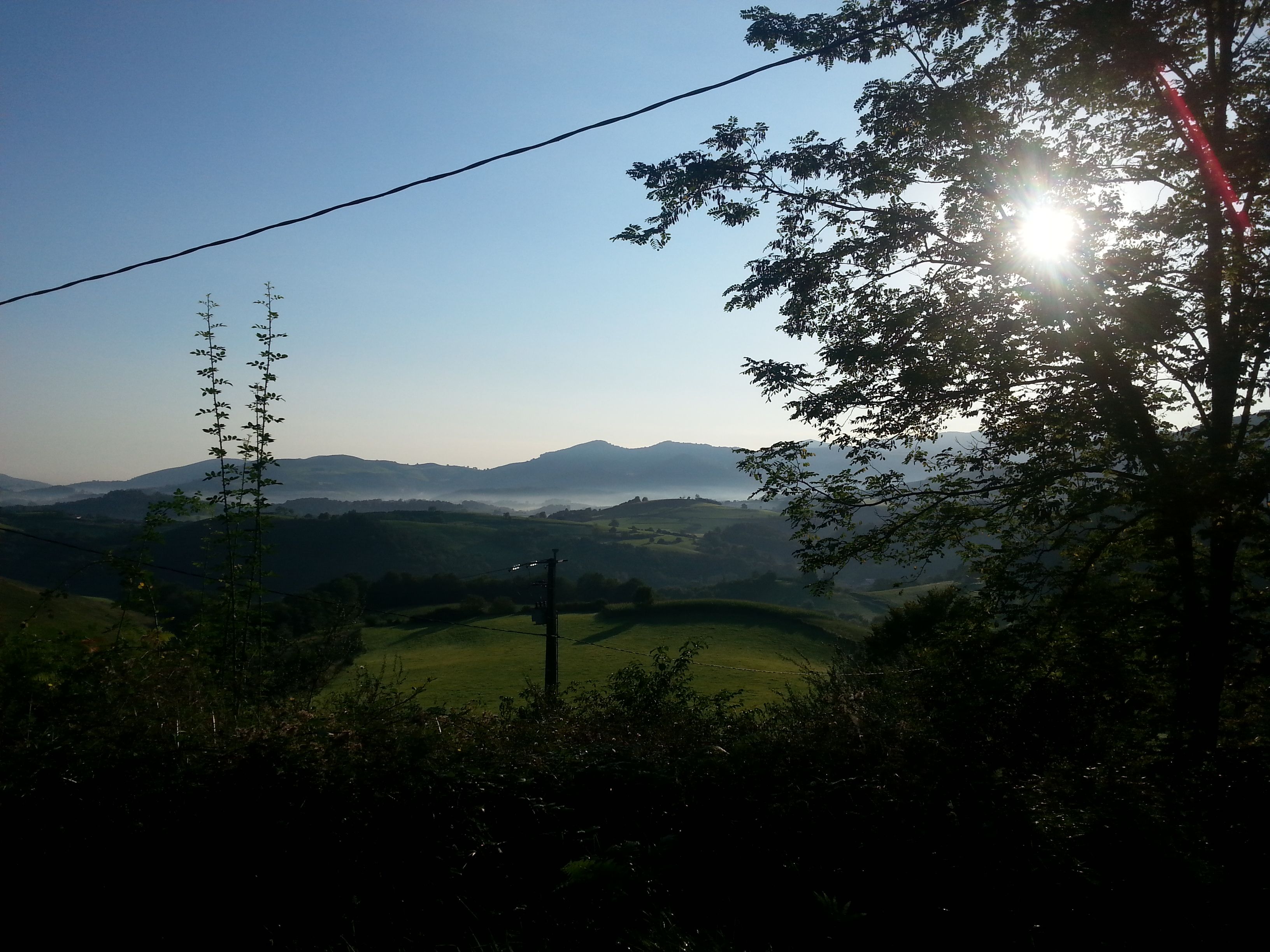
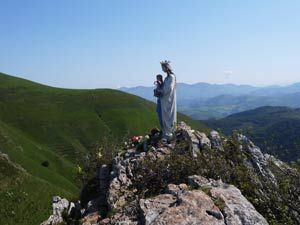
As the ascent of the Pyrenees mountain range, the natural border between France and Spain, is long and trying, we have split it into two days with transfers from the Virgin of Orisson. So you will enjoy two nights in this amazing setting!

Today your Camino begins. Leave Saint-Jean-Pied-de-Port through the Notre-Dame Gate, cross the River Nive and take your first steps towards Santiago de Compostela.
The climb to the Virgin of Orisson gains approximately 950 m over 12 km. Take your time and enjoy the spectacular mountain scenery before your included transfer returns you to Saint-Jean-Pied-de-Port for a second night.

After a short transfer back to the Virgin of Orisson, continue your journey along the “route de Napoleon”, the mountain path used by the French Emperor to bring his troops into Spain in the XIX century.
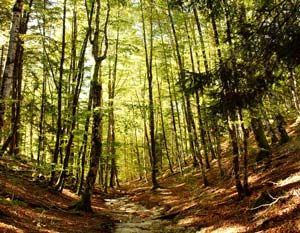
The Camino will take you uphill for another 10 km, until you reach the Col de Lepoeder at 1450m altitude, followed by a steep descent through magnificent beech woods to the monastery of Roncesvalles.

You begin at approximately 950 m altitude, while Zubiri lies much lower, so today’s route includes considerable descent as well as several short climbs. Your first stop is Burguete, the village where Ernest Hemingway went fishing in his novel “The Sun Also Rises”.
You are walking through Esteríbar, the Valley of the Hunters, a fertile and beautiful forested valley crossed over the centuries by Romans, Moors and French troops. Walking downhill is less strenuous than climbing, but it can be hard on the knees. Take it slowly and enjoy the peaceful surroundings as you reach Zubiri.

Today, the River Arga will lead you to Pamplona, one of Spain's greatest cities, and world famous for its Fiesta de San Fermín (a celebration involving the running of bulls and the theme of Hemingway's masterpiece "The Sun Also Rises").
If you enjoyed the movie The Way, you will need to stop by the beautiful Hotel Akerreta, 6 km out of Zubiri. Then, we recommend taking the Huarte Detour through Zabaldika to see the 13th century Church of San Esteban and ask the nuns to allow you to ring the bell to send your prayers out onto the valley.

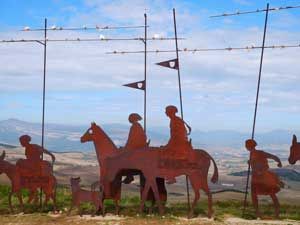
After breakfast, an included transfer brings you from Pamplona to Cizur Menor, where today’s walk begins. One of the most memorable days on the Camino lies ahead as you climb towards the Alto del Perdón and its striking sculpture of medieval pilgrims, with wide views across Navarra.
You will also pass near the 12th-century Romanesque Church of Santa María de Eunate, built on an unusual octagonal plan, before reaching historic Puente la Reina, “the Bridge of the Queen”.

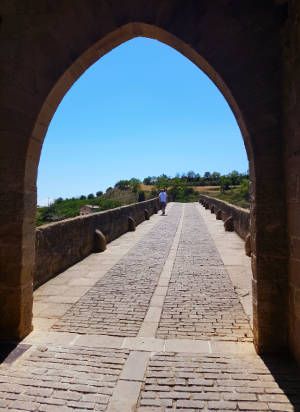
The legend says pilgrims should always spend the night in Puente la Reina and leave the town barefoot in the morning. So, why not, take off your shoes to cross the famous bridge?
The Camino will turn into an earth track between cereal fields, vineyards and olive trees. Continue straight until you pass through a Gothic arch to enter the beautiful medieval hilltop village of Cirauqui, where you’ll find the Church of San Roman and its impressive Romanesque portal. The Camino follows in some sections a well-preserved old Roman road, along the Salado River bank, a saltwater river mentioned in the Codex Calixtinus.

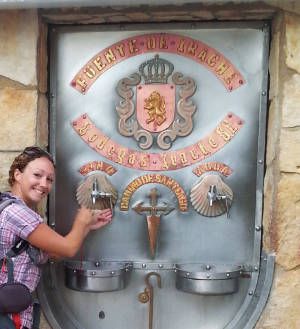
Your first stop is the Bodega Irache, where you will find one of the Camino’s most original features: a free, unsupervised wine fountain created for pilgrims. After a taste, continue through vineyards, wheat fields and olive groves.
Your destination is Villamayor de Monjardín, home to the beautiful 12th-century Fuente de los Moros. Once you arrive, an included transfer will bring you to Logroño, the capital of La Rioja and one of Spain’s best cities for tapas.

An included transfer brings you from Logroño to Navarrete, where today’s walk begins. Leave the town past the ruins of the Hospital of San Juan de Acre and continue across the rich red-clay landscapes of La Rioja towards Nájera.
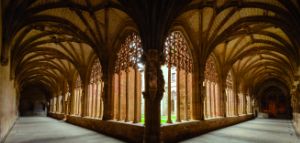
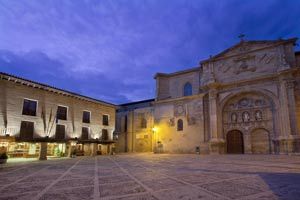
Set between ochre cliffs and the River Najerilla, Nájera was once the capital of the Kingdom of Navarra and preserves a remarkable medieval heritage. Take time to discover the Monastery of Santa María la Real and the town’s lively riverside setting.

Continue through medieval La Rioja along the region’s distinctive red-earth trails towards Santo Domingo de la Calzada, one of the most emblematic towns on the French Way.
Depending on availability, you may stay in the Parador, a four-star hotel housed in the former 12th-century pilgrims’ hospital beside the Cathedral. The town is famous for the legend of a roasted cock and hen that returned to life to prove the innocence of a wrongly accused pilgrim; a live rooster and hen are still kept in the Cathedral in memory of the miracle.

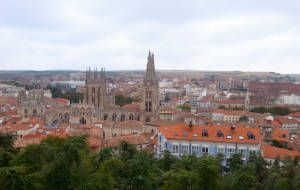
A private transfer brings you to Burgos, whose historic centre and magnificent Gothic cathedral are recognised as UNESCO World Heritage sites.
The rest of the day is yours to explore at your own pace. Visit the Cathedral, stroll beneath the Arco de Santa María, follow the tree-lined Paseo del Espolón or discover the city’s links with the Camino de Santiago and the legendary Castilian hero El Cid.

After breakfast, a taxi brings you from Burgos to Hornillos del Camino. You are now entering the heart of the Meseta and the vast region of Castilla y León. This is one of our favorite sections of the Camino, offering some of the most striking and memorable landscapes of the French Way.
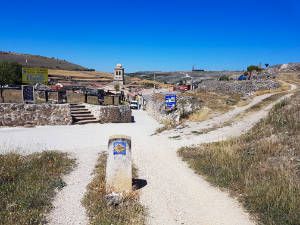
You will find places to rest approximately every 5 km, but little shade, so we recommend setting out early. The Jacobean village of Hontanas appears as a welcome and unexpected oasis amid the Castilian plains. Continue to beautiful Castrojeriz, where you can discover its 9th-century castle and 13th-century Collegiate Church.

A morning private transfer brings you from Castrojeriz to León, leaving most of the day free to discover one of Spain’s greatest cities.
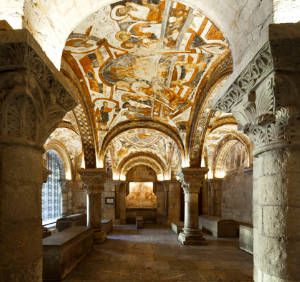
Explore the remarkable Cathedral of León, filled with more than 100 stained-glass windows, visit the Royal Pantheon of San Isidoro and admire Gaudí’s Casa Botines. Later, enjoy the lively streets and tapas bars of the Barrio Húmedo before spending the night in the city.

After breakfast, a private transfer brings you from León to Astorga, where today’s walk begins. Take a little time to admire the Cathedral and Gaudí’s Episcopal Palace before following the Camino towards the foothills of the Mountains of León.
The ascent to Rabanal del Camino is gradual, gaining approximately 300 m as the open countryside slowly gives way to wooded slopes. Tomorrow you will reach the Iron Cross, one of the Camino’s most meaningful symbols, so you may wish to choose a small stone to carry with you and leave there.

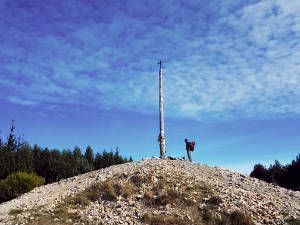
Today you will reach one of the rooftops of the French Way and one of the pilgrimage’s most emblematic places: the Cruz de Ferro, or Iron Cross. You have been preparing for this challenge.
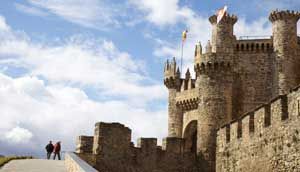
As you walk through these dramatic landscapes, with the green mountains around you and the vast Meseta visible in the distance, notice the messages and small tributes left by pilgrims. After you reach El Acebo, an included transfer will bring you through Ponferrada, where you can admire the Templar Castle, and onwards to Villafranca del Bierzo for the night.

Your final walking day in Castilla y León has a very different character. Following the Río Valcarce upstream, you pass through small villages that have welcomed pilgrims for centuries. Dense vegetation surrounds the valley, while the mountains you will cross tomorrow rise ahead.
Although the traditional route follows the road in places, the villages remain attractive and the walk brings you gently to the foot of the mountains. Your destination is Las Herrerías, whose name, “the ironworks”, recalls the area’s historic metalworking tradition.

Prepare for a challenging but rewarding day, with an ascent of approximately 600 m during the first 8 km. The effort is repaid by beautiful mountain paths and the unforgettable arrival at O Cebreiro, one of the Camino’s most atmospheric villages.
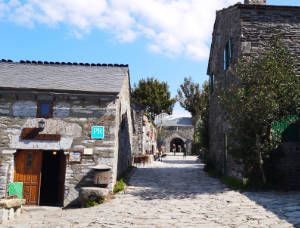
At around 1,300 m, O Cebreiro offers sweeping views across the valleys below. Its pallozas are traditional round stone-and-thatch buildings with pre-Roman origins, while the 9th-century Church of Santa María la Real is one of the oldest surviving pre-Romanesque churches on the Camino and is associated with a 14th-century Eucharistic miracle.

A private transfer brings you down from the mountains to Sarria, where you begin the final 115 km to Santiago. Climb the medieval steps out of town and follow easy paths through meadows, oak woods and small villages with traditional slate-roofed houses.
Cross the River Miño to reach Portomarín. When the Belesar Reservoir was created in the 1960s, the old town was flooded and several of its most important historic buildings were carefully dismantled and reconstructed on higher ground, including the fortress-like Romanesque Church of San Nicolás.

Cross the bridge over the Belesar Reservoir and leave Portomarín for a steady climb through peaceful woodland and open countryside.
Along the route you will pass the 2,200-year-old hillfort of Castromaior. The remarkable 12th-century Romanesque Church of Vilar de Donas is another important monument in this area, although it requires a separate detour from the Camino. Depending on availability, tonight you may stay in a beautifully restored 18th-century Galician manor near the route.

Continue from Lestedo through woodland, farmland and small Galician villages towards Melide. Along the way, medieval churches and stone bridges reveal the long history of this pilgrimage route.
Try to arrive in time for lunch, as Melide is renowned for its pulpo á feira, tender octopus seasoned with olive oil, salt and paprika. Here the French Way meets the Camino Primitivo from Oviedo, and you will also pass one of the oldest cruceiros in Galicia.

Leave Melide along quiet lanes and woodland paths, crossing small rivers and traditional stone bridges as the Camino winds through the green Galician countryside. The medieval bridge and former pilgrims’ hospital at Ribadiso form one of the loveliest ensembles on this final section of the French Way.
Today’s shorter stage gives you time to settle into the rhythm of the Camino and enjoy Arzúa, a welcoming pilgrim town known for its mild, creamy Arzúa-Ulloa cheese. With Santiago drawing closer, the shared sense of anticipation among walkers becomes increasingly tangible.

With only around 40 km left to Santiago, the atmosphere along the Way begins to change. Pilgrims are increasingly aware that the end of their journey is approaching. The route today passes through eucalyptus forests, small villages, and quiet country roads, with long stretches that invite reflection before the final arrival in Santiago.
The scenery becomes more wooded and enclosed, with tall trees and soft light filtering through the branches. Many of the villages you pass are small and peaceful, appearing almost untouched by time.

This is it. Only 20 km separate you from your destination: Santiago de Compostela and the Cathedral that has drawn pilgrims from across Europe for centuries. Soon, you will enter the city itself and make your way toward Plaza del Obradoiro, where the Cathedral stands at the end of your journey. Take time to enjoy the moment, celebrate your arrival, and reflect on the days you have walked.
You still have plenty to do today: check in at your hotel, collect your Compostela, attend the Pilgrim Mass, and admire the architecture of our beloved city.

Your Camino journey ends after breakfast. You may choose to extend your stay in Santiago, spend more time exploring the Cathedral and old town, enjoy a guided visit, or continue onward to Finisterre and the Atlantic coast.
A wise pilgrim once told us, “The real Camino starts where the Camino de Santiago finishes, but I will not be afraid because the Camino will always be there for me.” We hope the Camino has brought you whatever you were looking for, and we hope to see you again soon.
Reviews
Feedback from travelers whose journey is identified beneath their words.
“We completed a superb 15-day walk on the French Way. Nellie understood our needs and expectations very well and met them completely.”
“You understood our needs very well and met all our expectations: documentation, practical advice, itinerary, accommodation, luggage transfers and taxis. Everything was perfect and tailor-made.”
“The trip you planned was just right for us, and you met and exceeded all our expectations. We had the most wonderful, life-changing experience.”
Frequently asked questions
Most accommodation costs are charged per room rather than per guest. When one traveler occupies a room alone, there is no second guest with whom to share that cost. The supplement covers the difference across the journey and reflects the limited availability of single rooms along the Camino.
No technical hiking experience is required for our walking tours. Regular preparation is important; review the daily distances in the itinerary and build gradually toward consecutive walking days.
One piece of luggage weighing up to 20 kg per person is transferred between accommodations each day, allowing you to travel with only what you need during the day.
Yes. We can add extra nights or arrange selected visits, transfers and Experiences according to availability. Tell us what you have in mind when you start planning.
The itinerary combines selected walking stages with the transfers described day by day, allowing you to experience defining landscapes across the route within 24 days.
How to book
We are here to take care of every detail.
Tell us your preferred travel dates, the number of people and any special requests.
We'll confirm availability and send you a personalized proposal.
To confirm your booking, a 50% non-refundable deposit is required.
We'll take care of the details. You just prepare for the journey!
Book
Tell us your preferred dates, who is traveling and anything that would make this journey feel right for you. Camino journeys require at least 30 days’ notice, and availability is confirmed only after we have reviewed your dates and arrangements.
A Camino specialist will review your plans personally.
Continue exploring
Compare another classic route, a gentler pace or a journey that continues beyond Santiago.