Packing for the Camino becomes easier when you separate two questions: what will you use during the stage, and what can wait at the next accommodation? On an Ultreya Tours Camino, main luggage transfer is included on walking and cycling days. Your journey documents repeat the 20-kilogram allowance and explain the collection procedure for your itinerary. That allows the daypack to remain focused, but it does not remove the need to prepare for changing conditions between departure and arrival.
Use this list as a framework and adapt it to your season, route, journey length, and personal needs. There is no universal bag that suits every traveler.
Begin with what Ultreya Tours already provides
Do not pack duplicates of materials that are prepared for your confirmed journey. Your Pilgrim Kit will be waiting at your first accommodation and includes your official Pilgrim Passport, the shorter printed version of your essential route and hotel information, your detailed guidebook, and the luggage identification supplied for the transfers. You will also receive your personalized vouchers and access to the custom Google map prepared for the itinerary.
Read the final vouchers before closing your suitcase. They contain the seasonal packing guidance and operational details that apply to your particular journey. Save the full digital version on your phone and keep an offline or printed copy of essential information. The general list below supports those documents; it does not replace them.
Organize two different bags
Ultreya Tours includes luggage transfer on the walking and cycling days identified in the itinerary. The standard service covers one bag per traveler weighing no more than 20 kilograms. Pack within this limit rather than treating a larger airline allowance as the Camino allowance.
Your transferred suitcase or travel bag moves between confirmed accommodations. Your daypack remains with you and must hold everything needed before the next check-in. Medication, identification, valuables, water, rain protection, and essential documents should never travel in the transferred bag.
Clothing that works in layers
Camino weather can shift within a day. A cool morning, exposed afternoon, and rainy approach may all occur in one stage. Several lightweight layers are generally more adaptable than one bulky piece.
Consider packing:
- Lightweight, quick-drying tops
- Walking pants or shorts suited to the expected conditions
- A warm mid-layer
- A light insulating layer in cooler seasons
- Breathable underwear
- Several pairs of tested walking socks
- Sleepwear
- A change of clothes for evenings
- A hat for sun and, when appropriate, a warm hat and light gloves
- A light scarf or neck covering if useful for sun, wind, or entering religious sites
Choose pieces that can be washed easily and dry without special care. Most travelers need fewer outfits than they first imagine. Washing a small amount regularly keeps luggage lighter and makes the contents easier to manage.
Avoid treating seasonal labels as guarantees. Galicia and northern Portugal can be wet in warmer months and bright on cool days. Check the forecast close to departure and follow any route-specific guidance in your travel documents.
Footwear and foot care
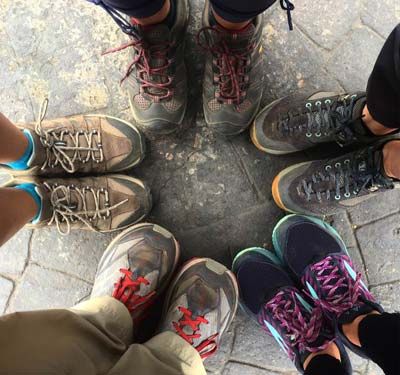
The best shoe is one you have tested over meaningful distances and on consecutive days. Depending on the route and season, travelers may prefer walking shoes, trail shoes, or light boots. Fit, grip, stability, and comfort matter more than whether a particular style appears on a generic list.
Wear the footwear during training with the socks you intend to bring. Feet can swell over a long day, so a fit that feels perfect during a short shop visit may not remain comfortable. Pack more than one pair of good walking socks and learn which combination keeps your feet comfortable.
A simple personal foot-care kit may include blister dressings or the products you already know how to use. Prevention begins with tested equipment, dry socks, attention to early rubbing, and a pace that does not turn a small irritation into a larger problem. Seek appropriate professional guidance for medical concerns rather than relying on a universal remedy.
Bring light footwear for evenings so walking shoes can air and your feet can rest.
Do not bring new walking footwear to be tested on the first stage. Trim and care for toenails before departure, but avoid an aggressive last-minute pedicure that leaves skin tender. If you use insoles, orthotics, toe protection, or a particular blister product, train with the same combination and bring enough of the product you already know works for you.
Rain and sun protection
A waterproof or reliably water-resistant outer layer belongs in the daypack, not at the next hotel. Some travelers prefer a rain jacket and pack cover; others use a poncho designed to cover both body and bag. Test the system in wind and rain before the Camino. A loose poncho that obstructs vision or catches unpredictably is not useful.
Sun protection is equally important. Carry sunscreen, sunglasses, and a hat with practical coverage. Exposed roads, coastal stretches, and open countryside can offer little shade. Reapply protection as needed and remember that cloud does not eliminate exposure.
In addition to the main rain layer, a waterproof pouch or zip bag is useful for a passport, phone, vouchers, and other items that must remain dry. Keep a dry pair of socks accessible when the forecast is poor rather than burying every spare in transferred luggage.
The daypack
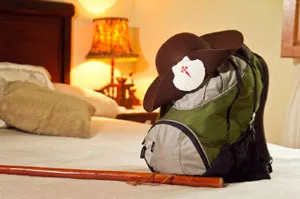
Choose a small, comfortable daypack with adjustable straps and enough room for the essentials without encouraging overpacking. On a typical walking day, it may hold:
- Water in a reusable bottle or hydration system
- Rain and sun protection
- A warm or spare layer
- Identification, money, and payment cards
- Phone and charging cable or small power bank
- Personal medication
- Emergency and travel-insurance information
- A small amount of food for quieter stages
- The Pilgrim Passport after collecting your Pilgrim Kit, plus the relevant daily route information
- Basic personal-care and first-aid items you know how to use
- Tissues and a small bag for carrying personal waste to the next appropriate bin
Trekking poles can improve balance and help some walkers manage uneven ground or descents. Practice with them in advance, learn to use them without obstructing others, and check airline rules if you are flying.
The daypack should also have room for a layer you remove as the temperature rises. A bag packed completely full at breakfast becomes awkward when the rain jacket, sweater, or food no longer needs to be worn or carried by hand.
What belongs in transferred luggage
The main bag is the place for clean evening clothing, larger toiletries, spare equipment, and items not needed before arrival. Useful contents may include:
- Remaining walking clothes and socks
- Evening clothes and light evening footwear
- Larger toiletries kept within airline and hotel requirements
- Spare prescription items where medically appropriate
- Laundry soap suitable for washing a few garments by hand
- Chargers and a travel adapter suitable for Spain and Portugal if your devices require one
- A compact swimsuit when the confirmed accommodations or additional plans make it useful
- A small collapsible bag for the nights before or after the walking itinerary
Keep important medication, documents, valuables, keys, and anything essential during the stage with you rather than in transferred luggage.
Use internal packing bags if they help you find things quickly, but avoid filling the suitcase simply because space remains. Every additional item must still be carried through airports, stations, hotel rooms, and the rest of the trip.
Follow the luggage instructions in your vouchers each morning. Attach the supplied identification securely, leave the bag in the stated place by the stated time, and keep your day essentials with you. The Ultreya Tours allowance is one bag per traveler weighing no more than 20 kilograms.
Documents and personal essentials
Keep your passport or identification, payment cards, essential medication, travel-insurance contacts, transportation documents, and final Ultreya Tours vouchers together in a secure, accessible place. Medication and anything you cannot manage without during the stage belong in your daypack, not in transferred luggage.
Save secure digital copies of key documents separately from the originals. Bring enough of your regular medication for the journey and any simple information you may need to identify it while traveling.
A final test before departure
Pack everything, then take a real training walk with the complete daypack. Drink from the bottle while moving. Put on the rain layer. Adjust the straps. Notice what shifts, rubs, or remains unused. Repeat the exercise in different weather if possible.
Finally, remove items included only for unlikely convenience. The Camino has shops and pharmacies, although not every village has every service or keeps the hours you expect. Thoughtful packing is not about preparing for every imaginable situation. It is about being ready for the actual day while keeping the journey simple enough to enjoy.
Final packing checklist
Before closing your bag, check that you have:
- Tested walking or cycling footwear, good socks, and light evening shoes
- Quick-drying layers, evening clothes, and weather-appropriate warmth
- Rain protection, sun protection, sunglasses, and a hat
- A comfortable daypack with water, a spare layer, and a little food
- Passport or identification, payment cards, phone, and charging equipment
- Essential medication and the personal-care items you already know how to use
- Final vouchers and transportation information saved for offline access
- One transferred bag weighing no more than 20 kilograms
Leave space in the daypack for layers removed during the stage, and keep valuables, documents, medication, and rain protection with you each day.
Use the finished checklist on several consecutive walks while following our guide to training for the Camino. It is also worth picturing where each item belongs during a self-guided Camino day, when your main luggage is already moving ahead.