Galician rain can be a short shower, hours of fine mist or a wet front that lasts most of the stage. For walkers, the most reliable answer is usually to bring both a waterproof jacket and a very light poncho rather than expecting one garment to handle every situation.
Ultreya Tours places a basic emergency poncho in the Pilgrim Kit. It is useful for an unexpected shower or as extra cover, but it is deliberately simple. Travelers expecting wet weather should still bring the rainwear they have trained in.
What a rain jacket does well
A jacket is close-fitting, easier to manage in wind and practical when rain continues for several hours. A hood with useful adjustment should turn with the head without blocking side vision. Cuffs and zips need to close properly, and the hem should remain covered when the daypack is fitted.
Even breathable waterproof fabric can become warm during a climb. Open ventilation zips before perspiration builds and adjust the layer underneath. The jacket protects the walker, not the contents of the daypack, so use a fitted pack cover or an internal waterproof liner as well.
Why keep a light poncho with you
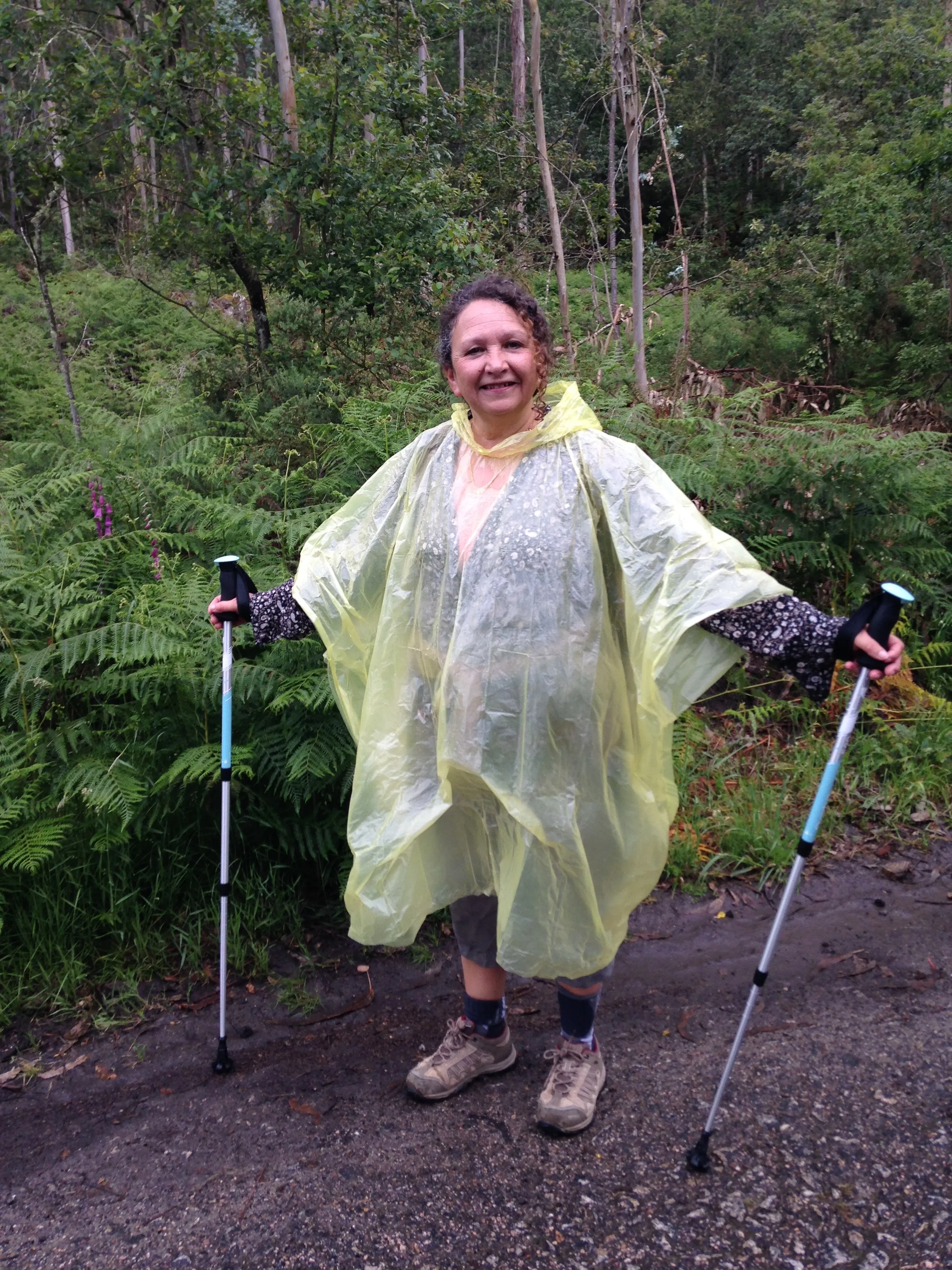
A poncho can cover both the walker and daypack in seconds. It is useful when a shower begins before there is shelter, when the jacket alone is struggling, or when you need to keep the pack and upper legs drier. A folded lightweight poncho occupies little room, so keep it in an outside pocket rather than at the bottom of the transferred suitcase.
Wind is its weakness. Loose material can flap, catch on vegetation and obscure the view of your feet on uneven ground. Stop somewhere safe before putting it on. Learn where the openings and fasteners are at home, and never try to arrange it while continuing to walk beside traffic.
Bring a warm jersey too
Rain often arrives with wind and a noticeable temperature drop. Pack a light jersey, fleece or other warm mid-layer in the daypack even when the morning is mild. The waterproof shell blocks rain and some wind but supplies little insulation by itself.
Keep the warm layer dry inside the pack and put it on before becoming chilled. In warm rain, wearing it may be unnecessary; in a cold stop, exposed ridge or long descent, it can be the layer that makes the difference.
Test the full combination
Wear the jacket over the jersey and put the poncho over the packed daypack. Walk uphill, use poles, turn your head and look down at your feet. Check whether the hood moves, whether the poncho is long enough to cover the pack and whether any fabric interferes with your hands.
Keep the passport, phone, money and journey documents in separate waterproof bags. Outer rainwear can leak at openings, and water may enter the pack while the cover is being fitted.
After a wet stage, hang the jacket and poncho separately as soon as you arrive. Do not leave either garment folded wet inside the daypack overnight.