Choose this journey if…
You want the complete Camino from beginning to end.
This journey is for travelers who dream of completing the French Way in one journey or several stages, with its rhythm and details shaped around them.


The Camino you have always imagined.Walk it from beginning to end.
A complete French Way, suggested over 40 days / 39 nights and personalized around you.
Discover the journeyWalk the full 775 km French Way from Saint-Jean-Pied-de-Port to Santiago de Compostela, using our 40-day itinerary as a carefully considered starting point. The route and rhythm can be fully personalized: complete it in one journey or in stages, add rest days or extra nights in the great Camino cities, adjust daily distances, include selected detours, combine walking with a cycling section, or skip a section such as the Meseta. We arrange the accommodation, luggage transfers and practical support around the French Way you want to experience.
Share your dates and priorities, and we will shape the next step with you.
Download brochure
From €6,990 per traveler
Base price per person for two people sharing a twin or double room. Subject to availability and final confirmation.
“We completed a superb 15-day walk on the French Way. Nellie understood our needs and expectations very well and met them completely.”
Why this Camino
Our suggested 40-day journey follows the entire French Way from the foothills of the Pyrenees to Santiago de Compostela, but it is a framework rather than a fixed formula. Complete it in one journey or over several visits while we shape the stages, pace and arrangements around you.
Journey highlights
 Walk the complete 775 km French Way from St-Jean to Santiago
 Cross the Pyrenees, Rioja, the Meseta and the green landscapes of Galicia
 Walk at your own pace with trusted local support throughout
Choose this journey if…
This journey is for travelers who dream of completing the French Way in one journey or several stages, with its rhythm and details shaped around them.
Consider another journey if…
The published itinerary covers 9 to 29 km on active days. Tell us if you would like to adapt the stages and we will explain what is possible on this route.
The experience
Use the day-by-day itinerary as your starting point. Walk the route as one continuous journey or divide it into natural sections: St-Jean–Pamplona, Pamplona–Logroño, Logroño–Burgos, Burgos–León, León–Ponferrada and Ponferrada–Santiago.
Stay in welcoming guesthouses and carefully selected 2 to 4 star hotels, chosen for their character, comfort and location. Each main part of the journey includes an exceptional historic stay, perhaps in a Parador, medieval monastery or converted palace. Where your accommodation is not directly on the Camino, the necessary transfers are included.
Each morning, a hearty breakfast is included to fuel your walk. Dinners are not included, giving you the freedom to discover local restaurants and the changing cuisine of the regions crossed along the Way. Please advise us of any dietary requirements in advance so we can inform your accommodations and recommend suitable places to eat.
A clear picture of the walking, the terrain and how to reach the start of your Camino.
Daily stages range from 9 to 29 kilometers (6 to 18 miles) across this 40-day journey. Rest days and carefully balanced stages provide time to recover, but you should be well prepared for sustained walking over the full route.
Cross mountain trails, vineyard tracks, open Meseta paths, country lanes, woodland and paved sections through cities. Both the terrain and the character of the route change considerably across northern Spain.
Regular walking before departure is the best preparation. Build gradually toward walking on successive days and test the footwear, daypack and clothing you plan to bring.
Via Biarritz: Continue to Saint-Jean-Pied-de-Port by rail, taxi or private transfer.
Via Madrid: Travel toward Pamplona by train, then continue by bus, taxi or private transfer.
Your journey ends after breakfast in Santiago. Reach Santiago Airport by airport bus, taxi or confirmed private transfer. For onward travel, Santiago has rail and long-distance coach connections.
We can advise on the most suitable option for your plans and quote a private transfer where available.
Price & extras
Base price per person for two people sharing a twin or double room. Subject to availability and final confirmation.
Adjust individual walking days, add rest days or extra nights in larger towns, and include detours such as the monasteries of Yuso and Suso. You may also skip a section, often the Meseta, or walk most days and cover a central section by bicycle. Every change is planned personally and confirmed in your proposal, subject to availability and revised pricing.
Explore guided visits, day tours and activities that can be added to your Camino.
Inclusions
Itinerary
The stages below show our recommended version of the complete route. They can be adapted, shortened, extended or divided across several journeys.
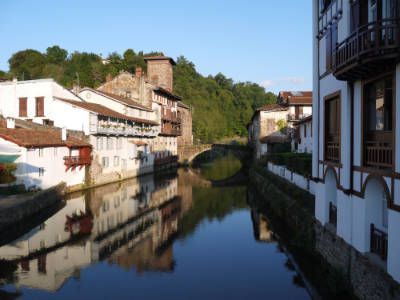
The most famous of all Caminos to Santiago de Compostela, the French Way, starts in the historic town of Saint-Jean-Pied-de-Port just before the Spanish border. And what a place to start: the narrow and steep cobblestone streets of St-Jean and the old bridges crossing the Nive River make it one of the prettiest villages in France!
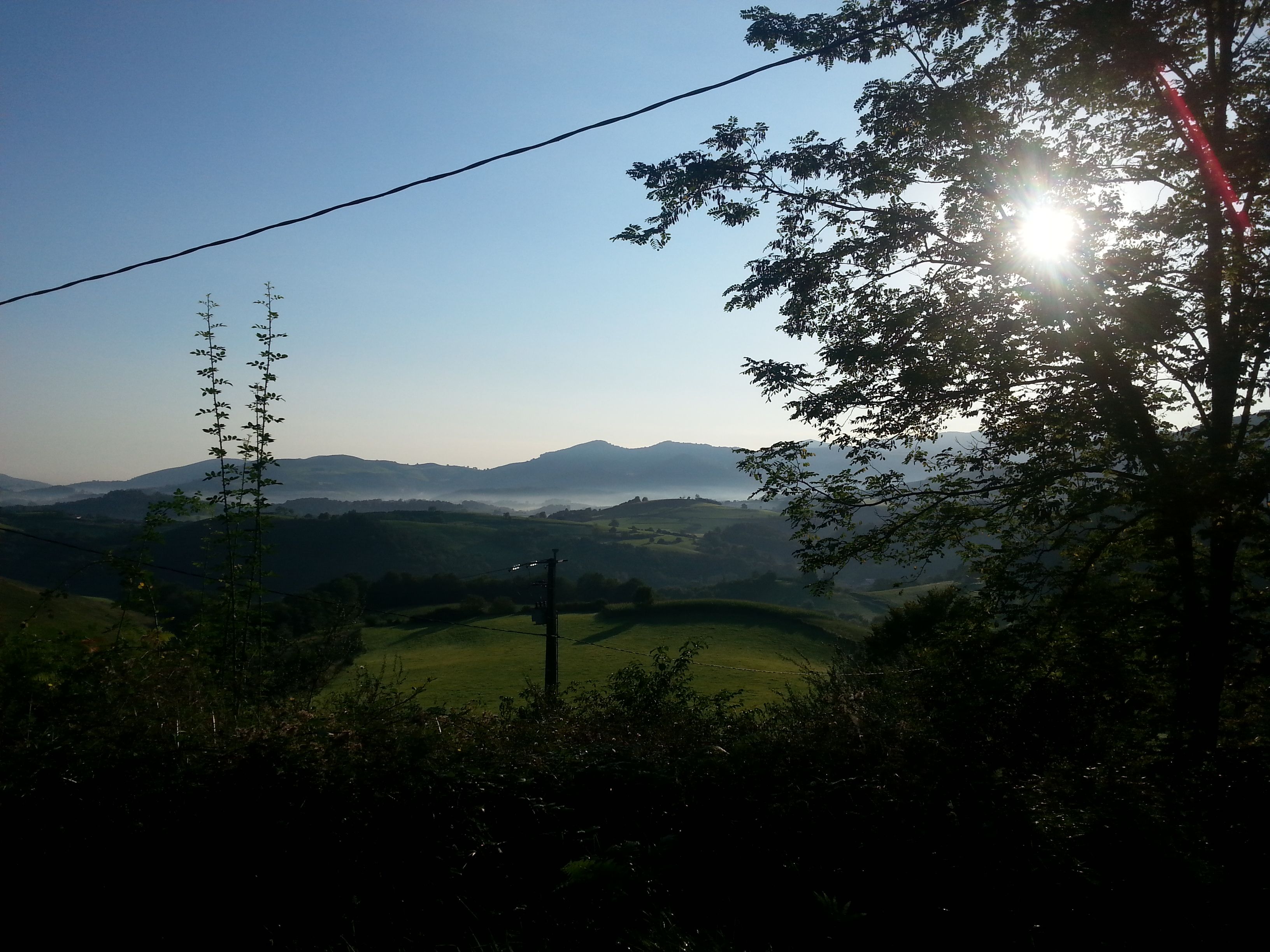
As the ascent of the Pyrenees mountain range, the natural border between France and Spain, is long and trying, we have split it into two days with transfers from the Virgin of Orisson. So you will enjoy two nights in this amazing setting!
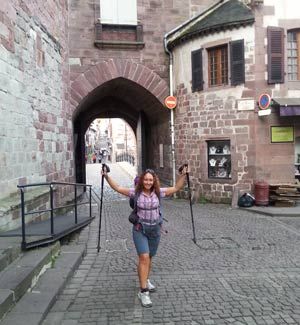
Today your Camino begins. Leave Saint-Jean-Pied-de-Port through the Notre-Dame Gate, cross the River Nive and take your first steps toward Santiago de Compostela.
The climb to the Virgin of Orisson gains approximately 950 m over 12 km. Take your time and enjoy the spectacular mountain scenery before your included transfer returns you to Saint-Jean-Pied-de-Port for a second night.
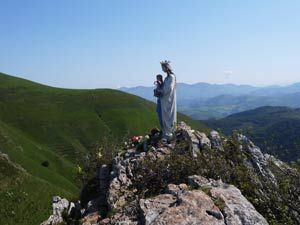
After a short transfer back to the Virgin of Orisson, continue your journey along the “route de Napoleon”, the mountain path used by the French Emperor to bring his troops into Spain in the 19th century.
The Camino will take you uphill for another 10 km, until you reach the Col de Lepoeder at an altitude of 1450 m, followed by a steep descent through magnificent beech woods to the monastery of Roncesvalles. You will be staying 3 km further in Burguete, where Ernest Hemingway went fishing in his masterpiece “The Sun Also Rises”.
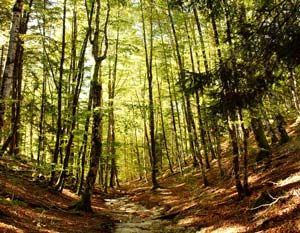
You are at 920 m altitude and Pamplona is at 400 m so the Camino will inevitably go downhill from now on, although there will be some ascents.
You are walking through Esteríbar, The Valley of the Hunters, a fertile, beautiful and strategic forest that everyone, from the Romans, Moors and French, tried to conquer over the centuries. Walking downhill is not as strenuous as walking uphill, but it is hard on the knees so take it easy and enjoy this now peaceful setting and the contact with nature as you reach the village of Zubiri.
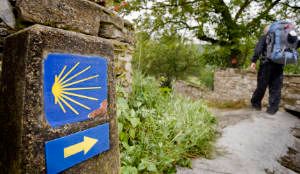
Today, the River Arga will lead you to Pamplona, one of Spain's greatest cities, and world famous for its Fiesta de San Fermín (a celebration involving the running of bulls and the theme of Hemingway's masterpiece "The Sun Also Rises").
If you enjoyed the movie The Way, you will need to stop by the beautiful Hotel Akerreta, 6 km out of Zubiri. Then, we recommend taking the Huarte Detour through Zabaldika to see the 13th century Church of San Esteban and ask the nuns to allow you to ring the bell to send your prayers out onto the valley.
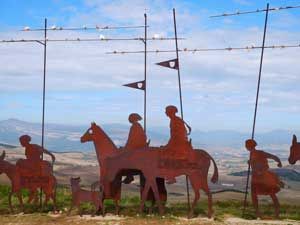
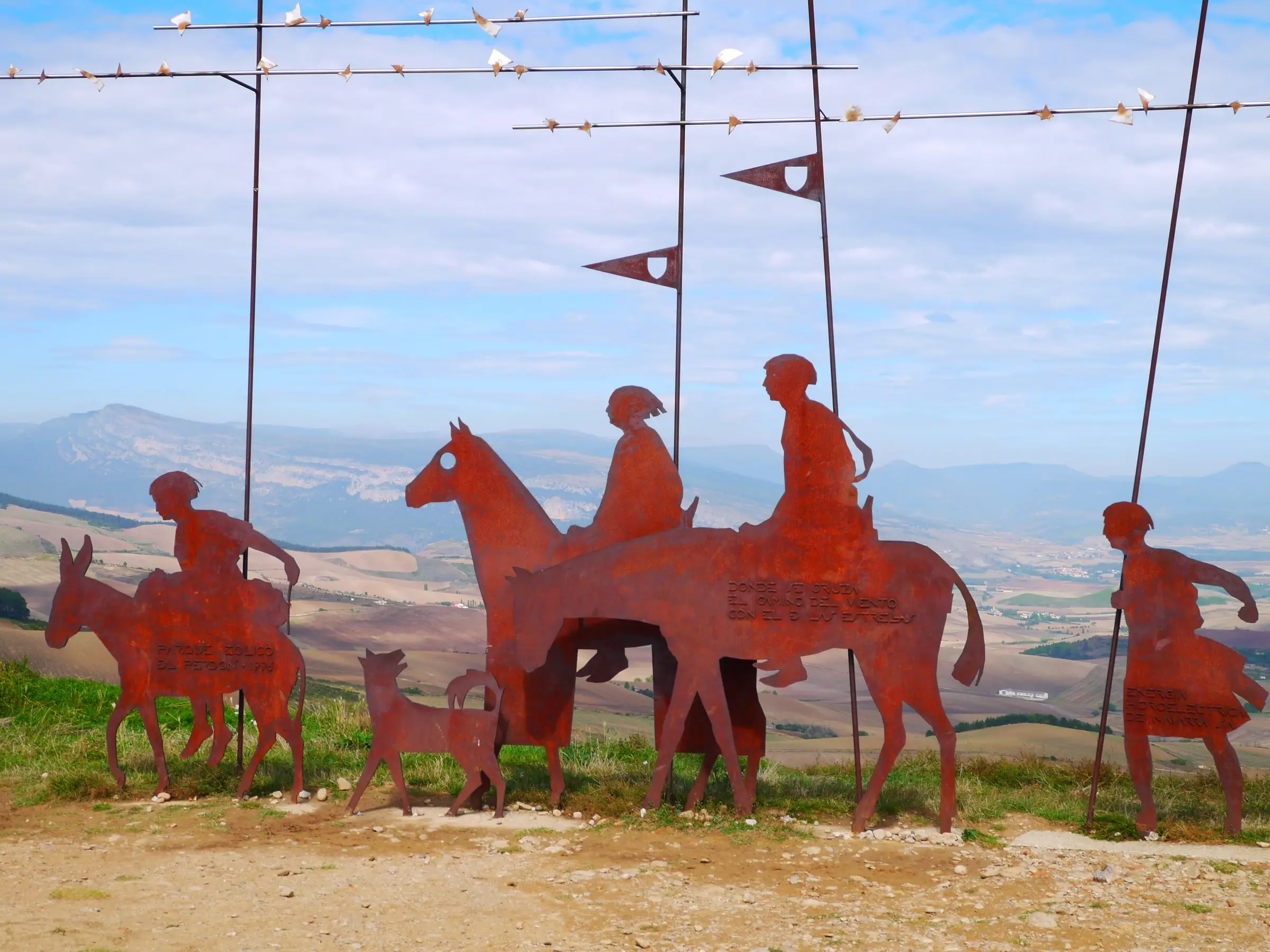
One of the most memorable days along the Camino lies ahead as you leave the beautiful city of Pamplona. You will cross the grounds of the 16th-century Citadel of Pamplona. Hike up to the Alto del Perdon to find one of the most recognizable monumental sculptures of the French Way representing a caravan of medieval pilgrims with panoramic views. One of the figures tells us this is “where the way of the wind crosses the way of the stars”.
You will also pass near a 12th-century Romanesque Church built on the plan of the Church of the Holy Sepulcher in Jerusalem and finally reach historic Puente la Reina, “the Bridge of the Queen”.
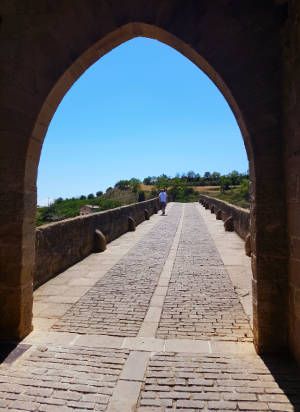
The legend says pilgrims should always spend the night in Puente la Reina and leave the town barefoot in the morning. So, why not, take off your shoes to cross the famous bridge?
The Camino will turn into an earth track between cereal fields, vineyards and olive trees. Continue straight until you pass through a Gothic arch to enter the beautiful medieval hilltop village of Cirauqui, where you’ll find the Church of San Roman and its impressive Romanesque portal. The Camino follows in some sections a well-preserved old Roman road, along the Salado River bank, a saltwater river mentioned in the Codex Calixtinus.
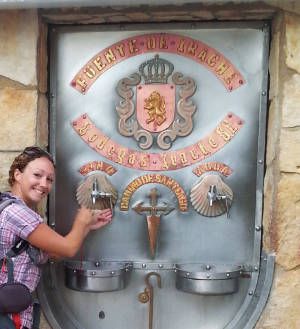
First stop, the Bodega of Irache, where you will find one of the Camino’s most original features: a free unsupervised wine fountain built for pilgrims.
After a taste, continue your walk through the vineyards, wheat fields and olive groves. Just before arriving in VillaMayor de Monjardín, make sure to refill your water in the 12th century Gothic fountain, Fuente de Moros, as the next 12 km offer little shade, and only one bar until you reach beautiful Los Arcos.
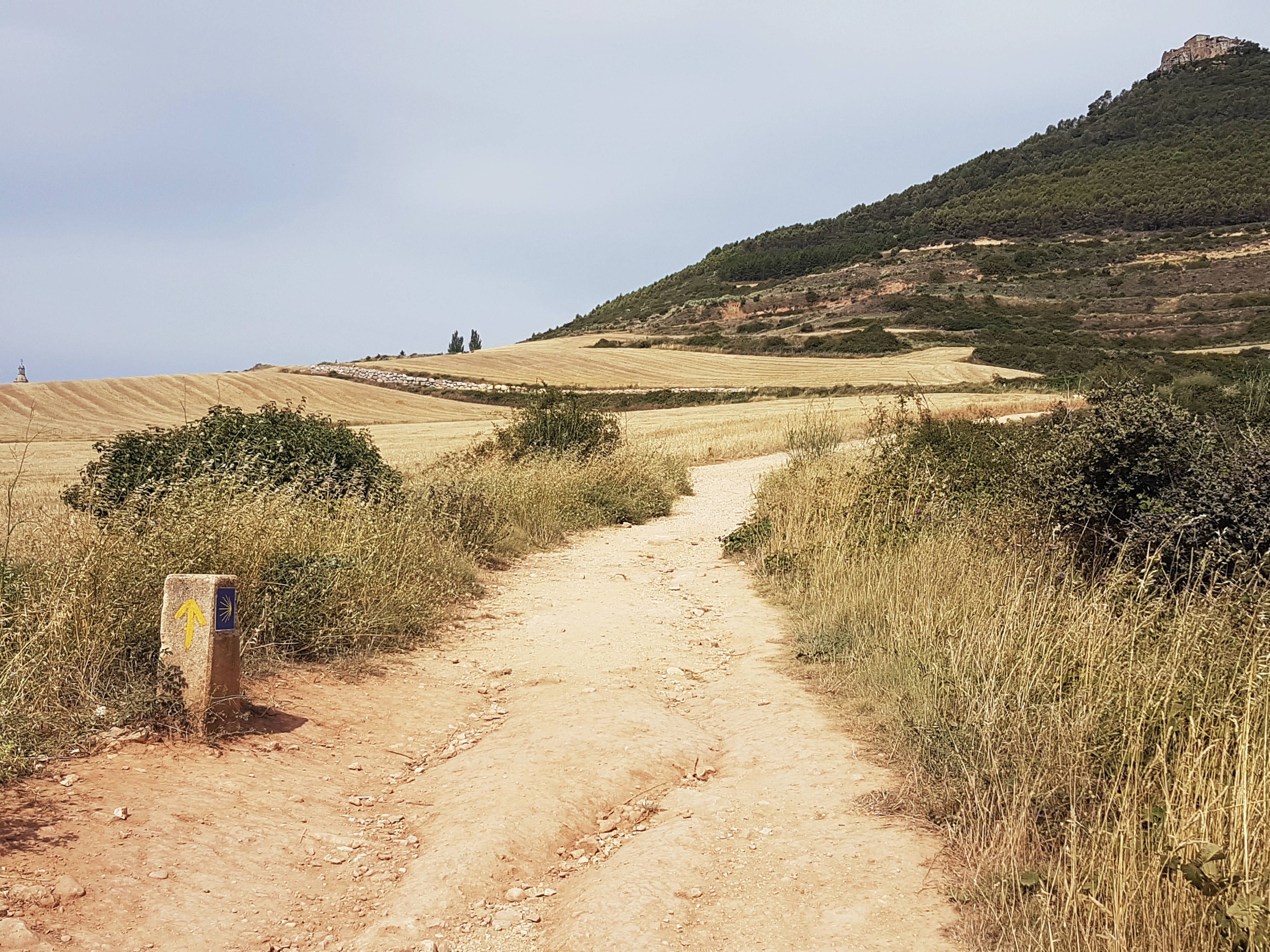
Leave the beautiful town of Los Arcos through the Puerta de Castilla, and continue your walk through the vineyards, wheat fields and olive groves. On a clear day, you should be able to see Viana, your destination for the day.
This is your last day walking in Navarra and you will notice that this frontier was important in Medieval Times. The very well conserved towns are all fortified and impressive. The best examples are Torres Del Rio and Viana built in the 12th century as a defense against the nearby Kingdom of Castile.
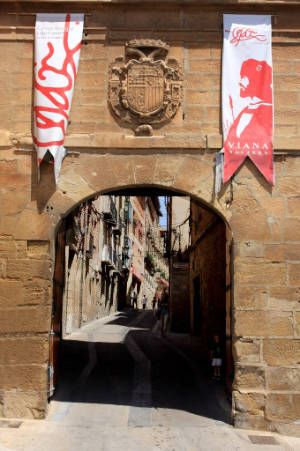
Leave Viana, through the Portal San Felices. The Camino will then lead you through fields and woodland to Logroño, the capital of La Rioja, third largest city along the Camino Francés and one of the best cities for tapas in Spain!
You will have most of the afternoon free to discover this great city. Either stay all afternoon in Logroño or take a taxi to visit Laguardia, a fortified medieval town 20 min away, considered the center of La Rioja Wine country, where you will be able to visit a 600-year-old winery and architectural award-winning super modern wineries like Marqués de Riscal.
Today, you will walk among vineyards and wide valleys to discover two historic Jacobean towns: Navarrete, with the medieval Hospital of San Juan de Acre, and Nájera. The path leads through San Miguel Park to Parque de la Grajera and its beautiful lake, a reservoir constructed in 1883. Most believe Nájera’s name was given by the Arabs and means “between mountains”; others say it is Visigothic. Archaeological evidence shows the area has been inhabited since the Bronze Age. Nájera later became an important Arab stronghold before being reconquered by King Sancho Garcés I of Pamplona in 923, laying the foundations for its importance within the medieval Kingdom of Navarre.
Continue through medieval La Rioja along the region’s distinctive red-earth trails toward Santo Domingo de la Calzada, one of the most emblematic towns on the French Way.
Depending on availability, you may stay in the Parador, a four-star hotel housed in the former 12th-century pilgrims’ hospital beside the Cathedral. The town is famous for the legend of a roasted cock and hen that returned to life to prove the innocence of a wrongly accused pilgrim; a live rooster and hen are still kept in the Cathedral in memory of the miracle.
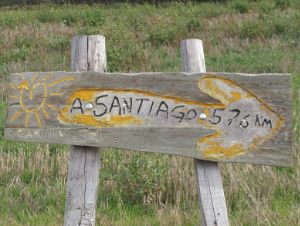
Today, you enter the region of Castilla y León, the medieval kingdom that led the "reconquest" of the Iberian Peninsula from the Moors, gave birth to modern Spain and gave the world Castilian Spanish.
Unfortunately, a busy road was constructed over the historical Camino that Santo Domingo did so much to improve. But we enjoy walking through the various villages along the way including Viloria de Rioja - the birthplace of Santo Domingo.
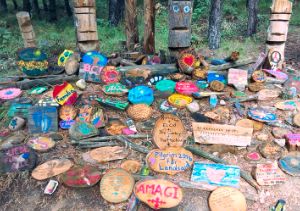
The Camino brings you on a glorious journey through the forests of the Montes of Oca - the mountains of the goose. These mountains were once feared by medieval pilgrims who were often attacked by bandits, hiding in the mist. Refuges were built by San Juan de Ortega, the disciple of Santo Domingo, to offer pilgrims places to rest and wait for the weather to improve. They are now home to works of art from thousands of pilgrims who walked by. The "Oasis of the Camino" is one of the great meeting points on the French route. So don't forget to purchase a picnic in Villafranca Montes de Oca to enjoy more time here!
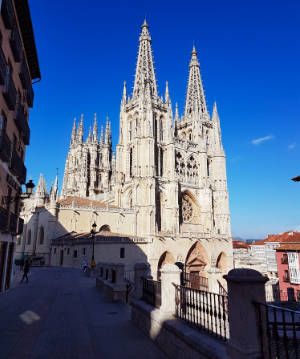
You will have the opportunity to discover two UNESCO World Heritage Sites today: the caves of the Sierra de Atapuerca, where the oldest records of humans in Europe were found, and Burgos.
There is a new path into Burgos following a pretty river and avoiding a long industrial stretch, make sure you follow our digital map to find it. The splendid City of Burgos is home to one of the most magnificent Gothic Cathedrals and the final resting place of the Spanish national hero El Cid. If you can, we highly recommend spending an extra day here to discover everything this wonderful city has to offer.
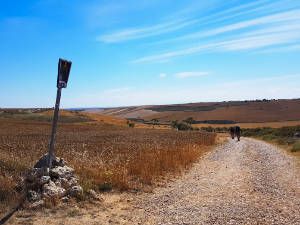
You are entering the Meseta, a vast, mostly flat plateau in the heart of Spain, around 700 m above sea level. The Camino is said to unfold in three stages: physical, mental and spiritual. During the first week, your body gradually adapts to the effort. By the Meseta, your legs and back are stronger, but the varied landscapes, shade, fountains and frequent villages give way to long, exposed stretches. No less beautiful, the Meseta presents a different challenge: a time for introspection, mental resilience and strengthening your will.
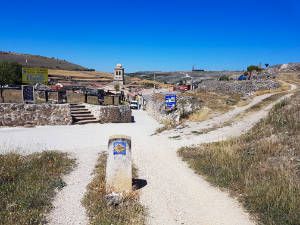
We are getting deeper into the Meseta and the vast Castilla y León region. Today's walk is one of our favorite sections as it offers some of the most striking and memorable landscapes of the French Way.
There will be resting places every 5 km but little shade so leave early. The Jacobean village of Hontanas appears as a welcome and unexpected oasis in the middle of the Castilian deserts and we enjoy discovering beautiful Castrojeriz, its 9th century castle and 13th century Collegiate church.
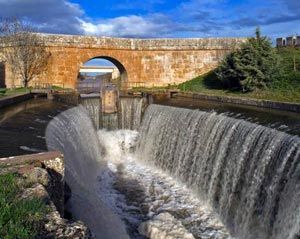
Welcome to Tierra de Campos, a rich agricultural region once considered the breadbasket of the Roman Empire! Until Hospital de Órbigo, you will walk through endless green and gold fields with practically no relief, few towns and limited services.
Yet this vast plain still has plenty to offer pilgrims who accept the challenge of the Meseta. Enjoy spectacular views from Alto de Mostelares, pass an old Roman mica mine and finish with 6 refreshing kilometers beside the historic Canal de Castilla before reaching Frómista.
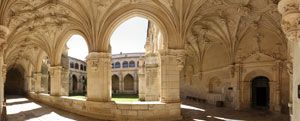
This is our first day of perfect flatness on the French Way and it feels quite monotonous, especially as the Camino runs parallel to a small road all day long. This is unless you follow our digital map, add 1 km to your journey and take the Villovieco detour from Población de Campos. This way, half the day will be along a pretty riverside path shaded by trees. You will be rewarded on arrival in Carrión de los Condes with the most interesting town between Burgos and León and a night in a 4* hotel inside the renovated Royal Monastery of San Zoilo, a former 10th century pilgrim hospital with an outstanding Renaissance cloister.
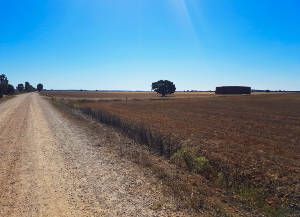
Put on your hat and strong sunscreen, take sufficient water and food, you are going to walk one of the longest and most uninhabited sections of the French Way, 17.3 km, without a single village, fountain or shade.
Most of the pavements you are walking on are from the Roman road XXXIV or Ab Asturica Burdigalam which linked Astorga to Bordeaux. In Medieval Times, it was called Via Aquitania, as it was used by pilgrims from the French region of Aquitaine on their Way to Santiago and it was later rerouted in some places, improved and renamed the French Way.
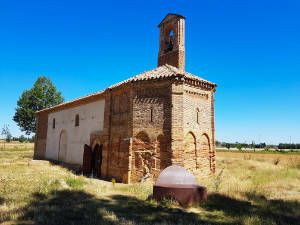
The name of the first town we pass speaks of the mysterious and legendary Knights that protected the area in Medieval Times: Terradillos de los Templarios, named after the Christian Military Order of the Temple, founded in the 12th century after the first crusade, to protect the Christian pilgrims to Jerusalem. As the guardians of the Holy Sites, the Templars extended their role to protecting the Camino de Santiago and left many reminders along the French Way for us to discover. To reduce tomorrow's walk pass Sahagún, once the most powerful Benedictine monastery in Spain, and continue to Bercianos del Real Camino before returning by taxi to Sahagún.
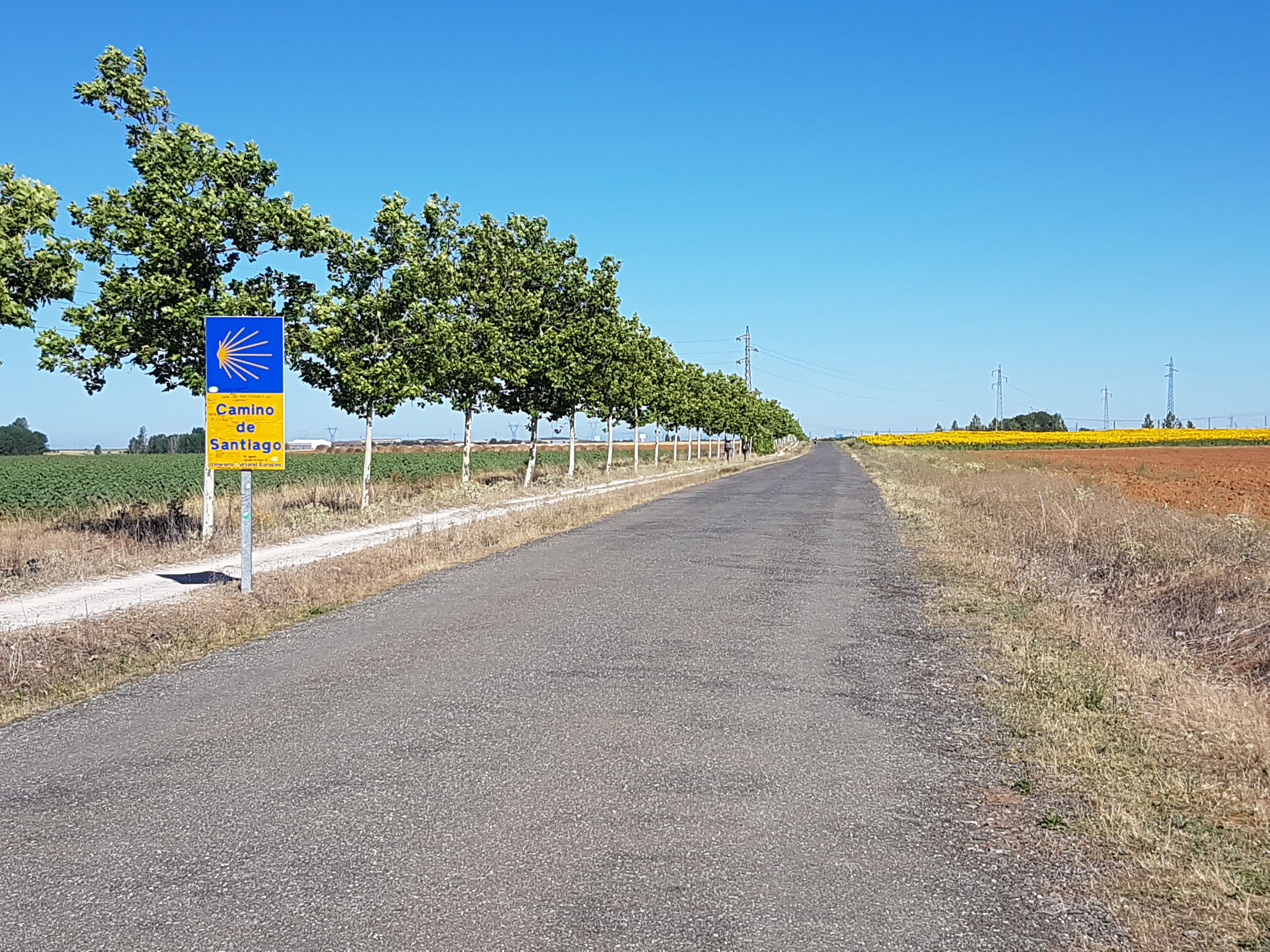
After a short drive back to Bercianos continue your journey through the farmlands of the Meseta.
The distances between towns are growing and distractions have disappeared. Only the strongest-willed pilgrims continue here, with an occasional car breaking the solitude. The Calzada Romana includes 17 km without a house or fountain. This is a moment for introspection: what makes you unhappy, and how can the Camino’s lessons improve your life?
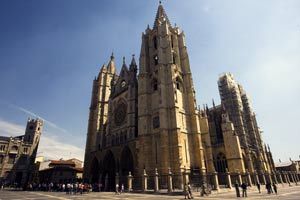
After crossing the Meseta, you will be rewarded with an evening in the beautiful city of León. Take time to discover its remarkable cathedral, the Romanesque treasures of San Isidoro and the lively tapas bars of the Barrio Húmedo. The historic Hostal de San Marcos, now home to the Parador de León, is also well worth visiting.
Leave León and return to the wide-open landscapes of the Páramo Leonés. As always, we favor the scenic route, which is longer but far more enjoyable than the main road.
In a few days, you will reach the Iron Cross, a strong symbol of the French Way. It is customary to leave a rock or a small token there. So we invite you to choose a small rock to carry until then and reflect on what is making you unhappy that you should abandon in the mountains of Foncebadón.
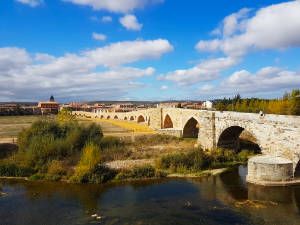
Continuing through the vast Páramo Leonés to Hospital de Órbigo, we are greeted by a 204 m long bridge with 20 arches. Today's walk is short and easy but very solitary.
The 13th century bridge that greets us in Hospital de Órbigo is commonly known as the Paso Honroso (Honourable Crossing). It witnessed in the 15th Century, one of the last medieval knight tournaments with a legend attached which inspired Cervantes' Don Quijote: a knight from Leon organized a great tournament where he confronted 100 of the best knights in the kingdom to prove his love to a beautiful Lady.
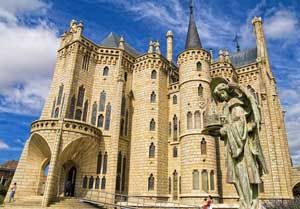
On your last day walking through the Meseta, the Camino has several surprises for you. Make sure you choose the scenic detour via Villares de Órbigo. This route will bring you by a very special and iconic Camino place, La Casa de los Dioses - the House of the Gods.
A bit further, you enter Astorga, the Roman city built over the wealth extracted from the Gold Mines of Las Medulas. It is here that the Via de la Plata (Camino starting in Sevilla) joins the French Way. Plan enough time to visit its beautiful Gothic Cathedral and the unusual Episcopal palace designed by Gaudí (architect of the Sagrada Familia Basilica in Barcelona).
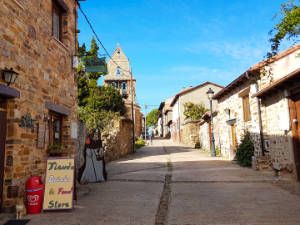
We're not in the Meseta anymore. Our great ascension through the Mountains of Leon begins slowly but after days of flatness the 300 m altitude gain feels difficult, take it slow as you reach Rabanal del Camino.
Tomorrow, you will reach the highest point of the Camino and the Iron Cross, a important Jacobean symbol. It is customary to leave a rock or a small token there. So make sure you found a rock by now and decided which burden has been making you unhappy you will be leaving behind.
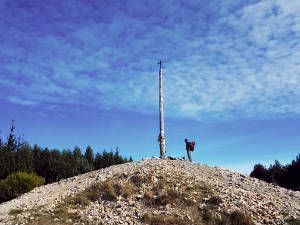
Get ready: today you will reach one of the highest points of the French Way and one of the pilgrimage’s most emblematic places, La Cruz de Hierro, the Iron Cross. You have been preparing for this challenge. As you walk through these dramatic landscapes, with the lush mountains below and the vast plains of the Meseta in the distance, notice the messages painted onto the rocks by pilgrims. Messages left by pilgrims often read: “You are beautiful. You are the gift.” Take a moment to leave behind whatever has weighed on you during your journey. For many pilgrims, this marks the symbolic end of the physical challenge and the beginning of a more reflective stage of the Camino.
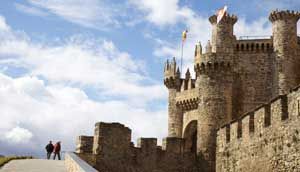
A final effort is required before reaching Ponferrada, as you need to descend another 650 m passing the charming mountain villages of Riego de Ambros and Molinaseca, with its memorable Romanesque bridge and baroque church Nuestra Señora de las Angustias attached to the mountain. The Camino will be much gentler after Molinaseca and until Valcarce. It brings us through one of the great cities of the French Way. Ponferrada was a Roman fort entrusted to the Templars in the 12th century who built the impressive fortress, where Paulo Coelho places one of the most memorable scenes of his novel “The Pilgrimage”.
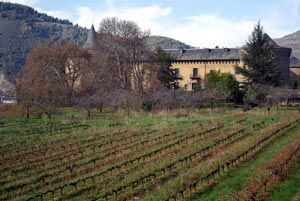
Pay attention as you leave the city, the original Camino although shorter crosses an ugly industrial area for almost 8 km. But there is a different path which follows the Rio Sil for 2 km and avoids most of the industrial area. Check our digital map to make sure you leave Ponferrada on the right path. If this is too much, we recommend skipping 11 km from Ponferrada to Camponaraya.
Once you reach Camponaraya, the landscape completely changes, giving way to the vineyards of the Bierzo Valley, famous in Spain for its excellent "Mencía" red wine.
Your final walking day in Castilla y León has a very different character. Following the Río Valcarce upstream, you pass through small villages that have welcomed pilgrims for centuries. Dense vegetation surrounds the valley, while the mountains you will cross tomorrow rise ahead.
Although the traditional route follows the road in places, the villages remain attractive and the walk brings you gently to the foot of the mountains. Your destination is Las Herrerías, whose name, “the ironworks”, recalls the area’s historic metalworking tradition.
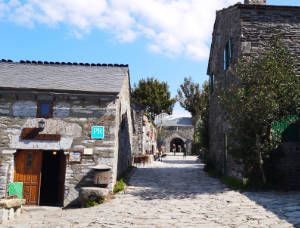
Prepare for a challenging but rewarding day, with an ascent of approximately 600 m during the first 8 km. The effort is repaid by beautiful mountain paths and the unforgettable arrival at O Cebreiro, one of the Camino’s most atmospheric villages.
At around 1,300 m, O Cebreiro offers sweeping views across the valleys below. Its pallozas are traditional round stone-and-thatch buildings with pre-Roman origins, while the 9th-century Church of Santa María la Real is one of the oldest surviving pre-Romanesque churches on the Camino and is associated with a 14th-century Eucharistic miracle.
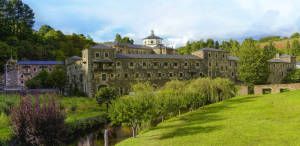
Continue your journey downhill to the valleys of Galicia. Enjoy the views, the villages you pass and the moments with the people you meet.
The Camino will bring you to two Jacobean towns, first Triacastela, one of the places with the most history and importance on the French Way according to the Codex Calixtinus, the 12th century guidebook of the Camino! Then Samos, where you will be greeted by one of the wealthiest and most powerful Benedictine monasteries of the peninsula in medieval times.
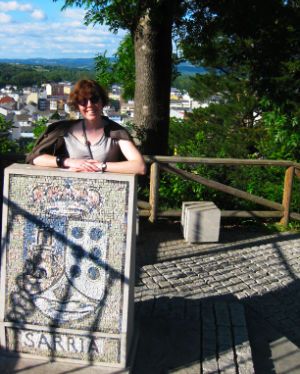
The River Sarria leads us to Aguiada, where we join the San Xil alternative we separated from in Triacastela, before bringing us to the town of Sarria.
Sarria is one of the most famous towns of all the Caminos. At 115 km from Santiago de Compostela, it is the closest point where you can spend the first night of your Camino to start walking the next day and claim your Compostela, the Certificate of Achievement of the Camino, on arrival in Santiago. As a result, almost 30% of all pilgrims who obtain their Compostela start in Sarria!
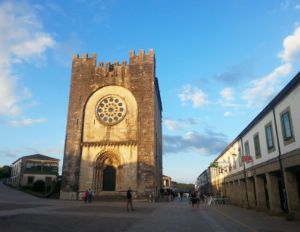
Today you begin the final 100 km of the French Way, the minimum distance required to receive the Compostela. The route passes through peaceful hamlets, oak woods and rolling Galician countryside, with cafés and resting places appearing regularly along the way.
Your destination is Portomarín, overlooking the Belesar Reservoir. The original riverside town was flooded in the 1960s following the construction of the dam. Before the waters rose, several of its most important historic buildings, including the fortress-like Church of San Nicolás, were carefully dismantled stone by stone and reconstructed on higher ground.
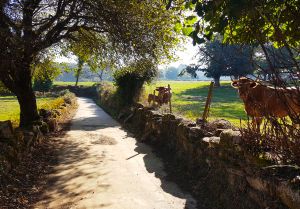
Leave Portomarín and climb gradually through woodland and rural villages before continuing across the rolling landscapes of inland Galicia. Along the way, you will pass Castromaior, one of the best-preserved Iron Age hillforts on the Camino.
Shortly before reaching Palas de Rei, a detour leads to the Romanesque Church of Vilar de Donas, once closely associated with the Knights of Santiago. The church lies several kilometers from the main Camino route, so visiting it requires additional time or transport. Continue to Palas de Rei, a historic Camino town where you will spend the night.
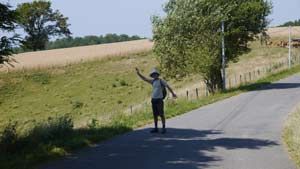
Leave Palas de Rei and continue through a succession of small villages, woodland paths and gentle valleys as the Camino crosses into the province of A Coruña. Medieval bridges and Romanesque churches reveal the long history of this section, while the landscape becomes increasingly green and pastoral. In Melide, you can try pulpo á feira, Galicia’s traditional octopus dish, in one of the town’s renowned pulperías. Near the Chapel of San Roque stands a 14th-century stone cross considered one of the oldest cruceiros in Galicia. From Melide, continue through forests and rural hamlets to Ribadiso, a peaceful riverside village with a beautiful medieval bridge.
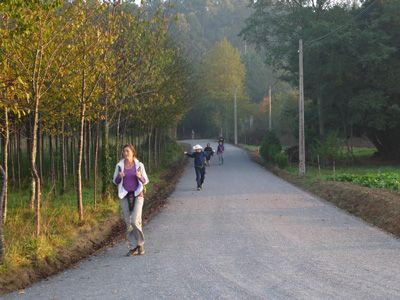
With just over 40 km left to reach Santiago de Compostela, you notice the atmosphere along the Way is changing. Pilgrims are celebrating their arrival and starting to realize it will soon be time to part with the friends they have been walking with for over a month. The countryside itself is changing, as you enter forests with perfectly symmetrical rows of eucalyptus, that produce curious visual effects. The small villages along the route sometimes seem frozen in time.
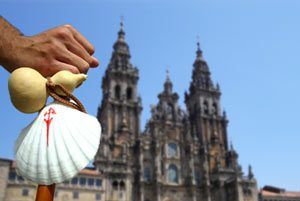
Today you reach Santiago de Compostela. Only 22 km separate you from the resting place of the Apostle Saint James in the Cathedral of Santiago de Compostela. Cross the River Lavacolla before climbing Monte do Gozo for your first view of the city.
Soon enough, you will reach Plaza del Obradoiro, where the Cathedral will present itself to you, majestic and beautiful. Take a moment to enjoy your arrival before checking in to your hotel, collecting your Compostela and, if you wish, attending the Pilgrim Mass.
Every Camino eventually comes to an end, but for many pilgrims the journey continues long after returning home. We hope this experience has given you everything you were looking for and that one day the Camino will welcome you back again.
Reviews
Feedback from travelers whose journey is identified beneath their words.
“We completed a superb 15-day walk on the French Way. Nellie understood our needs and expectations very well and met them completely.”
“You understood our needs very well and met all our expectations: documentation, practical advice, itinerary, accommodation, luggage transfers and taxis. Everything was perfect and tailor-made.”
“My luggage arrived every single day… I could really enjoy my days and take in the entire experience without worrying about accommodations.”
Frequently asked questions
Most accommodation costs are charged per room rather than per guest. When one traveler occupies a room alone, there is no second guest with whom to share that cost. The supplement covers the difference across the journey and reflects the limited availability of single rooms along the Camino.
No technical hiking experience is required for our walking tours. Regular preparation is important; review the daily distances in the itinerary and build gradually toward consecutive walking days.
One piece of luggage weighing up to 20 kg per person is transferred between accommodations each day, allowing you to travel with only what you need during the day.
Yes. We can add extra nights or arrange selected visits, transfers and Experiences according to availability. Tell us what you have in mind when you start planning.
This is a 40-day journey with 38 walking days. Review the day-by-day distances carefully and prepare for repeated walking across the varied terrain and weather of northern Spain.
How to book
We are here to take care of every detail.
Tell us your preferred travel dates, the number of people and any special requests.
We'll confirm availability and send you a personalized proposal.
To confirm your booking, a 50% non-refundable deposit is required.
We'll take care of the details. You just prepare for the journey!
Book
Tell us your preferred dates, who is traveling and anything that would make this journey feel right for you. Camino journeys require at least 30 days’ notice, and availability is confirmed only after we have reviewed your dates and arrangements.
A Camino specialist will review your plans personally.
Continue exploring
Compare another classic route, a gentler pace or a journey that continues beyond Santiago.