The Camino Francés, or French Way, crosses the Pyrenees and northern Spain to Santiago. Its name refers to the pilgrims arriving from beyond the mountains, not to a route contained in France.
Roman roads before the pilgrimage
The Camino was not laid over one continuous Roman highway. It uses a corridor already shaped by Roman roads, bridges and cities, especially around Pamplona, the Rioja country, Burgos, León and Astorga. Astorga was Asturica Augusta, a major road junction connected with the gold-mining territory of the northwest. In Galicia, the route passes close to alignments inherited from the Roman road network, although the medieval path changed with bridges, monasteries and safer settlements.
When the French Way took shape
The pilgrimage followed the reported discovery of Saint James’s tomb in the ninth century. The route recognizable today consolidated later. The Consejo Jacobeo places its definitive formation in the eleventh century under Sancho III of Navarre. Kings supported roads and bridges; monasteries and hospitals received travelers; new towns grew around the traffic.
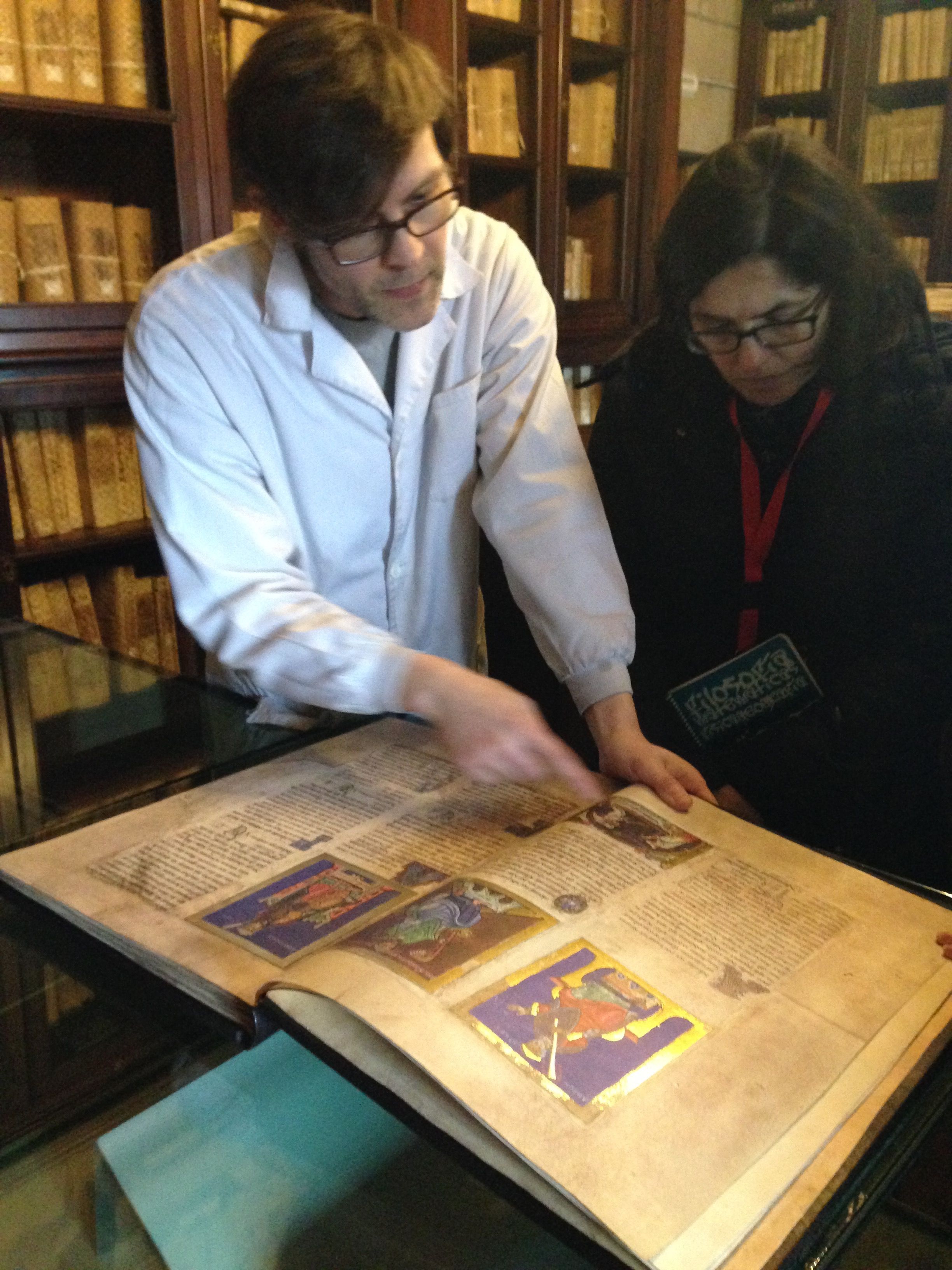
Book V of the twelfth-century Codex Calixtinus describes routes through France and the Spanish road to Compostela. It names stages, rivers, shrines and local customs. That makes the French Way the medieval Camino with the clearest early itinerary.
Towns that explain the route
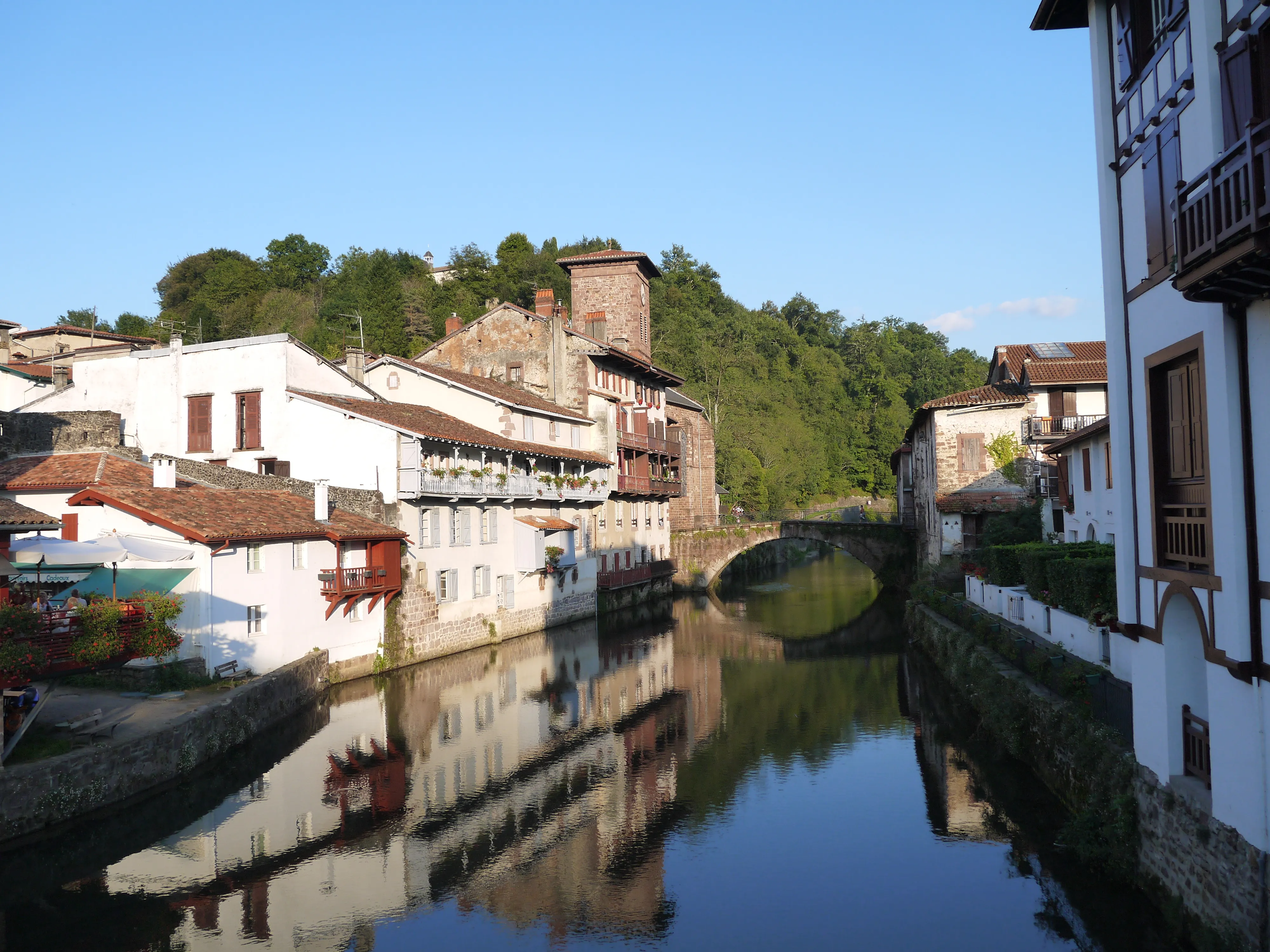
Saint-Jean-Pied-de-Port gathers the French approaches beneath its citadel before the climb over the Pyrenees. Across the mountains, Roncesvalles combines a medieval pilgrim hospital and Gothic collegiate church with the legends of Charlemagne, Roland and the fatal ambush remembered in the Song of Roland.
Pamplona layers Roman Pompaelo, the Kingdom of Navarre and the streets of the San Fermín bull run. Beyond it, the route climbs Alto del Perdón and crosses the elegant Romanesque bridge at Puente la Reina, where several pilgrim roads become one. Estella grew through royal encouragement and Camino trade; nearby Irache offers a monastery, Romanesque church and the famous wine fountain.
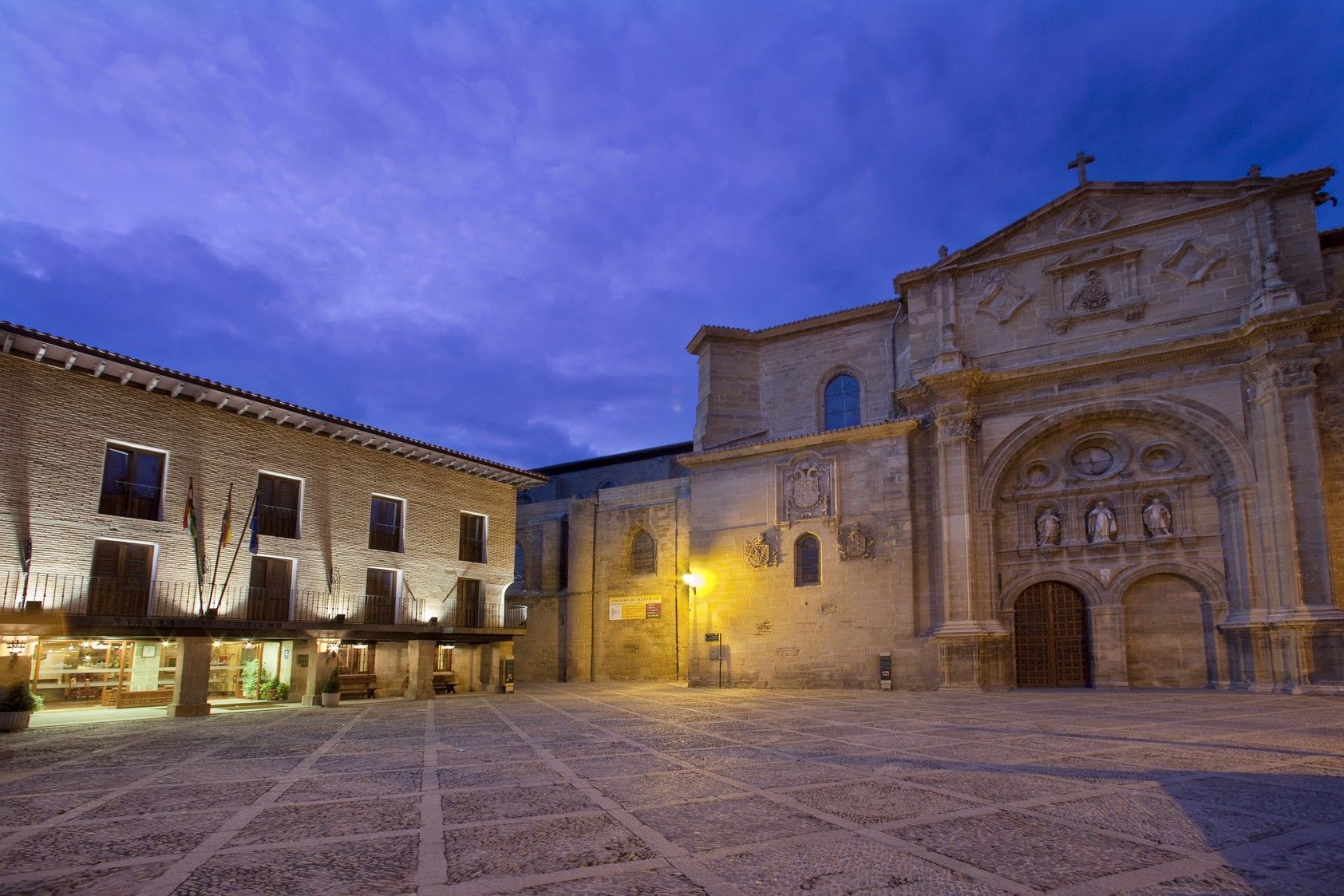
In Rioja, Logroño controls the Ebro crossing while Navarrete, Nájera and Santo Domingo de la Calzada tell stories of potters, kings and bridge builders. Santo Domingo’s live rooster and hen recall the miracle of the hanged pilgrim. The vineyards make this one of the best sections for adding a bodega visit and understanding how landscape becomes wine.
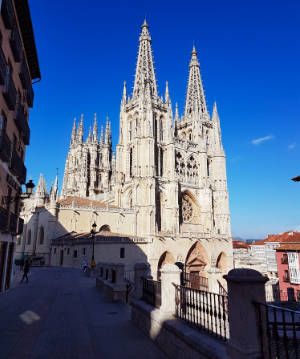
Burgos is a royal city dominated by its Gothic cathedral and the memory of El Cid. The Meseta then opens into long horizons, villages clustered around church towers and the extraordinary canal-side approach to Frómista. Its church of San Martín is among the purest Romanesque buildings on the route.
León combines Roman walls, a medieval kingdom, luminous cathedral glass and the former pilgrim hospital of San Marcos. Astorga was Roman Asturica Augusta and later gained Gaudí’s fantastical Episcopal Palace. From there the Camino climbs to the iron cross at Cruz de Ferro, descends into the vineyards of El Bierzo and passes the Templar castle of Ponferrada.
The entrance to Galicia is one of the route’s great scenes: a steep ascent reaches the stone village of O Cebreiro, often surrounded by cloud. Samos offers a beautiful monastery alternative before Sarria. Portomarín was rebuilt above a reservoir; Palas de Rei and Melide lead through dairy country, oak woods and villages toward the first view of Santiago from Monte do Gozo.
Pilgrims remembered by name
Medieval stories connect the route with Charlemagne, although the emperor’s Spanish campaign and the legends attached to it must be separated. Saint Francis of Assisi is traditionally said to have travelled to Santiago in 1214, but the documentary basis is debated. Better documented travel accounts include clerics, nobles and foreign visitors whose descriptions record roads, hospitals and towns.
The modern revival produced another kind of famous pilgrim. Paulo Coelho’s novel The Pilgrimage turned the route into a spiritual quest for an international readership. Shirley MacLaine described her 1994 walk in The Camino: A Journey of the Spirit, while German entertainer Hape Kerkeling’s candid and funny I’m Off Then encouraged a new generation of German pilgrims.
Cinema made the landscape visible to millions. Emilio Estevez’s The Way follows a father, played by Martin Sheen, carrying his son’s ashes from Saint-Jean-Pied-de-Port to Santiago. It captures the communal rhythm of the route and the way strangers repeatedly meet, separate and find one another again. Luis Buñuel’s The Milky Way takes a stranger, more surreal pilgrimage through Christian history and heresy. Neither film is a practical route guide, but both show why the French Way continues to attract storytellers.
Earlier travel writing gives a different texture. Edith Wharton’s Back to Compostela records a 1925 motor journey through northern Spain, while Walter Starkie’s The Road to Santiago helped introduce English-language readers to the route before the modern revival. Reading one of these accounts during the journey reveals how much the infrastructure has changed while bridges, cathedrals and the westward pull remain recognizable.
How the French Way compares
No other Camino offers the same density of pilgrim infrastructure, monumental cities and recognizable medieval references. It is also the most social route: people who begin alone repeatedly encounter familiar faces at cafés, village fountains and evening tables. After Sarria it becomes much busier as shorter journeys join for the final qualifying distance. The Portuguese Ways feel more Atlantic and intimate; the Sanabrés and Winter Ways are quieter and demand more careful logistics.
The Xunta’s stage maps and elevation profiles are collected in our official French Way guide and PDF resource.
Ultreya Tours offers the full French Way from Saint-Jean-Pied-de-Port, individual historical sections and the final French Way from Sarria.