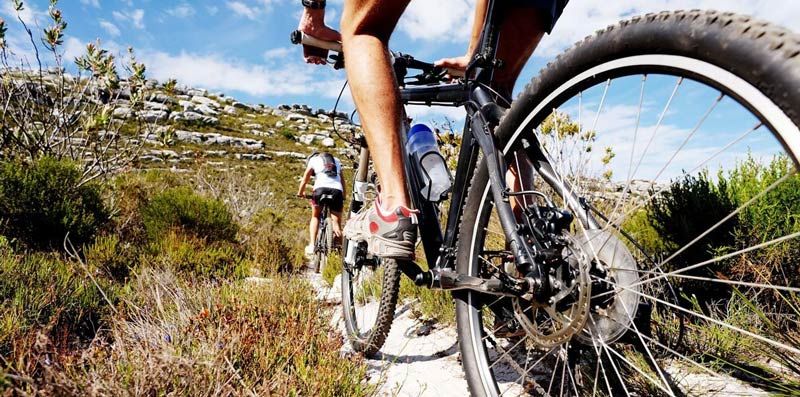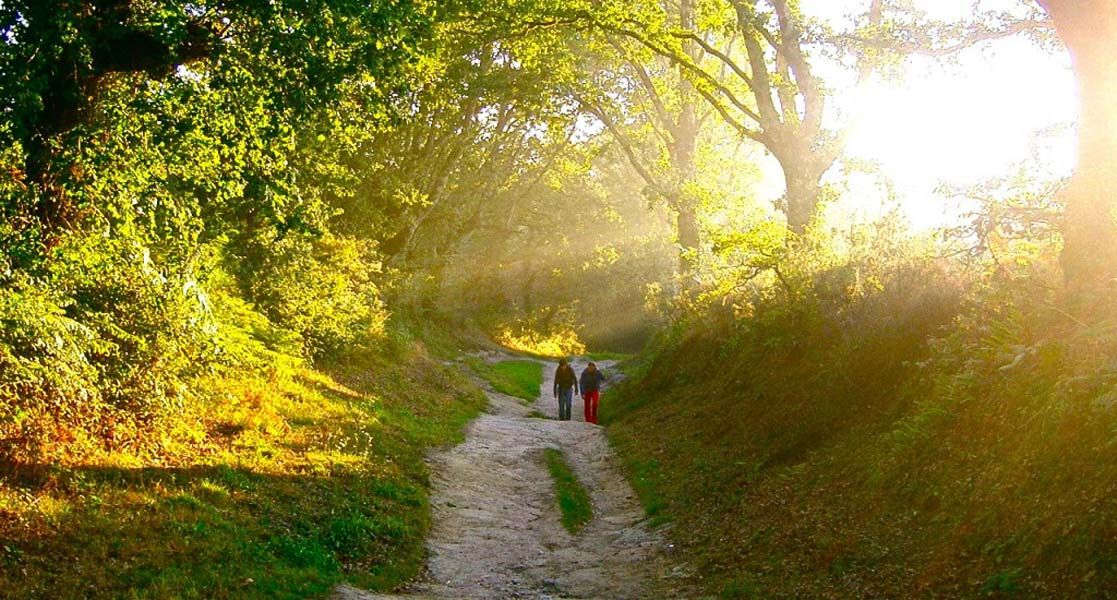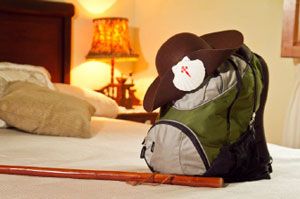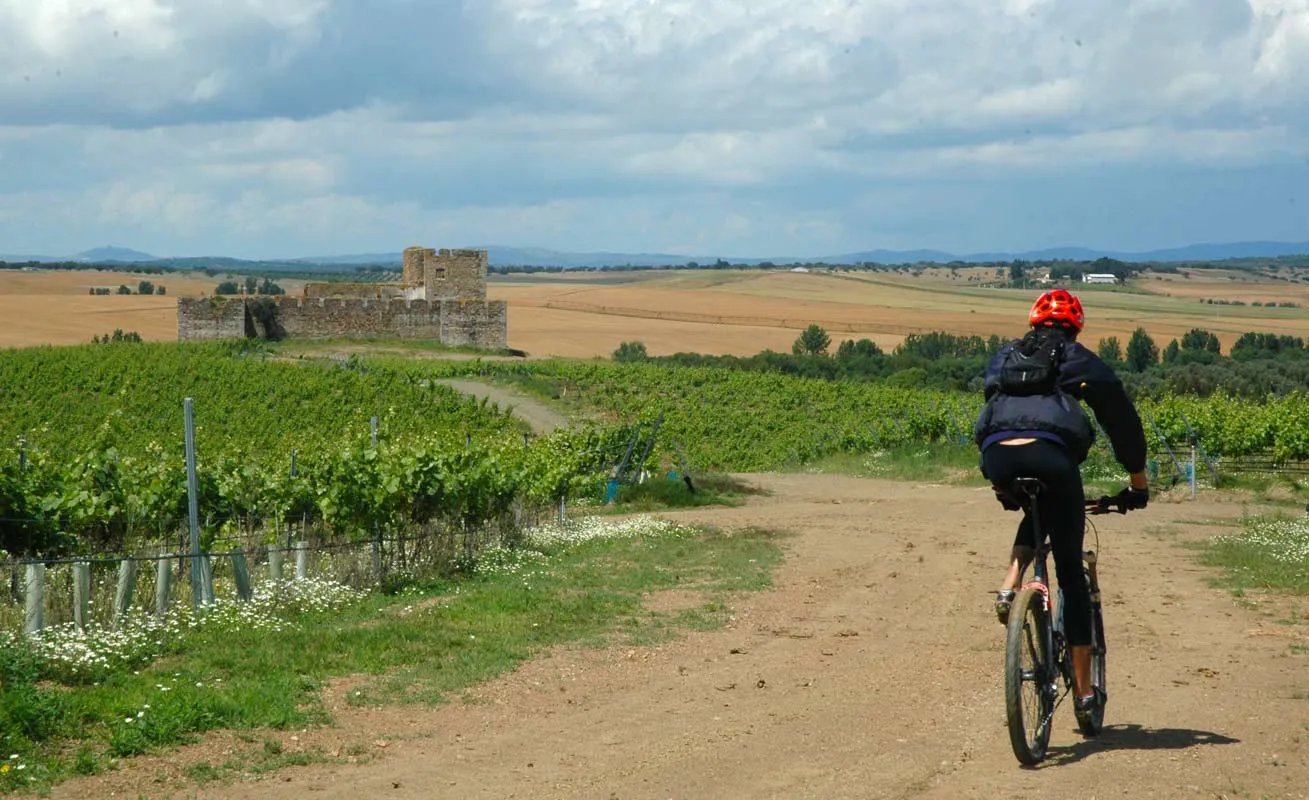
Cycling changes your perspective on the Camino landscape. A loose stone or narrow turn demands your immediate attention, while a long climb can reveal an entire valley ahead. That combination can be exhilarating, but it depends on realistic preparation and an itinerary designed for cycling rather than borrowed from a walking route.
The Camino is mixed terrain
The yellow arrows do not guarantee a uniform riding surface. A day may include quiet asphalt, compacted earth, farm tracks, cobbles, and woodland paths, as well as urban approaches and short sections where getting off the bike is the sensible choice. Rain can change the character of an otherwise straightforward trail. Steep descents demand control; narrow paths require courtesy around walkers.
Not every historic footpath is the best line for every cyclist. Depending on conditions, ability, and bicycle type, a rider may use a nearby road or an established cycling alternative before rejoining the Way. That is not a lesser Camino. Good judgment protects the cyclist, other pilgrims, and the route itself.
This is why experience matters more than enthusiasm alone. A traveler who rides regularly on roads may still need practice on gravel or uneven surfaces. Someone comfortable on trails may need to build endurance for consecutive days. An e-bike reduces some pedaling load but remains a substantial machine to balance, brake, maneuver, and manage. Its usable battery range also changes with gradients, assistance level, surface, wind, temperature, rider weight and luggage, so the day cannot be planned from one advertised range figure alone.
A cycling day has its own rhythm
Morning begins with the same practical habits as a walking Camino: check the weather, prepare water and layers, confirm the day’s route, and leave transferred luggage according to the instructions provided. The difference is that bicycle checks join the routine. Tires, brakes, controls, battery level where applicable, and anything attached to the bike deserve attention before departure.
The first hour should not become a race to gain distance. A steady start gives the body time to warm and leaves room to respond to the terrain. Breaks are part of the journey rather than evidence of weakness. Towns, viewpoints, churches, bridges, and local cafés are what turn a line on a map into a Camino.
Cyclists often reach their accommodation earlier than walkers covering an equivalent stage, but this should not be assumed. A mechanical issue, strong wind, a demanding climb, or time spent exploring can reshape the day. Arrival also includes securing the bicycle as instructed, charging an e-bike when relevant and permitted, and preparing equipment for the next stage.
Cycling can feel more solitary than walking
The Camino is famous for its social life, but cycling changes how that social rhythm forms. Walkers on a popular route often cover similar distances and stop in the same stage towns. They may pass one another during the day and meet again over several evenings. A cyclist travels farther, overtakes many walking pilgrims, and may use different overnight stops from other cyclists. The people beside you at a morning café may therefore be far behind by the afternoon, while the cyclists you meet may be following longer or shorter stages than your own.
Firsthand rider accounts describe both warm encounters and a reduced sense of repeatedly meeting the same Camino companions. On a quieter route, a cyclist may see very few other riders at all. This can make the journey feel independent and spacious, but it may also feel lonelier than a walking Camino, especially for someone expecting an immediate, recurring “Camino family.”
That does not mean cycling is antisocial. Conversations still begin at viewpoints, cafés, monuments, bike-storage areas, and the end of the day. Slowing down for stops rather than treating every pause as lost riding time creates more opportunities to connect. Traveling with a partner or private group gives the day its own companionship, while a solo cyclist should be comfortable with stretches in which the principal company is the landscape.
Preparation before the journey
Training should resemble the experience ahead. Build time in the saddle gradually and include consecutive riding days. Practice climbs and controlled descents. Ride on varied surfaces appropriate to your planned route. Learn how the bicycle feels when carrying your actual day equipment, not just on a short unloaded ride.
Basic competence matters even when bicycle arrangements are made for you. Riders should know how to adjust their position within safe limits, use gears before a slope becomes overwhelming, brake progressively, and identify an issue that makes continuing unsafe. Ultreya Tours does not describe every cycling journey as including roadside rescue or continuous mechanical support; only services confirmed in a proposal and booking confirmation should be expected.
Comfort is also cumulative. Padded shorts, gloves, suitable footwear, sun protection, and layers chosen for the season can make repeated days more manageable. Test everything before traveling. The Camino is a poor place to discover that a seam, saddle position, or unfamiliar shoe becomes painful after several hours.
Luggage and accommodations
Main luggage transfer is included on the cycling days identified in Ultreya Tours Camino itineraries. Travelers carry their immediate needs with them: water, identification, a phone, personal medication, rain protection, sun protection, and any route-specific essentials. The luggage allowance and daily procedure are confirmed for the particular journey.
Cycling logistics extend beyond moving bags. A coherent itinerary considers where the bicycle can be kept, how it connects with arrival and departure arrangements, and whether the accommodation sits directly on the practical cycling line. These details should be confirmed rather than assumed. Bicycle availability, model, accessories, and support arrangements depend on the selected journey and dates.
Distance without losing place
The bicycle makes it possible to cover a substantial Camino section in less time. That is one of its great gifts, but it can also tempt riders to turn the day into a number. The experience becomes richer when distance leaves space for place: a market square, a conversation, a regional meal, or the silence after a climb. Those unhurried stops also help replace some of the repeated social encounters that arise more naturally at a walker’s pace.
The walking-or-cycling comparison can help if you are still deciding between modes. If cycling is clearly your choice, explore the cycling journeys in the Camino collection and describe your experience accurately in the Start Planning Questionnaire. The most rewarding cycling Camino balances skill, effort, landscape and curiosity at a distance that feels right for you.