Walking and cycling both have a recognized place in the pilgrimage to Santiago. Each asks travelers to engage physically with distance, terrain, weather and the repeated rhythm of moving west, while changing the scale of the day.
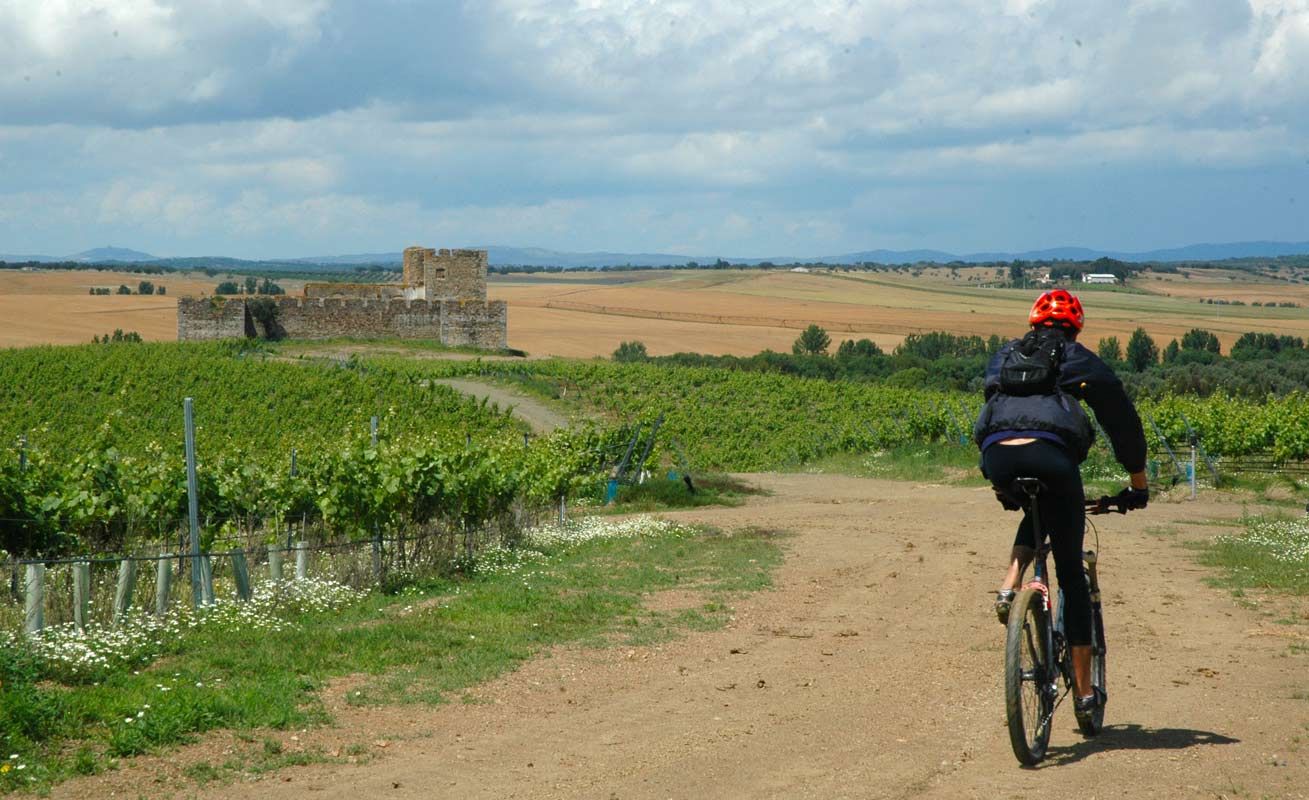
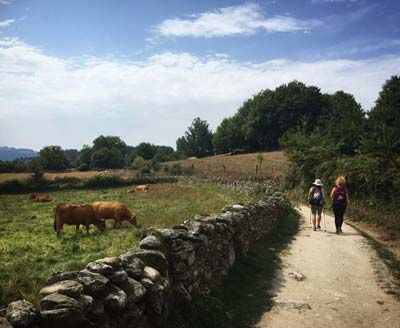
On foot, the world narrows. A hill, café, village fountain, or shaded bench can become the main event of an hour. By bicycle, the landscape opens. You can pass through several distinct areas in one day, gain and lose elevation quickly, and connect places that would take walkers several stages to reach.
Pace and distance
Walking itineraries commonly organize the day around the distance a traveler can repeat on consecutive days. A pace that feels comfortable on one weekend walk may feel very different after several stages. Shorter itineraries can use selected final sections; longer ones allow a route to unfold across regions.
Cycling covers more distance, but those kilometers are not interchangeable with walking kilometers. Surface, gradient, traffic, technical handling, and weather matter. A long smooth descent can pass quickly; a rough climb may demand concentrated effort and careful bike handling. The number printed on an itinerary never tells the whole story.
Time available often influences the choice. Cycling can reveal a longer section of a Camino within a limited vacation, while walking gives more time to notice a smaller area. Neither is inherently rushed or slow. The quality of the itinerary depends on matching distance to ability and to the experience you want.
| Consideration | Walking | Cycling |
|---|---|---|
| Sensory pace | Close attention to a smaller area | Faster transitions across a wider landscape |
| Social contact | More repeated encounters at similar speeds | More passing encounters and fewer shared stages |
| Terrain | Foot comfort, balance, climbs, and descents | Handling, braking, mixed traffic, and technical surfaces |
| Preparation | Consecutive days in tested footwear | Consecutive rides on a similar bicycle and terrain |
| Time available | Fewer kilometers experienced slowly | A longer geographical section in the same vacation |
| Frequent stops | Simple whenever there is a safe place | Requires safe parking and a willingness to break riding rhythm |
| Compostela distance | At least the final 100 continuous kilometers | At least 200 kilometers by bicycle |
Terrain and physical demands
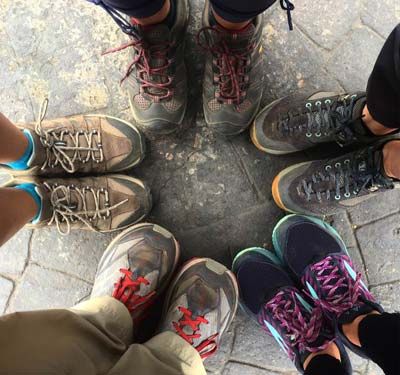
Walking requires endurance, foot care, balance on uneven surfaces, and comfort with repeated days. Descents can be as demanding as climbs. The load in your daypack and the suitability of your footwear affect every step.
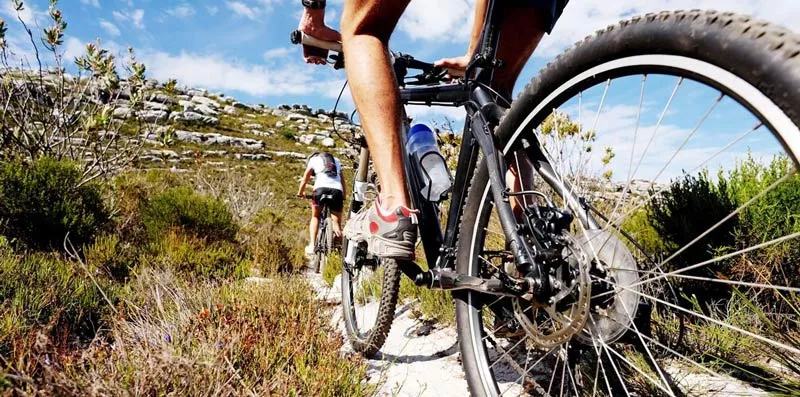
Cycling adds sustained pedaling, steering and braking control, confidence around other route users, and the ability to manage a bicycle on mixed surfaces. Some Camino paths are rocky, narrow, steep, muddy, or crowded. Cyclists may appropriately use a nearby road or recognized cycling alternative rather than force a bicycle onto a section unsuited to their skill or considerate shared use.
An e-bike can assist with pedaling, but it does not remove the need for balance, handling, judgment, or preparation. The bicycle is heavier, and battery management becomes part of the day. Travelers should be comfortable riding the kind of bike arranged for their journey before committing to consecutive stages.
Encounters along the Way
Walkers moving at a similar pace often see one another repeatedly. A familiar face at breakfast may reappear at a café, a crossroads, or the next town. This gentle repetition helps create the Camino’s social character.
Cyclists encounter more people and places but may spend less time alongside any one group. That can be freeing: the day contains wider changes of landscape and more choice about where to pause. It also asks cyclists to pass walkers with patience, warning, and enough space. The Camino is a shared route, not a racecourse.
Luggage and daily logistics
With Ultreya Tours, luggage transfer is included on walking and cycling days. The main bag travels to the next confirmed accommodation while the traveler carries what is needed during the day. Your journey documents explain the luggage allowance and collection instructions.
Walkers typically carry water, rain and sun protection, identification, a phone, personal medication, and a few immediate essentials in a daypack. Cyclists need those basics plus suitable riding equipment and a secure way to carry them. Bicycle storage, collection, delivery, and the relationship between the route and each accommodation require additional coordination.
The Compostela distinction
The Cathedral’s current rules require at least the final 100 continuous kilometers on foot or horseback, or at least 200 kilometers by bicycle, along a recognized route to Santiago. A duly stamped credential demonstrates the journey, and the Compostela is intended for those traveling with religious or spiritual motivation as defined by the Pilgrim’s Reception Office. When completing only the minimum distance, the official instructions require stamps at the start and end of each stage, with dates.
Rules can change, so travelers should check the Pilgrim’s Reception Office before departure. Not every journey in the Ultreya Tours catalog is marked Compostela-eligible, and receiving the document need not determine the personal value of a Camino.
How to decide
Choose walking if you are drawn to an intimate pace, repeated encounters, and the experience of measuring a route step by step. Choose cycling if you are a capable rider who wants to experience longer geographical transitions and enjoys the concentration and freedom of a bicycle.
If both appeal, be honest about experience rather than aspiration. Consider the terrain, how your body responds on consecutive days, and whether the itinerary leaves time to stop rather than simply cover distance. Review the current walking and cycling journeys, then use the Start Planning Questionnaire to share your preferred mode and pace. A personal review can determine whether the practical journey supports the Camino you are imagining.