A mountain bike and an e-bike can follow the same broad Camino direction while creating different practical days. The right choice begins with riding experience, terrain and confidence, not with the assumption that electric assistance makes a cycling Camino effortless.
A conventional mountain bike
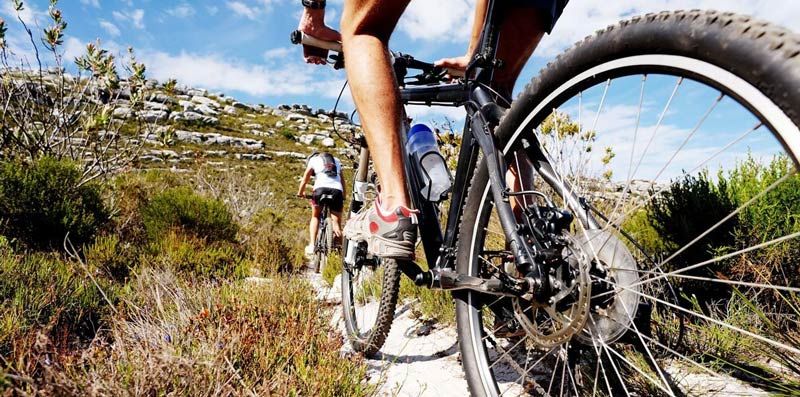
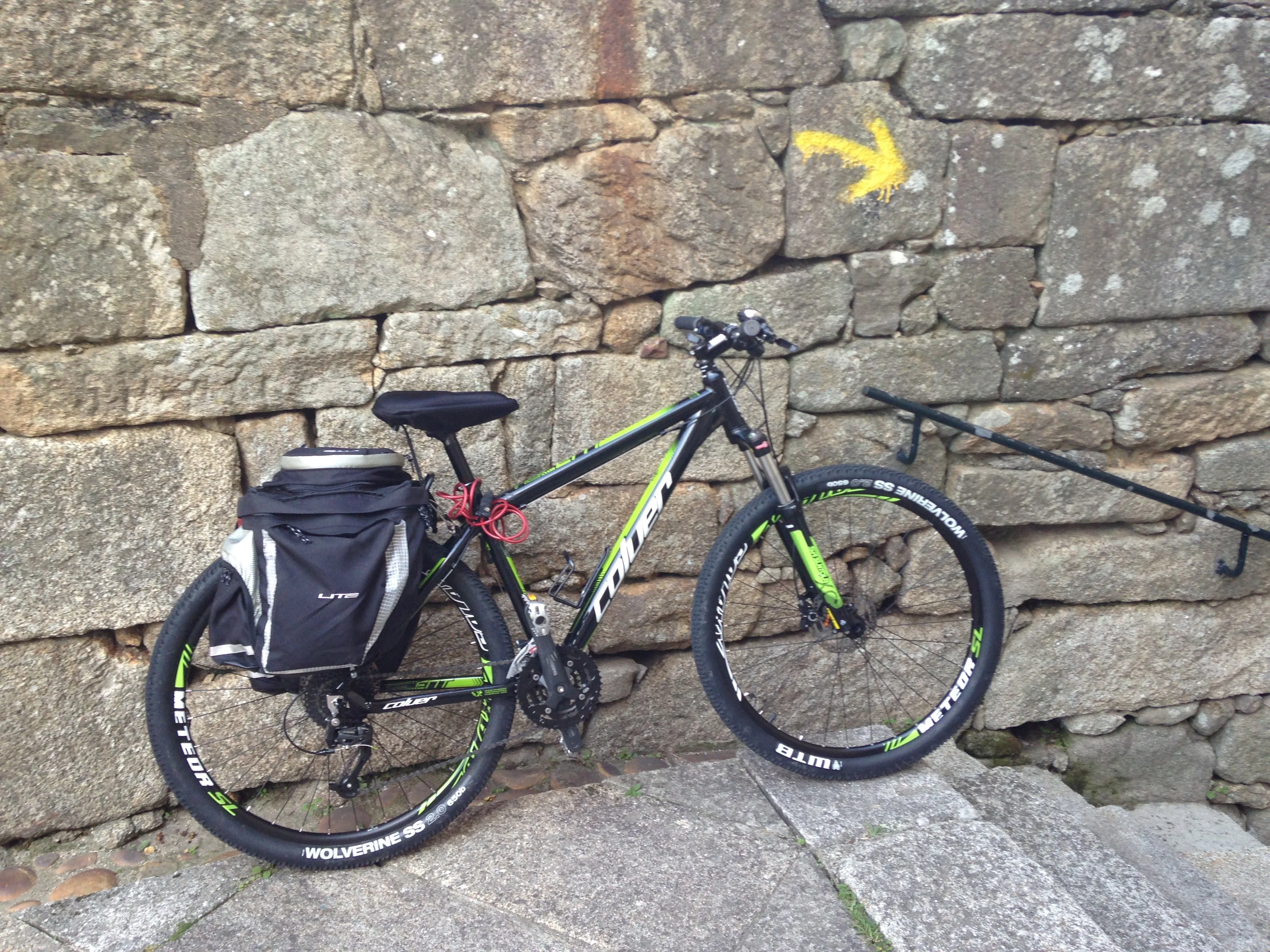
A mountain bike is lighter and simpler to lift, maneuver and transport. It rewards riders who already have the fitness for consecutive stages and the technique to manage loose surfaces, descents and changing gradients. Long climbs remain entirely physical, so realistic pacing matters.
A typical cross-country mountain bike may weigh roughly 12 to 15 kg. Exact weights vary considerably with frame size, suspension, tyres, rack and luggage. That lower weight helps on tight turns, when lifting the bicycle up steps and on stretches where pushing is safer than riding.
An e-bike
An e-bike assists pedaling; it does not steer, brake or balance itself. A suitable Camino e-bike normally has a 250 W mid-drive motor, a battery large enough for the planned stage, hydraulic disc brakes, low climbing gears and wide, puncture-resistant tyres. A removable battery is useful when the bicycle store and the charging socket are in different places. Correct frame size and saddle adjustment are just as important as the motor.
Many full-power electric mountain bikes weigh around 20 to 25 kg, often 7 to 12 kg more than an equivalent conventional bike. Riders feel that difference when starting, braking, turning slowly, pushing uphill or lifting the bike. Anyone hiring one should practise mounting, stopping and changing assistance modes before the first stage.
Under the standard European definition, assistance from a pedal cycle motor is progressively cut before the bicycle reaches 25 km/h and stops when the rider stops pedaling. The bicycle can travel faster through the rider’s effort or on a descent, but the motor no longer supplies assistance. Downhill speed still has to be controlled with the brakes.
One bicycle type for the whole group
Everyone travelling together should choose the same type: either conventional mountain bikes or e-bikes. Electric assistance produces a large difference on long climbs and when accelerating after a stop. A mixed group can become stretched out repeatedly, with conventional riders working hard to catch up while e-bike riders wait at junctions.
Riders on matching bicycle types may still have very different fitness. Agree a sensible group pace and regroup before turns to give everyone a better chance of staying together throughout the stage.
Battery range and charging
Battery range is affected by assistance mode, gradient, surface, headwind, temperature, tyre pressure, rider weight and luggage. A display prediction is an estimate, so begin a long climb with a useful reserve rather than spending the morning in the highest mode. Use lower assistance on flat ground and change gear before the gradient becomes severe.
At the accommodation, use the secure bicycle area and the original charger supplied with the bike. Remove the battery only if the rental provider permits it and the mechanism has been demonstrated. Charge it in the designated dry, ventilated place at normal room temperature, away from heaters and direct sun. Do not cover the charger. Unplug it when charging is complete and refit the weather cap over the bike’s charging port.
Never use a borrowed or incompatible charger. A damaged, unusually hot, swollen or dropped battery should be left alone and reported immediately to the bicycle provider.
The end-of-day bicycle check
Allow ten minutes before going to your room:
- remove loose dirt with a soft brush or damp cloth; never direct a pressure washer at bearings, electrical parts or the battery contacts
- dry the bike and check that the charging port and contacts are clean
- inspect both tyres for cuts, embedded thorns and loss of pressure
- check the brakes, wheels and chain, and report rubbing, loose parts or unusual noises
- recharge lights and the bicycle battery in the confirmed location
- lock the bicycle in the accommodation’s secure storage and take removable accessories with you
Do not apply oil to brake discs. If the chain needs lubricant or the bike needs adjustment, follow the rental company’s instructions or ask its assistance service.
Bike model, battery and accessories are detailed in the confirmed itinerary.
Experience remains essential
Whichever bicycle is chosen, train on comparable surfaces and on consecutive days. Practice braking on descents, looking behind before changing line, passing walkers courteously and getting on and off without losing control. An e-bike can make a cycling Camino accessible to a broader range of experienced riders, but it is not a substitute for cycling competence.
Ultreya Tours can arrange fitted bicycles, luggage transfers and suitable overnight storage on a cycling Camino. Start planning and tell us about every rider’s recent experience, preferred bicycle and any concerns about hills or daily distance.