Walking poles are particularly useful on long descents, loose tracks and days when tired legs make balance less certain. They can also establish a steady rhythm on a climb. Their value depends on adjustment and technique: poles carried in one hand or planted far ahead of the body do very little.
Set the length before walking
On level ground, stand upright with relaxed shoulders and the pole tip beside your foot. Adjust the pole so that the elbow forms roughly a right angle when the hand holds the grip. Another useful check is that the top of the handle reaches about the wrist crease when the arm hangs by your side.
The printed centimetre setting is only a starting point. Shorten adjustable poles slightly for a sustained climb and lengthen them slightly for a long descent, always remaining within the manufacturer’s safe adjustment marks. Return them to the level-ground setting afterwards. If raising the poles makes the shoulders lift, they are too long.
Lock each section firmly and test it with body weight before setting off. Check the locks again during the day, particularly after collapsing the poles for a town or transfer.
Put your hand through the strap correctly
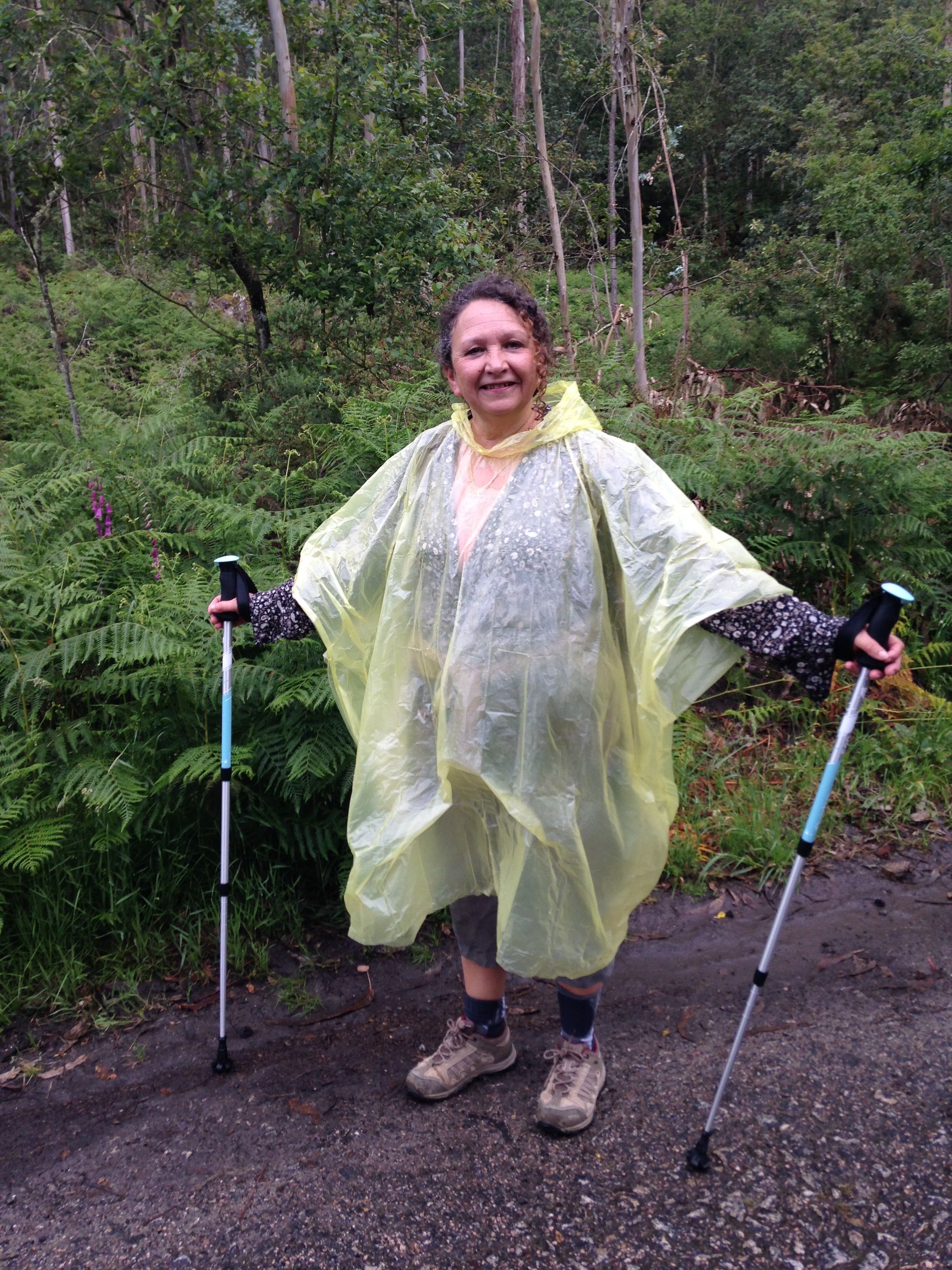
Pass the hand up through the loop from below, then lower it onto the grip so the strap runs under the heel of the hand. Adjust the loop until it supports the wrist without cutting into it. This position allows pressure to pass through the strap, so the fingers can hold the handle lightly instead of squeezing it all day.
Pole straps and quick-release systems vary. Follow the manufacturer’s instructions for the model you own. Release the straps before crossing a road, negotiating a stile or entering terrain where a trapped pole could pull the arm during a fall.
Use an alternating rhythm on ordinary paths
Plant the left pole as the right foot advances, then the right pole with the left foot. The tip lands close to the body, around the level of the opposite foot, and the arm follows through naturally behind. Avoid reaching far forward or stabbing at the ground; both interrupt the stride and place unnecessary load on the shoulders.
On a climb, shorten the poles and plant them close to or slightly behind the feet to help drive forward. On a descent, lengthen them a little and place the tip ahead before committing weight to the next step. Keep the pole angled rather than vertical and take shorter steps. For a high step down, both poles can be placed securely on the lower level before descending, provided the surface is firm.
Do not assume a pole tip will grip wet stone, metal drainage covers or smooth pavement. Test the contact before loading it.
Protect your hands as well as your knees
Practise on consecutive training walks with the same grips and straps. Adjust at the first sign of rubbing. Thin walking or cycling gloves can protect sensitive hands, and clean grips prevent grit from working against the skin.
Some travelers use Akileïne NOK anti-friction cream on areas prone to rubbing. Begin the routine at least two weeks before departure so you know how your skin reacts; the product’s competition routine starts 20 days beforehand. Massage it into the likely friction points before activity, following the product instructions. Cream cannot compensate for an abrasive strap or a grip held too tightly, and it should not be applied to broken skin.
Hard surfaces, towns and other walkers
Rubber tips reduce noise on streets and protect polished stone, although they may offer less purchase on mud. Metal tips are for earth and rough trail surfaces. Never swing poles horizontally in a crowd. Leave enough space behind you, and collapse or hold them vertically in cafés, hotels and churches.
Airline cabin rules often restrict trekking poles. Check the carrier and departure airport before travel; collapsible poles commonly need to go in checked luggage.
Train with the exact poles and daypack intended for the Camino. By departure, changing the length, fitting the straps and stowing the poles should be automatic. Anyone using poles because of pain, balance problems or a previous injury should seek individual advice from an appropriate health professional.