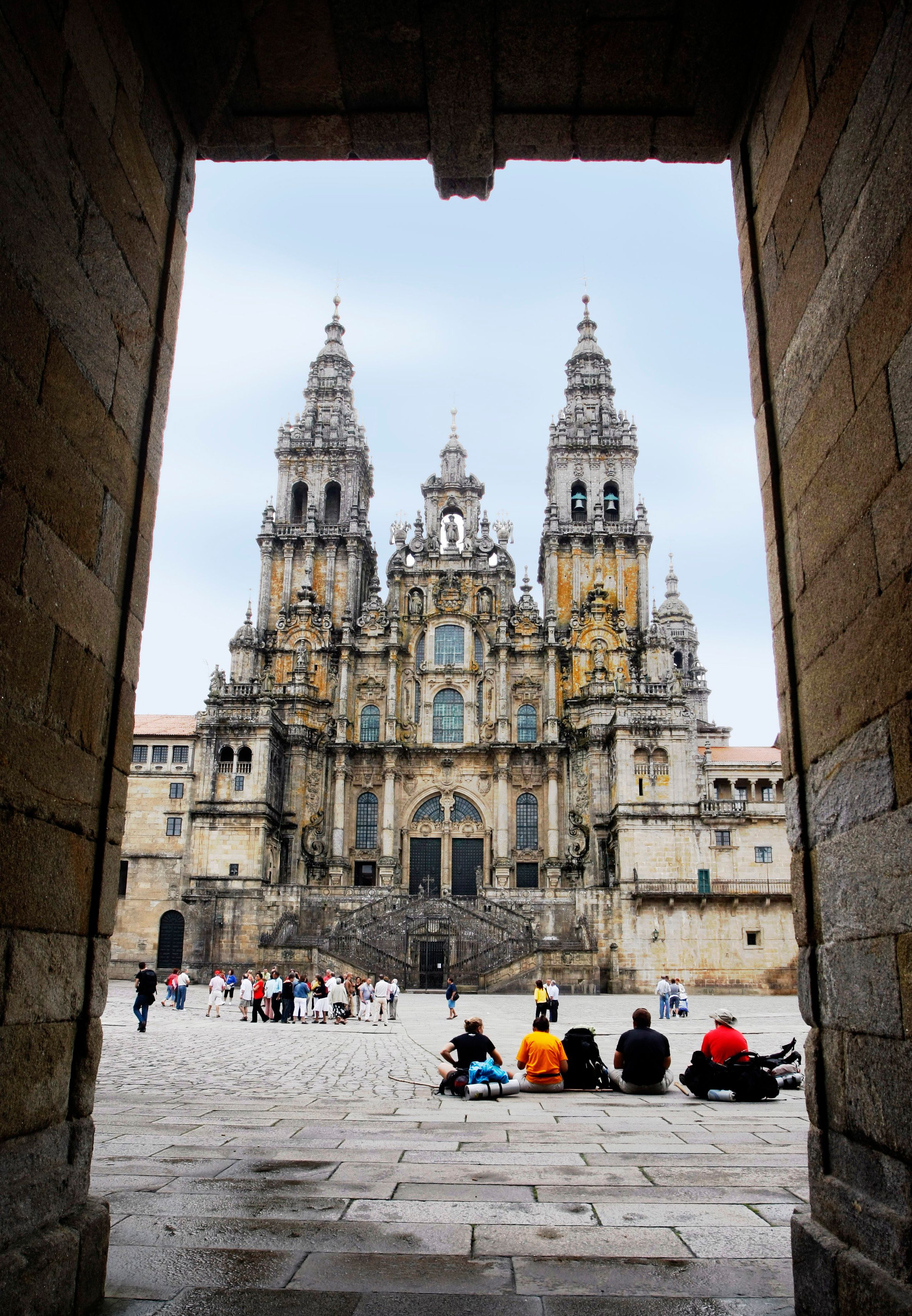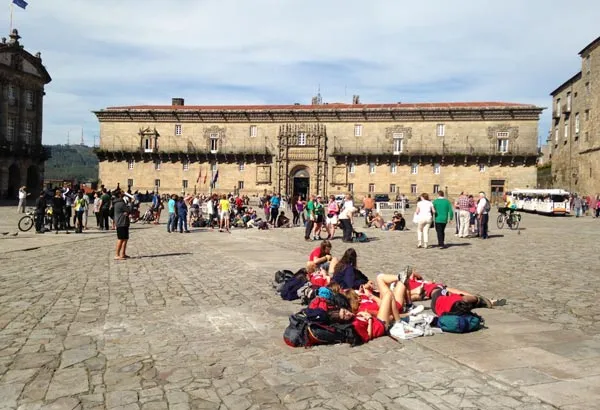
Pilgrims entering Praza do Obradoiro naturally turn first toward the Cathedral. Yet the long granite façade on the northern side of the square tells another essential Camino story: what happens when the traveler arrives tired, ill, poor, or simply in need of a bed.
The Catholic Monarchs founded a royal hospital in Santiago around the turn of the sixteenth century. It was intended to receive pilgrims and provide care close to the apostle’s shrine. The project joined devotion, public display, and practical charity at the symbolic end of the road.
Isabella of Castile and Ferdinand of Aragon had visited Santiago in 1486. Their foundation was authorized in 1499, and work on the building began soon afterward under the royal architect Enrique Egas. The result was a major institution offering lodging and care directly opposite the Cathedral, with arrival and hospitality facing one another across the square.
Reading the building
The richly carved entrance presents sacred and royal imagery before a building organized around four courtyards. Those internal spaces bring light and order to an immense complex. Chapels, stone corridors, heraldry, and later alterations preserve layers of institutional life rather than one frozen architectural moment.
The Plateresque doorway is dense with figures and ornament, including the monarchs and sacred imagery associated with the foundation. Inside, the four patios divide the complex into a balanced plan. The chapel occupies a central position, expressing how bodily care and religious purpose were joined rather than separated.
The word “hospital” once covered a wider idea of hospitality than a modern medical facility. Food, shelter, worship, and care belonged together. That history helps explain why hospitals, hospices, and hostels appear repeatedly along Camino routes.
Over time, the institution’s functions and architecture changed. Renaissance foundations, Baroque additions, medical use, and later restoration all left traces. Looking for one “authentic” century misses the point: the building survived precisely because Santiago kept adapting the meaning of hospitality.
A historic hotel today
The building eventually became part of Spain’s Paradores network and now operates as a hotel. Staying there offers access to the atmosphere of the courtyards and historic interiors, but travelers do not need a room to appreciate its place in Obradoiro. The façade, doorway, and relationship to the Cathedral can all be read from the square.
Today its rooms vary because they inhabit a protected historic structure rather than a standardized modern plan. Courtyard views, stone walls, tapestries, and long corridors create atmosphere; they may also produce different room shapes and distances from elevators. Its value lies in the complete experience of the building, not in assuming that every room is identical.
Interior access changes with hotel operations. Check before visiting, follow signs, and respect the privacy of guests.
The Hostal’s transformation can seem paradoxical: a royal hospital for pilgrims is now a prestigious hotel. Yet the building keeps hospitality at the center of Santiago’s monumental stage. Cathedral, civic palace, university building, and former hospital face one another, reminding arrivals that pilgrimage created religious meaning and an entire practical world around it.
What to notice in Obradoiro
Begin outside. The Plateresque portal gives the hotel entrance ceremonial meaning: the figures of the Catholic Monarchs, sacred imagery, coats of arms and dense carving announce patronage and purpose to the entire square. Then look at the length of the granite façade and compare it with the Cathedral opposite. Care for arrivals was given monumental scale.
If you enter as a guest, diner, or authorized visitor, notice how four courtyards organize the immense interior and bring light into its center. The building’s long corridors and uneven room shapes make its history perceptible. Even without going inside, the façade completes the story of Obradoiro: pilgrimage reaches a shrine within a city built to receive tired human bodies after the road.
Read the building beside the wider guide to Camino churches, monasteries, and historic stays, then use Arriving in Santiago to understand the square it faces.