There is no single compulsory Camino prayer. A pilgrim may follow the Catholic liturgy, say the rosary while walking, use a short phrase at each marker or remain silent. Churches along the French Way often display prayers in several languages, and pilgrim Masses may end with a blessing for those continuing toward Santiago.
The Pilgrim’s Prayer to Saint James
Santiago Cathedral publishes a short prayer addressed to the Apostle. It begins, “Saint James, Apostle, chosen among the first,” and asks for strength in faith and hope during the pilgrimage. It connects the physical road with the Christian understanding of life as a journey toward God.
This is a useful prayer on arrival in Santiago or before the first stage. A pilgrim can read the complete official text on the Cathedral’s pilgrimage page. Prayer cards bearing versions of it are also found in churches and religious shops.
The traditional blessing of pilgrims
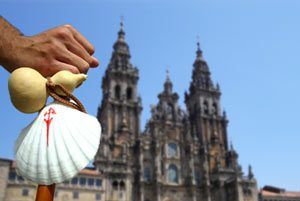
Roncesvalles is one of the best-known places to receive a pilgrim blessing near the beginning of the Spanish French Way. At the end of Mass, the blessing asks protection for the journey and a safe return home. The shell, walking staff and pack have all appeared in historical rites because they visibly marked the pilgrim’s departure.
Blessing wording varies by church and language. Rabanal del Camino also has a strong tradition of blessing pilgrims through the Benedictine community of San Salvador del Monte Irago. These are acts of worship rather than staged Camino performances, so arrive before the service and follow the directions of the parish or monastic community.
The Lord’s Prayer
The Our Father is heard at every Catholic Mass and is often the prayer a mixed-language pilgrim group can recognize together. Each person may say it in their own language. The overlapping sound is part of the experience: the words differ while the structure and intention remain shared.
A traveler unfamiliar with Catholic worship can stand or sit quietly. Receiving Communion has a specific religious meaning and practice; visitors who are uncertain should follow the guidance of the celebrant rather than copying the person ahead.
The Hail Mary and the rosary
Marian devotion is visible throughout the route, from the collegiate church of Santa María at Roncesvalles to village churches dedicated to Nuestra Señora. The Hail Mary forms the repeated prayer of the rosary. Pilgrims may pray a decade while walking, using ten beads to keep count, or complete the traditional five decades over a stage.
The repetition suits a walking rhythm, although road crossings and navigation still need full attention. A rosary can be carried without display, and nobody needs to match another pilgrim’s pace or practice.
Psalm 121 for departure
Psalm 121 begins with the speaker lifting their eyes toward the hills and asking where help will come from. Its language of travel, vigilance and protection has made it especially appropriate for pilgrims. Read it before a mountain stage such as the crossing toward Roncesvalles or the approach to O Cebreiro, when the landscape makes the imagery immediate.
Different Bible translations use different wording and numbering conventions. Bring the translation used by your own church or open it on a phone when safely stopped.
A prayer at the Cruz de Ferro
Many pilgrims carry a small stone to the Cruz de Ferro, between Foncebadón and Manjarín. Some leave it in memory of a person, a burden they hope to release or a prayer intention. Others simply pause. The growing mound contains intensely personal objects, so take photographs without handling what another pilgrim has left.
A prepared sentence is enough: name the person or concern, express gratitude, or ask for help. The place does not require a public speech. Wind, weather and waiting pilgrims often make a brief private prayer more appropriate.
Prayer inside Santiago Cathedral
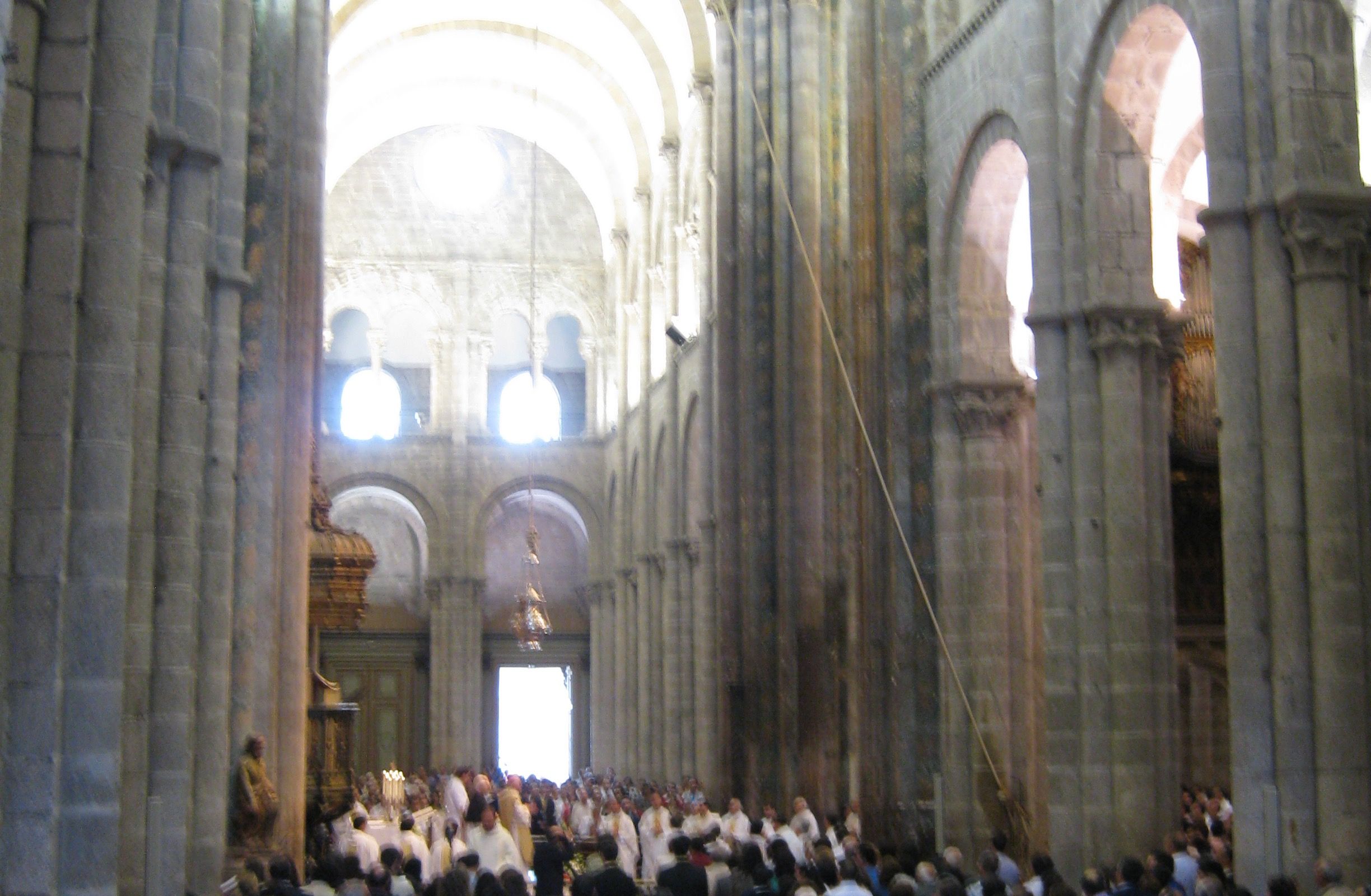
At the Cathedral, pilgrims can attend Mass, visit the Apostle’s tomb and pray before the shrine. Check the current liturgical schedule because times and access arrangements can change. The Botafumeiro is used on specified solemn occasions and when formally requested; it should not be promised for every Pilgrim’s Mass.
Parish and private groups traveling with a priest can ask Ultreya Tours to explore Mass arrangements at stages along the route. This involves advance permission, church availability and coordination; our guide explains how private Camino Masses are arranged.