Alfonso IX, king of León and Galicia from 1188 to 1230, used new towns to strengthen royal authority and support movement through his territories. Sarria is one of the clearest places to see that policy beside the Camino.
At the end of the twelfth century, traditionally dated to 1194, Alfonso founded Vilanova de Sarria and granted it a town charter. The settlement stood on a route already used by pilgrims, traders and royal officers. Its legal privileges encouraged residents and commerce while placing the new town under the Crown rather than a local monastic or noble lord.
Sarria developed along the ridge followed by the Camino. Churches, charitable institutions, workshops and lodgings served residents and travellers. The surviving medieval fabric has changed greatly, but the long street plan still explains why the town grew there.
The king’s work along the road
Alfonso IX founded or reorganized several strategic towns in Galicia and León. On the Camino Francés, his policies affected places including Villafranca del Bierzo, Triacastela and Sarria. A charter did more than create a name on a map. It established rights, markets, obligations and a royal presence along a busy road.
He also summoned the Cortes of León in 1188. Representatives of towns joined nobles and clergy in an assembly whose surviving decrees are recognized by UNESCO’s Memory of the World programme as an early documentary expression of European parliamentary practice.
Samos and the alternative Camino
After Triacastela, pilgrims could travel directly towards Sarria or turn south through Samos. The Benedictine monastery controlled extensive lands in the region and had offered hospitality long before Alfonso’s reign. Its influence formed part of the political landscape in which the king created royal towns.
Samos should not be described as a foundation of Alfonso IX. The monastery is centuries older. The connection lies in geography, jurisdiction and the king’s repeated work along the road through this part of Galicia. Medieval royal expansion often had to accommodate the established rights of monasteries such as Samos.
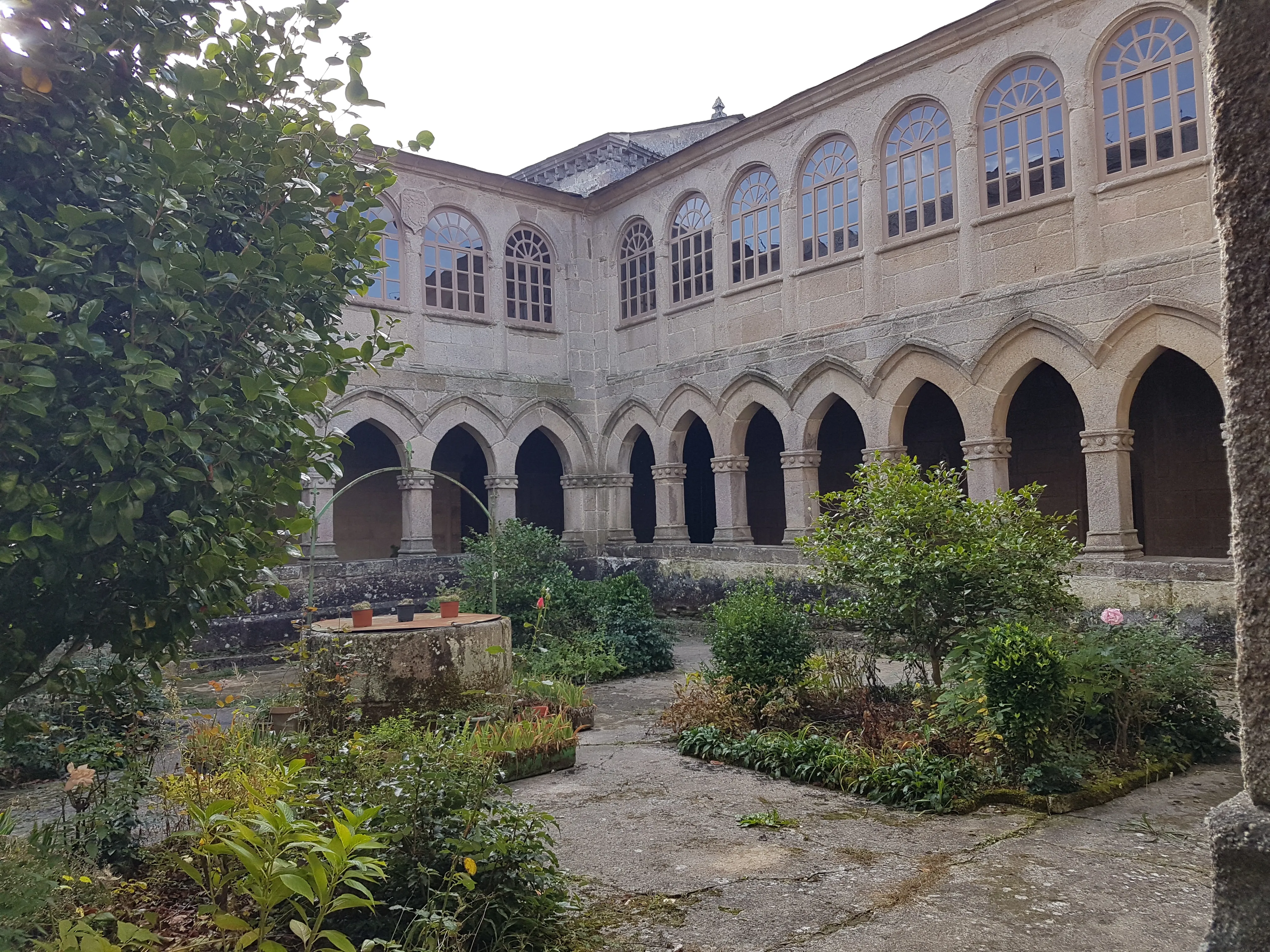
The abbey visible today is largely the result of later rebuilding. Its two cloisters, Baroque church and long relationship with pilgrim hospitality make the detour worthwhile. The small Chapel of the Cypress preserves a much earlier architectural layer.
Alfonso IX’s last journey
In 1230 Alfonso travelled into Galicia after campaigning in Extremadura. He died at Vilanova de Sarria in September 1230 while travelling towards Santiago de Compostela. His body was taken to Santiago and buried in the Cathedral’s royal pantheon near his father, Fernando II.
The circumstances give Sarria an unusual double connection with the king. Alfonso helped create it as a royal town for movement along the Camino, and the same road brought his final journey to an end there.
Visiting Samos before Sarria
The Samos alternative adds distance and deserves its own day or a carefully adjusted stage. It is a poor addition to make at the last minute if accommodation and luggage transfer have been arranged on the direct route.
Ultreya Tours can include Samos before the start of a Sarria journey, arrange a monastery visit and preserve the walking distance that suits you. Use Start Planning and tell us that Samos and the medieval history of Sarria are priorities.