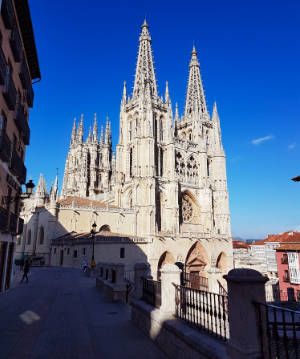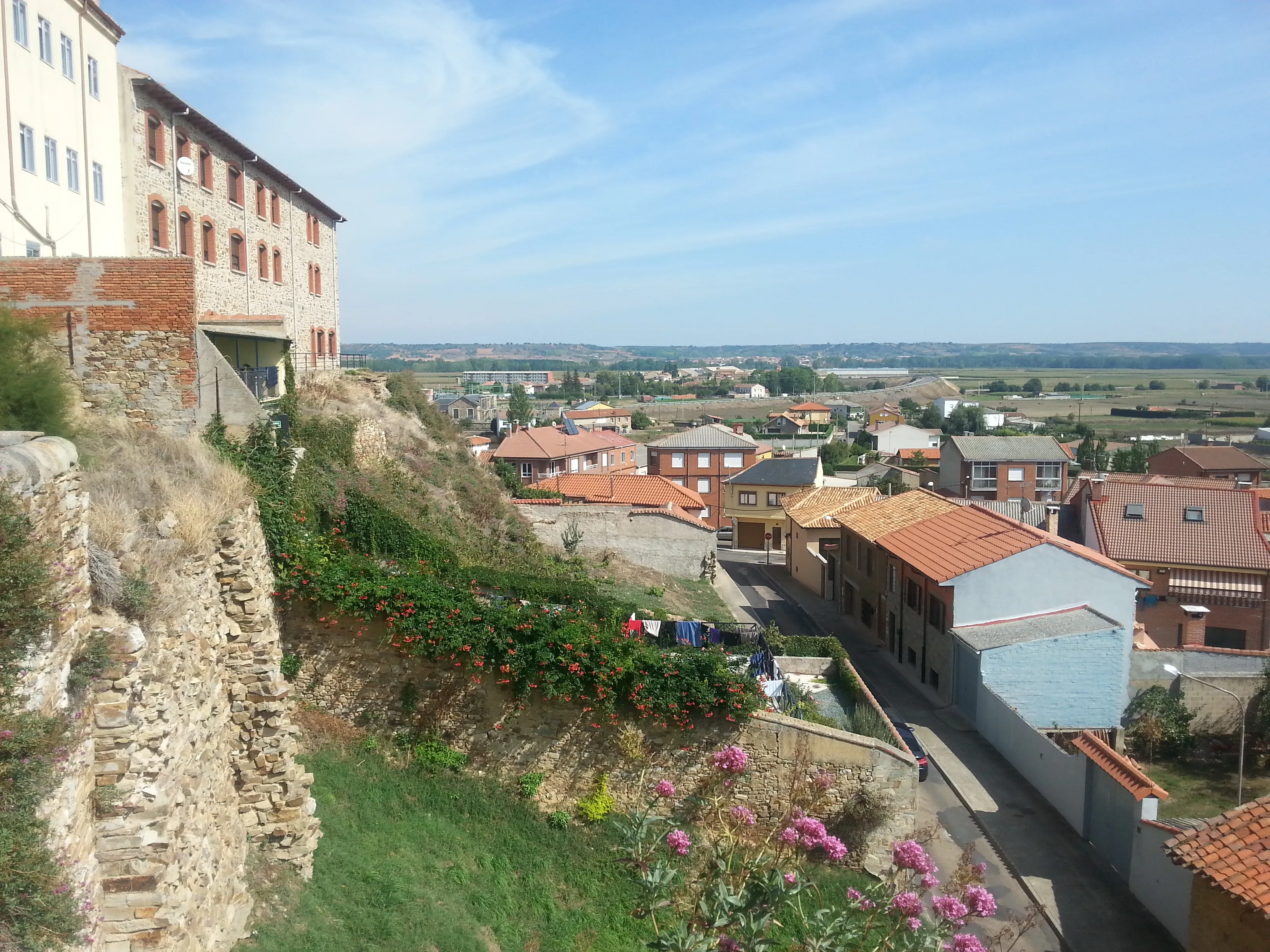
Pilgrims arriving from León first meet a lively stage town and then an almost improbable architectural pairing: a many-layered cathedral opposite the episcopal palace designed by Antoni Gaudí. Another city, however, lies beneath their feet.
Asturica Augusta was one of the principal Roman centers of northwestern Iberia. Its remains are not confined to a single archaeological park. They appear below houses, beneath protective glass, inside a museum, and along a route through the modern town. Astorga is best read as a palimpsest.
From military presence to Roman city
Rome completed its conquest of northern Hispania under Augustus after wars against the Cantabrian and Astur peoples. Astorga’s earliest Roman settlement is associated with this military phase. Its hilltop position near mountain country and intersecting routes made it strategically valuable.
During the first century, the camp developed into a city with streets, public buildings, baths, drainage systems, and a forum. Asturica mattered both as an administrative center and as a communications hub connecting other cities with the mining districts of the northwest.
That quality as a crossroads never entirely disappeared. Centuries later, Astorga became a major point on the Camino Francés and a meeting place with routes approaching from the south.
Gold and empire
Asturica’s story is often linked with Las Médulas, west of Ponferrada. Rome transformed this landscape to exploit alluvial gold on an enormous scale. Water carried from the mountains through a network of channels helped break down earth before the material was washed.
The red, sculpted landscape visible today is spectacular, but it also reflects imperial organization of land, labor, and resources. Las Médulas belonged to a broader economic and administrative network in which Asturica held an important position.
When mining declined, the city did not simply vanish. Its role changed, and its defenses were reinforced in late antiquity. The surviving walls, like so much of Astorga, belong to more than one phase.
Walking through the archaeology
The Domus del Mosaico offers a glimpse of private life in a prosperous residence. Elsewhere, baths, sewers, the ditch of the early camp, and remains associated with the forum reveal the infrastructure behind Roman urban life.
The Roman Museum occupies the space traditionally known as the Ergástula. It presents objects recovered through excavation and provides a starting point for understanding the ancient city. Opening arrangements for the archaeological route can change, so visitors should check current information locally.
The experience alters how one walks through Astorga. A modern square may occupy the former civic center. A street crosses an axis that disappeared centuries ago. A protected fragment becomes evidence of a much larger urban fabric.
From Rome to Gaudí
The Roman city was followed by Christian, medieval, and modern layers. Santa María Cathedral brings together several architectural periods. Beside it, Gaudí’s late nineteenth-century episcopal palace introduces a remarkable neo-Gothic silhouette and now houses the Museo de los Caminos.
Astorga still sits at a junction. The French Way meets the Vía de la Plata here, close to the streets of Roman Asturica Augusta. A few hours beyond the Cathedral square are enough to see the Roman sewers, the Domus mosaic and Gaudí’s episcopal palace instead of treating the city as a bed between stages.