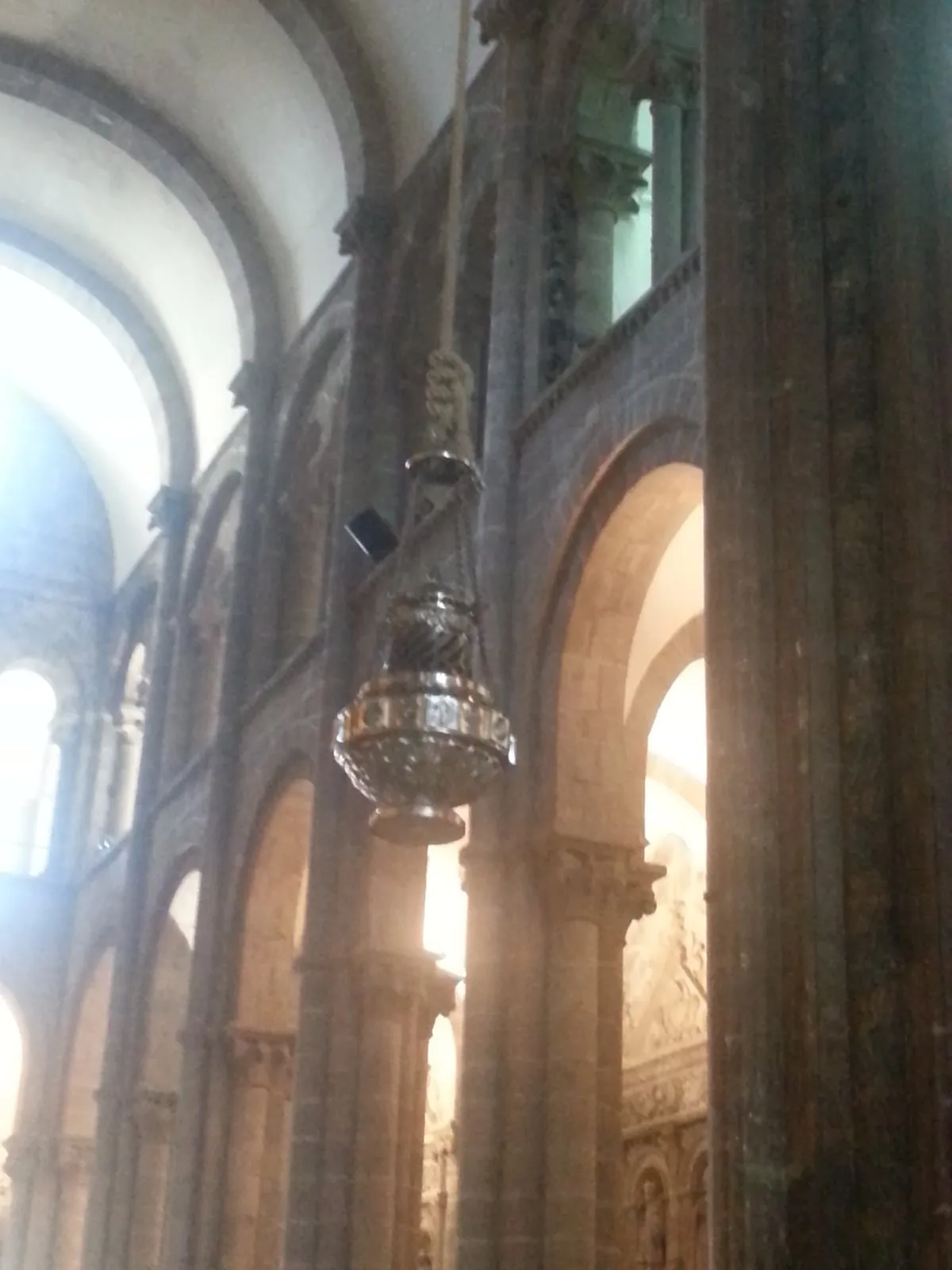
Eight men pull a thick rope in the transept of Santiago Cathedral. The great silver-colored censer rises from the crossing, gathers speed and sweeps high toward the vaults. It passes through the transept in a wide arc while incense fills the church.
This is the Botafumeiro. Its Galician name roughly means “smoke expeller.” Videos make it look like a performance, but its setting and purpose are religious. It is used during particular liturgical celebrations, not as an attraction on a fixed daily schedule.
Its movement is spectacular: architecture, sound and incense combine as the censer climbs toward the transept vaults. It remains part of worship, appearing on particular occasions instead of every time pilgrims arrive.
Why does the Cathedral use incense?
Incense has a long place in Christian worship. Its fragrance honors the altar and sacred objects, while the rising smoke represents prayer ascending toward God. Censers are used in churches throughout the world.
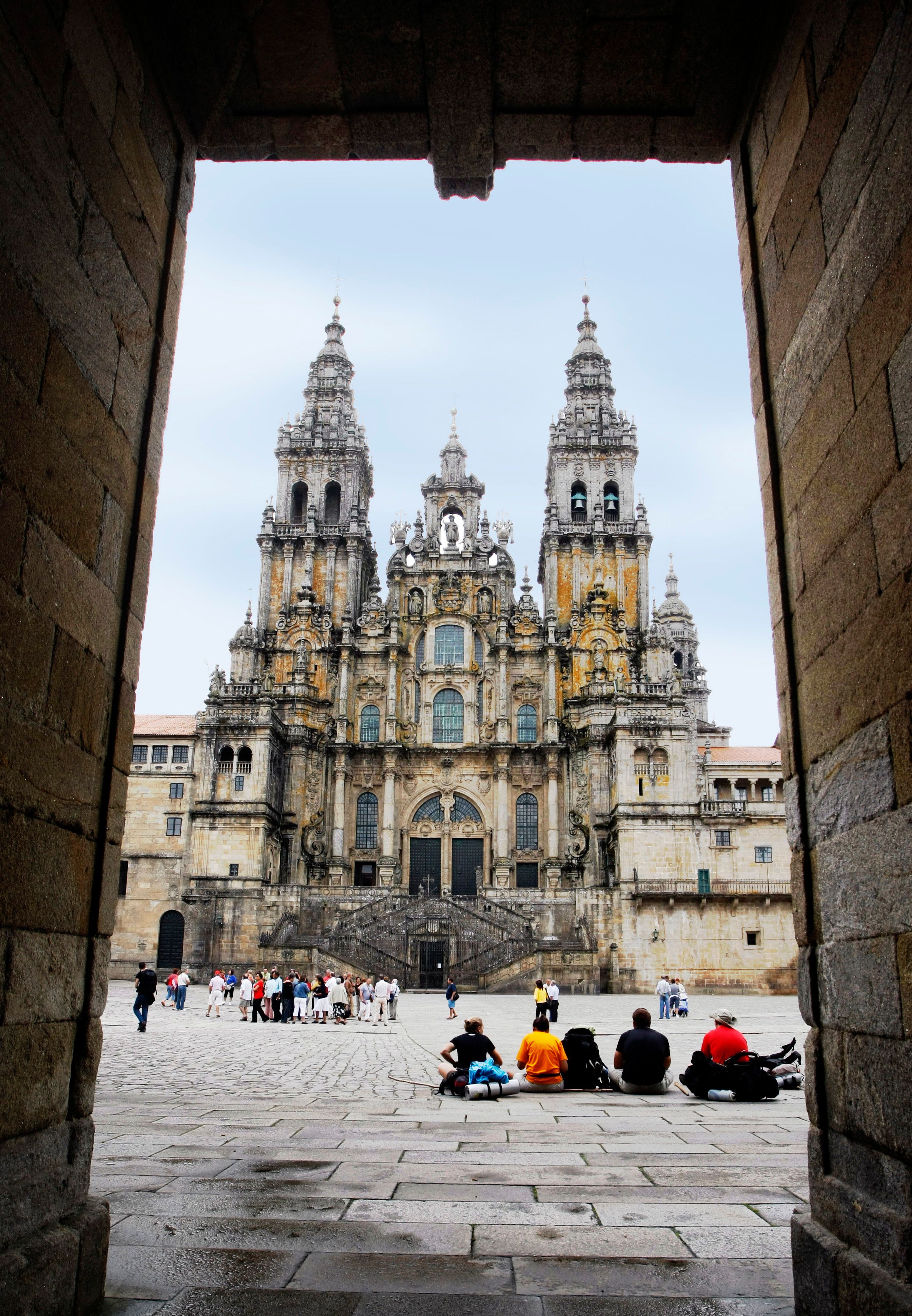
Santiago’s is exceptional because of its size and the space in which it moves. The Cathedral developed around the tomb of Saint James and received large numbers of pilgrims. A dramatic censer suited the scale and ceremonial importance of the shrine, particularly during celebrations such as the Feast of Saint James on 25 July.
The Cathedral also explains that the Botafumeiro helped perfume the building when pilgrims slept inside it. Hygiene is part of the story told at Santiago, alongside the established use of incense in Christian worship.
How the Botafumeiro moves
The censer hangs from a rope below the dome at the crossing. A group known as the tiraboleiros controls it from the floor. By pulling in a coordinated rhythm, they increase the length and height of each swing.
Repeated pulls make the censer climb higher on each pass. It swings through the transept, not along the Cathedral’s main nave. The team must keep the timing exact and then slow the vessel until an assistant can take hold of it.
The present Botafumeiro dates from the nineteenth century. Earlier censers served the same purpose, and historical accounts describe accidents in which the object broke free. These episodes help explain why its operation is now entrusted to an experienced team.
Will it swing at the Pilgrim Mass?
The Botafumeiro is used on designated solemn feast days and on other occasions arranged through the Cathedral. It does not swing at every Pilgrim Mass, and the Cathedral’s visitor arrangements should be checked separately. Our private guided walk in Santiago can include the Cathedral area, although access and services remain under Cathedral control.
Groups and organized pilgrimages can ask the Cathedral to operate it during a suitable Mass. The current requested donation to the Apostle is €500, and the arrangement must be made in advance because the Cathedral has to approve the request and schedule the tiraboleiros. Write to botafumeiro@catedraldesantiago.es or contact the Pilgrim Reception Office on +34 981 568 846. Confirm the donation and arrangements directly with the Cathedral before promising it to a group.
Schedules and access procedures can change, particularly during major celebrations. The Cathedral publishes current information for visitors. Ultreya Tours never promises the Botafumeiro unless its use is officially guaranteed for a specific celebration.
Seeing it during Mass
Arrive early enough to pass security and take your place before Mass begins. During the service, keep the phone low enough for the people behind you to see.
The engineering is visible in every pull of the rope. For a newly arrived pilgrim, the strongest memory may be more immediate: incense in the transept, the rush of the censer overhead and hundreds of faces turning together.