“Visiting the Cathedral” can mean entering the basilica for prayer, seeing the Apostle’s tomb, studying the museum collections, standing before the Pórtico da Gloria or walking on the roof. These experiences use different tickets and, in some cases, fixed time slots.
The Cathedral’s programme changes with the liturgical calendar, conservation work and special events. Use the official Cathedral ticket office for the date of your visit. It is the only online source we recommend for advance admission.
1. Entering the basilica independently
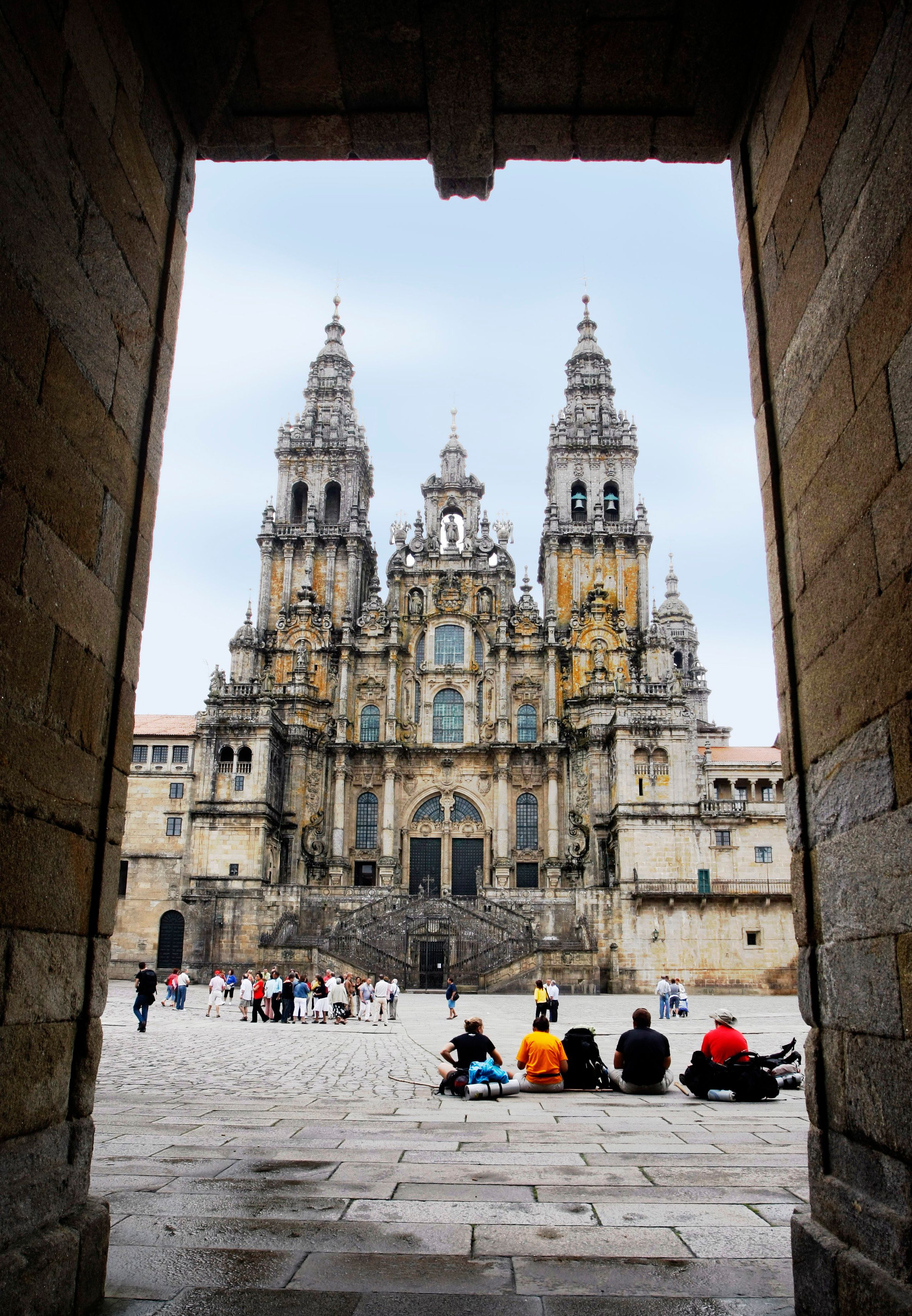
Individual entry to the basilica is free. The public entrance is normally through Praza das Praterías, and the Cathedral currently publishes daily opening from 7 am to 9 pm. Religious services and institutional events can change access.
Inside, pilgrims can visit the crypt containing the tomb of Saint James and follow the route behind the high altar to embrace the Apostle. These spaces may have separate queues. Entry during Mass is for worship rather than sightseeing, and tourist visits pause during services.
Backpacks are not permitted for security reasons. The Cathedral Museum has no left-luggage facility, so leave walking packs at your hotel or a luggage service before arriving.
2. The Cathedral Museum’s permanent collection
The standard museum route explains the construction and artistic history of the Cathedral. It includes the permanent collection, cloister, Treasury and Chapel of Relics, together with the Pazo de Xelmírez and its Master Mateo spaces.
Xelmírez Palace is one of the most valuable parts of the visit. Its medieval ceremonial hall has carved corbels showing scenes from a banquet, while other rooms occupy the former archbishop’s residence. The museum collections contain pieces from Master Mateo’s dismantled stone choir, tapestries, liturgical objects and works connected with the cult of Saint James.
According to the Cathedral’s current ticket rules, its visit products include access to the permanent collection and Xelmírez Palace, as well as MuSar at Santa María de Sar. Tickets remain valid for the stated period, but each included space permits one entry only. Read the exact conditions attached to the ticket you select.
3. The Pórtico da Gloria
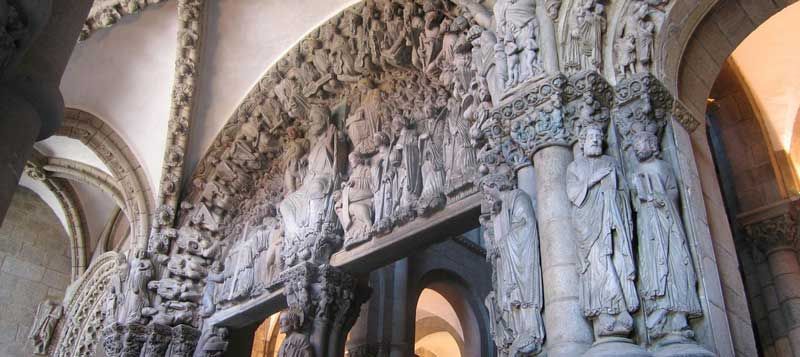
Master Mateo’s Pórtico da Gloria is viewed in a controlled group because the surviving medieval polychromy requires stable environmental conditions. The timed visit generally includes an audio guide and permits a limited stay before the sculpture.
The main paid Pórtico ticket is combined with the Cathedral Museum. The Cathedral also releases a limited number of free timed invitations under a separate programme. These are capacity-controlled, allow a maximum of two invitations per person and cannot be treated as a guaranteed last-minute option.
Arrive at least fifteen minutes before the time printed on the ticket. Bags, backpacks, umbrellas and pilgrim poles are prohibited, and photography and video are not allowed. Our article on Master Mateo and the Pórtico da Gloria will help you identify the instruments, prophets and central figure of Christ.
4. Roofs and Carraca tower
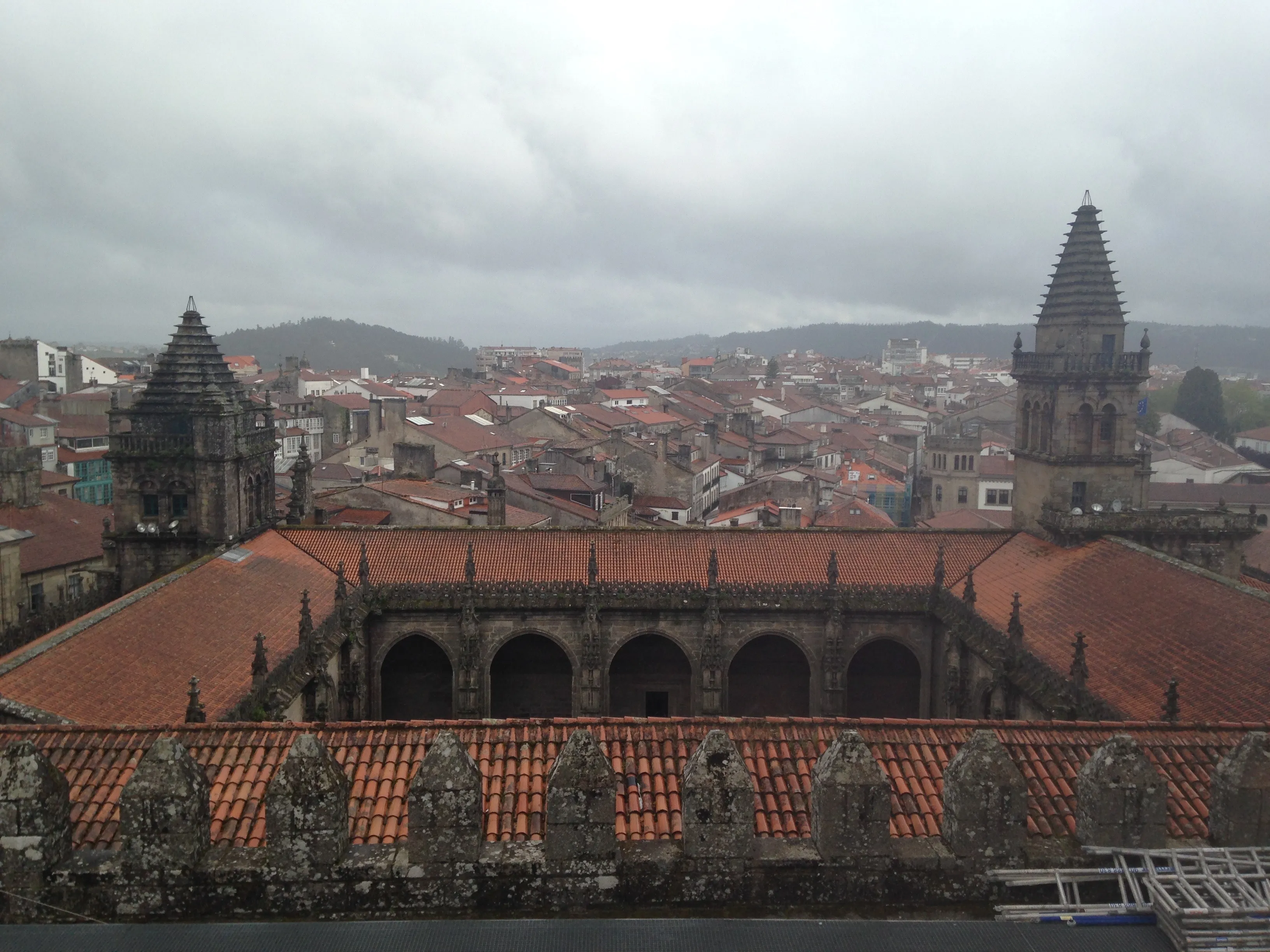
The Cubiertas and Torre de la Carraca route climbs into areas that cannot be visited independently. It is always conducted as a group with specialist Cathedral staff. The route gives close views of the towers, stone roofs and surrounding squares, as well as a broad view across Santiago.
Expect stairs, uneven historic surfaces and exposure to weather. The Cathedral can cancel or adapt visits when conditions make the roofs unsafe. Ask the visitor service about accessibility before purchasing if stairs or confined passages are a concern.
This is the best choice for architecture and city views. It does not replace the Pórtico visit; they are distinct timed experiences.
5. Complete Museum visit
The official ticket office offers a Visita Completa that brings several Cathedral Museum spaces together. Check its live description carefully because the combination, guided language and available times can change. It is useful when the Cathedral is a major reason for your stay and you have enough time to respect more than one timed access.
Do not schedule it immediately after your expected arrival on foot. A delayed walking stage, Compostela queue or late lunch can make a non-refundable Cathedral slot difficult to reach.
6. Night visits: Descubre la Catedral
The Cathedral periodically offers Descubre la Catedral, a guided night visit after normal tourist circulation has ended. It presents the building in a quieter setting and may include spaces arranged specifically for that programme.
These visits are not offered at every hour or in every language. Select the language shown on the official booking page rather than assuming live English interpretation. Because access begins promptly, arrive early and follow the meeting point on the ticket.
7. Compostela Sacra: Cathedral and San Martiño Pinario
The Compostela Sacra programme connects Cathedral heritage with other major religious buildings in Santiago. The ticket office currently advertises a Cathedral and San Martiño Pinario visit, as well as visits associated with the diocesan museum and Santa María de Sar.
San Martiño Pinario faces the Cathedral’s north side and developed as one of Spain’s largest Benedictine monasteries. Santa María de Sar preserves a Romanesque church famous for its visibly leaning columns and later exterior buttresses. Confirm the meeting place: these monuments are not entered through the standard Praterías basilica door.
8. MuSar at Santa María de Sar
The MuSar visit covers the museum, cloister and collegiate church of Santa María de Sar, outside the compact historic centre. It is a valuable choice for Romanesque architecture and for seeing a religious complex beyond the Cathedral itself.
Allow travel time from Obradoiro. The Cathedral FAQ currently states that MuSar is included with its ticket modalities, but opening arrangements must still be checked for the day you intend to use it.
9. Archive and library guided visits
The Cathedral Archive-Library preserves the Codex Calixtinus, Tumbo A, the Breviario de Miranda and other manuscripts. Its public guided visits are special activities rather than ordinary museum admission. The documents displayed and the dates offered depend on the current programme.
Researchers use the archive under separate conditions. A museum ticket does not promise access to the original Codex. Read more about the manuscript, its music and its theft in our Codex Calixtinus guide.
Visiting with your own official guide
Groups and individuals accompanied by a guide follow different access rules from unaccompanied individual visitors. The Cathedral requires groups to use an official guide accredited by the Cathedral, and an appropriate museum ticket is needed for guided interior access at the assigned time.
Our private guided Santiago Experience can be planned around the city and Cathedral context. Any ticketed interior space must be requested and confirmed separately; it is not automatically included in a city walking tour.
Booking rules worth knowing
Official online purchases are currently made with Visa or Mastercard and may be released up to sixty days ahead. Tickets generally cannot be changed or refunded because of an error or a missed time. Timed visits require punctuality, and late entry may be refused.
The museum prohibits photography, large bags, food and drink. Bring the QR ticket on your phone or on paper. For current accessibility advice, languages and changes caused by worship, contact the Cathedral visitor service shown on the official ticket site.