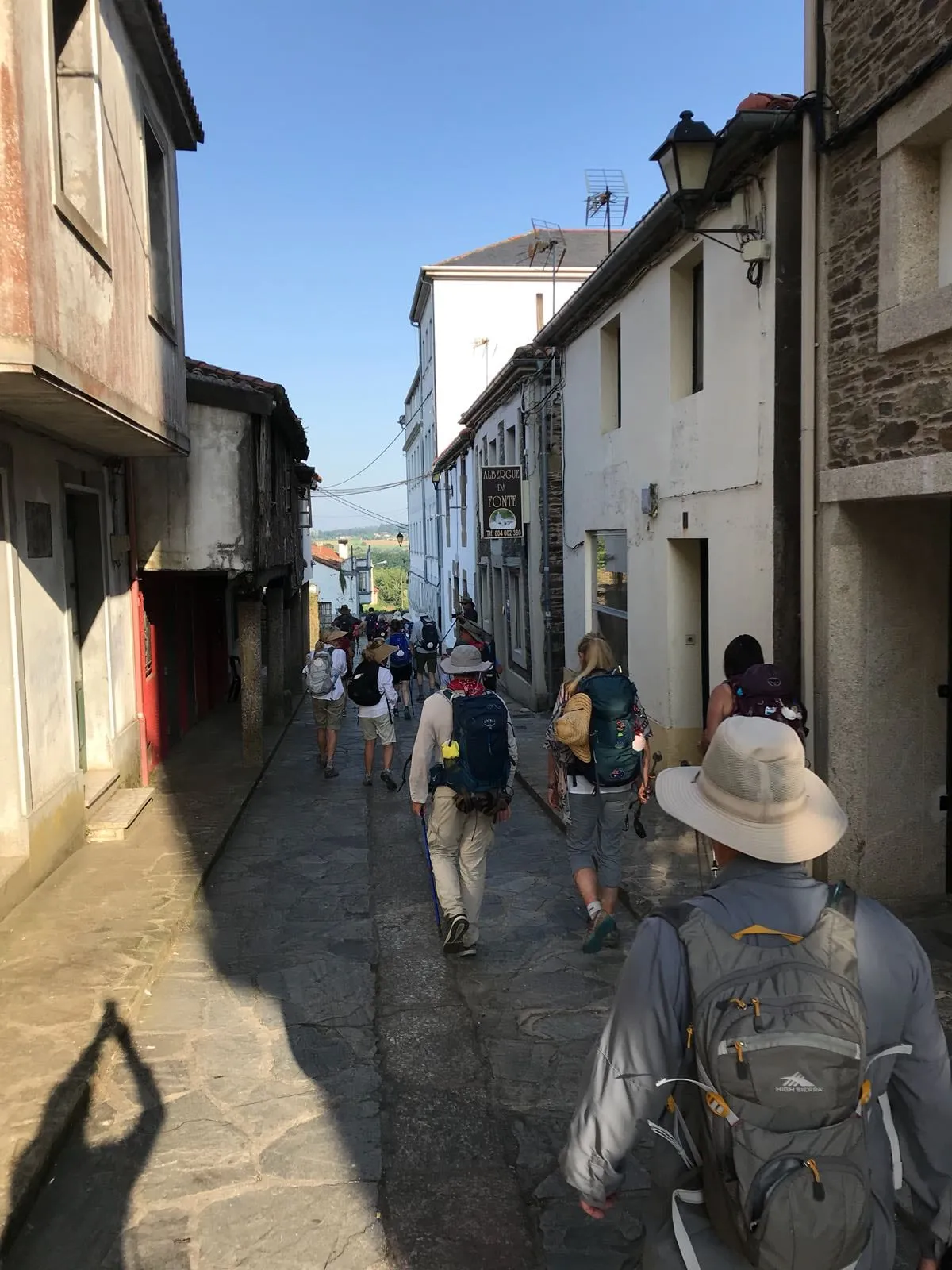
Yellow arrows cross working farms, village streets, active churches and paths used by local residents. Responsible travel on the Camino begins with recognizing that these are living places, and most trail etiquette is ordinary courtesy adapted to them.
Greetings are invitations, not obligations
“Buen Camino” is a friendly acknowledgment. Offer it naturally; a quiet answer may mean that the other person is tired, praying or absorbed in the walk.
Conversation can begin easily, but personal questions still require sensitivity. Accept when another person wants to continue alone.
Keep the path passable
Walk to one side when others need to pass, and step off the path before checking a map or taking a photograph. Cyclists can help by slowing down and signaling their approach.
On road sections, use the side indicated by local signs and stay alert to traffic.
Close gates
Leave each gate as you found it. Follow the marked route around fields, orchards and farm buildings.
Fruit beside the path belongs to someone. Buy local produce or accept it when offered rather than picking it without permission.
Toilets and litter
Use public facilities and cafés where possible. Carry tissues and personal waste until it can be disposed of properly. Toilet paper left beside the path is litter, even when it appears biodegradable.
Keep personal tokens in your journal or luggage instead of attaching ribbons, stickers or unofficial arrows to the route.
Respect quiet hours
In the early morning, keep voices low and use rubber tips on walking poles through paved residential streets.
Hotels usually provide a suitable place for muddy footwear, wet clothing and luggage awaiting collection.
Enter churches respectfully
Silence the phone and follow the photography signs in an active church. During a service, remain behind the congregation and wait to explore the building. A small donation helps when a church is maintained and opened by local volunteers.
Good etiquette is rarely complicated. Leave gates as you found them, carry away what you brought and remember that the freedom to walk exists because many other people share and maintain the same places.