The bridge at Hospital de Órbigo was already carrying pilgrims when Suero de Quiñones chose it for an elaborate feat of arms in 1434. He and nine companions announced that they would defend the passage against other knights. For about a month, challengers met them with lances beside one of the busiest roads to Santiago.
The event was called the Passo Honroso. It was staged as a public demonstration of honour, loyalty and courtly love. Suero claimed that he wore an iron collar every Thursday as a sign of captivity to a lady, traditionally identified as Leonor de Tovar, and that only a great feat could release him from this obligation.
What happened in 1434
The tournament ran from 10 July to 9 August during a Jacobean Holy Year. Contemporary records describe sixty-eight challengers and hundreds of encounters with the lance. The frequently repeated ambition of breaking three hundred lances was greater than the final count, but the spectacle was still exceptional.
The bridge controlled an unavoidable point on the Camino. Knights, heralds, judges, tents and spectators transformed the riverbank into a carefully regulated arena. After the tournament, Suero travelled to Santiago and offered a jeweled band associated with his lady at the Cathedral.
This was a real event, recorded by Pero Rodríguez de Lena and later circulated in print. It also behaved like a story from a book of chivalry because its participants deliberately used the language, costume and rules of that literary world.
Cervantes knew the story
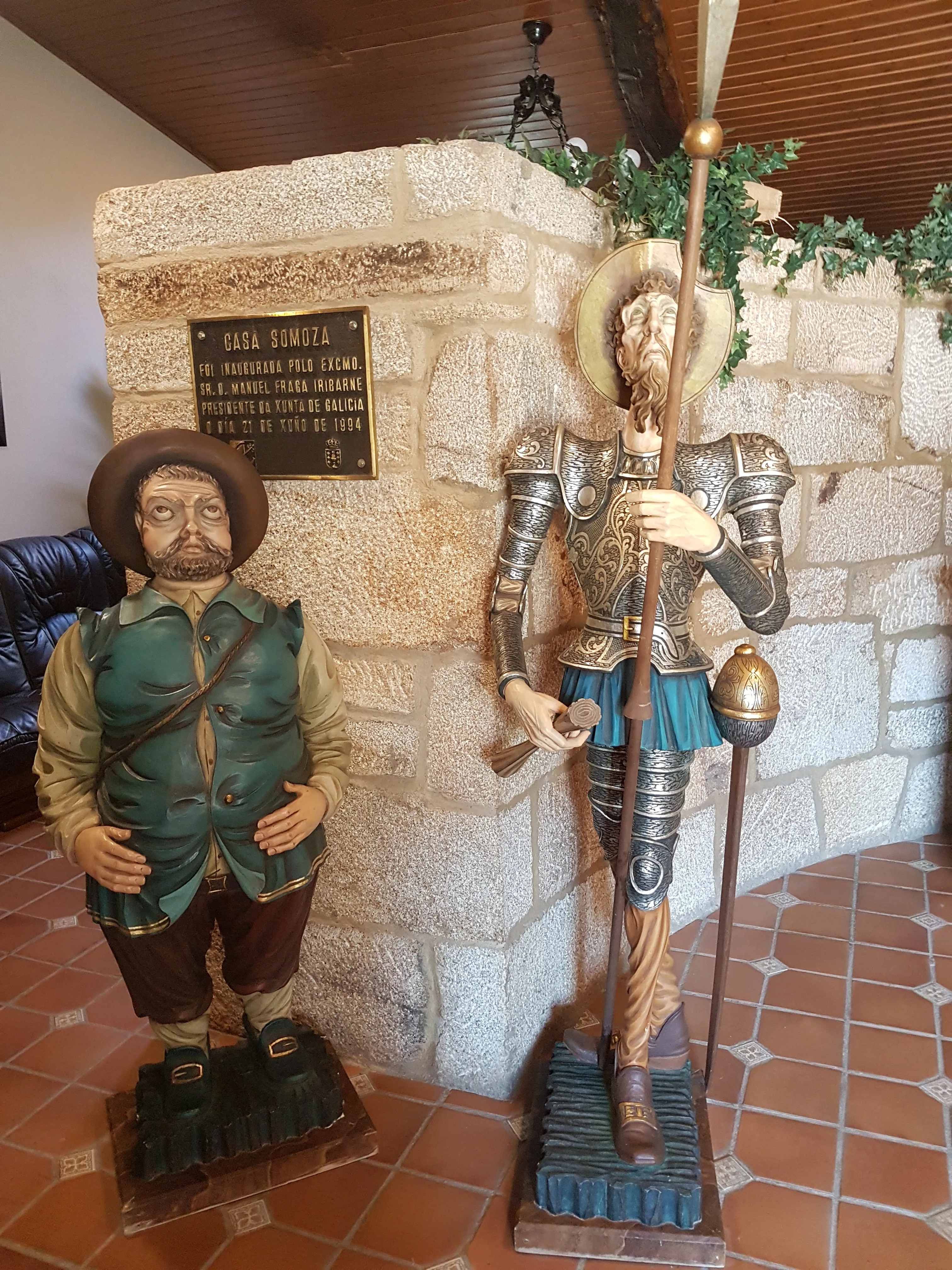
In Part I, Chapter 49 of Don Quixote, Cervantes names “the jousts of Suero de Quiñones, of the Pass.” The reference would have been recognizable to many early seventeenth-century readers. An edition of the tournament account had appeared in 1588.
Cervantes did not simply mock courage or dismiss every knightly ideal. He examined what happens when literary codes are carried into ordinary roads, inns and fields. Don Quixote repeatedly turns the public highway into a place where travelers must accept his imagined rules. Hospital de Órbigo provides a historical example of a knight who really did regulate passage through a celebrated feat of arms.
There is also a family link within the literary joke. Suero died in 1458 fighting Gutierre Quijada, whom Cervantes’ text presents among the supposed ancestors associated with Don Quixote’s lineage. History, family legend and fiction sit unusually close together here.
The games today
Hospital de Órbigo stages its Justas Medievales del Passo Honroso each year, normally around the first weekend of June. The bridge and riverbank fill with costumes, tournament displays, music and a medieval market. Dates and road arrangements should be checked with the municipality before travel.
Outside festival days, the bridge is quieter and easier to read. Its nineteen surviving openings belong to different building phases. Walk across slowly and look down at the broad floodplain. The scale explains why this was such an effective stage.
Hospital de Órbigo appears on our Camino Francés journeys between León and Astorga. Start planning if you would like the route timed around the medieval games or an extra visit devoted to León’s literary and historical landscape.