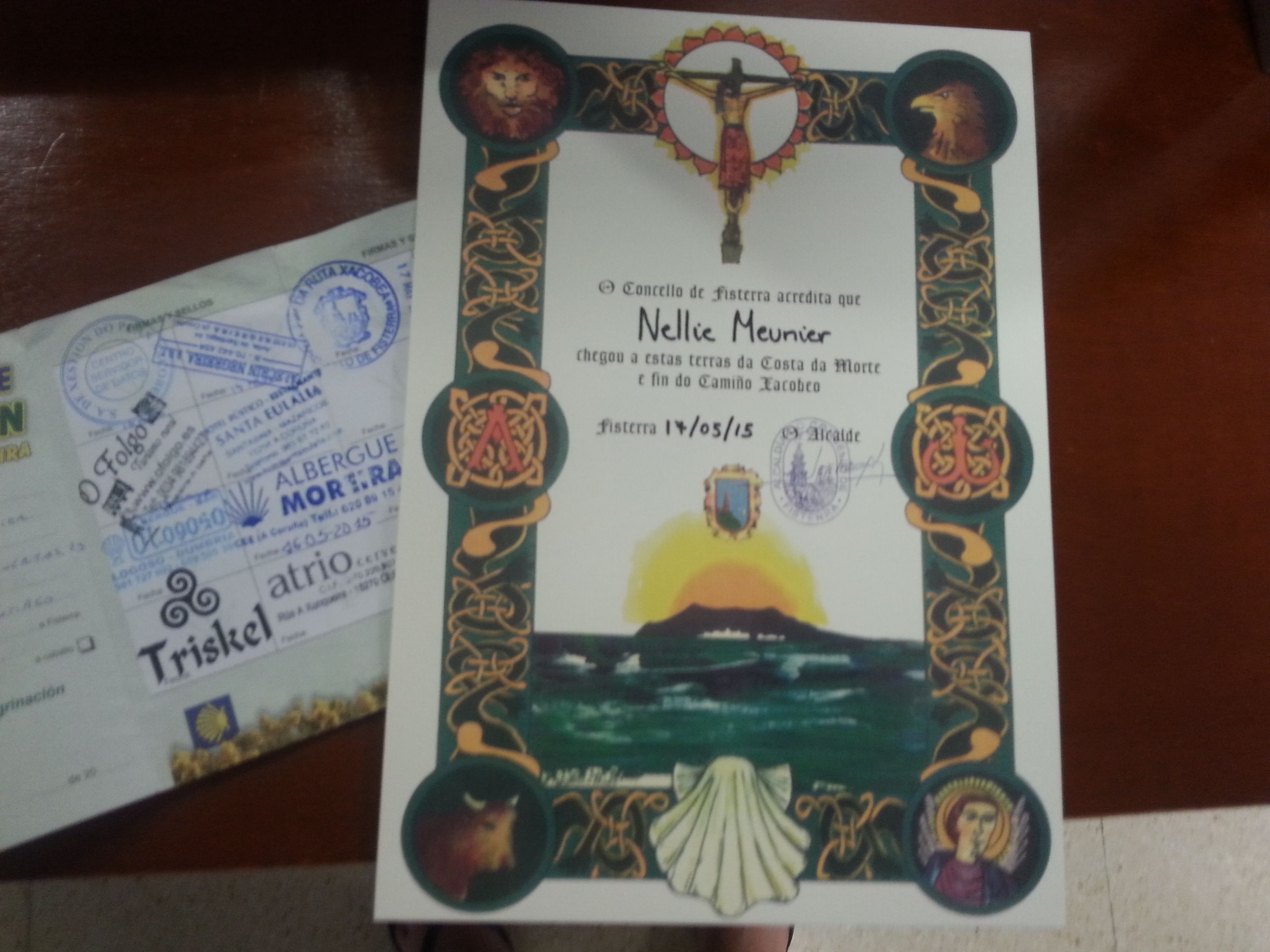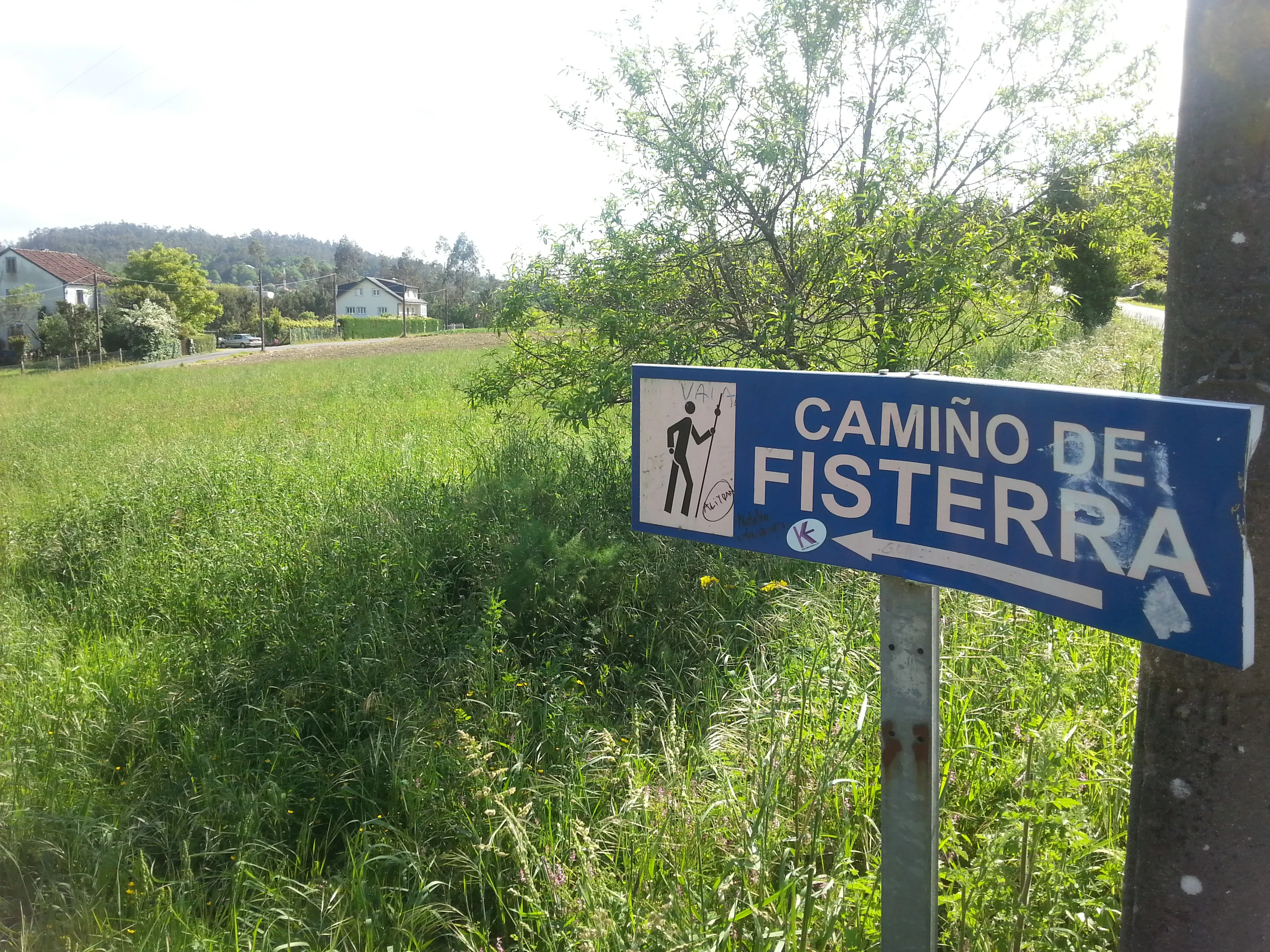
The Finisterre and Muxía Way begins where most Caminos end. Pilgrims leave the Cathedral behind, cross the River Sarela and walk west toward the Atlantic. At Olveiroa the path divides toward Fisterra and Muxía, while a separate coastal stage connects the two endings. The journey feels less like an appendix than a release: city bells give way to farms, moorland, fishing harbors and the first line of ocean on the horizon.
Before and after Rome
Cape Fisterra acquired the Latin name associated with the end of the earth. Roman roads served the coastal settlements and linked them with the interior long before the shrine at Santiago existed. Later Christian pilgrimage absorbed a landscape already charged with ideas about sunset, death and the western ocean.
The Romans knew that land continued elsewhere, yet Finis Terrae captured how the cape appeared from this edge of their western world. Long before Christianity, Atlantic communities watched the sun disappear into a sea whose scale invited stories. There is no evidence that today’s Camino simply preserves a single prehistoric sun pilgrimage, but the emotional power of walking west at sunset needs no invented continuity.
The first Jacobean references
The twelfth-century Codex Calixtinus connects the region with the Saint James tradition through the destruction of a pagan altar at Dugium, traditionally placed near Fisterra. Devotion later centered on the Santo Cristo de Fisterra in the church of Santa María das Areas. The medieval sculpture acquired a reputation for miraculous growth of hair and nails, drawing pilgrims beyond Santiago. In the sixteenth century, Licenciado Molina wrote that fervent visitors to the Apostle also went to the Santo Cristo.
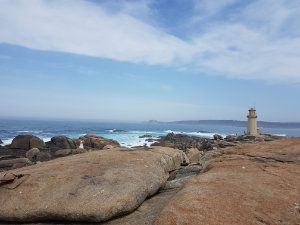
At Muxía, the sanctuary of Nosa Señora da Barca stands beside immense granite rocks. Tradition says the Virgin arrived in a stone boat to encourage Saint James: the sail became the Pedra de Abalar, the hull the Pedra dos Cadrís and the rudder another rock beside the sea. Passing beneath the Pedra dos Cadrís became associated with healing. Waves, wind and spray make the location unforgettable even for visitors who approach the story as legend.
The route has unusually strong travel literature. Among its recorded visitors were the fourteenth-century Hungarian knight George Grissaphan, who became a hermit; Nicholas von Popplau, who reached Muxía in the fifteenth century; the Venetian Bartolomeo Fontana; and the seventeenth-century Bolognese cleric Domenico Laffi.
Towns and the two endings
The first day crosses the medieval bridge of Ponte Maceira, where stone houses, mills and arches gather around the River Tambre. Negreira developed around another crossing and the arcaded Pazo do Cotón. Beyond it, the landscape opens into farms, woodland and the high moorland around Maroñas.
Olveiroa preserves granite houses and raised hórreos. Soon after, Hospital recalls a former pilgrim institution and the route divides. Toward Fisterra, the first ocean view arrives before the long descent to Cee and Corcubión, neighboring harbor towns shaped by fishing and maritime commerce. The path then follows the bay to Fisterra and continues beyond the town to the lighthouse cape.
Toward Muxía, walkers cross quieter country before descending to the fishing port and sanctuary. Those completing both endings can walk the rugged connecting stage through Lires, seeing open coast, beaches and small estuaries that day visitors miss.
Why pilgrims continue
Santiago offers arrival, crowds and ceremony. The western continuation offers time to understand that the walk is ending. At Fisterra, fishing boats work below streets full of pilgrims; at Muxía, the sanctuary stands directly against the ocean. Sunset is never guaranteed on the Costa da Morte, but cloud and storm can be as moving as a clear horizon.
The old practice of burning clothes at the cape is prohibited and damages the landscape. Today’s meaningful rituals are simpler: walk the final kilometer, sit above the water, share dinner in the harbor and carry home the shell or stone already collected without leaving anything behind.
Modern cultural fame
Emilio Estevez’s film The Way helped make the Atlantic continuation familiar to international audiences. Its final scenes at Muxía brought the sanctuary, rocks and ocean into the Camino imagined by millions of viewers.
How it compares
This route does not lead to the Compostela and does not finish in Santiago. It is quieter than the final French Way, more exposed to Atlantic weather and emotionally different because Santiago lies behind the walker.
Our Way to Finisterre from Santiago arranges the stage order, luggage and accommodation. Travelers short on time can visit both destinations on a private Fisterra and Muxía experience.