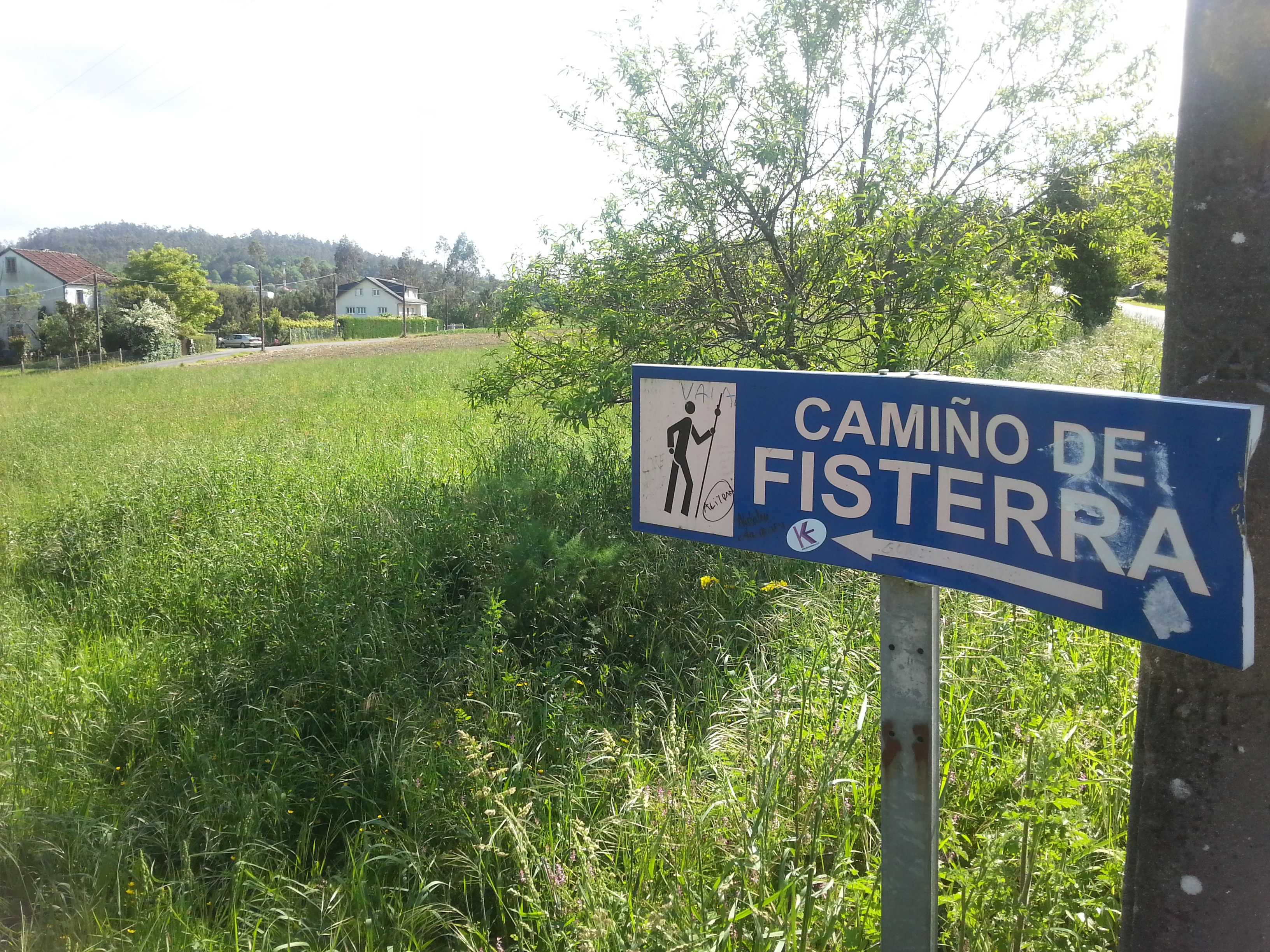
Leaving Santiago on foot feels entirely different from arriving there. The Cathedral bells fade behind you, the path crosses the River Sarela and the city gives way to oak woods, small farming villages and the broad landscapes of western Galicia. For several days the ocean remains out of sight. Then, high above Cee, the Atlantic suddenly appears on the horizon.
The Camino to Fisterra and Muxía is the only recognized Camino route that begins in Santiago. It leads to the Costa da Morte, where the journey finishes beside the lighthouse at Cape Fisterra or among the rocks surrounding the Sanctuary of A Virxe da Barca in Muxía. The coast gives the pilgrimage a spacious, emotional ending: fishing harbours, long beaches, evening light on the water and the satisfaction of having walked from the Apostle’s city to the Atlantic.
The route from Santiago to Fisterra covers 92 kilometres. Our six-day journey divides it into four walks:
- Santiago to Negreira: 21 kilometres.
- Negreira to A Picota: 28 kilometres.
- A Picota to Cee: 24 kilometres.
- Cee to Fisterra: 19 kilometres, including the continuation to the lighthouse at Cape Fisterra.
This avoids the traditional 33-kilometre stage from Negreira to Olveiroa by staying in A Picota. We can also design shorter days with transfers and additional nights. At Hospital, the marked route divides: one branch descends through Cee and Corcubión to Fisterra, while the other turns north towards Muxía. Travelers visiting both coastal destinations can divide the connecting route with an overnight stay in Lires or use a private transfer.
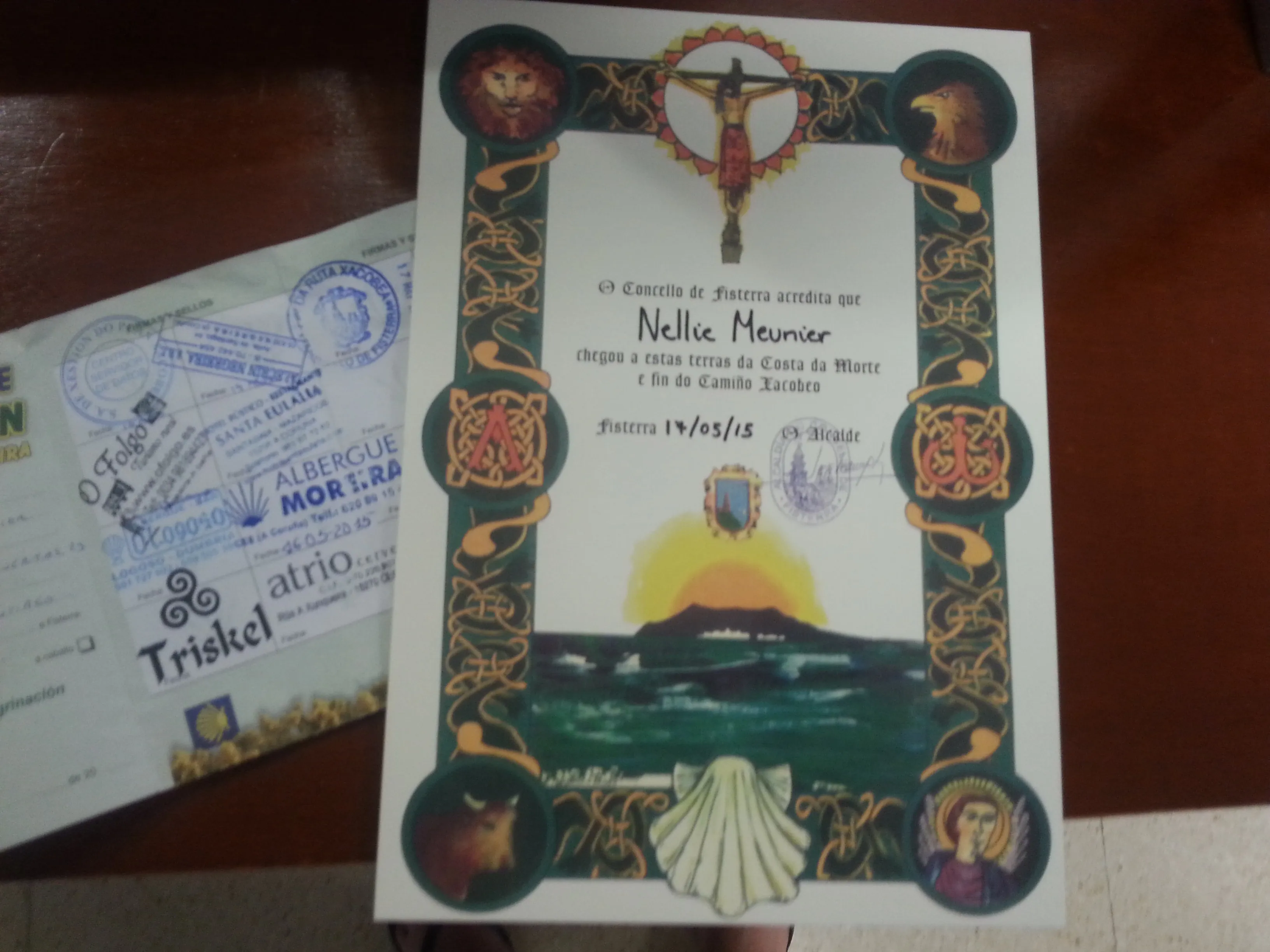
Fisterra and Muxía issue their own certificates for this continuation: the Fisterrana and the Muxiana. They are separate from the Compostela collected in Santiago.
Before leaving Santiago
Continue using the pilgrim credential that brought you to Santiago if it has enough space. New credentials are readily available in Santiago from the Pilgrim Office, Camino associations, albergues, hotels and shops selling pilgrim supplies. Ultreya travelers receive a credential in their pilgrim kit before the walk.
Collect stamps as you walk west. Churches, municipal hostels, private accommodation, cafés and other recognized businesses along the route provide them. The sequence of dated stamps shows that you travelled the marked route from Santiago to the coast.
How to obtain the Fisterrana
The Fisterrana certifies completion of the route from Santiago to Fisterra on foot, by bicycle or on horseback.
Bring your stamped credential to either of these locations in Fisterra:
- Fisterra Tourist Office: Praza da Constitución 31.
- Fisterra Municipal Pilgrim Hostel: Rúa Real 2.
Show the credential and request the Fisterrana in your name. The Tourist Office opens throughout the year, with hours that change by season. The council publishes the current schedule on its Tourist Office page, and the certificate itself is free.
Groups of more than ten people must contact the Tourist Office or municipal hostel before arriving. The council gives the telephone number +34 627 239 731 and email turismo@concellofisterra.gal for this purpose.
The certificate is collected in the town of Fisterra. The famous kilometre-zero marker and lighthouse stand approximately three kilometres farther away at the cape, reached by an uphill road and pedestrian path. Leave time to continue there after collecting the document, or visit the cape first and return to town.
How to obtain the Muxiana
The Muxiana records completion of the Camino to Muxía. Bring the stamped credential to Muxía’s municipal Tourist Information Office and ask for the certificate.
The office operates from two municipal locations according to the day and season:
- Muxía Town Hall: Rúa Real 35.
- Casa das Beiras: Rúa Virxe da Barca 49, on the way towards the sanctuary.
Current hours and the location serving pilgrims are published by the Muxía Tourist Information Office. Its contact numbers are +34 981 742 001 and +34 981 742 365.
After collecting the Muxiana, continue about 700 metres around Monte Corpiño to the Sanctuary of A Virxe da Barca. The church stands directly above the Atlantic beside the Pedra de Abalar and Pedra dos Cadrís, rocks connected with the legend of the Virgin arriving in a stone boat to encourage Saint James.
Can these certificates replace the Compostela?
The Compostela certifies a qualifying pilgrimage to Santiago. The Fisterrana and Muxiana certify the separate continuation from Santiago to the coast. Walking only from Santiago to Fisterra or Muxía does not earn a Compostela because the route moves away from the Apostle’s tomb.
Pilgrims who first complete a qualifying route into Santiago can collect the Compostela there, then continue west and collect one or both coastal certificates. Keep the credential with you throughout both parts of the journey.
Ultreya Tours can arrange the full walk from Santiago, shorter stages with private transfers, luggage movement and an overnight stay in Fisterra or Muxía. Extra time at the coast allows you to enjoy Langosteira beach, the fishing harbour, Cape Fisterra and the Sanctuary of A Barca after the day’s walkers have departed.