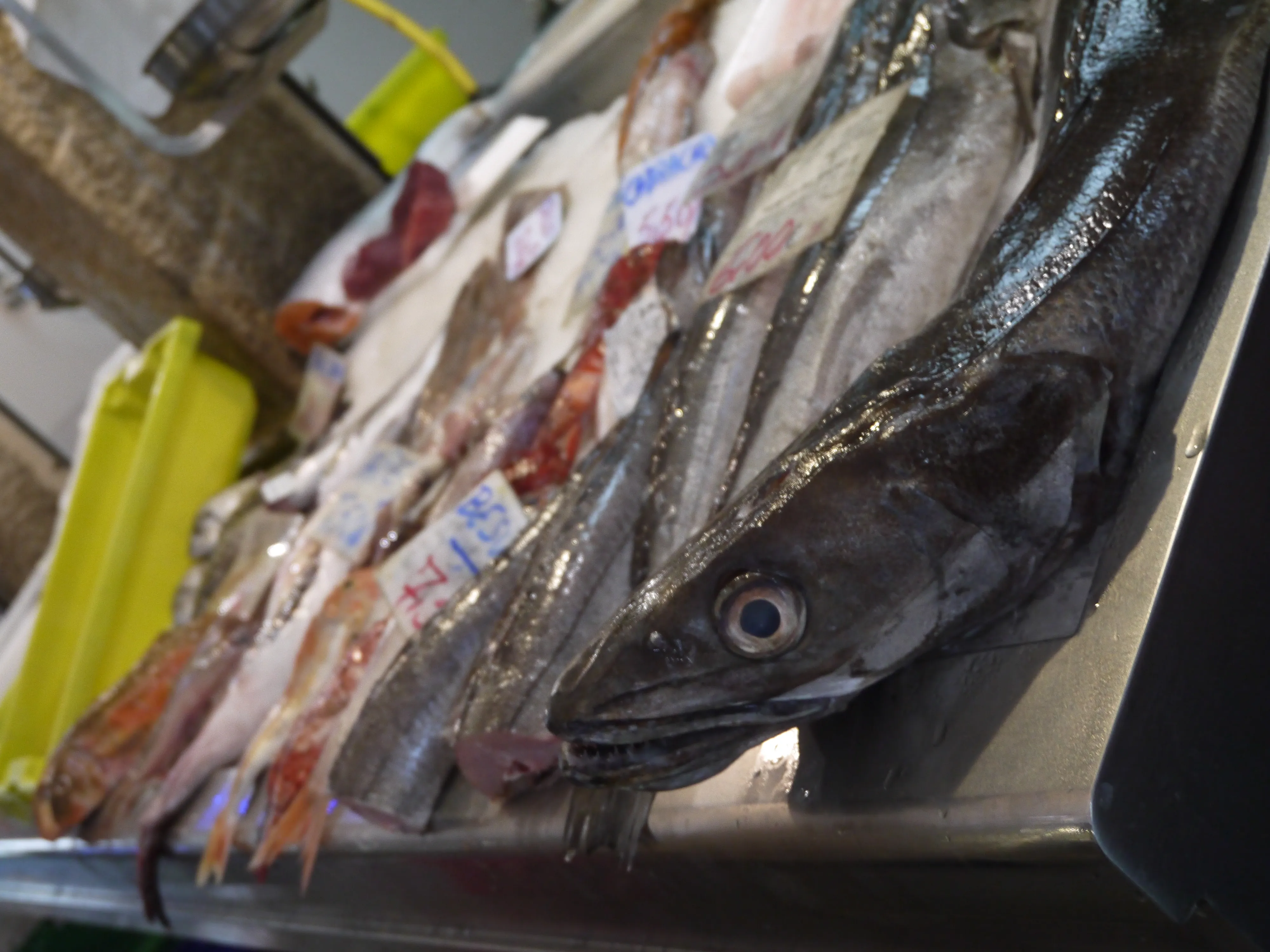
At a Galician fish counter, labels change with the auction and the season. Restaurants that buy well often present a short list of species and ask whether you want the fish grilled, baked or cooked a la gallega with potatoes, olive oil and paprika.
Names you will see
- Merluza is hake, delicate and usually sold in steaks or fillets.
- Rodaballo is turbot, a rich flatfish that works especially well grilled or roasted on the bone.
- Rape is monkfish, firm enough for rice dishes, stews and skewers.
- Lubina is sea bass; dorada is gilt-head bream.
- Lenguado is sole, while jurel is horse mackerel and caballa is mackerel.
- Bonito del norte is albacore tuna, especially associated with the summer season.
- Sardiña is sardine; xouba is the small sardine loved fried, grilled or baked into an empanada.
- San Martiño is John Dory, recognizable by the dark spot on its side. Ollomol is blackspot seabream and maragota is ballan wrasse, both familiar on Galician counters.
- Raia is skate, traditionally served a la gallega. Congro is conger eel, used in stews and rice dishes.
Ask for the price if a whole fish is sold by weight. A menu may show a price per 100 grams rather than for the entire dish. Also ask whether the fish is wild or farmed when that distinction matters to you.
Which fish is actually local?
A Galician restaurant may serve excellent fish landed locally alongside species brought in from elsewhere. Hake from Celeiro or Burela, sardines, horse mackerel, mackerel, small coastal fish, monkfish and turbot may come through Galician auctions, depending on season and catch. Mussels, clams, cockles and oysters can be farmed or gathered in the Galician rías.
Atlantic salmon is not a normal local catch and generally comes from aquaculture outside Galicia, especially Norway, Scotland or Ireland. Much of the tuna served year-round also arrives from outside Galician waters or from distant fleets. Summer bonito del norte is the useful exception to look for: albacore caught during the Cantabrian coastal season and sold fresh. Sea bass, gilt-head bream and turbot may be excellent but are often farmed, so ask if wild local fish matters to you.
Useful questions are ¿Es de la lonja? (Did it come through the fish auction?), ¿Es salvaje o de piscifactoría? (Is it wild or farmed?) and ¿Qué llegó hoy? (What arrived today?).
Buy it in Santiago’s market and have it cooked
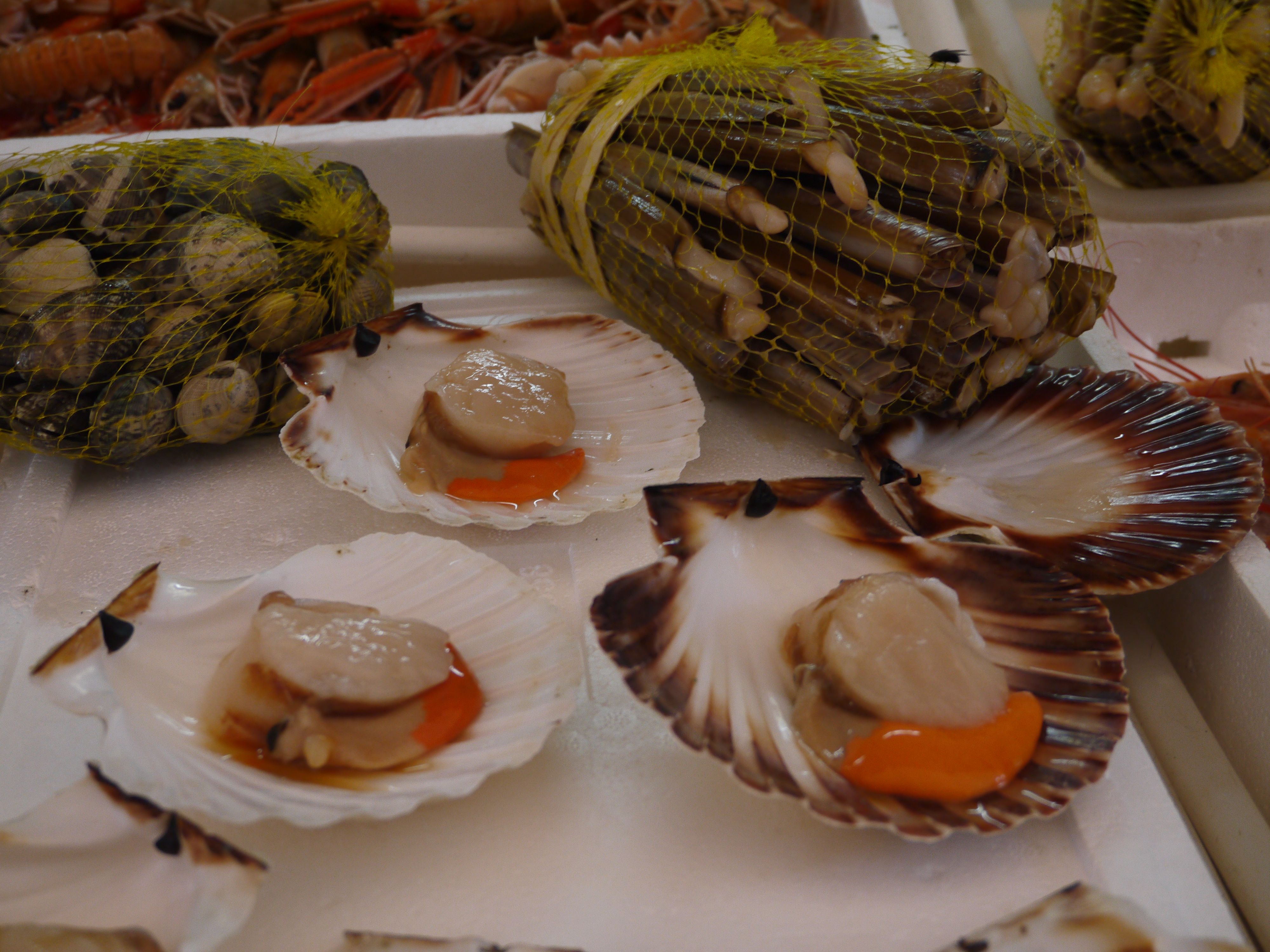
Santiago’s Mercado de Abastos is busiest in the morning, when the fish aisles display the day’s hake, monkfish, shellfish and small coastal species. One of its most enjoyable lunches begins at the counter: choose seafood from a market stall, then take it to Mariscomanía, which cooks customers’ market purchases for eating there or taking away. Ask the fishmonger what quantity you need and confirm the cooking service before buying, especially on a busy Saturday.
The market opens Monday to Saturday from 8 am to 2 pm; the liveliest browsing is generally between 9:30 am and 12:30 pm. Nave 5 contains additional food counters and shared seating, usually operating later into the afternoon. Arrive before lunch rush if choosing fish is as important as eating it.
Sardines and the night of San Juan
On the night of 23 June, fires are lit for the eve of Saint John. Along the Galician coast, the smoke of bonfires mixes with sardines cooking over grills. The saying por San Xoán, a sardiña pinga o pan means that by Saint John’s Day the sardine is rich enough for its fat to drip onto the bread.
The classic serving is simple: whole sardines grilled with coarse salt and laid over a slice of bread that catches the juices. Eat them with your fingers where the setting allows it. The smell clings to clothes, which is part of the night rather than a service failure.
Bonfires and public celebrations vary by municipality and can be changed because of wind or fire risk. Follow local safety restrictions and never assume that fires are permitted on a beach.
Choosing well
Look for clear eyes, bright skin and a clean sea smell at the market. In a restaurant, ask ¿Qué pescado llegó hoy? and let the answer guide the order. Elaborate preparation cannot improve fish that has spent too long waiting.
For shellfish vocabulary and Galicia’s mixed platters, continue with Seafood in Galicia. Food-led days in Santiago or the Rías Baixas can be included through Start Planning.