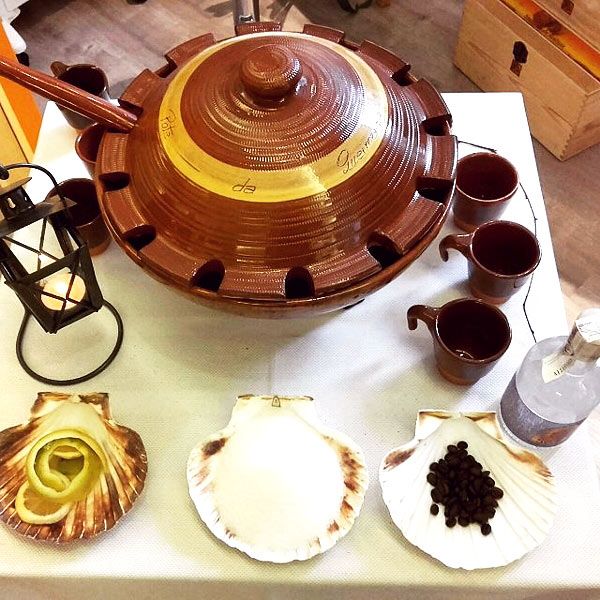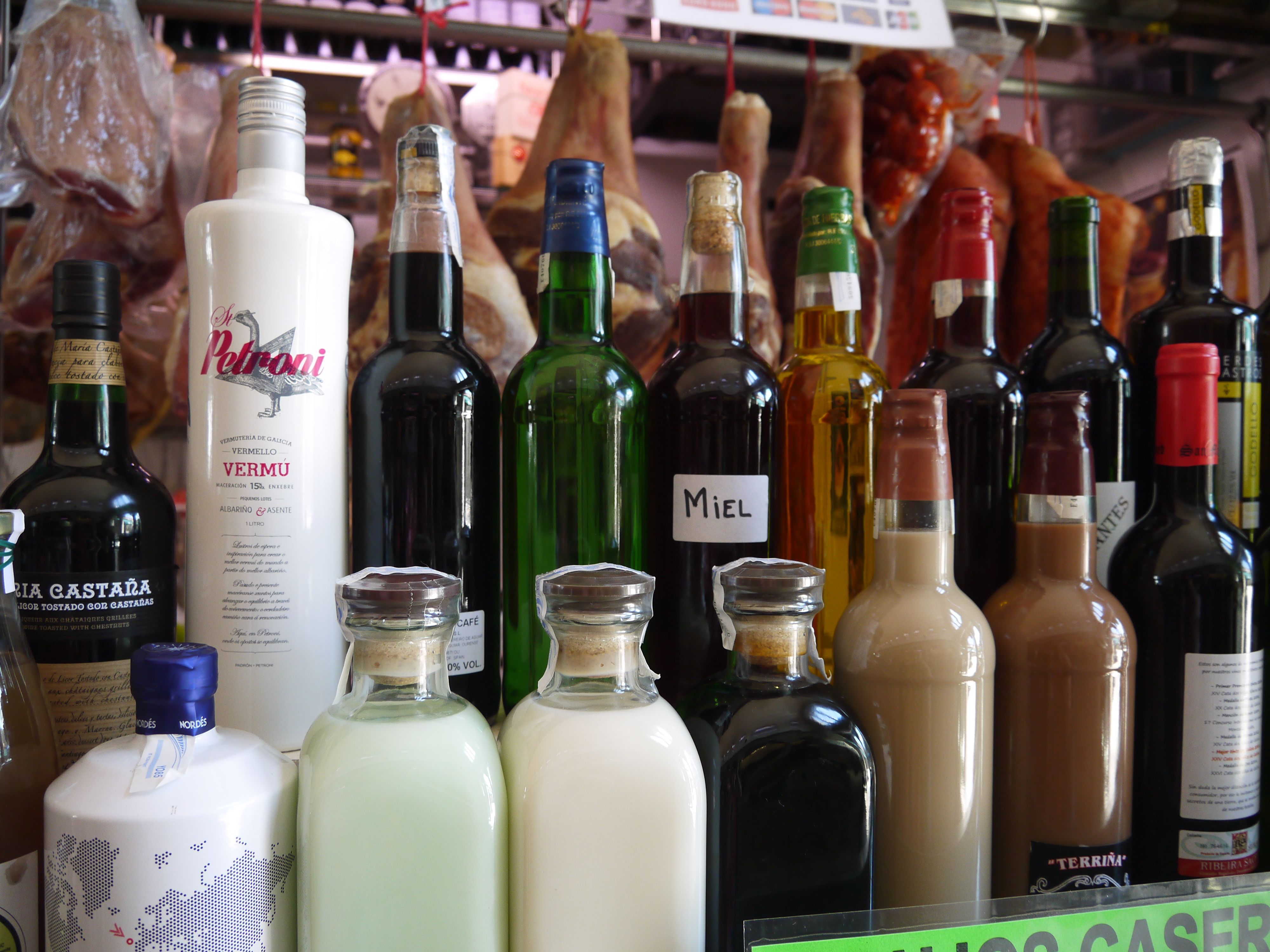
Galician families and restaurants often finish a celebration with coffee and a bottle passed around the table. The measure is small because the base is augardente, the grape spirit also called orujo elsewhere in Spain.
Licor café
Coffee beans or brewed coffee, sugar and augardente are macerated until the spirit becomes deep brown and aromatic. Recipes vary sharply. Some are dry and bitter; others are sweet enough to resemble dessert. It is normally served cold in a small glass.
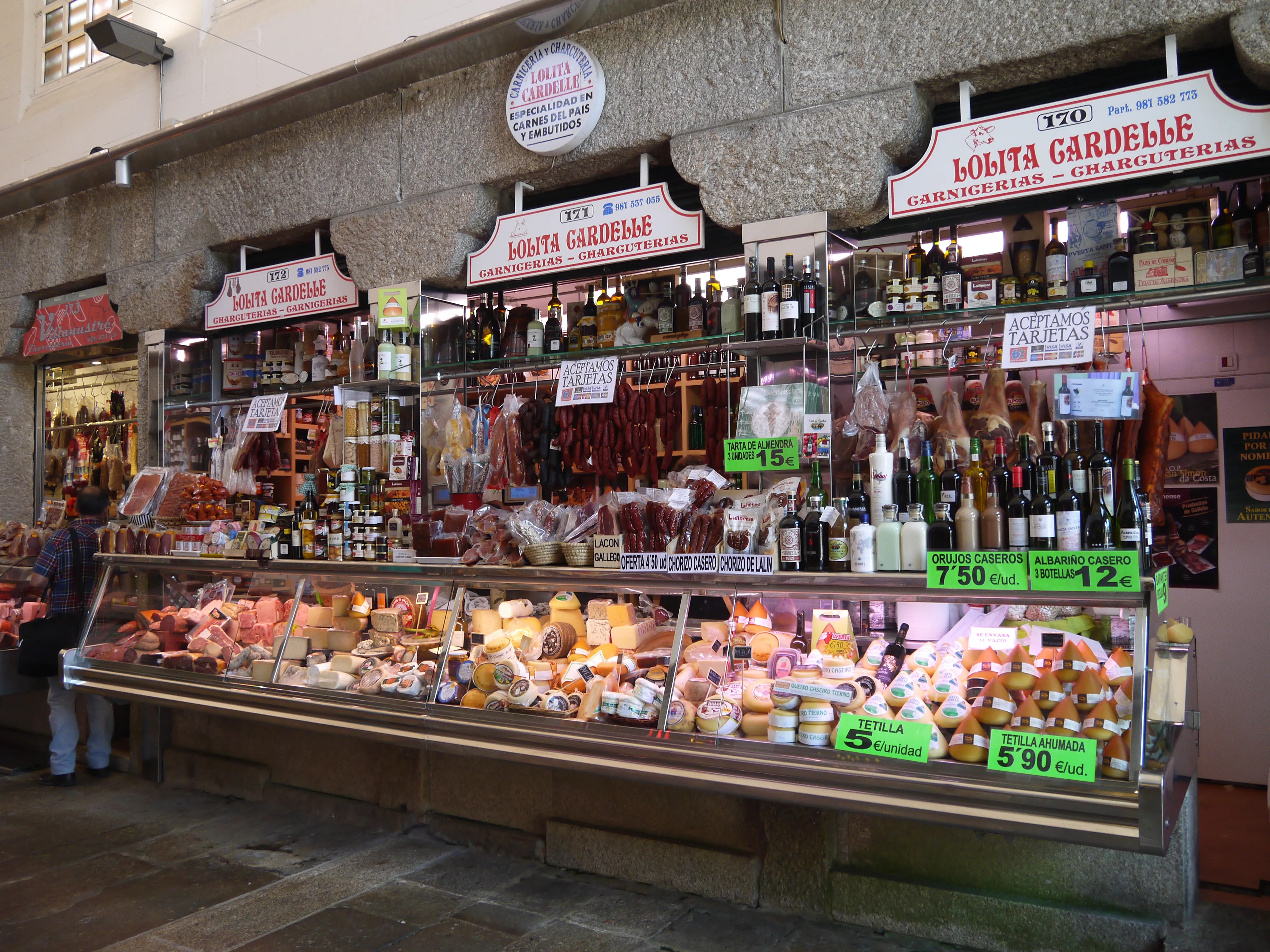
Homemade bottles are common, but strength and sugar are rarely printed on them. Taste slowly. The smoothness can disguise a high alcohol content.
Licor de herbas and augardente de herbas
Herb liqueur is made by macerating plants in grape spirit, often with aniseed, mint, chamomile, lemon verbena or other aromatics. Licor de herbas is sweetened; augardente de herbas is the drier protected category. Both are usually golden or greenish.
Crema de orujo
Cream liqueur combines dairy cream with spirit and flavourings. It is sweeter, lower in alcoholic bite and served chilled. It is the easiest of the three for many first-time visitors, although it is still an alcoholic drink rather than a cream dessert.
How to order
Ask for un licor café, un licor de herbas or una crema de orujo. A restaurant may offer a complimentary glass after a large group meal, but it should never be assumed. Commercial liqueurs covered by Galicia’s geographical indication give more consistency than an unlabelled homemade bottle.
A late drink at Modus Vivendi
For a night out in Santiago, Modus Vivendi occupies the former stables of the eighteenth-century Pazo de Somoza in Praza de Feixóo. Antonio López opened it in 1972 with the idea of a Scottish-style pub. Its licence for a café-bar especial, permitting amplified music, is described as the first pub licence of its kind in Galicia.
The stone basement has hosted generations of students, musicians and night owls. Old tickets, notes, coins and posters form part of the decoration because customers left them behind over five decades. Order a licor café at the bar if you want to continue the Galician after-dinner ritual in a place with real Compostela nightlife history. Check current opening times before going.
For the flaming drink with a spoken spell, see our separate history of the Galician queimada.