Galicia has produced major writers in Galician and Spanish, often moving between Madrid and Galicia while returning repeatedly to local speech, landscape and social life. Rosalía de Castro, Ramón María del Valle-Inclán and Camilo José Cela can all be encountered through places beside the Portuguese Way.
Two of their houses stand beside the final stages of the Portuguese Way. A third lies across the Arousa estuary. Together they turn the area around Padrón into an unusually rich literary geography.
Día das Letras Galegas: 17 May
Galicia celebrates Día das Letras Galegas every 17 May. The Real Academia Galega established the day in 1963, marking one hundred years since the date associated with the publication of Rosalía de Castro’s Cantares gallegos in 1863.
The date honours Galician language and literature. Each year the Academy selects a different figure whose work made a significant contribution in Galician; at least ten years must have passed since that person’s death. Schools, libraries, publishers and towns organize exhibitions, readings and performances, and 17 May is a public holiday in Galicia.
The first dedication belonged to Rosalía. That choice recognized a book that changed the standing of Galician after centuries in which it survived as a widely spoken language but had been pushed from many formal and literary settings.
Rosalía de Castro: a language returned to print
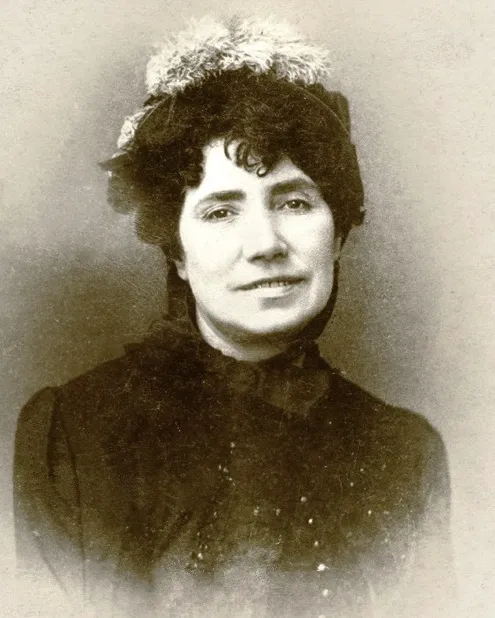
Rosalía de Castro was born in Santiago in 1837 and spent formative years around Padrón. Her life included financial uncertainty, family loss and periods away from Galicia. She married the historian Manuel Murguía, an important advocate of the Galician cultural revival known as the Rexurdimento.
With Cantares gallegos, Rosalía made rural voices, songs and speech central to a major literary work. The poems include affection and humour, but also migration, poverty and the contempt directed at Galicia and its language. Follas novas deepened that work with a darker examination of solitude, injustice and departure. She also wrote extensively in Spanish, including poetry and novels.
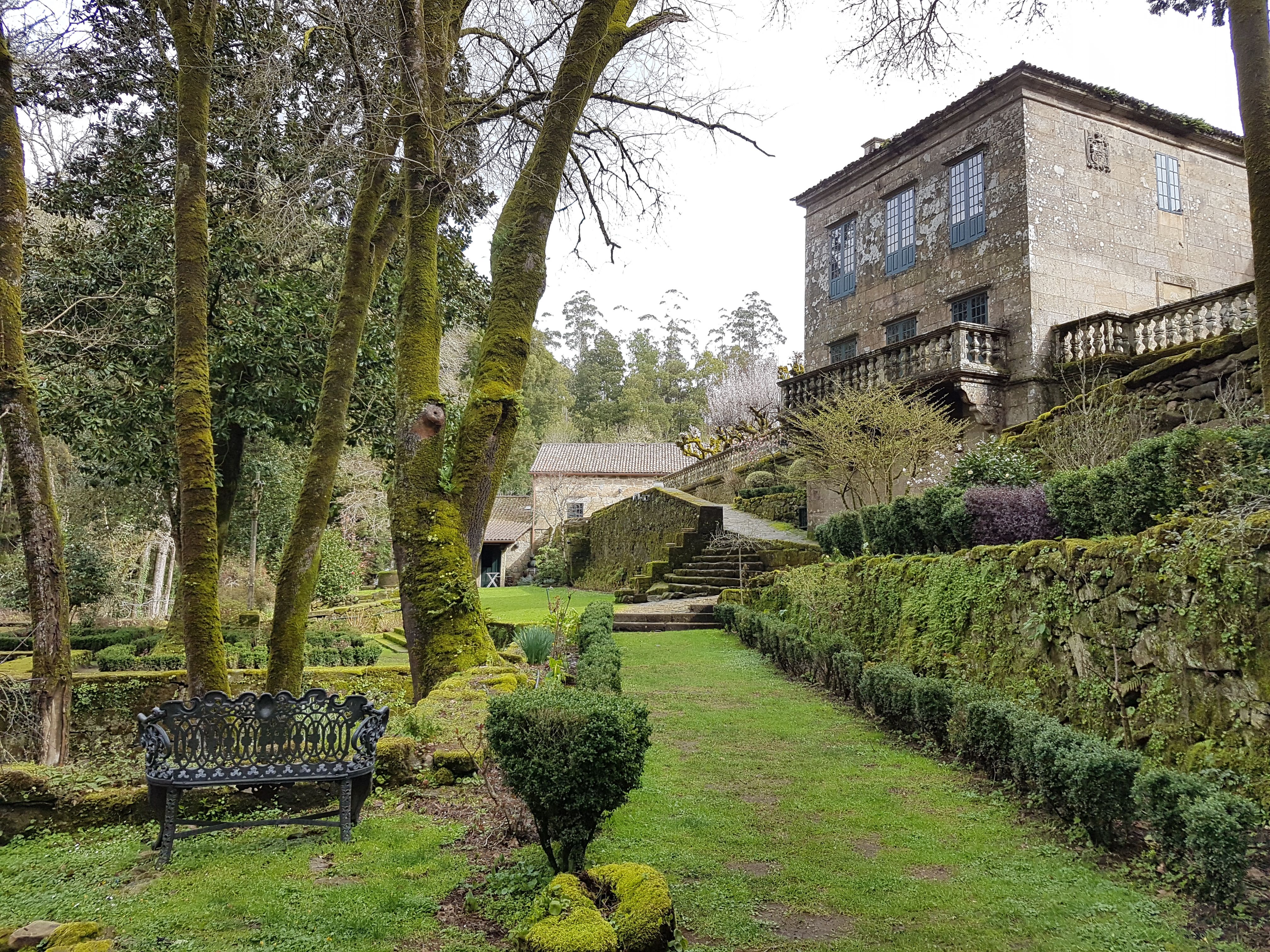
Her final home, A Casa da Matanza, is now the Rosalía de Castro House Museum at Rúa Maruxa Villanueva, A Matanza, 15917 Padrón. The museum publishes its opening information here. The rooms, garden and personal objects make the author’s domestic circumstances visible. Her grave is in the Panteón de Galegos Ilustres at San Domingos de Bonaval in Santiago.
Valle-Inclán: Galicia transformed into theatre
Ramón María del Valle-Inclán was born in Vilanova de Arousa in 1866. He studied in Santiago, travelled to Mexico and built much of his career in Madrid. His carefully cultivated appearance, with long beard, cape and round spectacles, became nearly as famous as his books.
Valle-Inclán wrote fiction and theatre in Spanish. Galicia enters his work through decaying manor houses, violent family histories, superstition, political memory and speech sharpened for dramatic effect. The Sonatas follow the fictional Marqués de Bradomín. The Comedias bárbaras create a harsh, mythical Galicia ruled by appetite, lineage and collapsing authority.
His most influential dramatic idea was the esperpento, a form that distorts people and institutions as if reflected in a concave mirror. In Luces de bohemia, grotesque exaggeration becomes a precise way of exposing political and social absurdity.
Vilanova preserves his birthplace as the Casa do Cuadrante, at Rúa Luces de Bohemia, s/n, 36620 Vilanova de Arousa. The museum’s official visitor page gives current hours. Walkers on the Portuguese Spiritual Way pass through Vilanova, so this is a genuine Camino visit rather than a distant literary excursion.
Camilo José Cela: Iria Flavia and postwar Spain
Camilo José Cela was born at Iria Flavia in 1916. He wrote chiefly in Spanish and became one of the most prominent Spanish novelists of the twentieth century. La familia de Pascual Duarte appeared in 1942 with a violent first-person voice later associated with tremendismo. La colmena, published in Buenos Aires in 1951 after censorship problems in Spain, follows a large cast through the hunger and constraint of postwar Madrid.
Cela also wrote travel books. Viaje a la Alcarria records roads, lodgings, conversations and small observations rather than presenting travel as a sequence of monuments. He received the Nobel Prize in Literature in 1989.
His museum occupies the eighteenth-century Casas de los Canónigos at Santa María 22, Iria Flavia, 15917 Padrón, opposite the collegiate church and close to the Camino. The collection includes manuscripts, correspondence, library material and personal objects. Cela is buried in the nearby cemetery of Adina. The Fundación Camilo José Cela provides practical information.
Castelao and other voices to know
Alfonso Daniel Rodríguez Castelao was born in Rianxo in 1886 and became a writer, artist, doctor and central figure in twentieth-century Galician nationalism. His drawings expose poverty, emigration and political hypocrisy with very little decoration. Sempre en Galiza, written in exile, remains one of the defining works of Galician political thought. Rianxo lies across the Arousa estuary from Vilanova.
Emilia Pardo Bazán, born in A Coruña in 1851, brought European naturalist debate into Spanish fiction and argued persistently for women’s education and intellectual equality. Ramón Otero Pedrayo, from Ourense, wrote novels, essays and geographical studies that treated the Galician landscape as a historical record. Their work helps explain why Galician literature cannot be understood from one language, one city or one political position.
Pilgrims following the Portuguese Spiritual Way join the central Portuguese route before Padrón. On the final walking stage towards Santiago, they pass through Iria Flavia and can visit the Cela museum when opening times permit. The Rosalía museum is nearby in Padrón, reached by a short detour rather than standing directly on the marked line.
A literary stop before Santiago
Allow more than the minimum overnight in Padrón if both museums are important to you. Check current opening days, since small museums may close at lunchtime or on particular weekdays.
Reading one short work before arrival changes the visit. Try selected poems from Cantares gallegos, Valle-Inclán’s Luces de bohemia, or the opening chapters of Cela’s La colmena.
Our Portuguese Spiritual Way Signature journey passes through Vilanova and continues through Padrón and Iria Flavia. Tell us if you want museum opening times and literary visits built into the walking plan.