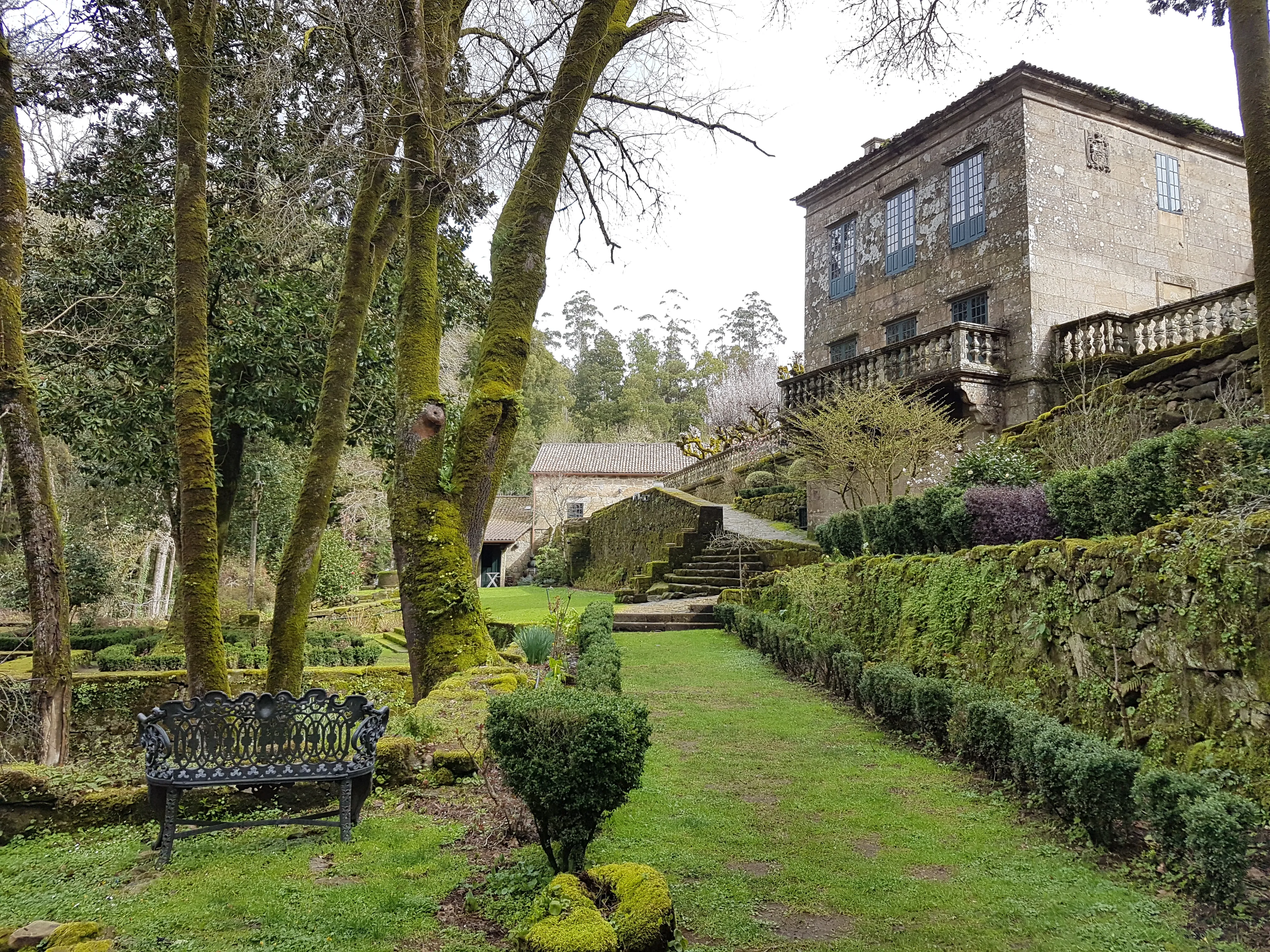
The word pazo comes from the same Latin root as palace, but a Galician pazo is more specific than a grand house. It is a country residence connected with land, income and local power. Most belonged to noble families or prosperous lineages and stood at the centre of a working estate.
Their architecture grew over time. An older defensive tower might be absorbed into a more comfortable residence. A chapel allowed the household to hear Mass close to home. Granaries, wine cellars, mills and stables reveal how the estate operated. The dovecote, often circular and built in stone, was both practical and a privilege associated with status. Heraldic shields recorded marriages and inheritance for anyone approaching the gate.
Pazos became especially prominent between the sixteenth and eighteenth centuries, when Galician families converted medieval authority into rural estates suited to a different age. Their settings matter. Stone walls, terraces, orchards and watercourses join the house to a landscape that supplied food, timber, wine and rent.
Pazo do Faramello: industry beside the Camino
The Pazo do Faramello, between Padrón and Santiago, challenges the idea that every pazo began with agriculture or a feudal tower. It grew beside the Royal Paper Factory of Faramello, founded in 1710. Water from the river powered the mills, and the surviving channels and industrial remains are central to the history of the property.
Its founder was connected with Genoa, and the early eighteenth-century buildings combine Galician civil Baroque with Italian influence. Stone terraces descend towards the water through a garden that feels closely fitted to the terrain rather than imposed upon it.
Faramello is also the last pazo crossed by the Portuguese Way before Santiago. Pilgrims pass its estate on the approach from Padrón, although visiting the house and private gardens requires following the property’s current arrangements. The setting brings industrial history, designed landscape and pilgrimage into the same small valley.
The current Señor del Faramello, Gonzalo Rivero, often receives visitors personally and explains the house as a lived family inheritance rather than a museum display. Gonzalo is a Knight of the Order of Santiago and a good friend of Ultreya Tours. Among the family traditions he shares are the Holy Door hammer entrusted to the house and an extraordinary royal privilege granted in 1815: the Señor del Faramello may enter Santiago Cathedral on horseback. The privilege has never been exercised, and Gonzalo has no intention of testing it.
Private access must be arranged. Ask Ultreya Tours to put you in contact or to add a guided Faramello visit to a Portuguese Way journey. When Gonzalo is available, the opportunity to hear the story from the owner is a much richer experience than seeing the gates from the Camino.
One historical object at Faramello has particular relevance to Santiago Cathedral: a painting showing the Pórtico da Gloria before much of its color disappeared. Conservators have used historic visual records of this kind when studying the Pórtico’s former polychromy.
Pazo de Oca: water, stone and theatrical gardening
The Pazo de Oca, near A Estrada, is the clearest expression of the great Galician Baroque estate. The house, chapel and gardens form a carefully staged ensemble. Water runs through channels and fountains before opening into two long ponds. Their stone boats, planted borders and reflections give movement to the central axis.
The grounds retain several different ideas of a garden. Formal compartments and clipped box sit beside productive areas, woodland and later Romantic planting. Camellias that now rise above visitors began as exotic acquisitions. The garden continued to change as each generation added plants, adjusted paths or altered the balance between beauty and production.
Oca is sometimes nicknamed the “Galician Versailles,” but that comparison can obscure what is local. The grey granite, constant water, orchard ground and relationship between garden and estate belong to Galicia’s climate and rural economy. Its design is courtly, while its materials and working history remain Galician.
Pazo de Rubianes: lineage, vines and winter flowers
At Pazo de Rubianes, near Vilagarcía de Arousa, the documented history reaches back to a medieval tower and the Caamaño family. An inscription records García de Caamaño’s house in 1411. The nearby town that became Vilagarcía took its name from the same lord.
The building seen today reflects a later transformation. After years in France during the Napoleonic period, Miguel Gayoso de Mendoza ordered the ruined residence rebuilt. The old tower was removed and the house acquired the French château-like appearance it retains.
Rubianes remains a working estate. Around 25 hectares of its 80 hectares are vineyards producing Albariño within the Rías Baixas denomination. The garden contains thousands of camellias, including hundreds of varieties, as well as monumental magnolias and eucalyptus planted during the era of botanical collecting. Winter flowering and wine production are parts of the same estate rather than separate attractions.
What makes a pazo visit special
A pazo brings several versions of Galicia into one estate. The house preserves the ambitions of the family that built it; the chapel and heraldic shields record faith, marriages and inheritance; the dovecote, winery, mill and hórreo reveal the work that sustained the property. Beyond the formal rooms, gardens move between clipped box, camellias, orchards, vineyards, water channels and native woodland.
The three estates offer very different experiences. Faramello is intimate and personal, especially when Gonzalo Rivero shares the stories of his family home. Oca has the scale and theatrical water gardens of a great Baroque estate. Rubianes combines a lived aristocratic history with an important camellia collection and working Albariño vineyards. Visiting more than one shows that a pazo is a Galician tradition rather than a single architectural formula.
Ultreya Tours can arrange the visit that best suits the route and season. This may be a private tour with the owner, a garden visit, an Albariño tasting or a special lunch in a historic setting. Transport matters because these estates stand in the countryside, away from the centres where most travelers stay.
Pazos can be included as private visits, special lunches or overnight stays on a tailored Camino. Start planning with Ultreya Tours if gardens and historic houses should form part of the journey rather than remain optional detours.