The Le Puy Way, or Via Podiensis, begins at Le Puy-en-Velay and crosses roughly 750 kilometres of France to Saint-Jean-Pied-de-Port. From there, pilgrims can cross the Pyrenees and continue along the Camino Francés.
It is one of Europe’s great long walks in its own right. Volcanic hills, the Aubrac plateau, the Lot valley, limestone plateaus, Gascon farmland and the Basque foothills unfold over five demanding weeks. The food, language and accommodation culture are distinctly French until Saint-Jean-Pied-de-Port, where the Spanish Camino lies ahead rather than behind.
Godescalc and an early named pilgrim
In 951, Godescalc, bishop of Le Puy, travelled to Santiago with a substantial retinue. He is one of the earliest foreign pilgrims known by name. His journey helped establish the association between Le Puy and Compostela long before the modern walking trail was marked.
The twelfth-century Codex Calixtinus describes four principal roads through France. The Le Puy tradition belongs to the route that gathered pilgrims toward Ostabat before the Pyrenean crossing. The contemporary GR65 was laid out from 1970. It connects authentic shrines, bridges and medieval towns, while choosing practical modern paths between them.
Departure from Le Puy-en-Velay is theatrical. The cathedral climbs directly out of the volcanic city, and pilgrims traditionally attend morning Mass before descending its broad staircase. The Black Madonna, the chapel of Saint-Michel d’Aiguilhe on a needle of volcanic rock and the red statue of Notre-Dame de France make the city unlike any other Camino beginning.
Roman inheritance
Roman roads crossed the regions traversed by the Via Podiensis, and towns reused older bridges, crossings and settlement corridors. The Le Puy route nevertheless owes its identity to medieval shrines and hospitality rather than to one continuous Roman road. Chapels, abbeys, hospitals and bridge towns determined where pilgrims stopped.
Conques, Cahors and Moissac
The early stages cross the Velay and Margeride through stone villages and cattle country. At Saugues, legends of the Beast of Gévaudan add darker folklore to the route. The high Aubrac plateau can feel immense and empty, with open grassland, drystone walls and rapidly changing weather. Its traditional restorative dish is aligot, potatoes beaten with local cheese until they stretch from spoon to plate.
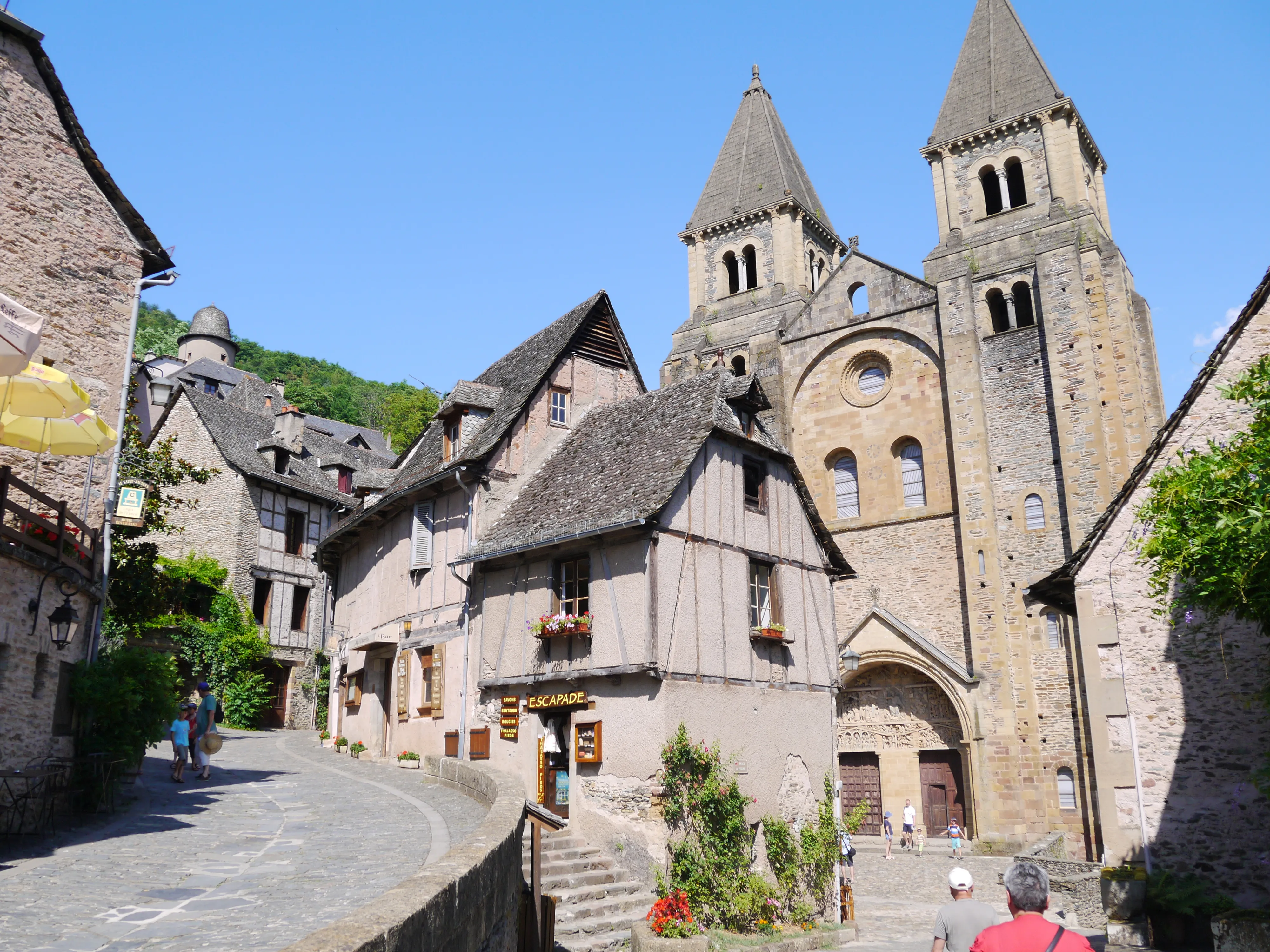
At Conques, tightly packed roofs descend toward the abbey church of Sainte-Foy. The great tympanum presents the Last Judgment in vivid carved detail, while the treasury holds the golden reliquary of the young martyr Sainte Foy. Evening light on the church and the blessing of pilgrims make Conques one of the defining stops of the entire route.
The path continues through the Lot valley and the cliffside town of Rocamadour can be reached by a significant variant. Cahors sits within a loop of the Lot and is entered across the fortified fourteenth-century Pont Valentré. Vineyards around the city produce dark Malbec-based Cahors wine.
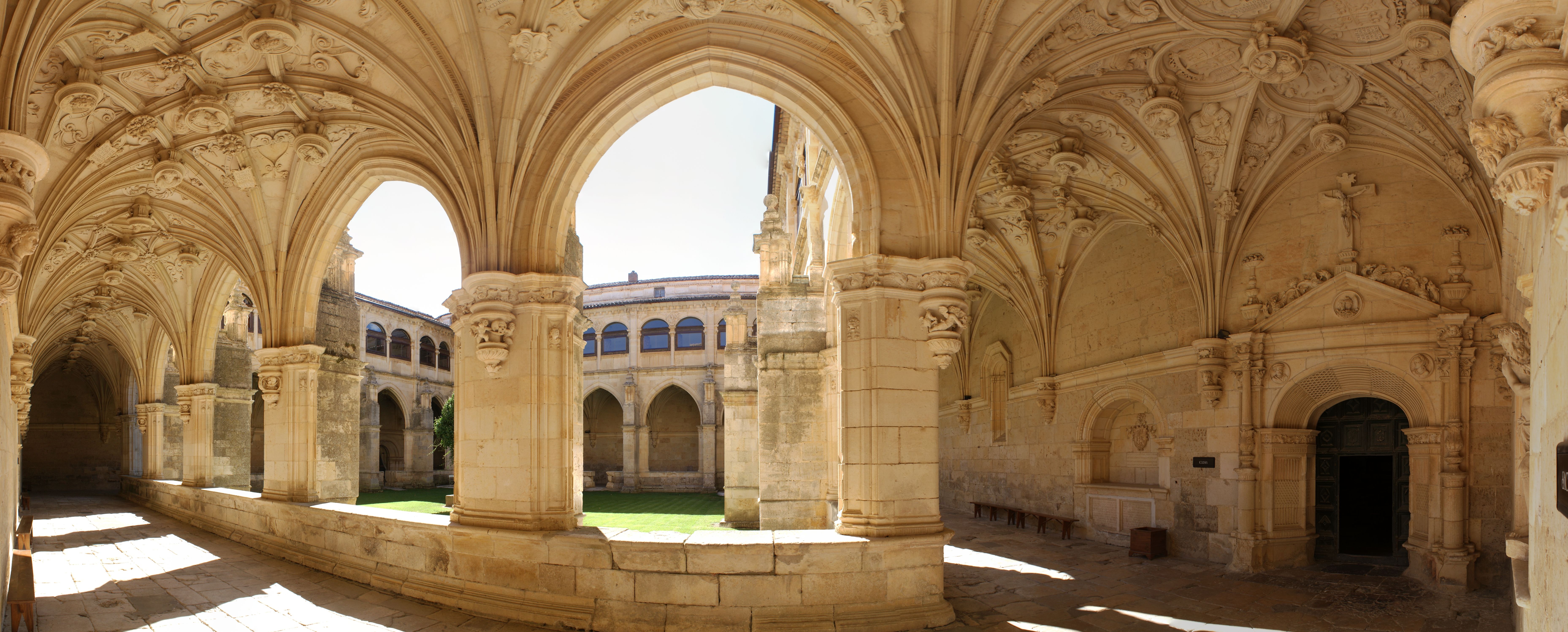
At Moissac, the abbey of Saint-Pierre preserves an extraordinary Romanesque portal and cloister whose carved capitals depict biblical stories, foliage and fantastic creatures. Farther west, Auvillar, Lectoure and La Romieu bring arcaded squares, hill towns, Armagnac country and the collegiate church associated with Cardinal Arnaud d’Aux.
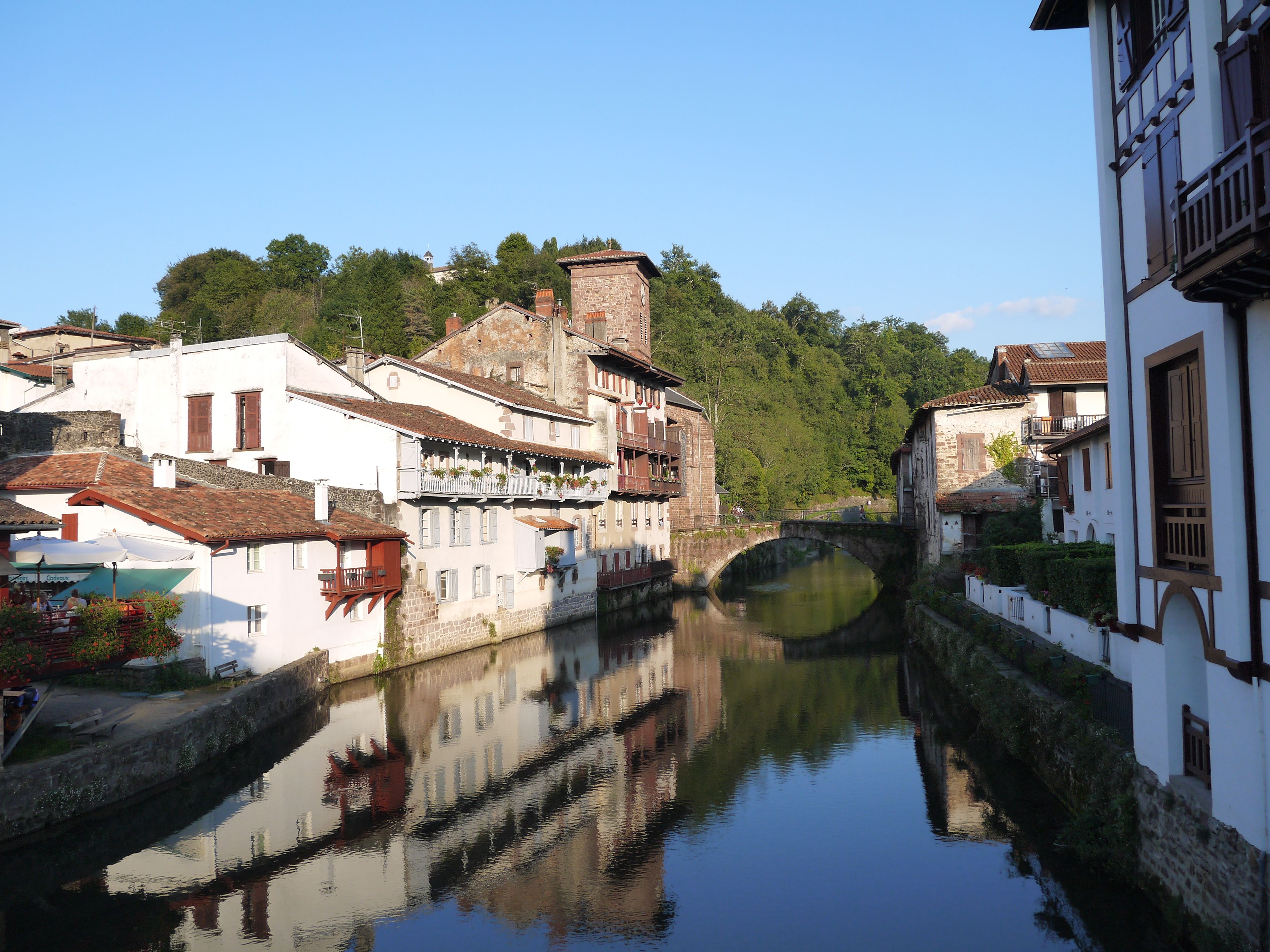
Farther south, the road passes through Gascony and the Basque foothills. At Navarrenx, massive defenses surround one of France’s early bastide-style fortified towns. Routes converge near Ostabat, echoing the medieval gathering of pilgrims from different parts of Europe. Red-and-white Basque houses then announce the approach to Saint-Jean-Pied-de-Port.
A different pilgrim culture
French gîtes d’étape often offer a shared evening meal, creating community around one table. Reservations are important in small villages, and some stages cross long rural sections with limited services. Meals follow local rhythms, and the route rewards enough French to greet hosts, confirm dinner and discuss the next day’s weather.
Many walkers complete the Via Podiensis in sections over several years. Continuing directly across the Pyrenees is a magnificent ambition, but Le Puy to Santiago is more than 1,500 km. Treating Saint-Jean as a meaningful completion point allows the French and Spanish journeys to breathe.
How it compares
The Le Puy Way has a distinct French walking culture, cuisine and accommodation tradition. It is a long rural journey with major changes in landscape, from volcanic Velay and the Aubrac to the Lot valley and Basque country. Walkers continuing into Spain should think of Le Puy and the Camino Francés as consecutive journeys with different logistics.
Ultreya Tours does not currently organize tours on the Le Puy Way. Our full French Way begins in Saint-Jean-Pied-de-Port. If you hope to begin in Le Puy, contact us and we will explore whether a tailor-made arrangement is possible.