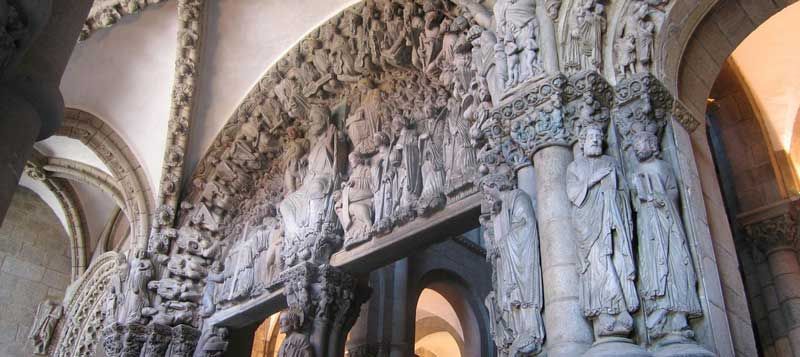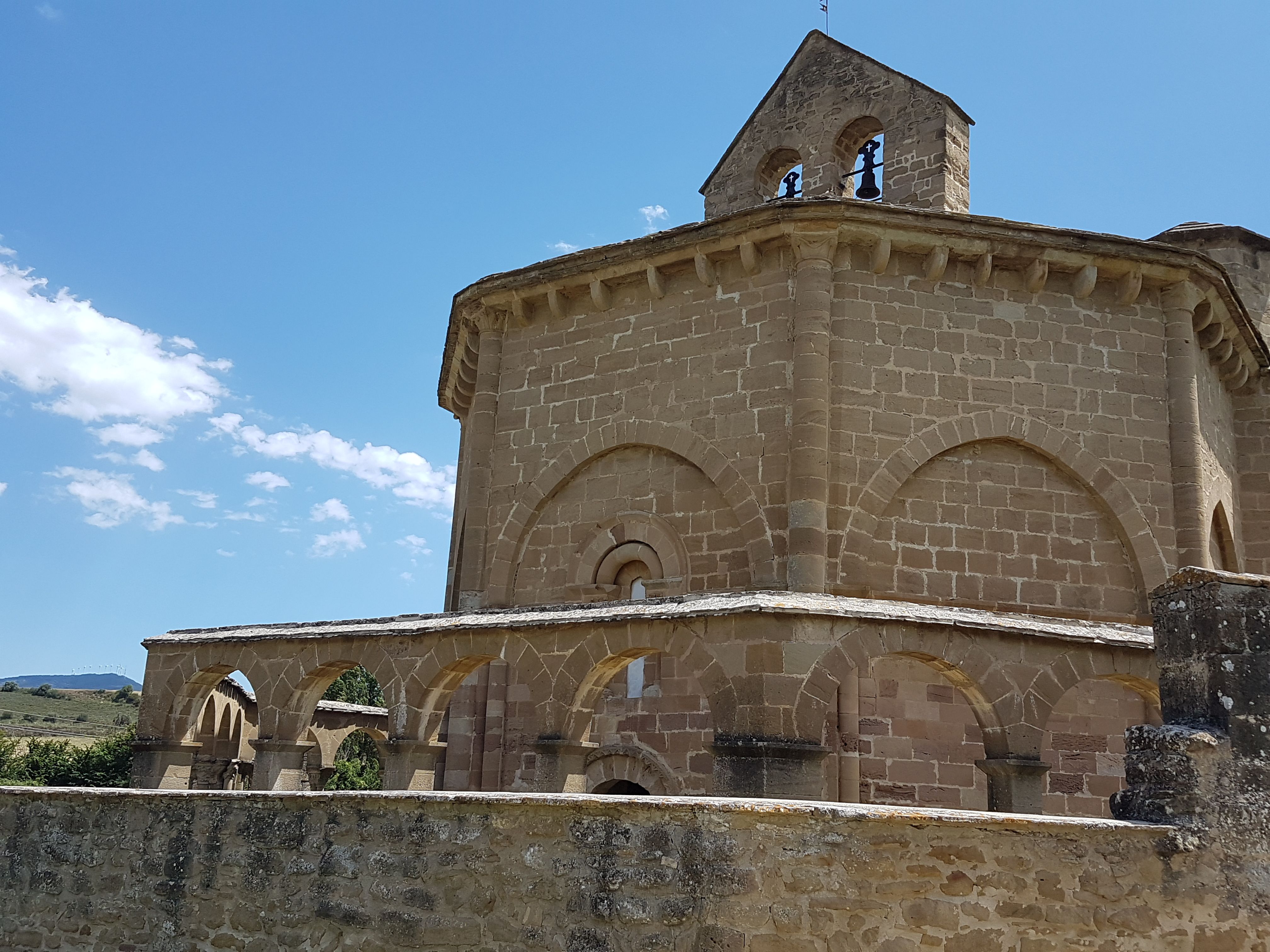
Romanesque churches were built across the Camino during the eleventh and twelfth centuries. Their sculpture occupies portals, capitals, apses and canecillos, the projecting corbels beneath a roof. It taught scripture, marked sacred thresholds and gave masons room for humour and warning.
At San Martín de Frómista, the balanced exterior and twin towers make the building look exceptionally coherent. Restoration around 1900 was extensive, so visitors see a medieval monument filtered through modern decisions. Walk around the apses to find animals, musicians and contorted figures beneath the roofline.
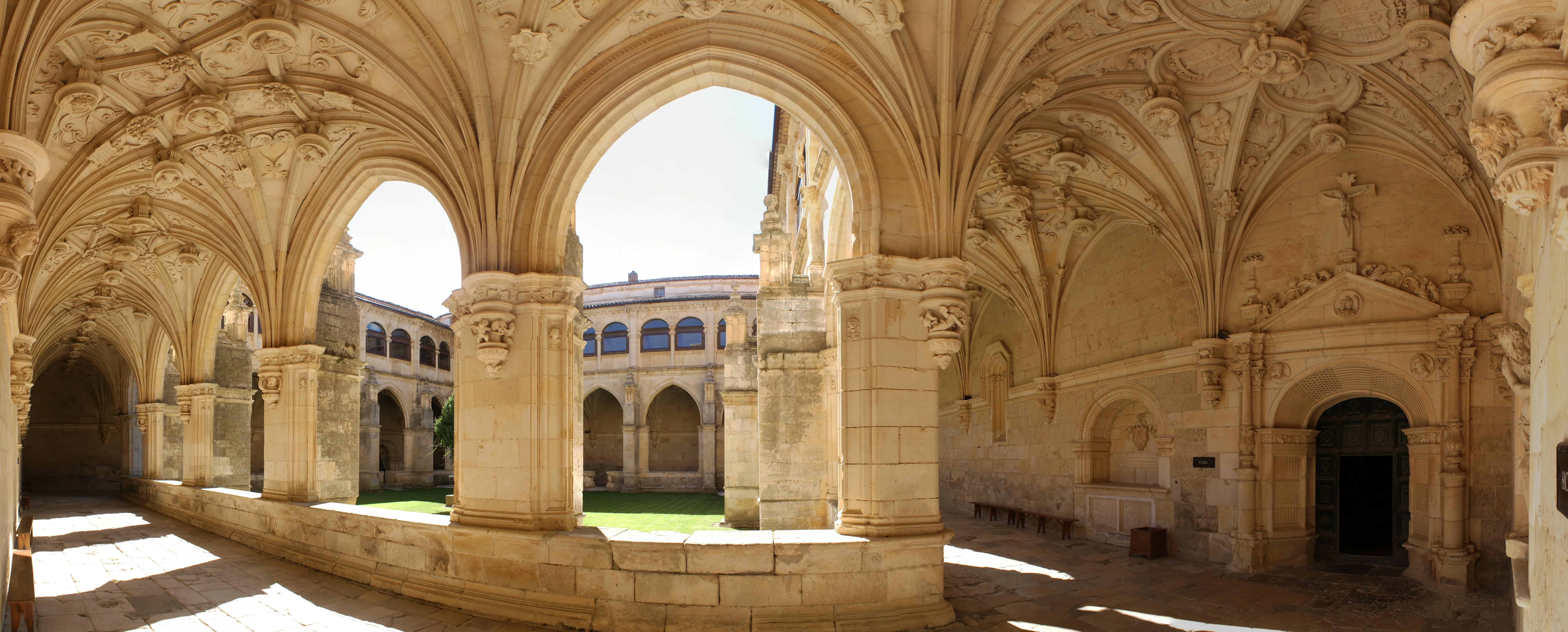
At Santa María la Blanca in Villalcázar de Sirga, the architecture moves towards Gothic scale while retaining dense sculptural portals. At Carrión de los Condes, Santiago’s western façade includes Christ in Majesty and an extraordinary frieze of craftsmen at work, including smiths, scribes and musicians. San Zoilo’s later cloister shows how the same towns continued building beyond the Romanesque.
León offers two essential comparisons. The carved doorway of San Isidoro and the royal pantheon belong to an elite religious complex, while the Cathedral demonstrates the later Gothic appetite for height and stained glass.
Portomarín: a church moved uphill
The church now called San Nicolás, formerly San Juan, was built as a fortified church connected with the Order of Saint John. Its heavy upper walls and crenellated walk combine worship with defence. The three portals use concentric archivolts and carved figures to control entry and communicate status.
In the 1950s, construction of the Belesar reservoir condemned the old riverside town. The church was numbered stone by stone and rebuilt on higher ground. Numbering marks remain visible. Its present setting preserves the monument while severing it from the medieval streets and river level for which it was designed.
How to look
Begin with location: portal, capital or roof. Identify what the sculpture does structurally before searching for a symbolic meaning. Compare repeated figures and notice tool marks. Many animals and obscene corbels have competing interpretations; certainty is often less honest than close description.
Romanesque sculpture was painted, repaired and rearranged. Pale stone is not its original complete appearance. The route from Frómista to Portomarín shows survival, reconstruction and relocation alongside medieval invention.
Our full French Way links Frómista and Portomarín. Tell us if architectural visits should determine the day’s timing rather than being fitted around a fixed arrival hour.