Portugal can be much more than the airport before a Portuguese Camino. Its main north-south railway links Lisbon, Coimbra, Aveiro and Porto, while Fátima and the Upper Douro require a little more planning. The right combination depends on whether you want cities, wine, religious heritage or a quieter transition into walking.
Porto: begin where the route begins
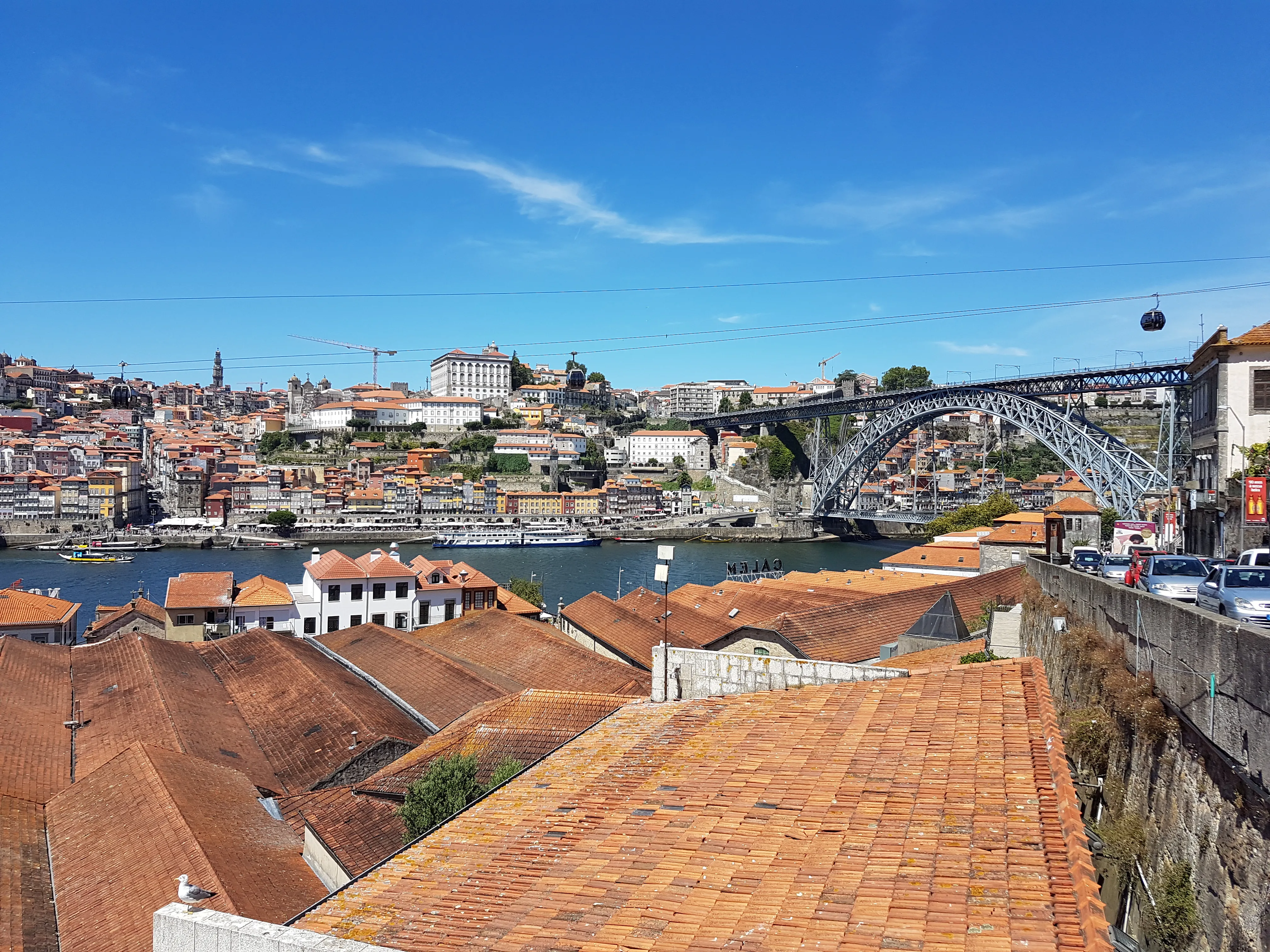
Porto deserves at least two nights before any journey starting in the city. The Cathedral is both a major monument and the traditional place to begin following the yellow arrows. Below it, the medieval streets descend toward Ribeira and the Douro. Across the Dom Luís I Bridge, Vila Nova de Gaia contains the historic port-wine lodges.
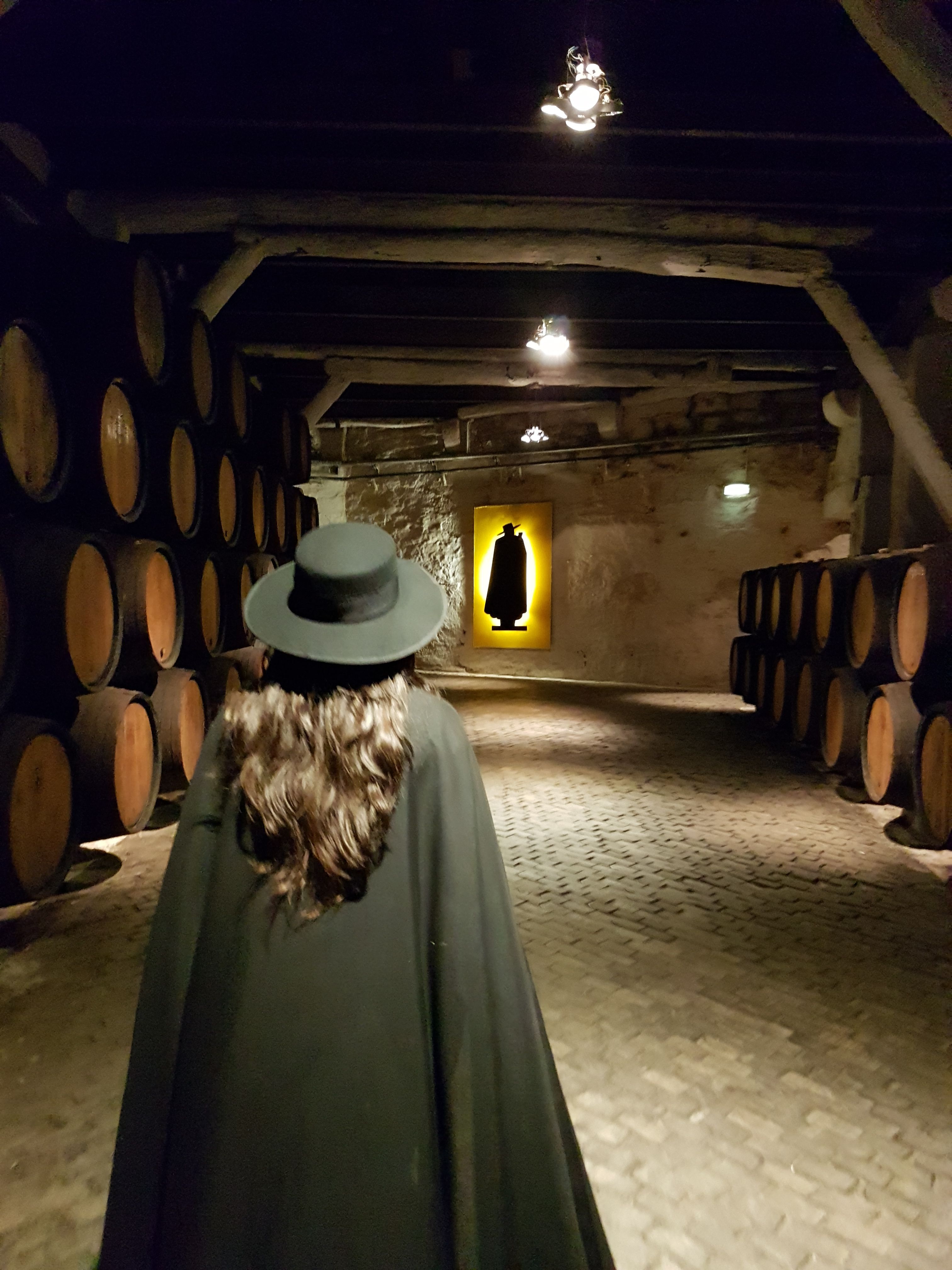
Use the first day for the city and the second for a cellar visit, a walk along the river or a meal in Matosinhos. Sandeman and Ferreira offer two useful perspectives on the port trade, and we can reserve visits for private groups. Our guide to Porto’s port-wine cellars explains their history and what happens during a tasting.
Do not schedule a late tasting the night before the first stage. Keep the final evening relaxed, prepare the luggage tag and daypack, and confirm whether your first walk follows the Central or Coastal route.
Lisbon: Portugal’s grand arrival
Lisbon is the best international gateway for travelers who want a city stay before continuing north. Allow two or three nights. Belém brings together the Jerónimos Monastery, the Tower of Belém and Portugal’s maritime history; Alfama climbs through narrow streets toward the castle; Baixa and Chiado are better for an unhurried evening and dinner.
Fast Alfa Pendular and Intercidades trains connect Lisbon with Porto. Long-distance services leave from Santa Apolónia or Oriente depending on the train. Book through CP and check the departure station printed on the ticket. The journey is roughly three hours on faster services, making Lisbon and Porto easy to combine without a car.
A sequence of three nights in Lisbon followed by two in Porto works well after a transatlantic flight. It gives the body time to adjust before the first walking stage and avoids placing a long rail journey and Camino departure on the same morning.
Fátima: a Marian pilgrimage before Santiago
Fátima became one of the world’s principal Marian pilgrimage centers after the reported apparitions of 1917. The Sanctuary includes the Chapel of the Apparitions, Basilica of Our Lady of the Rosary and Basilica of the Holy Trinity. Pilgrims may attend Mass, join the evening rosary and candle procession, and visit Aljustrel, where the shepherd children lived.
Fátima is easier by road or coach than by train. The station called Fátima is not beside the Sanctuary, while the coach terminal is only a short walk away. By road, Fátima lies roughly midway between Lisbon and Coimbra and can become an overnight stop rather than a hurried excursion.
For religious groups, Fátima before the Portuguese Way creates a coherent pilgrimage. We can combine it with private transport to Porto, Tui or Baiona and arrange the Camino around the group’s liturgical needs.
The Upper Douro: vineyards before the walking route
The Alto Douro Wine Region follows steep, terraced slopes far inland from Porto. Grapes have been cultivated here for centuries, and the demarcated port-wine region dates to 1756. The landscape is the attraction as much as the wine.
The Linha do Douro train follows the river east from Porto through Peso da Régua toward Pinhão. A day trip is possible, but one or two nights in the valley give time for a winery visit, a river journey and dinner without racing back to the city. Quinta appointments and local transfers should be booked, because many estates sit high above the stations and river.
Place the Douro before the final nights in Porto. Returning to Porto the day before the Camino is more comfortable than attempting to leave a rural quinta and begin walking on the same morning.
Coimbra: university, music and a natural stop north
Coimbra sits on the principal Lisbon-Porto railway corridor. Its university occupies the old royal palace above the Mondego, with the Joanina Library, chapel and ceremonial rooms at the heart of the visit. The old cathedral and steep lanes below the university reveal a city shaped by students and religious foundations.
Coimbra has its own fado tradition, generally sung by current and former university students. An evening performance gives the overnight stay a clear purpose. Reserve the university visit in advance, especially if the Joanina Library is important to you.
One night is enough for the principal monuments, while two nights allow a slower visit and a meal without watching the train timetable. Continue north by rail to Porto.
Aveiro: canals, Art Nouveau and the lagoon
Aveiro is also on the Lisbon-Porto railway line and is easy to add without a car. The center is known for Art Nouveau façades, canals and brightly painted moliceiro boats originally associated with work on the lagoon. The local sweet is ovos moles, egg yolk and sugar enclosed in a thin wafer shell.
An afternoon and night suit the compact city. With another day, continue to Costa Nova for striped houses and the Atlantic beach. Aveiro is a light, coastal counterpoint to the older stone cities visited later on the Camino.
Combinations that work
With three extra nights, stay in Porto and take one carefully chosen excursion. With five or six nights, combine Lisbon with Porto, or Porto with the Douro. With a full week, Lisbon, Coimbra and Porto follow the railway naturally; substitute Aveiro for Coimbra if canals and the coast appeal more than university history. Fátima fits best between Lisbon and Coimbra by coach or private vehicle.
Our longer Portuguese Way from Porto lets the cultural journey continue on foot. Travelers with less walking time can enjoy Portugal first and then begin our Portuguese Way from Tui or Portuguese Spiritual Signature journey from Baiona. See the Portuguese Way airport guide before buying the flights.