Port wine begins in the vineyards of the Douro Valley, but its most recognizable urban landscape lies opposite Porto. Cross the Luís I Bridge and the names painted across the roofs of Vila Nova de Gaia appear one after another: Sandeman, Ferreira, Graham’s, Taylor’s, Cálem and many more.
The buildings are called lodges or cellars. For centuries, wine travelled downriver from the Douro to mature near the Atlantic, where Gaia’s cooler, more humid conditions suited ageing. The barrels could then be shipped from the mouth of the Douro to Britain, northern Europe and markets farther away.
Sandeman: a Scottish merchant and a famous silhouette
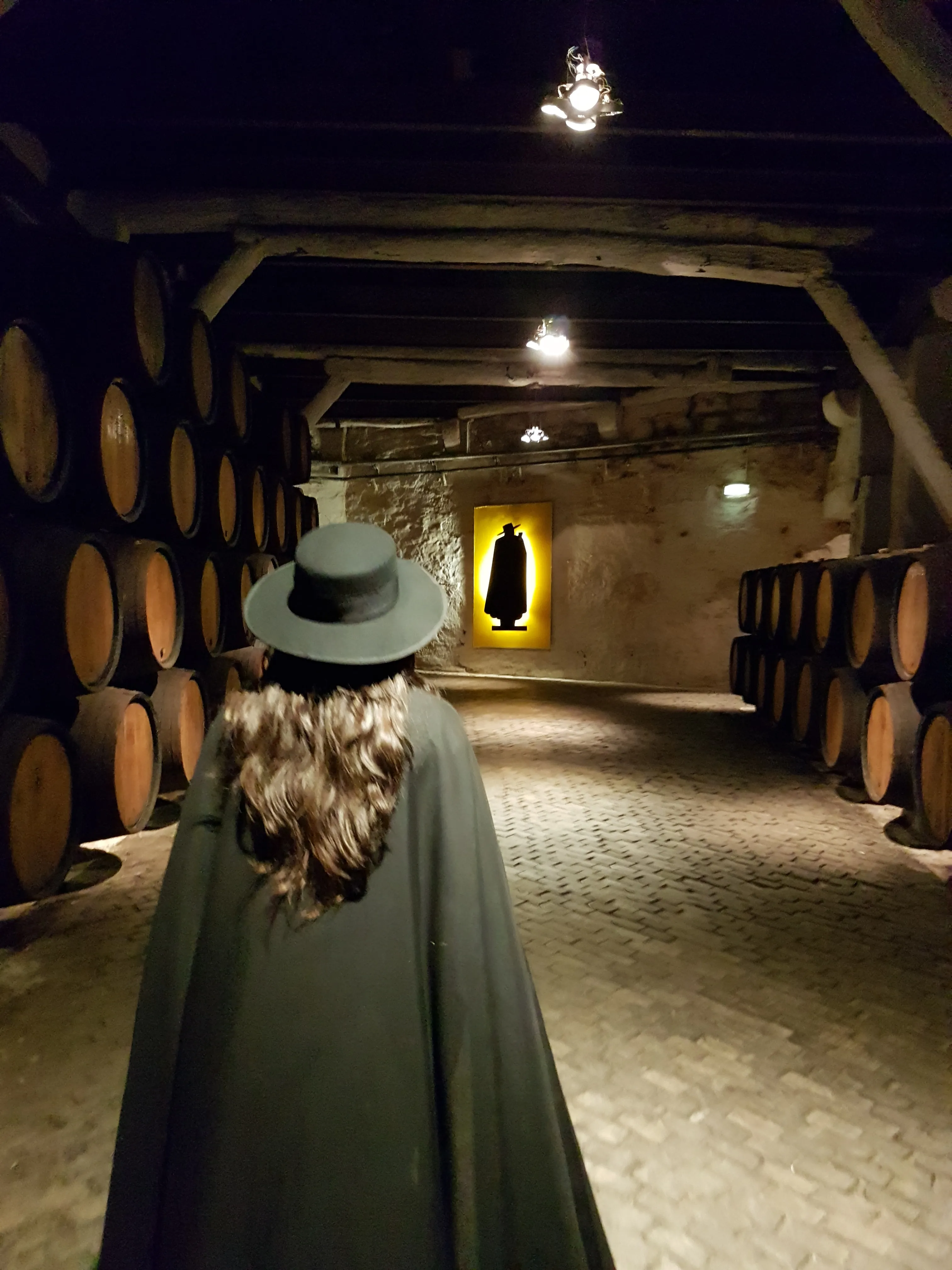
George Sandeman founded his business in London in 1790, initially trading Port and Sherry. The Sandeman lodge occupies a granite building dating from 1811 on the Gaia riverfront, directly opposite Porto’s historic centre.
The brand’s caped figure, known as the Don, arrived much later. George Massiot Brown designed it in 1928, combining a Portuguese student’s cape with a wide-brimmed Spanish hat to represent the house’s Port and Sherry businesses. It became one of the wine world’s most recognizable logos.
At Largo de Miguel Bombarda 47, Vila Nova de Gaia, visits range from an introduction to Port to tastings focused on old tawnies, chocolate pairings or private experiences. The visit normally explains fortification, the difference between ruby and tawny styles, ageing and the work that once took place inside the lodge. Current times and tasting formats must be booked for the travel date.
Ferreira: the Portuguese house of Dona Antónia
Ferreira was founded by a Douro winegrowing family in 1751. Its central figure is Antónia Adelaide Ferreira, born in 1811 and still widely known as Ferreirinha, an affectionate diminutive that says much about her place in Portuguese memory.
After she was widowed, Dona Antónia expanded the family’s vineyards and business during a difficult nineteenth century. She invested in the Douro, supported local communities and confronted the devastation caused by vine diseases. Ferreira’s history therefore gives a different view of the Port trade: a Portuguese house shaped by a woman closely identified with the region that produced the wine.
The Ferreira cellars are at Avenida Ramos Pinto 70, Vila Nova de Gaia. Visits include the standard Porto Ferreira tasting and options centred on Dona Antónia, vintage Ports or Douro wines. The long interiors, casks and historic material make Ferreira especially worthwhile for travelers who want the story as well as the tasting.
What should you taste?
A white Port can be dry or sweet and is often served chilled, sometimes with tonic. Ruby styles preserve darker fruit and include late bottled vintage and vintage Port. Tawny Port ages with greater exposure to wood and oxygen, developing nut, spice and dried-fruit flavours. A guided tasting makes these differences much clearer than choosing a single glass from a bar menu.
Port is fortified, usually around 19 to 20% alcohol, and tasting portions add up. Schedule the visit after the day’s walking, eat beforehand and do not plan to cycle afterwards.
Adding a cellar visit to the Portuguese Way
A cellar visit works naturally with the arrival night of our Portuguese Way from Porto journeys. Ultreya Tours recommends Sandeman and Ferreira and can request a timed group visit as part of a private Portuguese Way program. For groups, advance booking matters: language, group size, tasting level, accessibility and the day’s other visits all have to fit together.
The Camino leaves Porto with a richer context after you have seen the lodges. The vineyards are far upriver, the ageing houses stand in Gaia, and the city across the water became the name by which the wine is known around the world.