Sarria is a small inland town, so the days before the Camino are usually shaped by the route used to reach it. Madrid followed by the train to Sarria is the cleanest combination. Santiago Airport followed by a private transfer is the simplest when the priority is to begin walking promptly. Barcelona is an excellent addition when the trip is long enough to justify a separate flight across Spain.
Madrid: the natural city before Sarria
Madrid has direct flights from many international cities and a rail connection to Sarria from Chamartín station. Direct trains generally take around four and a half hours, although some dates involve a change in Ourense. Check the exact service on Renfe before arranging the Sarria hotel or airport transfer.
Give Madrid at least two nights. The Prado, Thyssen-Bornemisza and Reina Sofía museums could fill several days, so choose according to your interests. The Royal Palace, Plaza Mayor, Retiro Park and neighborhoods around Las Letras and La Latina provide a broader view of the city. Food markets are enjoyable, but for dinner we prefer a proper restaurant or traditional tavern rather than building an evening entirely around a crowded market hall.
On the final day, leave from Madrid Chamartín Clara Campoamor with enough time to find the platform. The train reaches Sarria late enough on some schedules that the arrival night should remain free of activities. Ultreya Tours meets the journey at the hotel rather than expecting you to start walking immediately.
Toledo: art and three religious traditions
Toledo lies south of Madrid and is reached by high-speed train from Atocha in about half an hour. Its cathedral, former synagogues, mosques and El Greco paintings make it the strongest day trip for travelers interested in Spanish religious history.
The historic center climbs sharply from the river, so comfortable shoes are sensible even before the Camino. A guide adds real value because Christian, Jewish and Islamic buildings overlap across a dense medieval city. Toledo can be visited from Madrid in a day, or enjoyed overnight after the excursion groups leave.
Do not attempt Toledo on the morning of the Sarria train. Atocha and Chamartín are different stations, and combining two rail journeys with luggage creates unnecessary pressure.
Segovia: Rome, a royal castle and roast lunch
Segovia is reached by high-speed train from Madrid Chamartín in under half an hour on the fastest services. The station lies outside the historic center, so continue by bus or taxi. The Roman aqueduct dominates the entrance to the old town, while the Alcázar rises above the meeting of two river valleys. The cathedral and former Jewish quarter fill the route between them.
Segovia is also a lunch destination. Cochinillo asado, roast suckling pig, is the famous dish and deserves a reservation at a traditional restaurant. If you have a car and another half day, La Granja de San Ildefonso adds a royal palace, formal gardens and fountains.
Ávila: walls, Saint Teresa and a quieter day
Ávila is encircled by one of Europe’s most complete medieval wall systems. Visitors can walk sections of the ramparts, enter the cathedral built into the defenses and follow sites associated with Saint Teresa of Ávila.
The journey from Madrid is slower than the high-speed trip to Toledo or Segovia, so Ávila works best as a full-day excursion or overnight stay. It particularly suits parish groups and travelers interested in Carmelite history. Some organized excursions combine Ávila and Segovia in one long day; the combination is efficient, although each city receives less time.
Barcelona: worthwhile when you have four or more extra nights
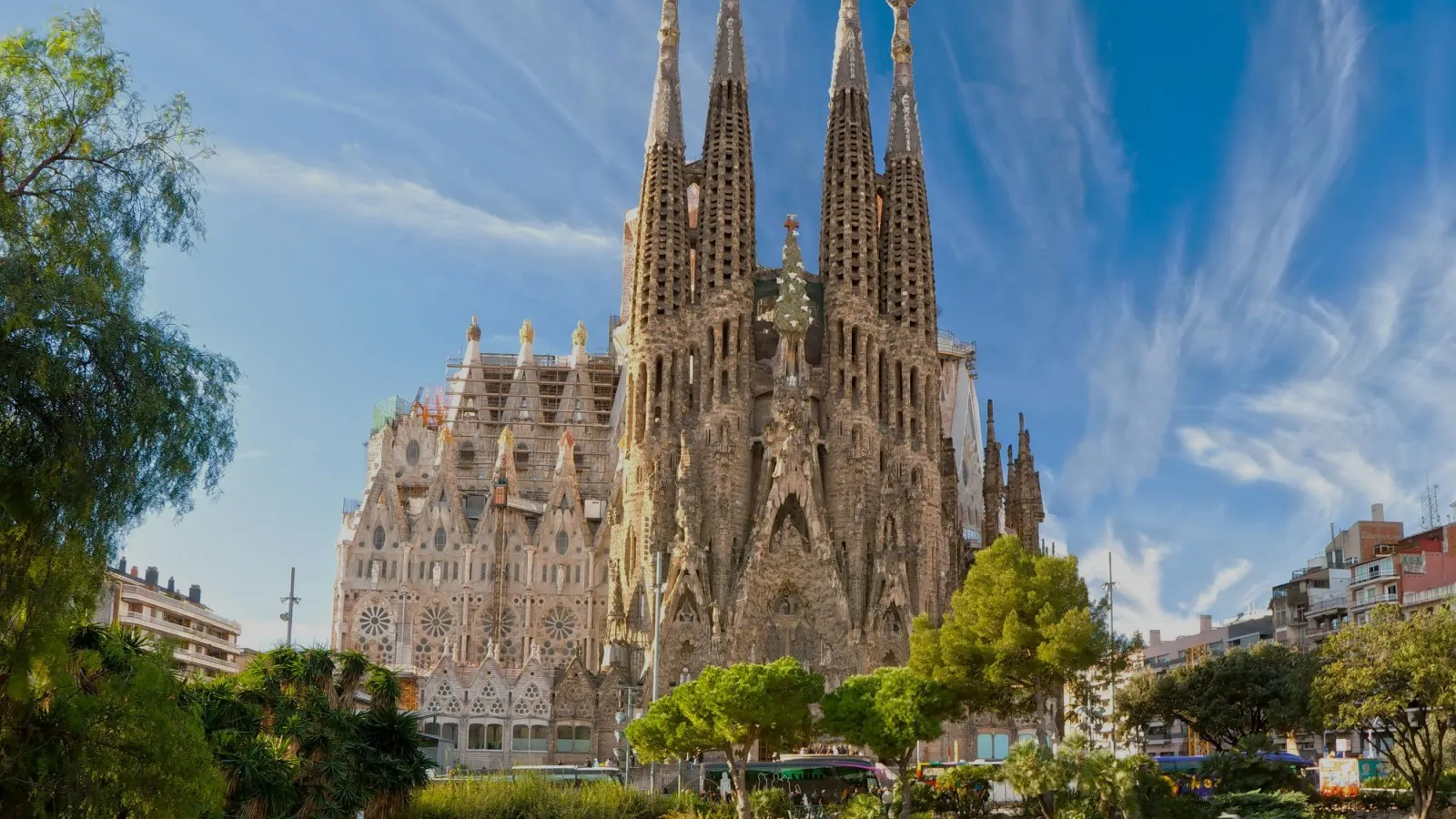
Barcelona is not on the route to Sarria. Include it because you want to see Catalonia, not because it simplifies the transfer. Spend at least three nights for the Gothic Quarter, Sagrada Família, one or two other Gaudí buildings and an evening near the waterfront or in a neighborhood restaurant.
From Barcelona, the practical onward journey is usually a domestic flight to Santiago de Compostela followed by a prearranged transfer of approximately one hour and forty minutes to Sarria. A high-speed train connects Barcelona with Madrid, but adding the Madrid-to-Sarria train makes for a very long cross-country rail itinerary.
Reserve the Sagrada Família and major Gaudí sites before travel. Barcelona rewards structure: one district in the morning, a timed monument and time to sit down, rather than a checklist spread across the whole city.
Montserrat: monastery and mountain
Montserrat rises northwest of Barcelona around a Benedictine monastery and the shrine of the Black Madonna, La Moreneta. The serrated mountain, basilica, museum and walking paths make it especially relevant before a pilgrimage.
Independent travelers can take the train from Plaça d’Espanya and continue by rack railway or cable car, depending on the chosen ticket and station. A private or guided day tour simplifies the connections and may add a winery or another Catalan stop. Check the basilica and choir schedule if hearing the Escolania is central to the visit, because performances are not guaranteed every day.
Girona: a compact medieval city from Barcelona
Fast trains connect Barcelona with Girona, making it an easy day trip or one-night addition. Walk the old city walls, cross the Onyar bridges, explore the Jewish quarter and visit the cathedral with its exceptionally broad Gothic nave. The Arab Baths are another compact and worthwhile stop.
Girona is less directly connected to the religious theme of the Camino than Montserrat, but it offers a calmer medieval city after Barcelona. One night allows the old center to be enjoyed in the early morning and evening when many day visitors have gone.
Flying to Santiago instead
Travelers who do not want a pre-Camino city tour can fly into Santiago and take a taxi or private transfer directly to Sarria. The drive normally takes about one hour and forty minutes. Public transport is less direct and often involves traveling into Santiago or changing in Lugo.
An extra night in Santiago before the walk is possible, although many travelers prefer to keep Santiago as the culmination of the Camino. If you arrive early, consider a quiet night in Sarria and visit the riverside, old quarter and Church of San Salvador.
A sensible sequence
With three nights, stay in Madrid and choose either Toledo or Segovia. With five nights, add Ávila or sleep in one of the day-trip cities. With a week or more, Barcelona and Madrid can both fit, but use a domestic flight or the fast Barcelona-Madrid train and protect the final arrival night in Sarria.
Our French Way Classic from Sarria includes that arrival night and the final 115 kilometers to Santiago. Read how to reach Sarria and the French Way airport guide before fixing the international flights.