Hot water reaches the surface across Galicia through cracks in granite and other ancient rock. Rainwater enters the ground, circulates at depth, warms, dissolves minerals and returns through springs. The journey underground affects its temperature and composition. In Ourense, water from As Burgas reaches the surface at around 67°C, while other Galician sources are cooler and prized for drinking as well as bathing.
The words used locally are specific. A balneario is a recognized health resort built around mineral-medicinal water and traditionally works with medical supervision. An urban or hotel spa can offer pools, saunas, hydrotherapy and massage without using natural thermal water. A talaso center uses seawater and marine products. The experience can look similar from the changing room, but the water and legal category are different.
The Roman use of Galician water
Roman towns joined hygiene, medicine and social life in public bath complexes. Galicia’s springs made that culture especially visible. In Lugo, the modern Balneario de Lugo preserves part of a Roman apodyterium, the changing room, and a vaulted bathing area beside the River Miño. Ourense developed around springs known today as As Burgas; its Roman association survives in the old name Aquis Auriensis. At Bande, the Roman military site of Aquis Querquennis stood close to warm springs in the Limia valley.
Romans built rooms at different temperatures and controlled the movement of bathers between them. Where naturally hot water was available, they could use the spring itself; elsewhere, hypocaust systems heated floors and rooms. Coins and archaeological material found near several Galician springs also show that people visited and made offerings around the water.
From local bathing places to fashionable resorts
Springs remained part of local life after Rome. Some were simple open pools or modest bathhouses. People traveled to drink or bathe according to local reputation, long before chemistry could describe bicarbonates, sulphur or sodium.
The great transformation arrived between the middle of the nineteenth century and the early twentieth. Medical hydrology, improved roads and railways, and a wealthy traveling public turned springs into destinations. Hotels, galleries, gardens, bottling plants, casinos and formal pump rooms appeared around the water.
Mondariz became known across the Iberian Peninsula and beyond. Its visitors included writers, politicians and members of Portuguese royalty. A Toxa developed into an island resort. Cuntis expanded around older bathhouses. Guitiriz opened its grand hotel in the early twentieth century. Caldas de Reis, whose name itself refers to hot waters, already had the Dávila establishment in operation by the late eighteenth century.
Guests did more than take a bath. A traditional cura termal could include drinking prescribed quantities from a spring, bathing, inhalation, jets, rest, regulated meals and long walks. The resort was also a social world, with concerts, newspapers, card rooms and elaborate dining.
Decline and return
The old resort culture weakened through war, changing medicine, the rise of seaside holidays and the cost of maintaining enormous hotels. Guitiriz declined after its post-war years. Mondariz’s monumental Gran Hotel was destroyed by fire in 1973. Other bathhouses closed or continued on a much smaller scale.
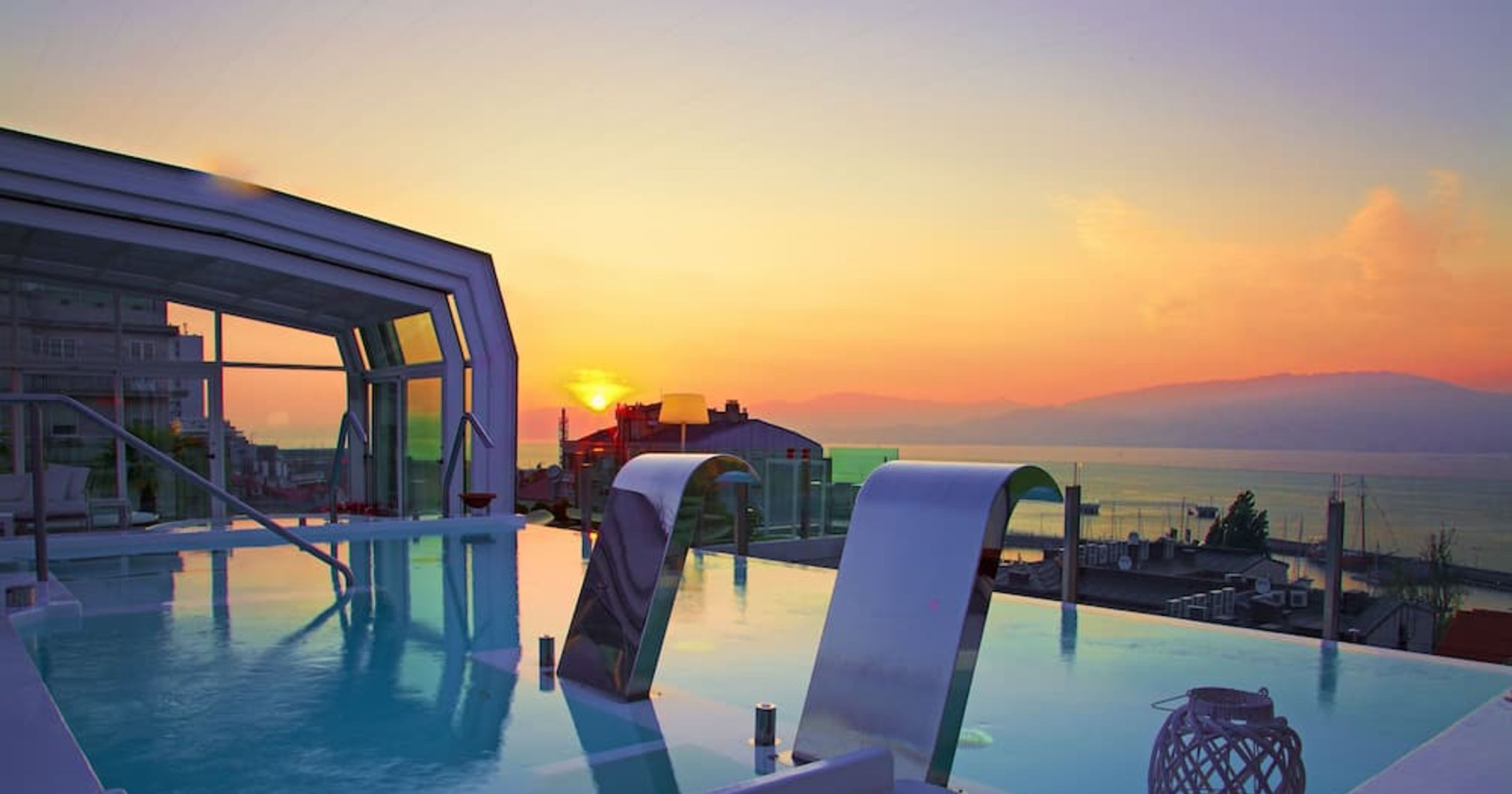
Galician thermalism returned through restored historic properties, new accommodation and a broader idea of wellness. Cuntis built a modern balneotherapy center in 1998 and later added a large recreational water circuit. Mondariz developed its modern Water Palace. Ourense made hot-water bathing part of the city through public and managed pools along the Miño. Some older resorts reopened after long closures, while new hotel spas adopted circuits, saunas and massage alongside the thermal tradition.
The thermal cities and towns of Galicia
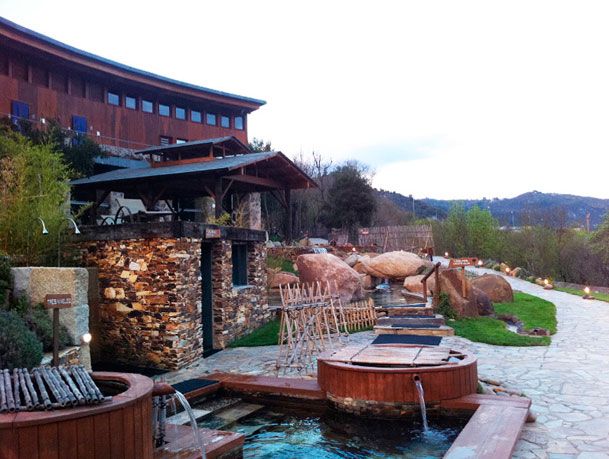
Ourense is the principal thermal city. As Burgas rises in the historic center, and springs continue west along the Miño at A Chavasqueira, O Tinteiro, Muíño da Veiga, Outariz and Burga de Canedo. These are genuine hot springs rather than heated hotel pools.
Mondariz-Balneario became an independent municipality because of the success of the resort. Visitors can walk between the Gándara and Troncoso springs, the spa buildings, the ruins of the old Gran Hotel and the modern bottling tradition.
Cuntis has Roman evidence, historic bathhouses and one of Galicia’s largest modern thermal complexes. Caldas de Reis, directly on the Portuguese Way, has hot springs in the town center and two historic balnearios. Guitiriz developed around the Fonte dos Santos and the Hotel Balneario. Lugo, Baños de Molgas, O Carballiño, A Toxa, Carballo and Arteixo add different combinations of archaeology, medical bathing, resort architecture and modern wellness.
What is actually in the water?
Mineral waters are described by temperature, total mineralization and their dominant dissolved elements. Galician sources include bicarbonated, sodium-rich, sulphurous, chlorinated, fluoridated and weakly mineralized waters. Two springs a short distance apart can have different profiles because their underground routes differ.
Old resort advertisements promised relief from long lists of illnesses. Today, medical thermal treatments are supervised by qualified professionals. Very hot water may be unsuitable for people with certain heart or circulatory conditions, during pregnancy, or immediately after a long stage when dehydrated. Ask the center about its access rules and any relevant medical restrictions.
Drinking the waters
Taking the waters once meant drinking at the spring according to a prescribed schedule. Mondariz turned that practice into an international bottled-water business: its mineral water received public-utility recognition in 1873 and was being bottled by 1877. Visitors can still see the Gándara and Troncoso springs, while bottled Mondariz water is served throughout Spain.
Do not assume that every decorative fountain or hot outlet is intended for drinking. Look for official signs. At a balneario, ask whether the drinking spring is open and whether its water is suitable for casual consumption.
Our companion guide profiles five famous Galician thermal waters. Travelers more interested in a comfortable circuit and massage can compare five spa hotels connected with Camino itineraries.