The Camino de Santiago is a network of routes, best understood as a direction rather than a single path. Routes begin in many parts of Europe and converge on Santiago de Compostela, the Galician city where Christian tradition places the tomb of Saint James the Greater. Some pilgrims travel for weeks or months. Others walk or cycle a final section. Each enters a story much older than any modern itinerary, yet no two people experience it in quite the same way.
A network of Ways
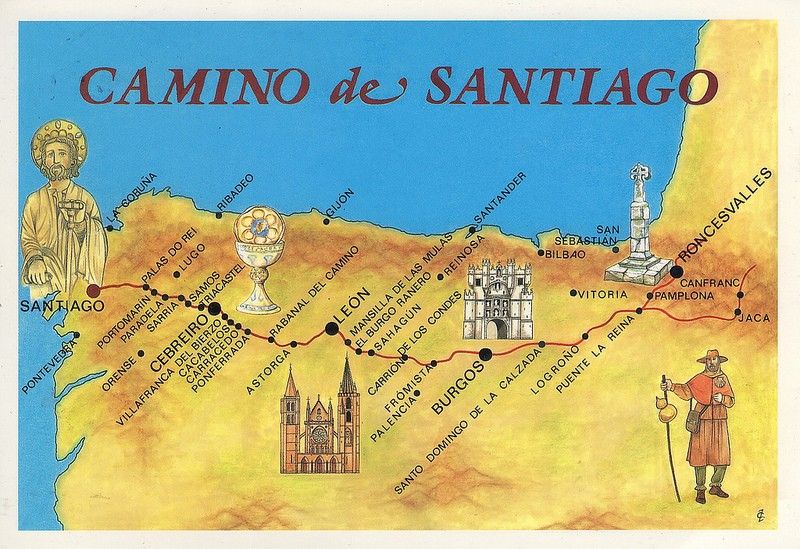
“The Camino” often brings to mind the French Way, the best-known route across northern Spain. It begins for many travelers in Saint-Jean-Pied-de-Port, crosses the Pyrenees, and continues through Navarra, La Rioja, Castilla y León, and Galicia. But it is one Way among many.
The Portuguese routes approach from the south, linking Portugal and Galicia. The Winter Way reaches Santiago through the river valleys and wine country of eastern Galicia. The Sanabrés Way enters Galicia from the southeast. The Finisterre Way is different again: it begins in Santiago and continues west toward the Atlantic. Each route has its own landscape, history, practical rhythm, and degree of solitude.
This variety is why choosing a Camino begins with more than counting available days. Terrain, comfortable daily distance, season, preferred atmosphere, and whether you wish to walk or cycle all matter. Our guide to comparing the main Camino routes is a useful next step, while the current journeys that Ultreya Tours knows personally are presented in the Camino collection.
History, tradition, and faith
The pilgrimage’s Christian foundation centers on Saint James, one of Jesus’s apostles. The New Testament records his place among the disciples and his death. Later traditions connect him with the Iberian Peninsula and hold that his remains were brought to Galicia. In the early medieval period, a tomb identified as his was discovered near what became Santiago de Compostela. The sanctuary and the roads leading to it grew in importance during the Middle Ages.
These layers should not be confused. Scripture, later religious tradition, medieval record, and modern historical study answer different questions and do not always speak with one voice. A traveler can respect that distinction while recognizing how powerfully belief in Saint James shaped Santiago, its cathedral, and a pilgrimage network that crossed borders.
The Camino remains a living Christian pilgrimage. Many people still walk in faith, prayer, gratitude, penance, or spiritual search. Others come for history, nature, culture, physical challenge, or a transition in their lives. Some arrive without a firm explanation at all. The modern Way makes room for these motivations to meet without requiring them to be identical.
What makes it a Camino
Yellow arrows and scallop-shell symbols guide travelers west. Pilgrims carry a credential, gathering stamps along the route. Those who meet the Cathedral’s current requirements and make the journey for religious or spiritual reasons may request the Compostela on arrival. Yet the certificate is not what gives every Camino its value. A shorter section, a journey beyond Santiago to Finisterre, or a Camino walked for personal reasons can carry its own significance.
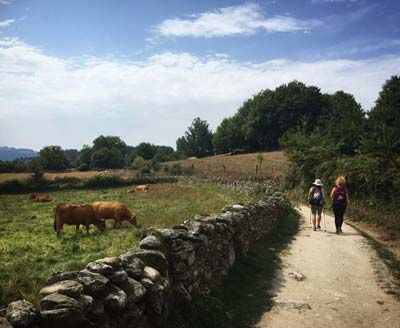
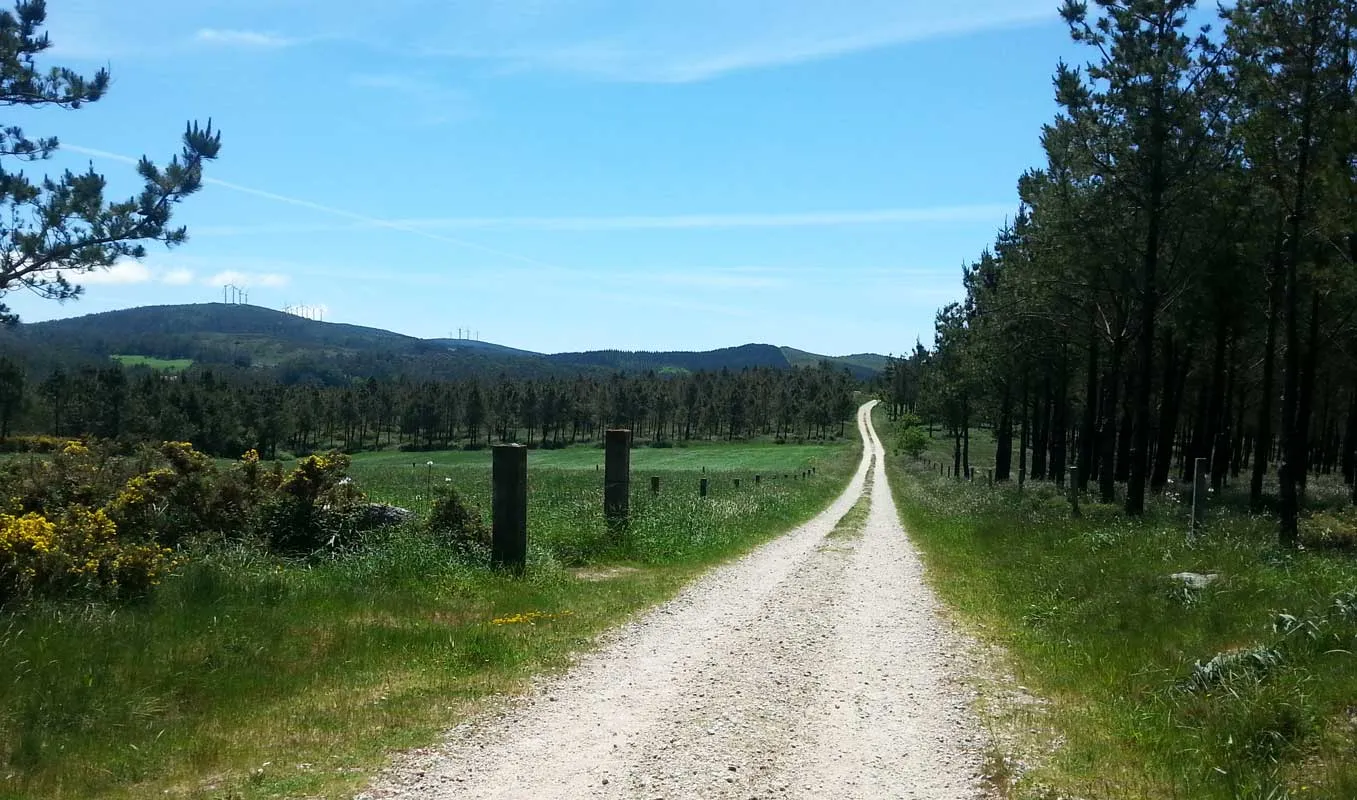
The daily experience is often simple: prepare a daypack, leave in the morning, follow the markings, stop when needed, and reach the next town on foot or by bicycle. Repetition creates a different sense of time. Landscapes become connected by effort rather than viewed through a window. Conversations begin easily because everyone is moving toward the same place.
That simplicity does not mean every Camino is easy. Consecutive days, uneven ground, rain, heat, hills, and unfamiliar routines require preparation. The right pace matters more than an impressive one. Thoughtful accommodations, luggage transfers, and well-planned connections can reduce practical strain while leaving the essential experience, traveling under your own power, intact.
A journey that can be your own
There is no single correct emotional response to the Camino. It may feel social one hour and private the next. It can be beautiful, monotonous, joyful, uncomfortable, or quietly ordinary. That range is part of its honesty. The Way does not need to produce a revelation to be worthwhile.
For a first Camino, begin with concrete questions. How many days can you truly give it? What daily distance can you repeat comfortably? Do you want the sociability of a well-traveled route or more solitude? Would you rather walk, cycle, or join a private group format? Are you drawn primarily to reaching Santiago, or to a particular landscape and route?
Once those answers start to take shape, the Camino stops being an abstract idea. It becomes a sequence of real places and manageable days, one step, one town, and one arrival at a time.