The Portuguese Way and its Spiritual Variant have the best sequence of luxury hotels on the Camino. Between Baiona, Vigo, Tui, Pontevedra, the Salnés vineyards and Santiago, we can combine historic Paradors, waterfront hotels, pazos and exceptional country houses. The distances between them are manageable with well-planned private transfers, so travelers can enjoy beautiful walking stages and return each evening to a property worth remembering.
The French Way has several outstanding hotels, particularly in its great cities, but they are separated by long stretches of small Camino towns. Its strength is the variety of the pilgrimage; the Portuguese routes offer the stronger hotel journey.
Baiona and Vigo: fortress walls and the Atlantic
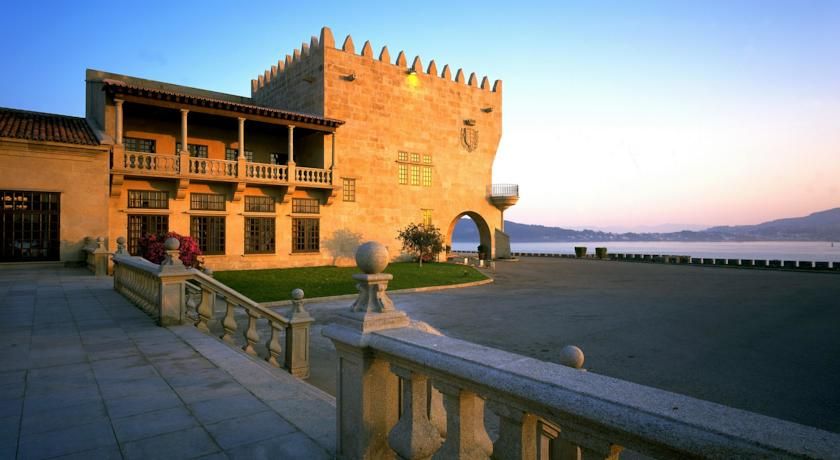
The Parador de Baiona occupies the Monterreal fortress on a peninsula almost surrounded by the sea. Guests can walk the ramparts, look across the bay towards the Cíes Islands and begin the Spiritual Way beside the Atlantic the following morning. Its scale, pool, gardens and views make it a true destination hotel.
In Vigo, Pazo Los Escudos is a five-star hotel in a restored Galician manor beside the water. It provides the polished rooms, spa facilities and full hotel service some travelers want before starting the Camino. A private transfer can connect it with the route in Baiona, Vigo or farther south without sacrificing the coastal walk selected for that day.
Tui and Pontevedra: historic buildings in the Camino towns
The Parador de Tui resembles a traditional Galician pazo, with stone arcades, timber ceilings and gardens above the River Miño. From the grounds, Portugal lies directly across the water. It gives walkers a peaceful first night while keeping Tui’s cathedral and medieval streets close at hand.
The Parador de Pontevedra occupies a Renaissance palace in the pedestrian historic centre. It is smaller and more intimate than Baiona, and its location is excellent: after walking into the city, guests are close to the arcaded squares, the church of the Pilgrim Virgin and Pontevedra’s restaurants. The next morning begins from the Camino itself.
These two Paradors place the traveler inside the towns rather than on their outskirts. That immediacy is a form of luxury: the guide can meet you at reception, dinner is a short walk away and the historic streets can be enjoyed after day visitors have left.
Cambados and the Salnés vineyards
The Spiritual Variant opens the most interesting collection of country properties. The Parador de Cambados, set in the former Pazo de Bazán, faces a handsome stone square in the capital of Albariño. It works especially well when the itinerary includes a winery visit, seafood lunch or time to explore the old fishing quarter of Santo Tomé.
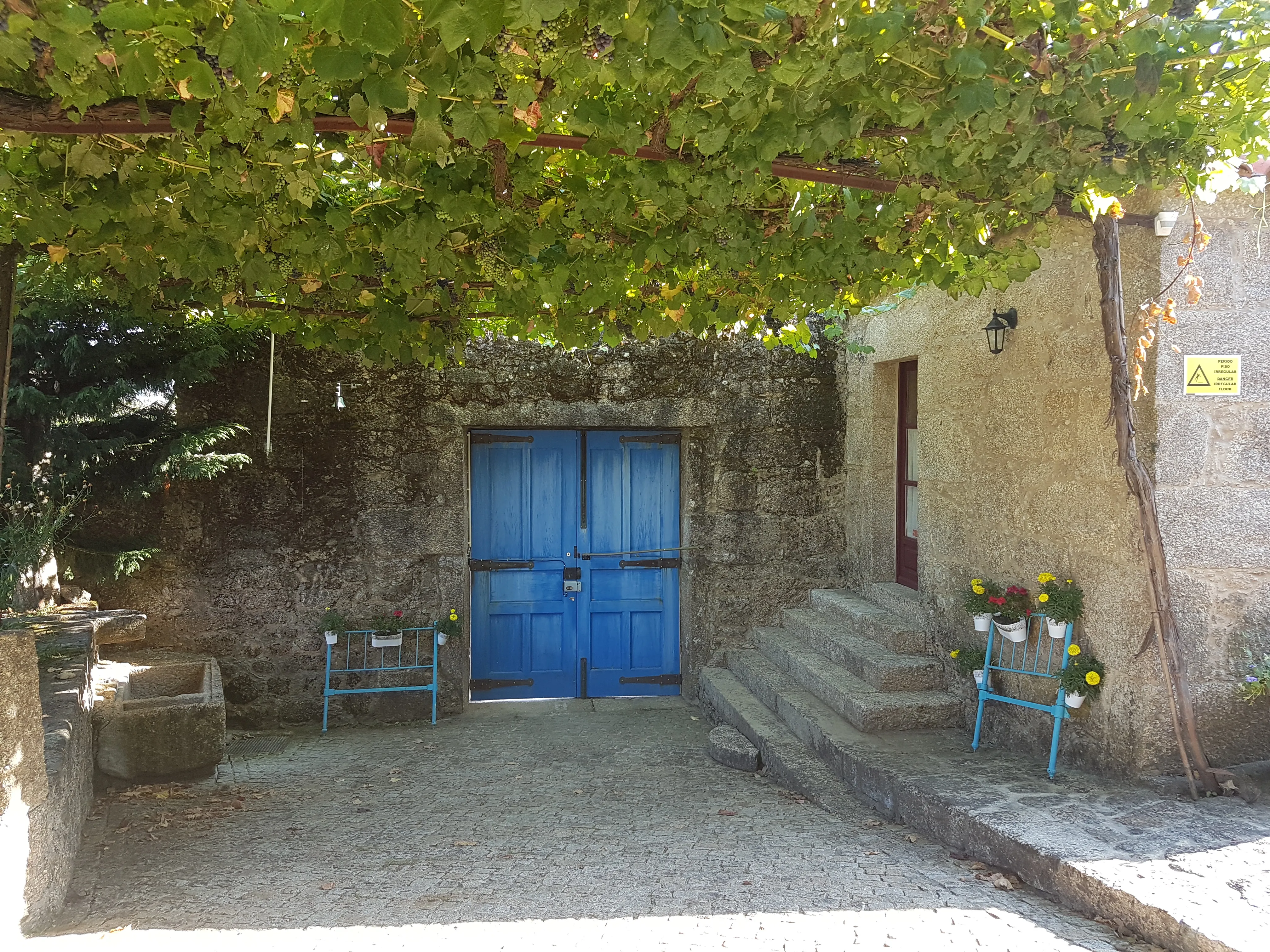
Quinta de San Amaro in Meaño offers a more personal experience among the vineyards. Its stone buildings, gardens, small pool and restaurant feel rooted in the Salnés landscape. It has fewer facilities than a large five-star hotel, yet the setting, food and individual attention often make it the more memorable stay.
Near Caldas de Reis, Torre do Río sits in lush grounds beside running water, with old stone buildings surrounded by trees and gardens. It is removed from the bustle of the town and reached with a short transfer. That transfer allows walkers to complete the chosen stage, enjoy a quiet country evening and return to the correct point on the Camino the next morning.
Our Portuguese Way Signature from Tui and Portuguese Spiritual Signature from Baiona use this range of properties to create two distinct journeys. The Tui route follows the classic inland Camino. The Baiona route adds the coast, the Spiritual Variant, the Salnés wine country and the boat journey across the Arousa estuary.
French Way
The French Way has magnificent individual stays. The Paradors of Santo Domingo de la Calzada, León and Santiago de Compostela place guests inside former pilgrim hospitals, convents and monumental buildings. Pamplona, Logroño and Burgos also have excellent city hotels.
The experience changes between those cities. On the final section from Sarria, small rural properties such as Casa Roán, Pazo de Sedor and O Muíño de Pena provide attractive gardens, home cooking and personal hospitality. They are characterful country houses rather than full-service luxury hotels. Transfers are often needed, and room styles can vary within the same historic building.
A journey using selected French Way stages can pair the strongest walks with its great Paradors. A continuous journey gives a more traditional progression through villages and market towns, with greater variation from one night to the next.
Five-star service or a memorable small hotel?
A modern four- or five-star chain hotel will usually have larger rooms, lifts, a staffed reception, room service and more standardized facilities. We use that kind of hotel when its comfort and location improve the journey. Our Caminos also make room for independent properties with a strong connection to the landscape and local life.
A beautiful guesthouse may have eight rooms, a garden where the owner serves wine and a dinner based on produce from nearby farms. It may lack a spa or a luggage porter, yet give travelers a much closer connection with Galicia. On the Portuguese routes, we can alternate these intimate stays with Paradors and polished five-star hotels. The contrast gives the journey personality.
For the best overall hotel route, choose the Portuguese Way. Choose the French Way for its celebrated pilgrim towns, deep historical sequence and the pleasure of moving between monumental hotels and rural hospitality. Our Luxury Camino Travel guide explains how we connect the walking, hotels and private transport into one itinerary.