Ultreya Tours Camino journeys operate from March 15 through November 15. For most travelers, the best balance comes in May, June, September and early October: enough daylight for an unhurried walk, a good choice of open services and fewer extremes than midsummer or winter. The right month still depends on the route. A June afternoon on the exposed Castilian plateau can feel completely different from the same day beside the Atlantic in Galicia.
Spring: changeable and fresh
Late March and April bring blossom, green fields and quiet paths. They also bring cool mornings, rain and fast changes of weather. The Pyrenean crossing from Saint-Jean-Pied-de-Port and the high ground around O Cebreiro may still have snow or temporary restrictions. On the Portuguese routes, Porto, the Minho and Galicia are usually milder, although Atlantic rain can last for several days.
May is one of our favorite months. Days are long, the countryside is intensely green and temperatures are usually comfortable for walking. Wildflowers cover the verges and rivers run full. It is popular, so the best small hotels can sell out well in advance.
Summer: light and heat
June offers the longest days and generally comfortable mornings. It is especially attractive on the Portuguese Coastal Way, where beaches, fishing towns and long evenings invite slower stops. Galicia can still receive showers, while Navarra, Rioja and the Meseta are already becoming hot.
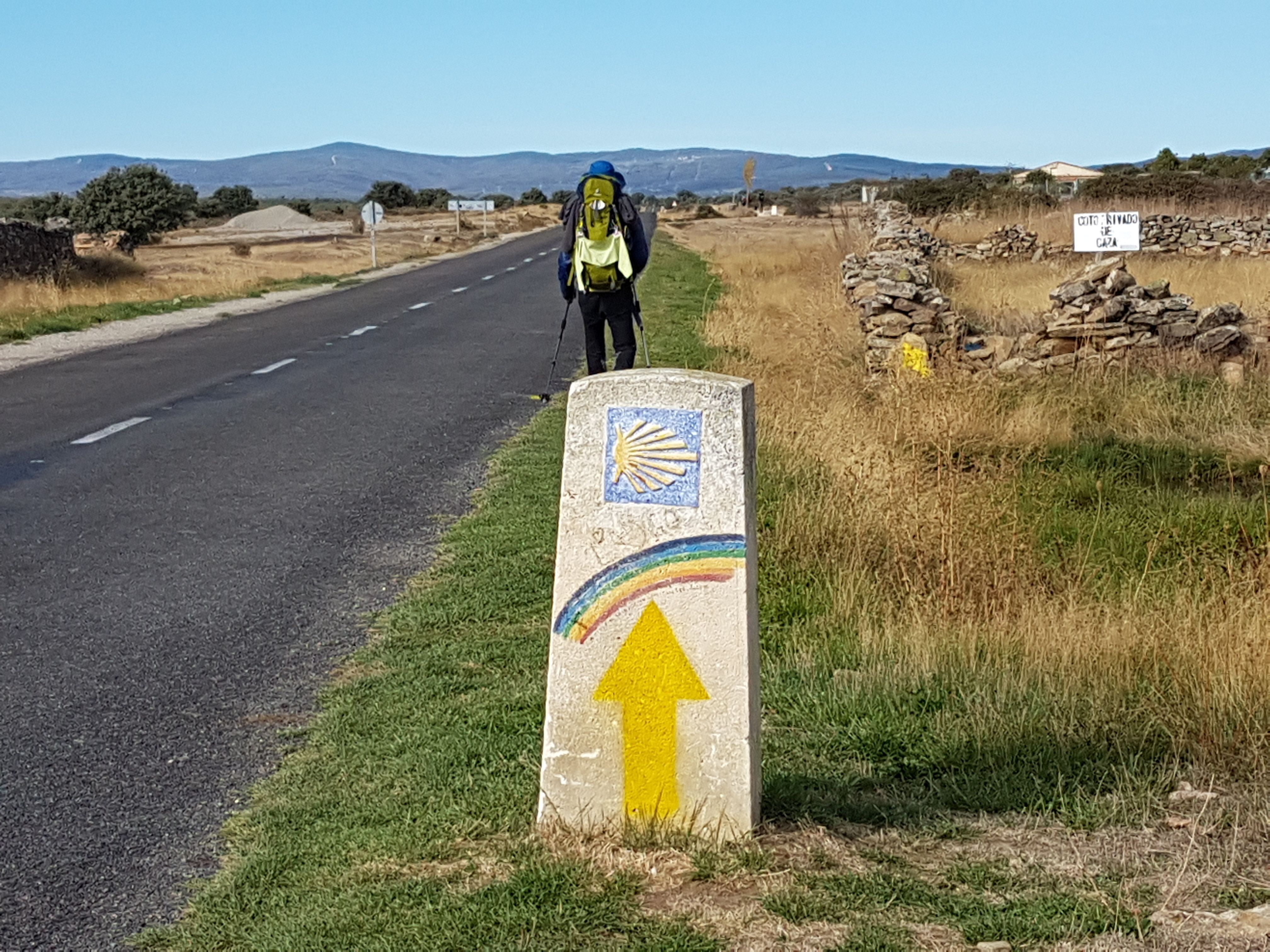
July and August demand an early start on the French Way, the Via de la Plata and other inland routes. The sections through Rioja, Burgos, Palencia and León have limited shade, and afternoon heat can be punishing. The Portuguese Coastal Way and the Northern Way are moderated by Atlantic air, yet humidity and direct sun still matter. Galicia is cooler than central Spain, although temperatures above 30°C are possible and the final stages from Sarria or Tui are at their busiest.
Summer offers festivals, lively squares and the widest choice of open cafés. It also brings Spanish and Portuguese holidays, crowded transport and heavy demand for well-located rooms. Travelers who dislike heat or crowds will usually enjoy late spring or early fall more.
Fall: warm color and shorter days
September is exceptionally good across much of the network. Summer warmth often continues, the strongest inland heat begins to ease and vineyards in Rioja, El Bierzo, Ribeira Sacra and the Rías Baixas approach harvest. The sea can remain pleasant on the Portuguese coast. It is still a busy Camino month, so early reservations matter.
October brings chestnuts, mushrooms, changing leaves and the grape harvest. Mornings are darker and rain becomes more consequential, particularly in Galicia and northern Portugal. A wet day on a short stage can be atmospheric; several wet days on a mountain section require good equipment and patience. By early November, daylight is limited, storms are more likely and some seasonal cafés, luggage services and rural accommodations have closed.
Why the regions feel so different
- The Pyrenees and O Cebreiro: high ground can be cold, windy and foggy even when the valleys are mild. Snow is possible at the edges of the season.
- Navarra, Rioja and the Meseta: spring and fall mornings can be cold, while July and August are dry, exposed and often very hot after midday.
- El Bierzo and Ribeira Sacra: sheltered valleys can be warm, but the route repeatedly climbs through hill and vineyard country.
- Galicia: temperatures are generally moderate, with frequent changes between sun and showers. The coast is windier; inland Ourense is notably hotter in summer.
- Northern Portugal and the Atlantic coast: winters are mild and wet, summers are sunnier, and sea breezes can disguise strong ultraviolet exposure.
Why we do not recommend a winter Camino
December, January and February can look wonderfully solitary in photographs, but they remove much of the margin that makes a self-guided journey enjoyable. Daylight is short, rain is frequent in the west, mountain weather can change quickly and long stretches have fewer open cafés and accommodations. Snow and ice affect the Pyrenees, the Montes de León and O Cebreiro. Emergency services repeatedly have to assist pilgrims caught by winter storms around the high Galician entrance.
The alternative Valcarlos route can replace the high Route Napoléon near Saint-Jean-Pied-de-Port, and the Winter Way avoids O Cebreiro after Ponferrada, but their names do not make them simple winter holidays. A closed path, swollen river or snow-covered waymark can turn an ordinary stage into a serious mountain problem. This is why Ultreya’s operating season begins on March 15 and ends on November 15.
Choosing your own best month
Choose May or June for green landscapes and long days; September for warmth, harvest country and strong all-round conditions; and October for color, food and a quieter path if you accept shorter days and more rain. Late March, April and early November suit experienced walkers who genuinely enjoy uncertain weather.
We help match the route to the season as well as to your preferred distance and comfort. Begin planning more than six months ahead when possible: the best small hotels can fill long before anyone can know the exact forecast.