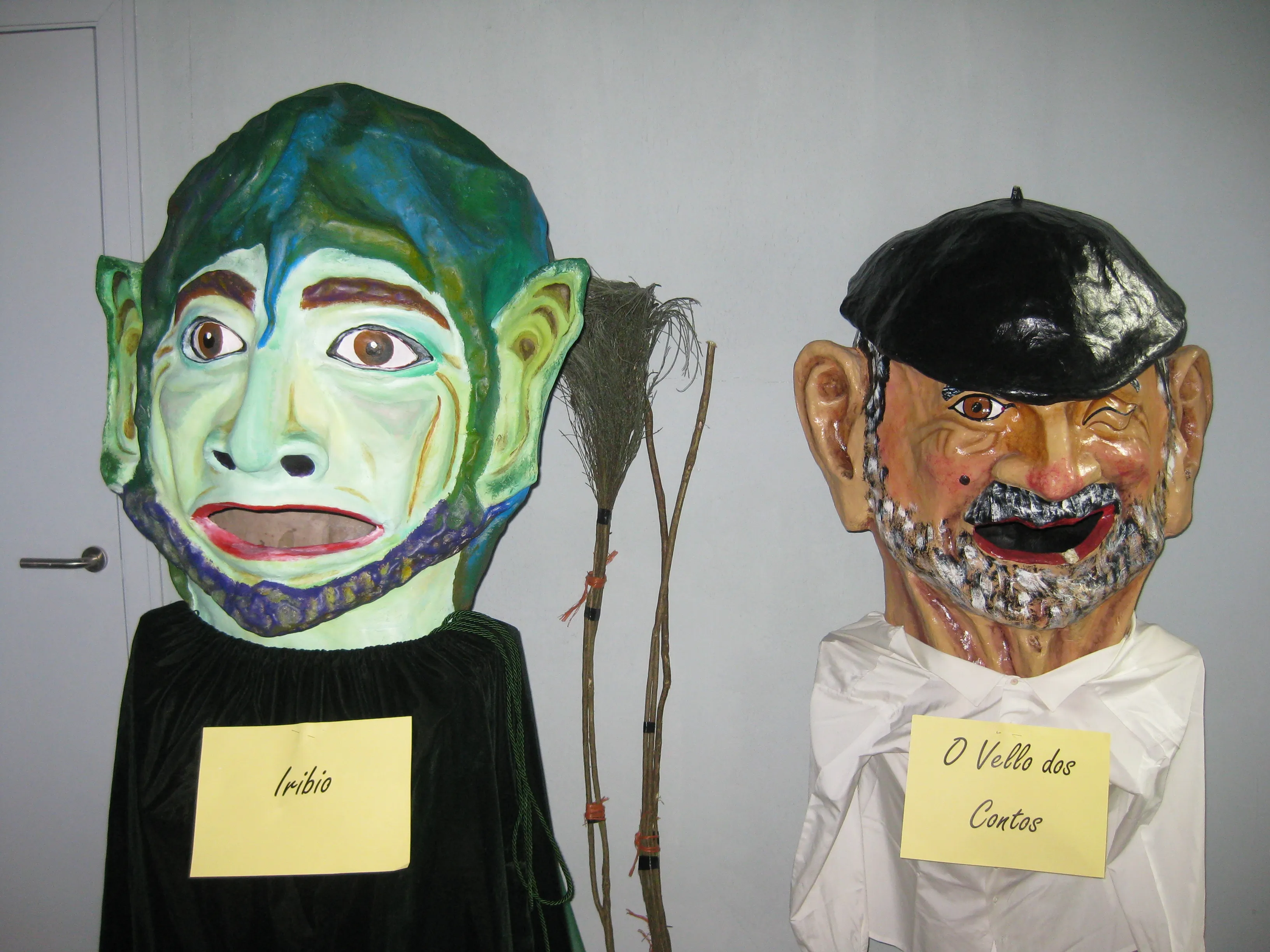
Visitors sometimes meet a row of enormous heads staring down from a Galician bar and assume they were made as decoration. Many are retired cabezudos, festival figures once worn in street processions.
A cabezudo consists of a large, light head carried over the performer’s shoulders. Traditional examples were made with papier-mâché over a mould or framework, then painted with exaggerated features. The performer sees through an opening in the mouth, neck or costume.
They often appear alongside gigantes, much taller figures built over a supporting frame. The giants move ceremonially; cabezudos can run, dance and approach spectators. Musicians accompany them through streets during patronal festivals.
Familiar types and local characters
Older groups include stock figures such as a mayor, soldier, priest, fashionable woman or foreign caricature. Some imagery now looks uncomfortable because festival satire inherited racial and social stereotypes from the nineteenth and twentieth centuries. Towns must decide whether to conserve such objects as historical evidence, reinterpret them or retire them from performance.
New cabezudos increasingly portray musicians, local personalities and contemporary characters. The tradition survives because workshops repair damaged heads and communities commission new ones rather than treating the form as fixed folklore.
From the street to the wall
Papier-mâché suffers from rain, sweat and repeated impacts. Retired heads may enter municipal collections, festival museums, schools or private businesses. Displaying them high on a wall protects their fragile lower edges and recreates the startling effect they have when worn.
Examples can be found in Sarria, where festival figures form part of local visual memory. In Santiago, the heads displayed at Flor bar introduce visitors to the tradition in an everyday setting rather than behind museum glass. Ask before photographing staff or other customers, and remember that opening arrangements can change.
Look at the wear around the viewing hole and shoulders. Repainting, repaired cracks and replaced fabric reveal whether a head danced for decades or was produced recently for display.
Sarria begins our most popular French Way journey. We can point out local cultural stops that are easily missed when visitors concentrate only on collecting their first pilgrim stamp.