When somebody asks me which Camino is the most beautiful, I usually answer with another question: what do you want the journey to feel like? A route can be magnificent and still be wrong for your available time, preferred pace, or reason for walking.
These are the five questions I use to bring the decision into focus.
1. How much time should I allow for the Camino?
Count the complete journey, not only the walking days. You may need an arrival night, time to reach the starting point, and at least one night in Santiago before traveling home.
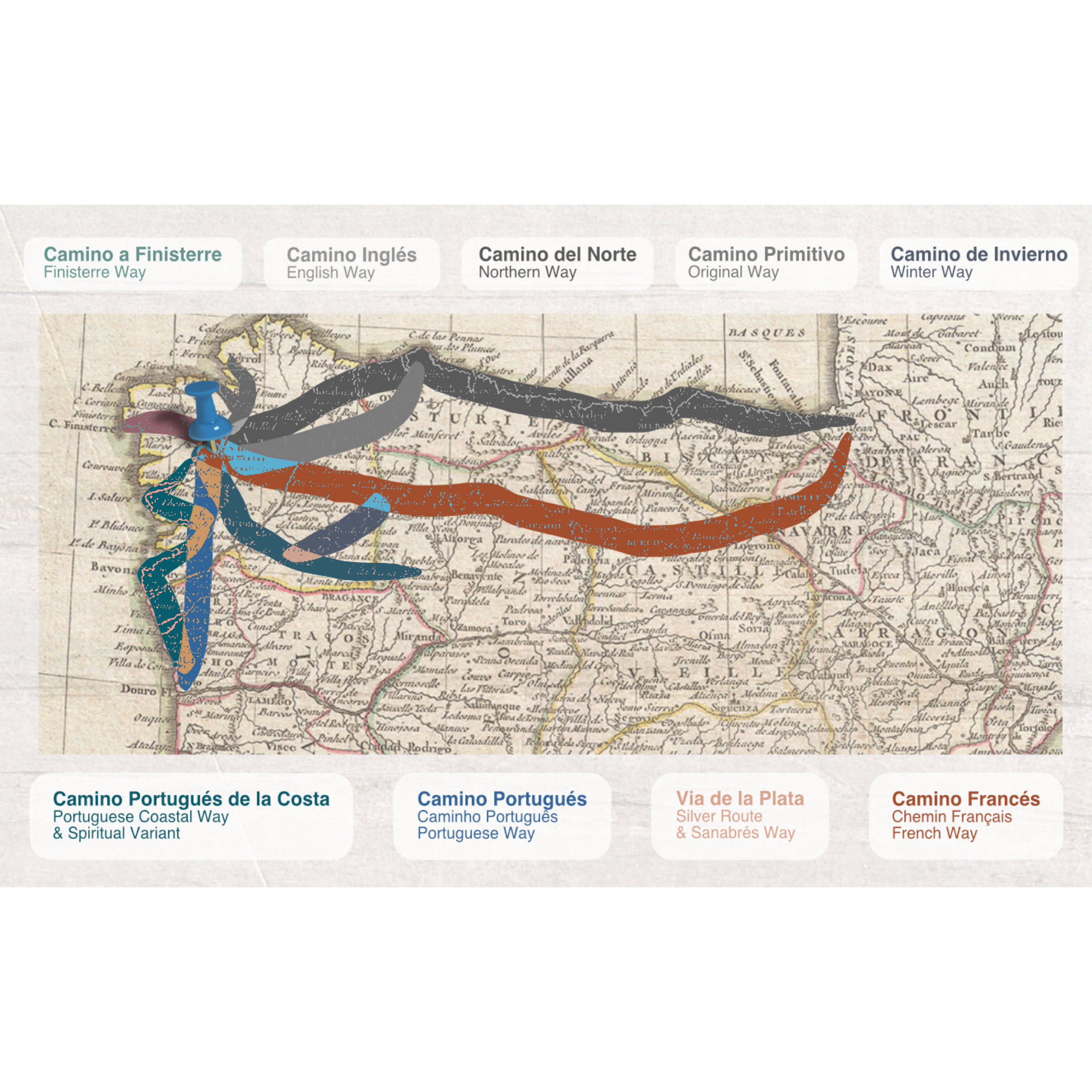
With about a week, the final French Way from Sarria and the Portuguese Way from Tui are natural options. With two weeks, longer Portuguese itineraries and gentler arrangements become possible. A month opens the door to much broader journeys, including longer routes from Oporto or an extended experience of the French Way.
I would rather plan a route that leaves you time to enjoy the Camino than force a famous itinerary into a calendar that cannot hold it.
2. Which route is best for a first Camino?
There is no single answer. The French Way from Sarria is a strong choice if you want the most recognizable pilgrim atmosphere, frequent encounters, and a classic arrival in Santiago.
The Portuguese Way from Tui offers historic towns, green countryside, and a different approach to Santiago. The Portuguese Coastal Way suits travelers who want the Atlantic to form part of the journey, while the Spiritual Variant adds quieter paths, monasteries, the Salnés landscape, and a distinctive boat stage toward Padrón.
For travelers who value quieter rural routes, I also consider the Sanabrés and Winter Ways. “First Camino” should describe your experience level, not restrict you to one route.
3. Should I choose the route by distance or by atmosphere?
Both matter. The atmosphere may be what attracts you, but the distances decide how you live it each day.
Standard itineraries often include stages of approximately 16 to 24 kilometres. At Your Pace journeys use shorter stages, but hills, weather, and surfaces still affect the effort. Look at every day rather than relying on an average.
Choose a distance you can repeat while retaining enough energy to enjoy where you arrive. One exceptional long day is a poor guide to a week of walking.
4. Is a quieter Camino always better?
No. A quieter Camino may offer space and a stronger feeling of discovery, but it can also mean fewer cafés, more dispersed services, and longer periods without other pilgrims.
A popular route brings companionship and practical convenience, but also more walkers in busy months. Neither is inherently better. The question is whether solitude makes you feel restored or uneasy, and whether meeting other pilgrims is central to the experience you imagine.
Every route gives something and asks something in return.
5. How important is the Compostela when choosing?
If receiving the Compostela is essential, say so at the beginning. The itinerary must satisfy the official requirements, and not every beautiful Camino product is designed around that goal.
Sarria to Santiago and Tui to Santiago are popular because their distances can meet the walking requirement when completed correctly. A journey from Santiago to Finisterre has a different direction, meaning, and certificate.
Once these five answers are clear, compare the journeys in our Camino collection or use the Start Planning Questionnaire. We still review dates, pace, accommodations, and availability personally before proposing a journey.