Camino days create their own appetite. Breakfast comes before the first kilometer, a café stop can divide the morning, lunch may arrive later than expected, and dinner becomes part of recovery for tomorrow. The rhythm feels straightforward once you settle into it, but Spanish and Portuguese meal times can surprise travelers used to eating earlier.
No timetable is universal. Regions, seasons, town size, day of the week, and individual businesses all make a difference. The useful habit is to observe and plan rather than assume the next village will have an open kitchen at the hour you want it.
Breakfast before the stage
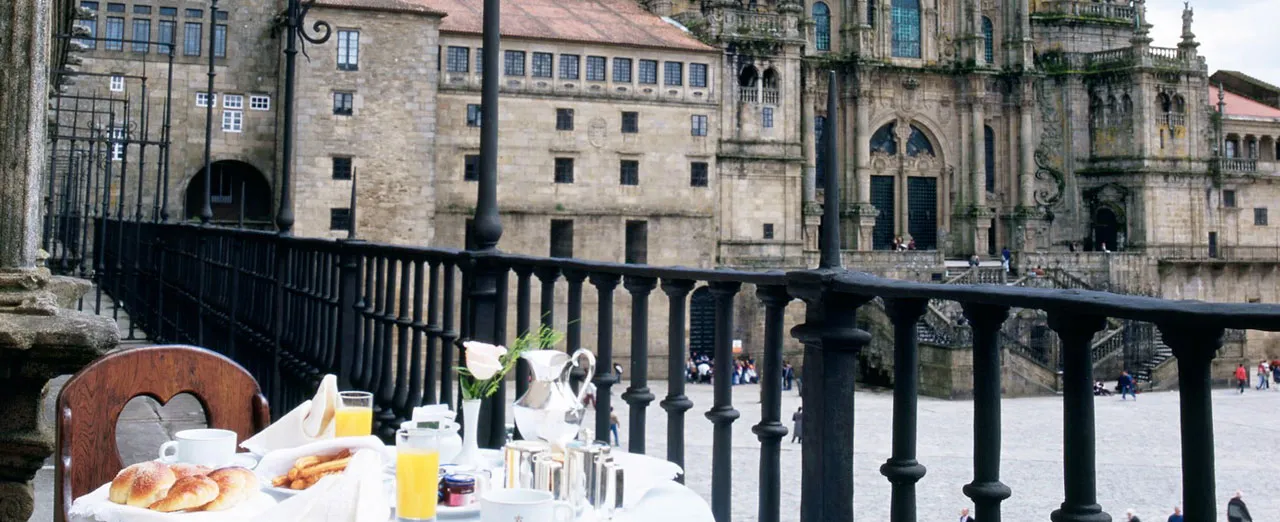
Breakfast is included with every Ultreya Tours hotel night. What appears on the table depends on the accommodation. It may be a simple continental breakfast with coffee, bread, pastries, fruit, or yogurt, or a broader hotel buffet. A rural property and a city hotel will not necessarily offer the same selection or serving time.
If you want an early departure, check when breakfast begins. Leaving before the normal service may mean missing what is included unless a different arrangement has been confirmed. Your vouchers and the hotel reception are the right sources for the actual schedule.
In towns along the Way, cafés may offer coffee, toast, tortilla, pastries, or sandwiches. Portugal has its own café culture and regional bakery traditions; Spain changes noticeably from one autonomous community to another. Rather than search for one “Camino breakfast,” enjoy the local version where you are.
The morning café stop
A café can be a practical marker in the day: a chance to refill water where available, use a restroom as a customer, check the route, and rest feet or legs. On popular stages, familiar pilgrims often gather at the same places. On quieter routes, there may be a long distance between services.
Do not rely entirely on a map icon or an old review. Opening hours change, businesses close seasonally, and a café may not serve food throughout the day. Carry a modest snack appropriate to your needs when the route information shows limited choices. This is especially useful on Sundays, holidays, early departures, and rural stages.
Lunch happens later
In Spain, lunch is commonly the main meal and often begins around 1:00 or 1:30 pm, continuing into the middle of the afternoon. Portugal also tends to serve lunch later than many North American travelers expect, though kitchens may begin and finish somewhat earlier than in Spain. These are broad patterns, not promises.
A walker who reaches the destination at noon may find that the restaurant kitchen has not opened. Conversely, arriving after a very long stage may mean the lunch service is ending. A café may still offer a sandwich, tortilla, pastry, or simple plate, but not necessarily the full menu.
Pilgrim menus appear in many Spanish Camino towns. They generally offer a limited choice of courses at a set price and can be sociable and satisfying. Quality and format vary widely; the words “pilgrim menu” do not guarantee a particular experience. A menú del día, local restaurant meal, or food from a market may be equally suitable.
Dinner and the evening rhythm
Dinner in Spain is late by North American standards. Many restaurant kitchens do not begin dinner service until approximately 8:30 p.m., and local diners commonly sit down after 9:30 p.m. A restaurant may be open earlier for drinks while its kitchen remains closed, so seeing lights or people inside does not necessarily mean dinner can be ordered. Portuguese dinner service generally begins earlier than in Spain, although exact hours still depend on the town and establishment. Hotels, rural accommodations, and restaurants serving pilgrims may follow their own schedules; use the times in your vouchers when a meal has been arranged and ask locally when it has not.
After a long stage, waiting until Spanish dinner service can feel difficult. A substantial late lunch and a lighter evening meal may suit some travelers. Others plan an afternoon snack, then use the time before dinner to shower, care for their feet, organize tomorrow’s daypack, or enjoy a gentle walk through town. If eating early is important, ask the hotel what is genuinely available rather than assuming a full restaurant service will begin at 7:00 or 8:00 p.m.
Lunches and dinners are not included in Ultreya Tours journeys unless expressly listed in the itinerary or booking confirmation. Some journeys may offer half-board or other arrangements when shown in the proposal. Never assume that staying in a hotel means its restaurant will be open that evening.
Regional food is part of the route
The Camino crosses regions with strong food identities. Galicia brings seafood, octopus, empanada, cheeses, greens, and wines whose character changes between coast and interior. The French Way passes through Navarra, La Rioja, Castilla y León, and Galicia, each with distinct ingredients and traditions. Northern Portugal adds its own soups, fish, meat dishes, pastries, and generous approach to the table.
Eating locally does not require ordering the most famous dish at every stop. It can be as simple as noticing the bread, asking what is seasonal, or choosing a regional cheese. Travelers with dietary requirements should communicate them clearly and remain prepared for fewer options in small communities. Translation tools can help, but serious allergies require precise personal planning rather than assumptions.
Plan enough, then stay curious
Before each stage, note where meaningful services appear and whether the day passes through long rural intervals. Carry water and appropriate food without turning the daypack into a pantry. Ask the hotel about local hours, especially on Sundays or holidays. When an appealing place is open, consider whether this is the moment to stop rather than postponing food for an uncertain option.
The Camino’s meal rhythm soon becomes part of its pleasure. Breakfast looks toward the road, a café gathers the morning’s stories, and dinner returns everyone to a table. Food supports the walking or cycling, but it also reveals where you are, and invites you to stay there for a little while.
For dishes worth seeking once the route enters Galicia, continue with Galician food beyond Tarta de Santiago. Our guide to tipping in Spain and Portugal explains the equally practical question that arrives with the bill.