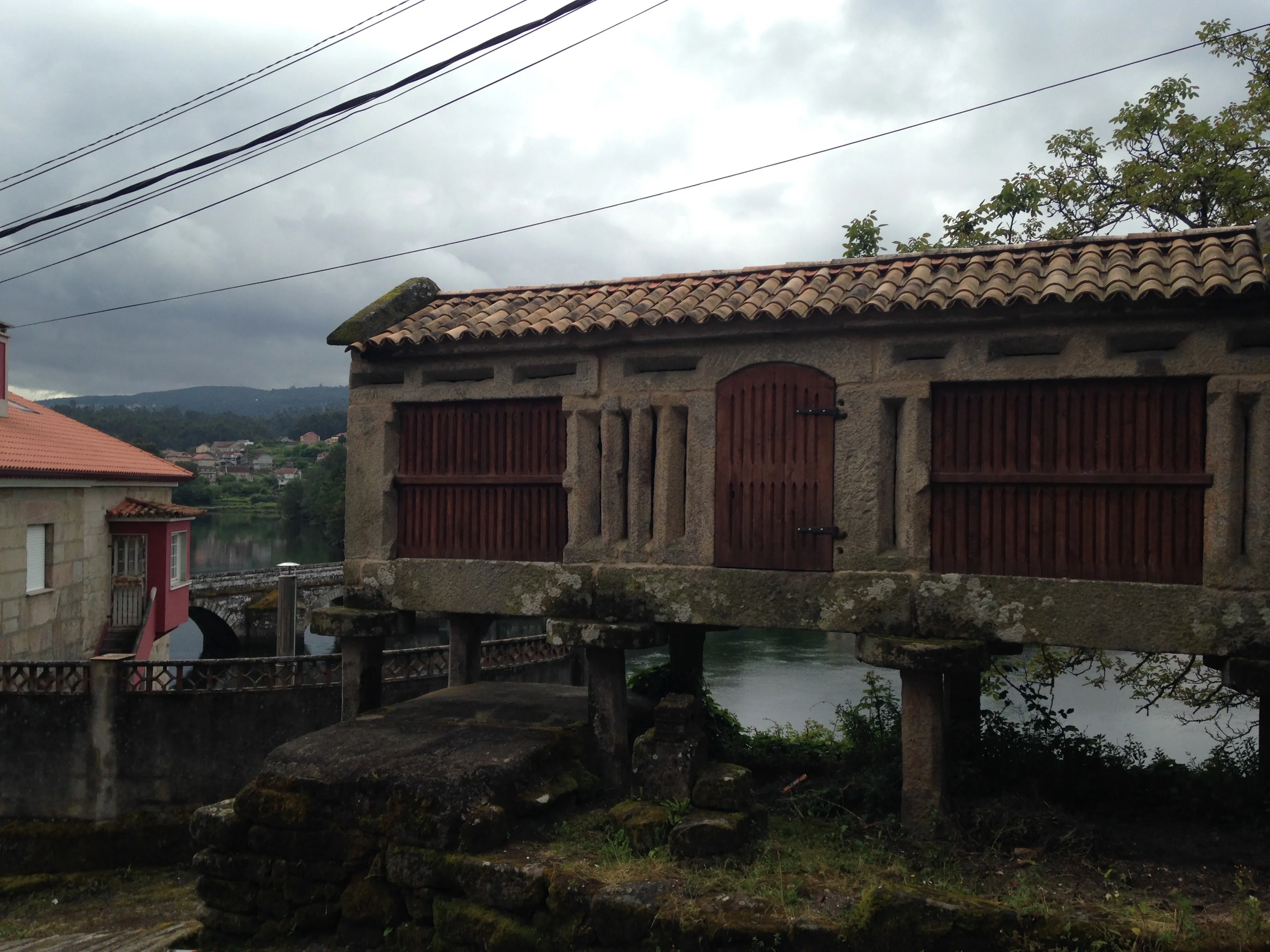
An hórreo is an elevated granary designed to keep a harvest dry, ventilated and beyond the reach of animals. The name comes from Latin horreum, but the familiar Galician form developed through local materials and crops.
The chamber stands on stone supports. Between each support and the floor sits a broad slab called a tornarratos, literally a mouse-stopper. Its overhang prevents rodents climbing into the grain. Narrow slots let Atlantic air pass through while the roof and raised floor keep out rain and ground moisture.
Maize, introduced from the Americas, increased demand for long ventilated stores. Earlier raised granaries existed, but the crop helped shape the rectangular forms now seen across much of Galicia.
Stone, wood and woven walls
Coastal hórreos are often granite, sometimes combined with wood. Inland and mountain examples may use more timber. Older circular or oval cabazos could be made from woven sticks. Names vary by district: canastro, cabazo, cabaceiro, piorno and paneira describe related forms.
The design changes noticeably as the route crosses regional boundaries. In Asturias, the familiar type is often a broad, almost square wooden chamber standing on four pillars, sometimes with an exterior corridor. Eastern Galician mountain hórreos may have square plans and rye-straw roofs, while long granite forms dominate parts of coastal Galicia. Even neighbouring valleys use different proportions, finials, wall slats and local names. Look at the granaries as regional buildings rather than expecting one standard hórreo all the way to Santiago.
Crosses and pinnacles on the roof have decorative and protective associations. Their presence does not make the building a tomb or chapel. Length could indicate storage capacity and institutional wealth. The hórreos at Carnota and Lira are famously long, while A Merca preserves a group of thirty-four.
Combarro has around sixty hórreos, with roughly thirty aligned beside the water. At high tide their supports seem to rise directly from the Ría de Pontevedra. The concentration made practical sense when families brought produce by boat and stored grain beside their houses. Combarro is also a stop on the Portuguese Spiritual Way, so walkers can examine several regional variations without making a separate excursion.
Reading an hórreo on the Camino
Look first at the ventilation slits, then underneath for the tornarratos. Count the support pairs and inspect the access door. Orientation responds to wind and available space, while construction quality reflects local stone and household means.
Many hórreos are protected heritage and remain private property. Do not climb, enter or use them as picnic tables. Their beauty comes from a practical solution repeatedly adjusted across thousands of farms.
Our Portuguese Spiritual Way Signature journey includes Combarro. A private guide can explain the waterfront settlement before the route continues towards Armenteira.