In Galicia, an indiano was an emigrant who returned from the Americas, often Cuba, Argentina, Uruguay, Mexico or Brazil. The word became especially associated with those who returned with enough money to build conspicuously and fund local projects.
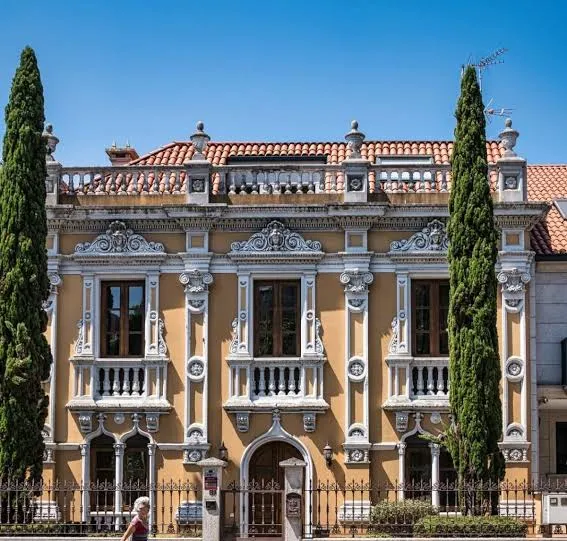
Their houses adopted verandas, glazed galleries, coloured tiles, decorative ironwork and gardens with palms or exotic trees. Plans often separated formal reception rooms from domestic service areas. Towers and roof terraces made new wealth visible from the road.
The greatest concentration lies along Galicia’s northern coast, particularly around Ribadeo and western Asturias. The phenomenon reaches much farther. Port towns and commercial centres around the Rías Baixas and the Muros-Noia estuary also received returning families and overseas money.
Vilagarcía and Noia
Vilagarcía de Arousa expanded through maritime trade, rail connections and summer residence. In the municipality and nearby towns, villas with galleries, garden walls and imported decorative details belong to families connected with overseas commerce and emigration. They sit beside older pazos and urban houses, so no single façade feature proves an indiano origin.
Around Noia, emigrant capital contributed houses, schools and civic improvements in the town and surrounding parishes. The estuary’s maritime connections encouraged movement to the Americas. Look beyond the Gothic centre for early twentieth-century villas, tiled names and garden compounds along later roads.
Philanthropy and inequality
Returning emigrants financed schools, fountains, roads, hospitals and community societies. Overseas Galician associations also sent money collectively. These investments could transform villages neglected by public provision.
The elegant houses tell only the successful end of migration. Many people left because rural work offered little security. Some never returned, and others came home without wealth. Fortunes could also depend on colonial economies and labour systems that deserve investigation rather than nostalgia.
When identifying an indiano building, seek a documented owner and date. Architecture travelled through pattern books and local builders, so a palm tree and bright façade are clues, not proof. The strongest stories join the house to a specific voyage, business and act of patronage.
Our Portuguese Spiritual Way reaches the Arousa area. Ask us for an architecture-led extension through Vilagarcía or a private visit to Noia before or after the walk.