Gregorian chant is the Latin plainchant of the Roman Church: a single melodic line shaped by the words of the liturgy rather than a regular beat. The name associates the repertory with Pope Gregory the Great, although the musical tradition developed over centuries and much of its surviving form took shape after his lifetime.
On the Camino, chant is best heard during the Liturgy of the Hours or Mass. A recording in a shop and a concert in a church can be beautiful, but neither is the same as monks singing the office they observe every day.
Rabanal del Camino
The clearest opportunity directly on the French Way is the Benedictine monastery of San Salvador del Monte Irago in Rabanal del Camino. The community sings the Liturgy of the Hours in Latin with Gregorian chant in the village church of Nuestra Señora de la Asunción.
Its published schedule includes Lauds in the morning, Vespers in the evening and Compline with a blessing of pilgrims later at night. Times can change with the season or community circumstances. Check the monastery’s official site and arrive early enough to sit quietly before prayer begins.
Rabanal is immediately before the climb toward Foncebadón and the Cruz de Ferro. Staying there rather than rushing farther creates time for Vespers and Compline without requiring a transfer off the route.
The Abbey of Samos
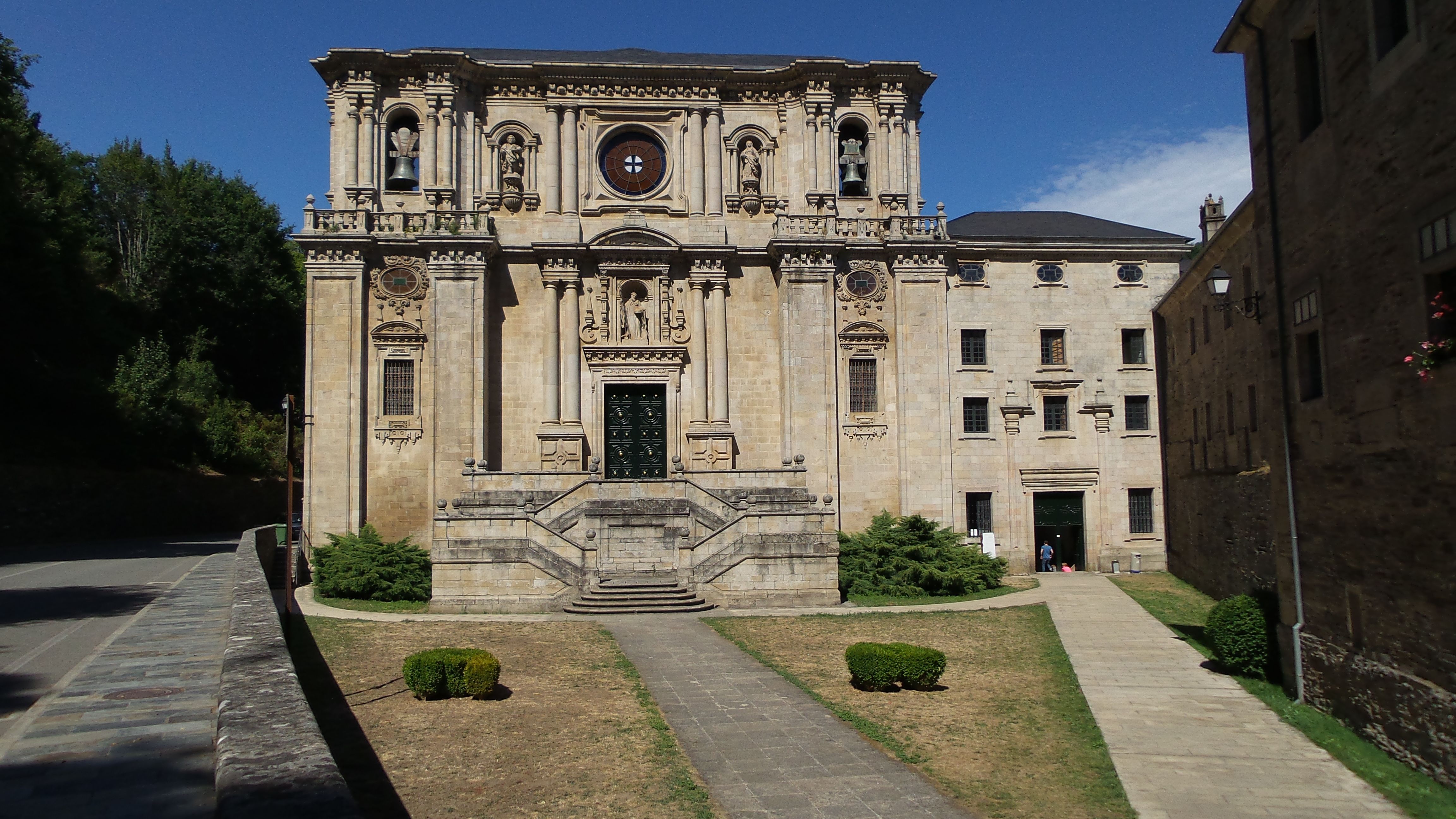
The Benedictine Abbey of San Xulián de Samos stands on the longer alternative between Triacastela and Sarria. Its community follows a daily monastic schedule that includes prayer and Mass. Chant and the amount of Latin used can vary with the service, the monks present and the liturgical day, so visitors should not expect a fixed concert programme.
The scale of the abbey makes the human sound striking. Samos has around fifteen centuries of monastic history, interrupted at different periods, and the present community also serves the parish around it. Consult the Abbey’s current timetable before altering a walking stage.
The Samos variant adds distance. Ultreya Tours can include an overnight stay or arrange the approach to Sarria so the abbey is visited without forcing an unsuitable stage.
Leyre in Navarre
The Monastery of San Salvador de Leyre requires a detour from the continuous walking line through Pamplona. Its Benedictine community belongs to the Solesmes congregation and maintains Gregorian chant during Lauds, conventual Mass, Vespers and Compline. Travelers should check the monastery’s current service times before making the detour.
Leyre explains the historical transmission particularly well: chant was present there from the late eleventh century until the nineteenth-century suppression of the monastery, and returned when monastic life was restored in 1954. Reaching it requires a planned detour or private transfer; “in Navarre” should not be confused with “beside the marked French Way.”
Montserrat, the largest musical example
The Abbey of Montserrat in Catalonia is Spain’s most famous living monastic music destination. It belongs naturally to Catalan approaches toward the Camino rather than the standard French Way from Saint-Jean-Pied-de-Port. Pilgrims can connect from Montserrat toward the Aragonese route and eventually join the French Way.
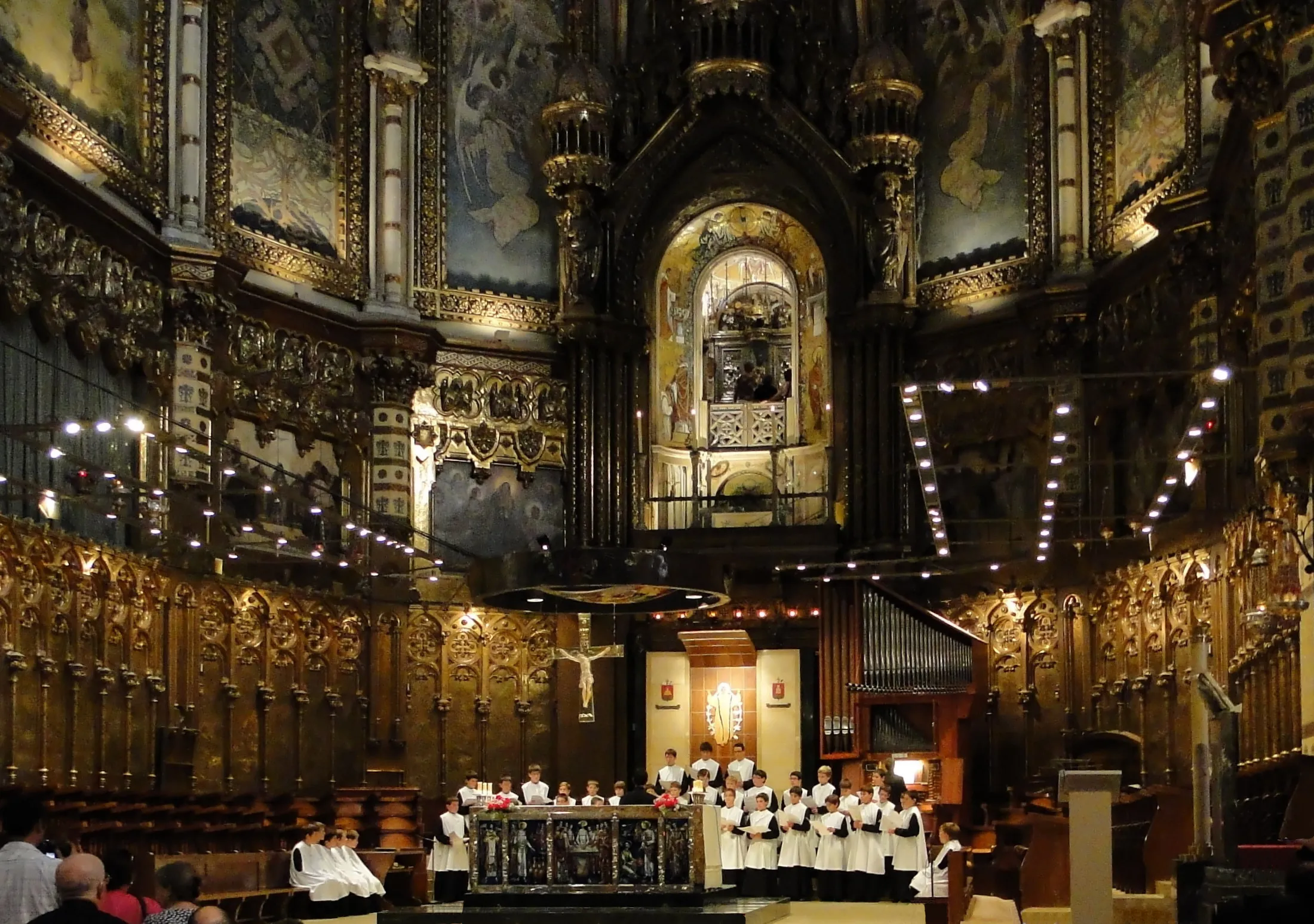
Montserrat’s Escolania, the boys’ choir with documented medieval origins, is known especially for the Salve Regina and the Virolai, the hymn to the Virgin of Montserrat. The abbey’s monks also sing the monastic office. The Escolania’s calendar follows school terms, liturgical celebrations and tours, so attendance must be checked against the Abbey’s current programme.
The Virolai is not Gregorian chant: it is a nineteenth-century hymn with music by Josep Rodoreda. Hearing it beside plainchant reveals how several periods of sacred music coexist at Montserrat.
Roncesvalles, cathedrals and ordinary parish chant
Roncesvalles offers one of the French Way’s most memorable pilgrim Masses and blessings. Its music depends on the ministers and occasion; do not advertise every service as Gregorian chant. The same caution applies to Burgos, León and Santiago cathedrals. They preserve chant in their musical and liturgical inheritance, while a particular Mass may use organ, choir, congregational song or spoken texts.
A small parish can provide the more affecting encounter. A priest may intone part of the Mass, a congregation may sing a familiar response or pilgrims may hear a Marian antiphon at the end of evening prayer. These moments rarely appear on a tourist timetable.
How to attend
Enter before the office begins, silence the phone and remain until the service ends. Photography and recording may be forbidden and are distracting even when no sign is visible. Visitors who are not Catholic are welcome to sit respectfully; participation in Communion follows the rules of the Church.
Confirm every timetable shortly before travel. Monastic communities are small, religious seasons alter the office, and funerals or local celebrations can replace an ordinary schedule. If Samos, Rabanal, Leyre or Montserrat is central to your journey, mention it when you start planning so walking stages and transfers can be arranged around the actual service rather than an old timetable.