Some Camino memories arrive through sound before image: bells across morning streets, singing in a small church, boots keeping an accidental rhythm, or a musician beneath an arch near the Cathedral.
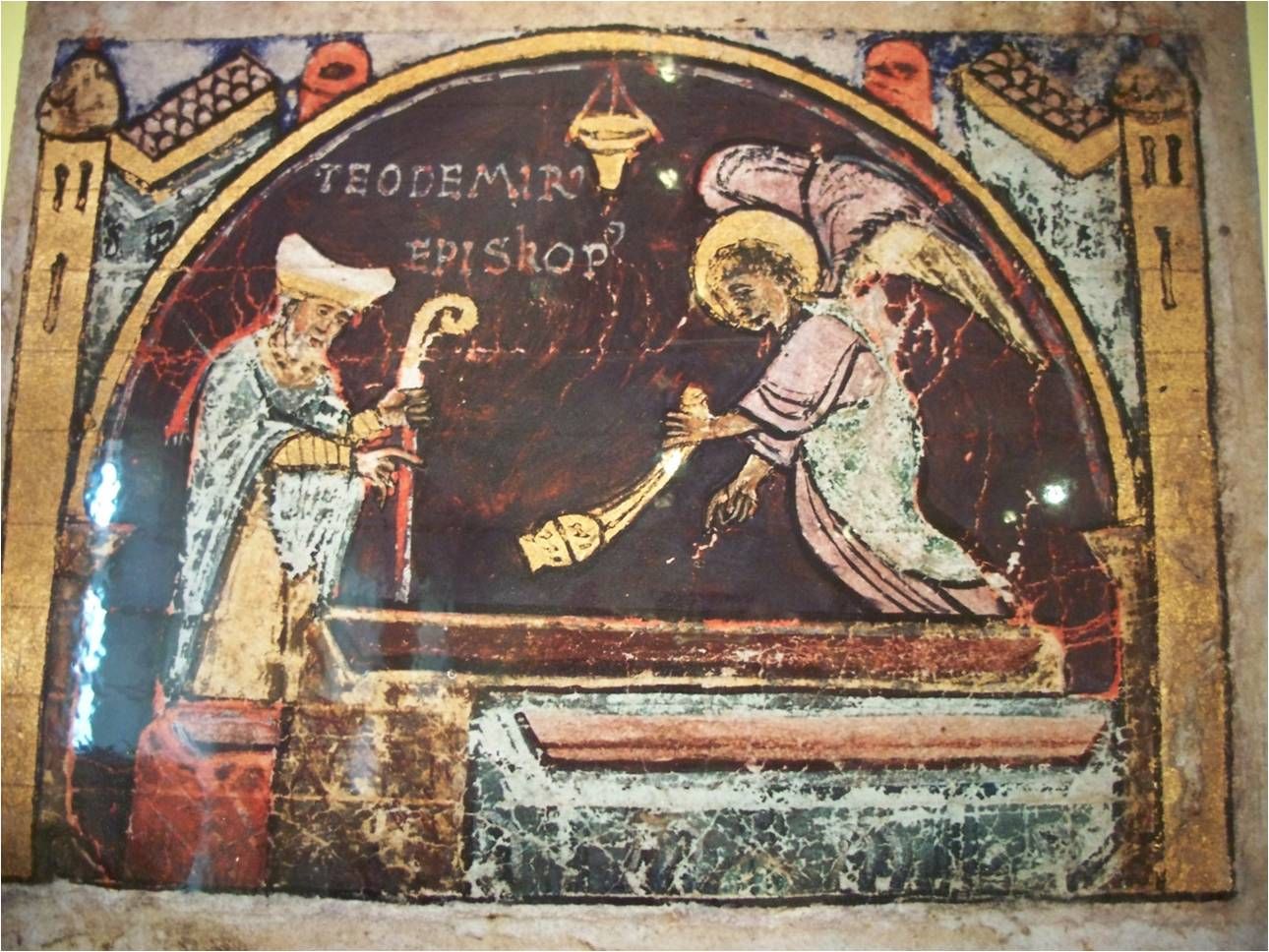
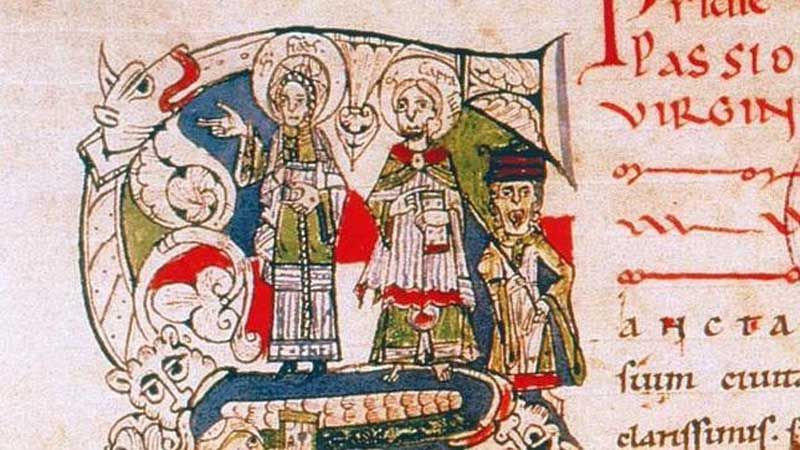
The medieval manuscript commonly known as the Codex Calixtinus is central to the musical history associated with Santiago. Alongside texts about Saint James, pilgrimage, and liturgy, it preserves music for worship connected to the apostle. Its polyphonic repertory has made it important well beyond Camino studies.
A route that continues to be composed
Pilgrim songs moved differently from cathedral manuscripts. Melodies traveled through memory, changed across languages, and helped groups maintain pace or identity. There is no single authentic Camino soundtrack; sacred and popular traditions have overlapped for centuries.
The Codex Calixtinus, preserved at Santiago Cathedral, contains some of the most important surviving music associated with medieval pilgrimage to Saint James. Among its best-known pieces is Dum Pater Familias, whose refrain includes the words “E ultreia, e suseia”, a compact medieval expression of onward and upward movement. This remarkable twelfth-century manuscript preserves the work as part of a sophisticated musical tradition.
Modern pilgrims are also likely to encounter Ultreïa, written by Jean-Claude Benazet and sung in several languages along the routes. Its recurring call has made it a contemporary Camino standard, especially for groups. The Taizé chant Laudate Omnes Gentes and other simple sacred songs sometimes enter pilgrim liturgies because a mixed congregation can learn them quickly, although they were not composed specifically for Santiago.
Contemporary composers continue to treat the route as a structure for reflection. Joby Talbot’s choral work Path of Miracles, for example, follows four places on the French Way, Roncesvalles, Burgos, León, and Santiago. The work offers a modern artistic response to distance, legend, fatigue and arrival through the language of music.
Other listening approaches the Camino obliquely. The Chieftains’ album Santiago explores musical connections among Galicia, Ireland, and the wider Celtic imagination. Galician artists and traditional ensembles bring the gaita, voice, tambourine, and dance rhythms into a living culture that exists far beyond music marketed to pilgrims.
Then there are songs chosen simply because they make walking feel possible. I’m Gonna Be (500 Miles) by the Proclaimers, Walk of Life by Dire Straits, Walking on Sunshine by Katrina and the Waves, and These Boots Are Made for Walkin’ by Nancy Sinatra are not Camino songs. That is exactly why they work in a personal playlist: humor and momentum can matter as much as historical relevance. Quieter selections about roads, leaving, or returning may belong to another traveler’s day.
Build a soundtrack with room in it
A satisfying Camino playlist can move through several layers:
- medieval and sacred music connected to Santiago;
- Galician and northern Portuguese traditional music;
- contemporary works inspired by pilgrimage;
- songs associated with walking, roads, or homecoming;
- music shared by the people traveling together.
Do not fill every hour. Bells, birds, rain, conversation, boots on gravel, and silence are part of the acoustic record of the journey. A song heard after ten quiet kilometers will often remain more vivid than a continuous stream.
Listening while traveling
Headphones can turn a long stage inward, but they also remove the sounds that help a traveler understand place and stay aware of traffic, bicycles, animals, and other people. Leave space for the route itself. If listening, keep volume low and one ear available where safety requires it.
Live music deserves attention without entitlement. A parish choir, festival, or street musician is not scenery arranged for a pilgrim’s video. Ask before recording identifiable performers and contribute when a public performance invites support.
Music gives the Camino another geography. A manuscript can carry us into medieval worship; a choral work can redraw the route in imagination; a local song can belong completely to one evening. Together they remind us that resonance belongs to pilgrimage alongside its kilometers and monuments.
What to listen for in Santiago
The Cathedral’s archive preserves the Codex Calixtinus, while its present musical life continues through choirs, organists, solemn liturgies, and a collection devoted to music from the Cathedral. When visiting, listen to the acoustics as carefully as you look at the stone: a bell, organ phrase, or unaccompanied voice reveals the scale of the building differently from a photograph.
Outside, the city has another sound. A gaita beneath an arcade, students playing in a square, festival music, and bells dividing the day belong to living Santiago rather than a reconstructed medieval scene. The most revealing Camino playlist may therefore end with space left open for whatever the city is playing when you arrive.
The medieval refrain connects naturally with the meaning of Ultreya, while the manuscript’s institutional world becomes clearer in the profile of Diego Gelmírez.