On the Galician section of the Camino Francés, many restaurants offer a menú del peregrino or the more general menú del día. The format usually includes a first course, a second course, dessert or coffee, bread and a drink. What is included must be checked on the printed menu; wine, coffee and supplements are handled differently from one restaurant to another.
Common first courses
- caldo gallego: broth with greens, potato and beans, often with pork
- sopa del día: soup of the day
- lentejas: lentil stew
- ensalada mixta: lettuce, tomato, onion and usually tuna, egg or both
- macarrones con tomate: macaroni with tomato sauce
- empanada gallega: savory filled pie, commonly with tuna, meat or cod
Caldo and lentils can be excellent after rain or cold. Ask whether a soup contains meat if you are vegetarian; vegetable appearance is not a guarantee of vegetable stock.
Common second courses
- pollo asado / a la plancha: roast or grilled chicken
- lomo de cerdo: pork loin
- ternera guisada: stewed beef
- merluza: hake
- trucha: trout
- tortilla española: potato and egg omelette
- huevos con patatas: eggs with chips or fried potatoes
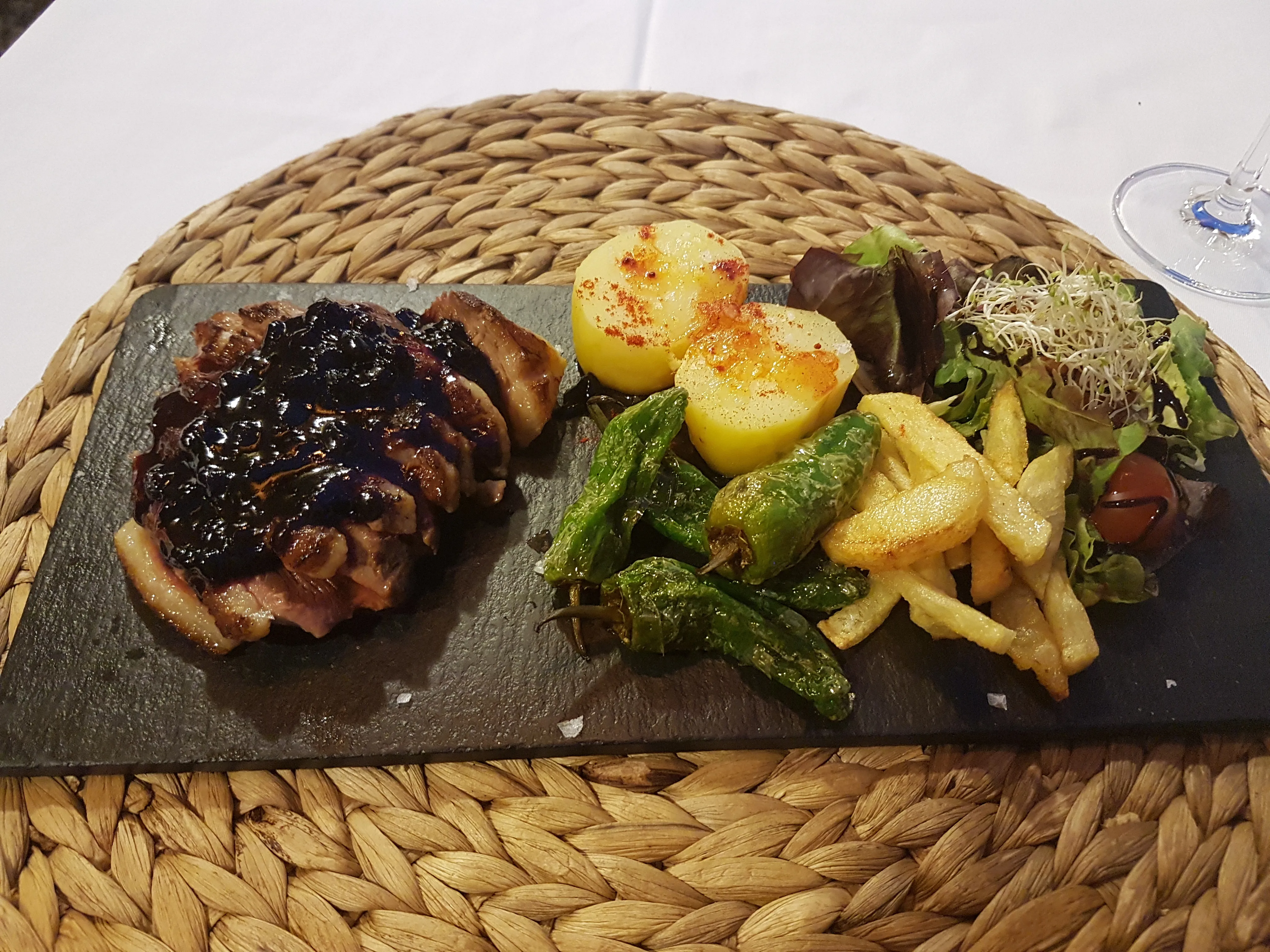
The second course is often deliberately plain and filling. Garnishes may consist only of chips and a little salad. Fish described as a la romana is battered and fried; a la plancha means cooked on a hot griddle.
Dessert
Typical choices are flan, natillas (custard), yogurt, ice cream, fruit or tarta de Santiago, the almond cake marked with the cross of Saint James. Postre casero means made in-house, though it does not identify which dessert is homemade.
Is it good value?
A pilgrim menu can be very good value when the kitchen serves a real daily stew, fresh fish or a well-cooked local dish. It is less convincing when every course is selected for speed and the same laminated menu appears in many towns. Read the board, look at what local customers are eating and ask what was prepared that day.
The menú del día often gives better cooking and more local variety for a small difference in price. At dinner, sharing raciones can be more interesting for two or more people. A tapa is a small portion, sometimes complimentary with a drink; a ración is a paid plate intended for sharing. A media ración is a half portion where offered.
Useful tapas and raciones
- tortilla: potato omelette
- croquetas: fried béchamel croquettes, with fillings such as ham or seafood
- pimientos de Padrón: small fried green peppers; a few can be hot
- pulpo á feira: sliced octopus with olive oil, salt and paprika
- empanada: filled Galician pie
- raxo: pieces of marinated pork
- zorza: paprika-seasoned chopped pork
- calamares: fried squid rings
- mejillones: mussels
- ensaladilla rusa: potato and vegetable salad with mayonnaise
Pulpo, seafood and large meat plates are not automatically cheap because they are called raciones. Check the listed price and market-price notation before ordering.
Guests on Ultreya Tours journeys receive the meal arrangements confirmed for their itinerary. Where dinner is not included, the journey documents provide local recommendations so you can choose between a set menu, tapas and a full restaurant meal.