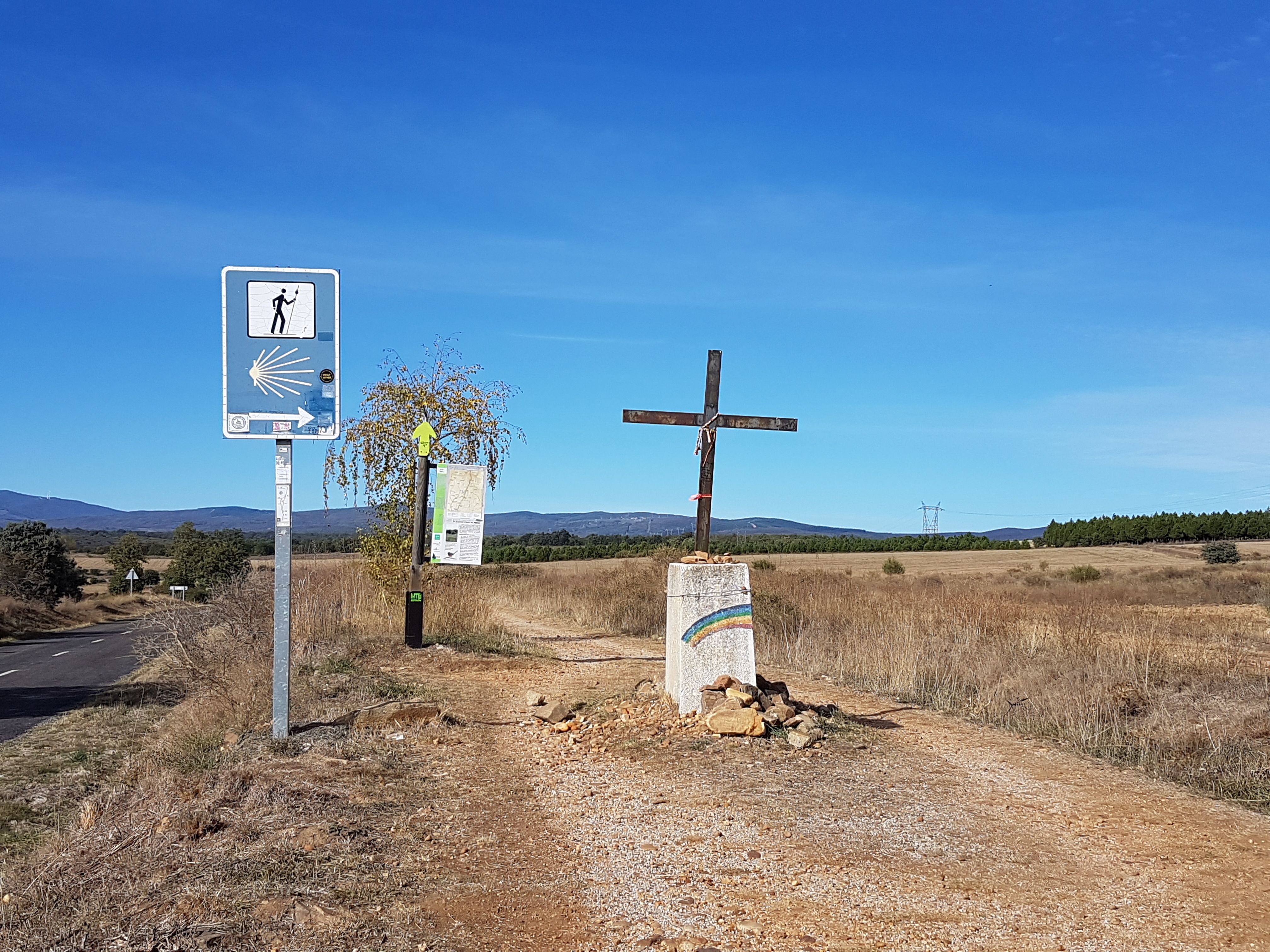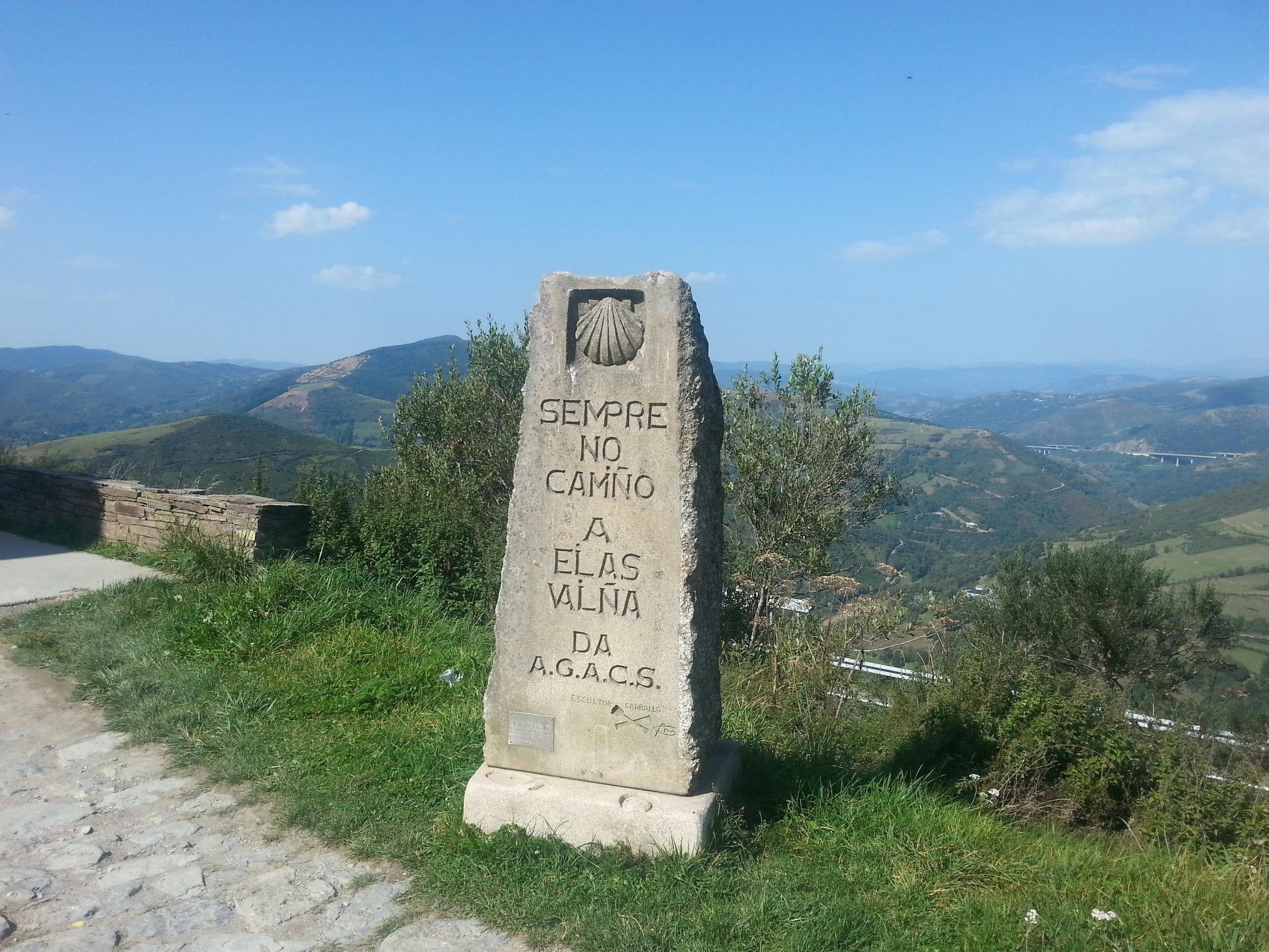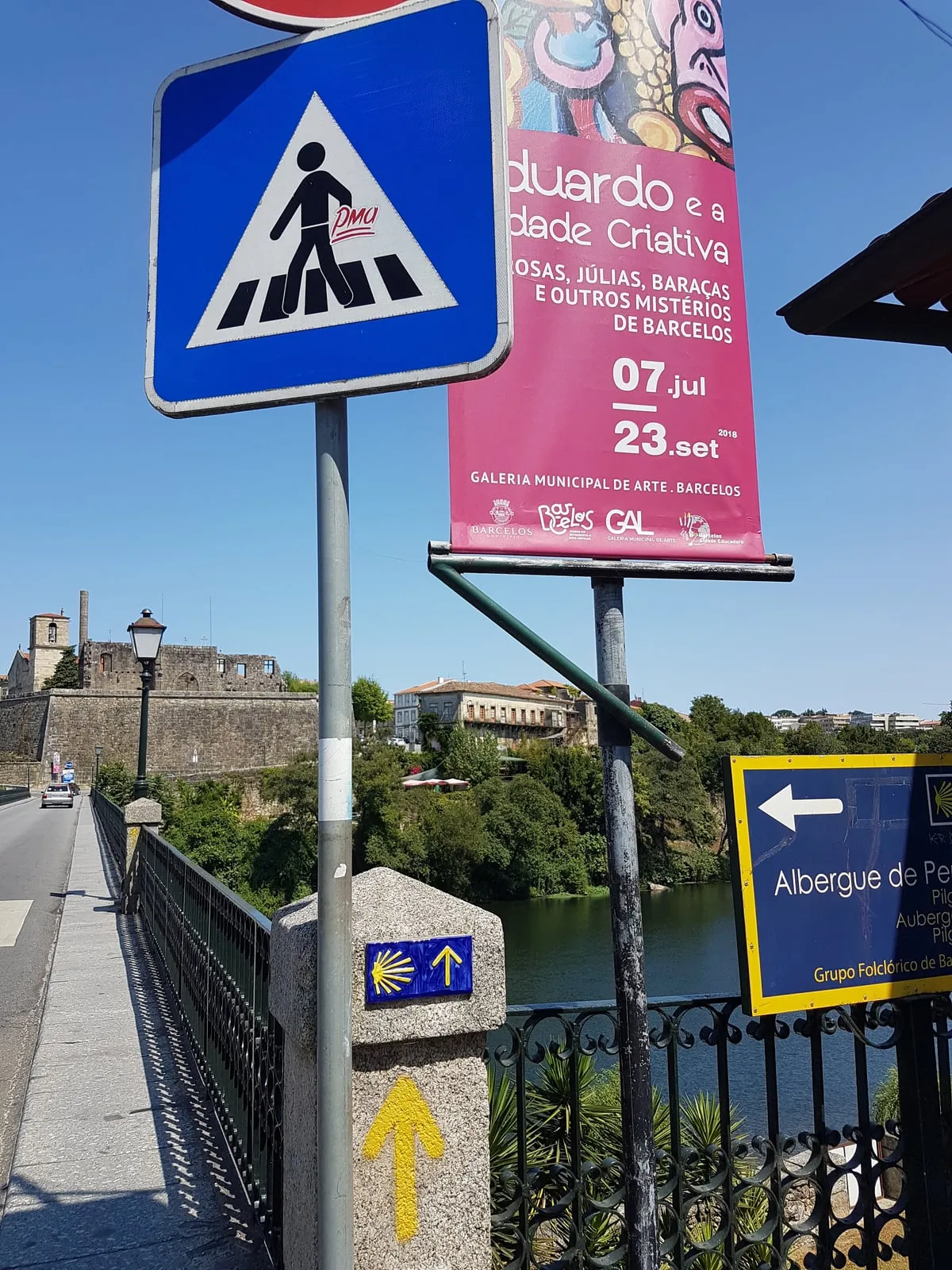
The Portuguese Way develops a particular kind of confusion after entering Galicia. A stone marker points one way, a painted arrow points another and a person outside a café confidently recommends a third. Each direction may eventually reach Santiago. That does not make them the same route.
Some alternatives are official and well considered. Others are temporary responses to flooding or roadworks. A few exist because a business wants pilgrims to pass its door.
The question is rarely whether one path is the true Camino. It is whether the person walking understands the choice being made and knows how Camino waymarking works.
The choice before O Porriño
The best-known example appears between Tui and O Porriño. Near Orbenlle, pilgrims can continue toward the industrial estate of As Gándaras or follow the riverside route beside the Louro.
The older line through the industrial area includes long stretches of pavement, warehouses and traffic. The alternative, waymarked since 2013, follows the river and wooded paths into O Porriño. It adds roughly half a kilometer, although published distances vary slightly depending on the measurement points.
For most walkers, the riverside option is the better Camino day. It is quieter, greener and separated from much of the industrial traffic. The distinction matters because pilgrims are sometimes told that the industrial route is the official or proper one.
There have also been documented complaints about signs being altered near O Porriño to send pilgrims past particular businesses. A hand-painted arrow, crossed-out mark or confident instruction from a doorway may therefore carry a commercial interest.
That does not make every café owner’s advice dishonest. A local business may know that the river has flooded, a path is obstructed or the next open café is hours away. Listen to the information, then look at who is giving it and what the proposed route actually does.
Why a detour through a village may be useful
The shortest or prettiest line is not automatically the most practical. A route through a village may provide water, shade, bathrooms and food. It may also pass a church, historic bridge or community that has welcomed pilgrims for generations.
This matters on quieter stages. A path that avoids every settlement can leave a walker without a useful stop for hours. In hot weather, an additional café may be more valuable than a kilometer saved. A pilgrim with sore feet may prefer pavement and services to an uneven riverside path.
Commercial life has always formed part of pilgrimage. Inns, food sellers, cobblers and hospitals developed beside the road because pilgrims needed them. A route passing businesses is not suspicious merely because money changes hands there.
A sign advertising a café presents an honest choice. An imitation Camino arrow disguises advertising as route guidance.
The complementary route beside the River Gafos
Another choice appears on the approach to Pontevedra. The traditional line runs through Tomeza, while a complementary route follows the River Gafos for several kilometers before entering the city.
The riverside option removes a substantial amount of roadside walking and offers shade and water. When Xunta markers were installed along it, some nearby hospitality businesses complained that pilgrims were being taken away from their doors. Reports also described unofficial notices intended to pull walkers back toward particular establishments.
The Gafos path is attractive, but it is not right for everyone. Its natural surface may be unsuitable for a wheelchair, stroller or someone who needs predictable footing. After prolonged rain, a roadside route may be the more comfortable choice.
Here the word complementary is useful. It signals another recognized way to continue, not an instruction that every pilgrim should abandon the principal route.
What “C. Complementario” means
In Galicia, official stone markers sometimes present a principal route beside a marker labeled C. Complementario, short for Camiño Complementario. The label has confused many pilgrims, who understandably read it as an optional excursion or a temporary diversion.
It normally identifies an officially recognized alternative within the Xunta’s route system. A complementary path may offer better walking conditions, environmental interest or a safer connection where the historic route has become difficult.
On older installations, the principal marker generally carries the remaining distance to Santiago, while the complementary marker may show its status without a kilometer figure. Signs have been introduced at different times, however, so one junction will not always look exactly like another.
The legal vocabulary has also developed. Galicia’s current cultural heritage law describes:
- Principal routes, historic sections that remain in use with their traditional character.
- Routes of historic traces, documented historic sections that have been physically or functionally lost.
- Functional routes, alternatives created for cultural or environmental reasons, continuity or user safety.
Pilgrims will still encounter Camiño Complementario on physical signs and in everyday conversation. It usually identifies an approved option that helps the modern route function. A privately painted arrow has no equivalent status.
Official does not always mean preferable
An official principal route preserves continuity with the historic road. That has cultural value, even when the modern surroundings include asphalt, traffic or an industrial estate.
A complementary route answers a different question: where can people walk safely and pleasantly today? At Portomarín on the French Way, for example, disputes arose when the principal historic line and a shorter, more attractive complementary line were both marked. The label alone did not tell pilgrims which experience they would prefer.
This is why blindly choosing either “principal” or “complementary” misses the point. Read what each path contains. One may have traffic and services; the other may have woodland, mud and no open café. Both can be legitimate Camino routes.
When the arrow looks unofficial
Official Xunta markers in Galicia are substantial stone or concrete posts with Camino symbols and standardized plaques. Painted yellow arrows remain part of Camino wayfinding, but they are easy to copy, repaint or redirect.
Be cautious when an arrow:
- names a specific bar, hostel or restaurant;
- appears on a removable board rather than a fixed waymarker;
- conflicts with a nearby Xunta marker;
- has been painted over another arrow;
- sends the route away from both the mapped line and the expected destination.
Unauthorized redirection is not confined to the Portuguese Way. Ponferrada has dealt with imitation signs leading pilgrims toward businesses and away from the marked route. Arguments over arrows have also appeared in towns where two streets compete for pilgrim traffic.
The existence of such cases should not create suspicion toward every person offering directions. Most local help is generous and accurate. It does justify pausing when advice produces an unexpected turn.
Use information and instinct together
Instinct on the Camino is often a quick reading of several details. The path ahead feels wrong, the sun is on an unexpected side, the last marker was too long ago or a commercial sign is doing too much persuading.
Pause at that moment. Compare the official marker, the personalized route map and the physical condition of both paths. Look for a destination name rather than following another pilgrim out of habit. If a local person recommends a change, ask why. “The riverside path is flooded” is useful information. “Everyone goes this way” explains very little.
Personal judgment also includes knowing what the day needs. The village route may be useful for water, food or an easier surface. In normal conditions, the riverside route may offer the quieter walk.
On the approach to O Porriño, the Camino beside the Louro is an established option that avoids much of the industrial estate. It is the line selected for the corresponding stage of our Portuguese Signature Way from Tui. If conditions are good and you do not need the services on the older line, it is usually the more pleasant choice.