The Portuguese Camino begins much farther south than Porto. Pilgrims can follow the road from Lisbon, passing Santarém, Tomar and Coimbra before reaching Porto and continuing towards Galicia. The complete journey reveals Portugal from the Tagus to the Minho, but it requires several weeks and includes long inland sections.
Porto is where the route opens into several compelling choices. The Central Way follows the historic inland road through Rates, Barcelos and Ponte de Lima. The Coastal Way stays closer to the Atlantic through Vila do Conde, Póvoa de Varzim, Esposende, Viana do Castelo and Caminha. The Senda Litoral keeps to beaches, promenades and boardwalks wherever the shoreline allows. Many walkers combine them, using the oceanfront route for its beauty and the marked Coastal Way when cliffs, rivers or urban development push the path inland.
This is a Camino of salt air, fishing harbours, tiled churches, estuaries and cities whose prosperity came from the sea. It eventually crosses the River Miño into Spain and continues through A Guarda, Oia, Baiona and Vigo before turning inland towards Santiago.
Porto: a city facing the river and the ocean
Porto deserves more than a departure morning. The Camino begins at the Romanesque and Gothic Sé Cathedral, high above the Douro. From its terrace, the roofs descend towards Ribeira and the river crossed by the Dom Luís I Bridge. On the opposite bank, the port-wine lodges of Vila Nova de Gaia explain the trade that carried the city’s name around the world.
The first walking day reveals Porto’s maritime scale. The route can follow the Douro through Miragaia and Foz, where the river meets the Atlantic, then turn north beside beaches and the fortress of São Francisco Xavier. Another option uses the metro to begin beyond the metropolitan streets. We choose the starting point according to how much urban walking the traveler wants and whether the priority is the cathedral departure, the riverfront or a full day beside the sea.
Porto grew through merchants, shipyards and Atlantic connections. Henry the Navigator was born here in 1394, and the city’s shipbuilders participated in the Portuguese voyages that connected Europe with Africa, Asia and the Americas. Those expeditions brought immense wealth and cultural exchange, alongside conquest, slavery and colonial rule. The churches, warehouses and tiled façades seen at the start of the Camino belong to that complicated maritime history.
Older roads and a newer continuous Camino
Roman roads connected settlements and ports along northwest Iberia. Medieval pilgrims reused parts of this network, choosing crossings, monasteries and towns where they could find shelter. The inland road remained more practical through many periods because rivers were easier to cross away from their tidal mouths.
The modern continuous Coastal Way brings together old local roads, fishing paths, urban streets and newer boardwalks. Portugal formally recognized the 138-kilometre Porto-to-Valença Coastal Camino in 2022. Its recent organization gives walkers clear continuity while the places themselves carry much older histories.
Towns built around the Atlantic
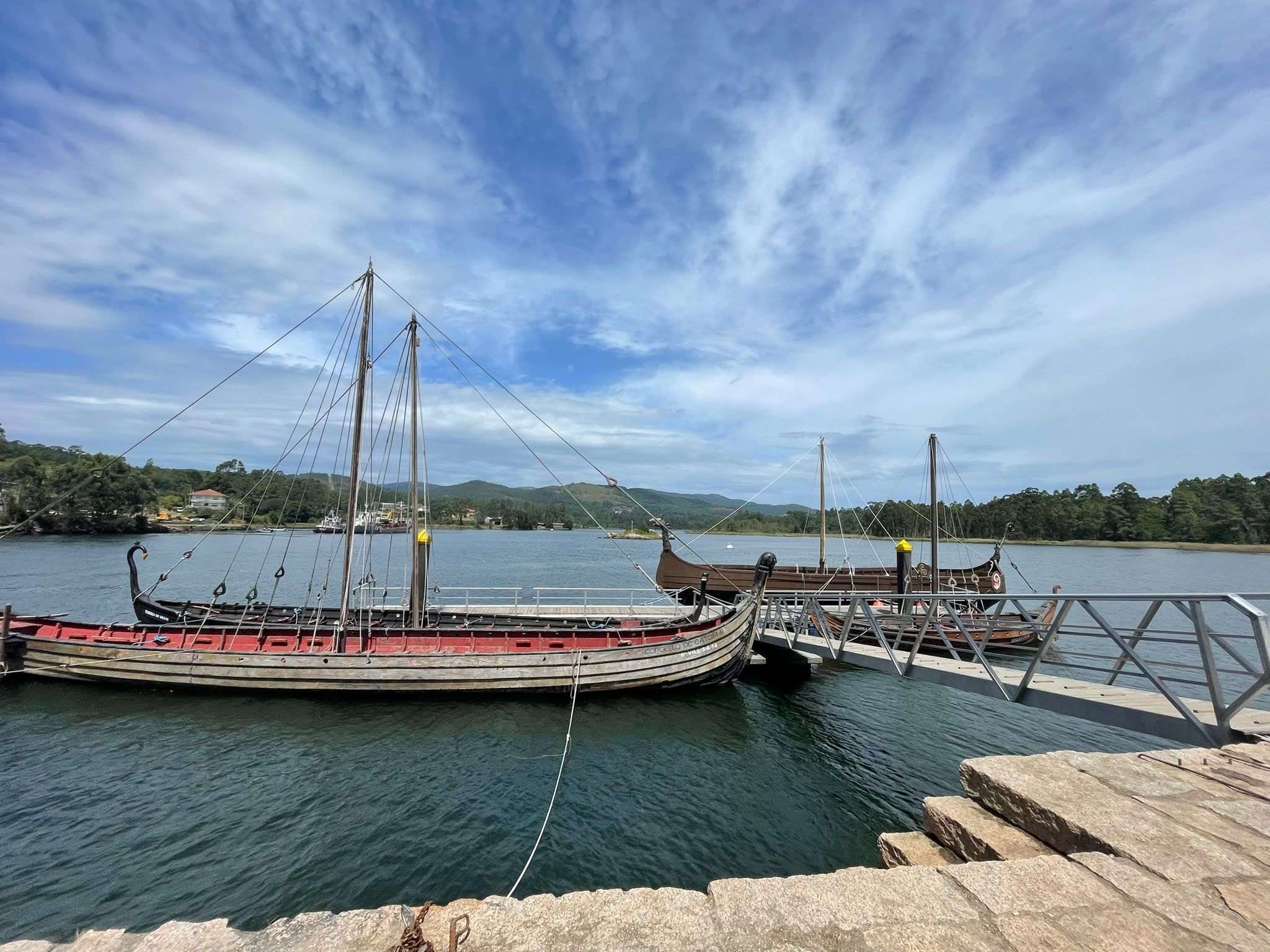
Vila do Conde was an important centre of shipbuilding during the Portuguese Age of Discovery. The riverside replica ship and the Alfândega Régia museum evoke the carpenters, sailors and merchants who worked here, while the great aqueduct carried water to the convent of Santa Clara above the town.
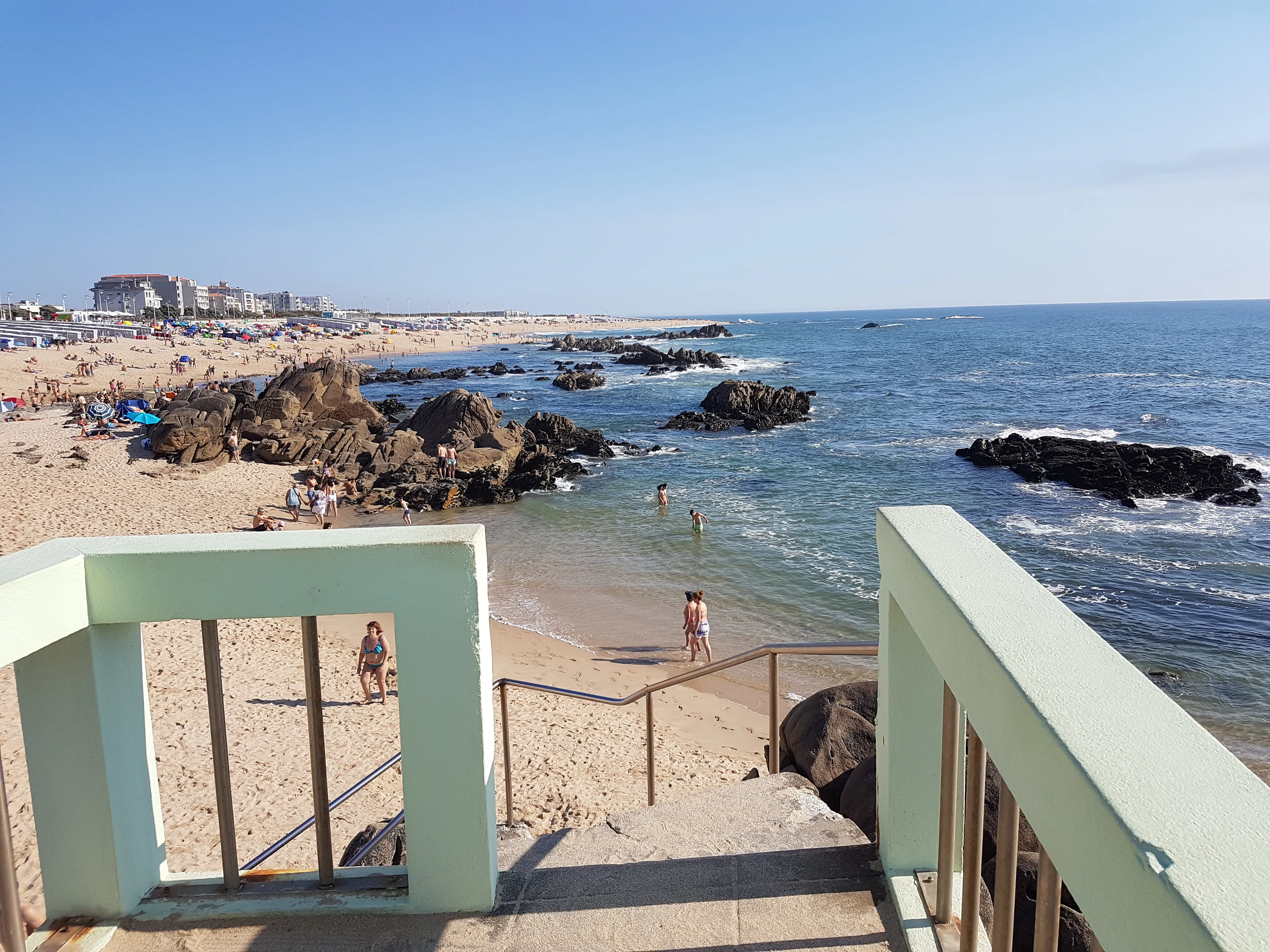
Póvoa de Varzim developed around fishing families with their own identifying marks, the siglas poveiras. These angular symbols were carved into boats, houses and belongings and passed through families. The wide beaches and working harbour introduce the culture that accompanies the route north.
At Esposende, the Camino crosses the Cávado estuary between dunes, pine woods and salt air. Viana do Castelo then provides one of the great urban arrivals of the route. Its historic centre contains Manueline and Renaissance houses built with Atlantic wealth, while the sanctuary of Santa Luzia watches from the hill above. The town’s gold filigree jewellery and elaborate festival dress preserve another expression of northern Portuguese identity.
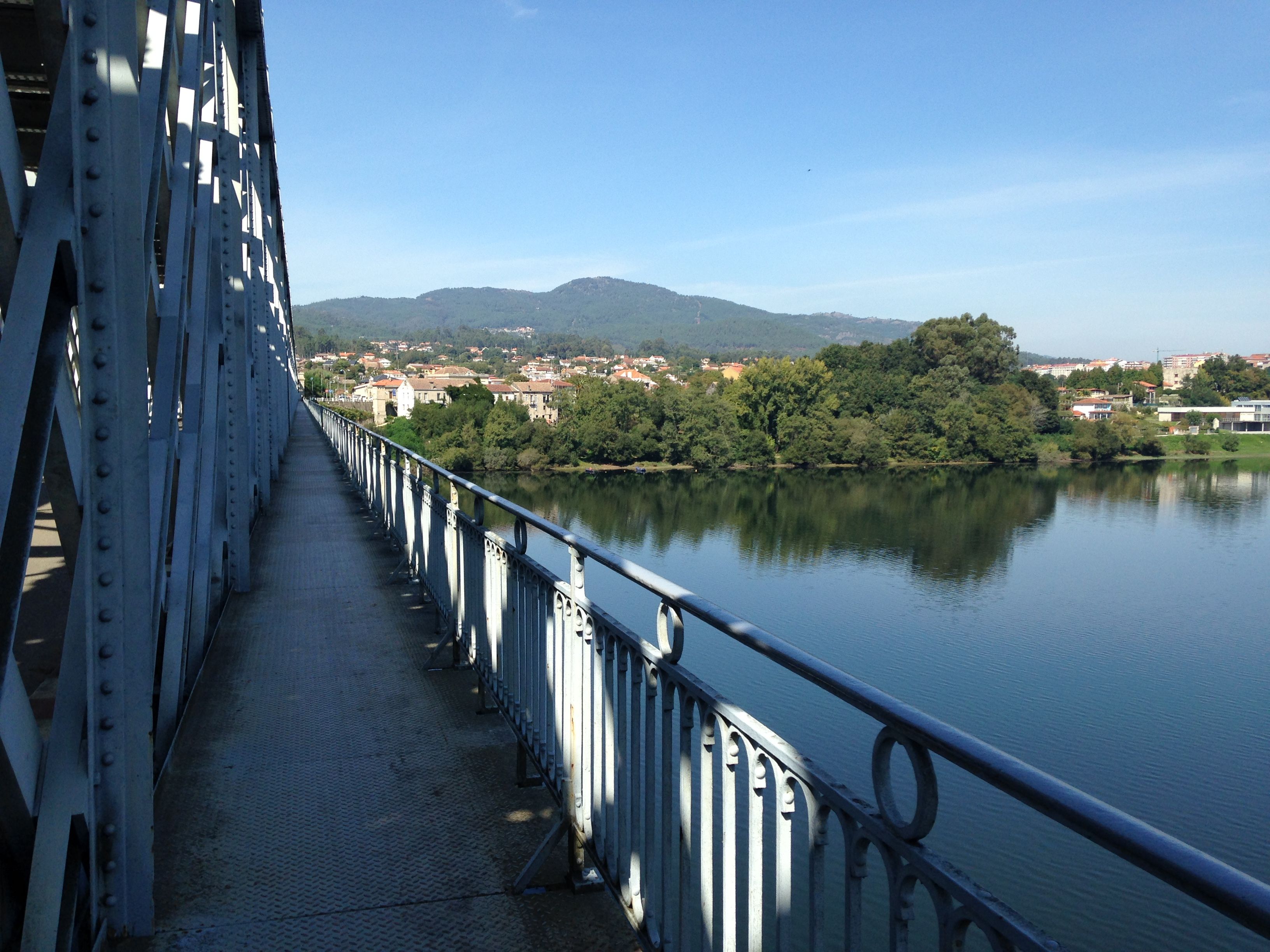
Caminha stands where the River Minho reaches the sea. Its clock tower, fortified streets and broad estuary show why the town guarded Portugal’s northern frontier. Pilgrims cross by boat to A Guarda, where the immense Iron Age settlement of Santa Trega overlooks both countries and the Atlantic.
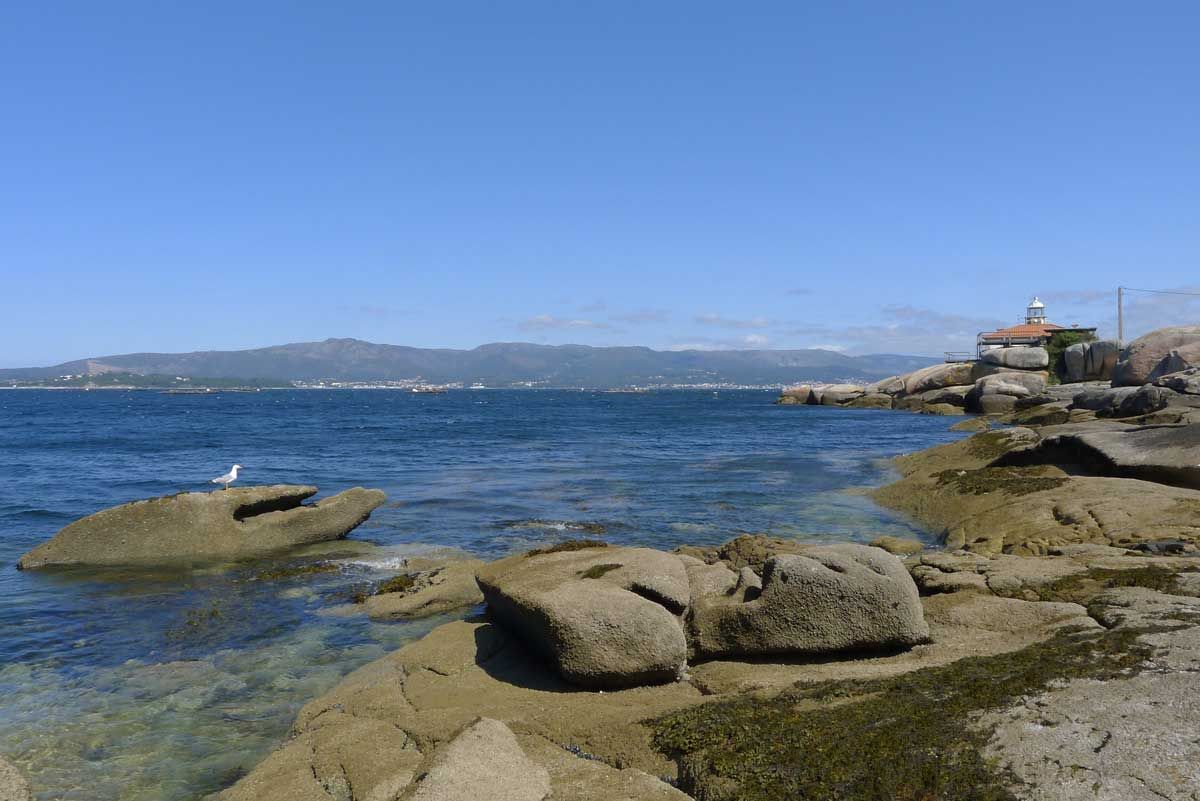
The Galician coast brings the monastery of Santa María de Oia, built almost against the ocean, followed by the fortress peninsula of Baiona. In 1493, the caravel Pinta reached Baiona with news of Columbus’s first voyage. Farther north, Vigo opens around one of Europe’s great natural harbours before the route turns inland towards Redondela.
Portugal and Spain across the Minho
The border has divided two kingdoms, languages and political histories, yet the communities on either side share a remarkably close landscape. Galicia and northern Portugal have related languages, granite architecture, small farms, fishing traditions, music and food. Families, merchants and smugglers crossed the Minho even when governments treated it as a military frontier.
Fortresses still face one another along the river. Portugal defended Caminha and Valença; Galicia guarded A Guarda and Tui. Wars of independence and succession brought conflict, while markets and marriages kept daily relationships alive. Today the boat crossing feels peaceful, and European borders allow walkers to move between countries almost without interruption. The clock changes by one hour, the language shifts and the Camino continues.
Historic pilgrims and modern walkers
Pilgrims have travelled north through Portugal since the cult of Saint James became established. Queen Saint Isabel made the pilgrimage to Santiago in the fourteenth century, carrying the staff and wearing the pilgrim’s clothing. Parish priests, nobles, merchants and ordinary travelers followed routes shaped by bridges, ferries and available lodging rather than the branded variants used today.
The modern Coastal Way has become popular because it feels unmistakably Portuguese before becoming Galician. Boardwalks cross dunes, fishing boats return to small harbours and each estuary changes the shape of the day. The route is relatively level in many Portuguese sections, though sand, wooden walkways, Atlantic wind and exposed sun add their own demands.
How it compares
The Central Way offers the strongest sequence of medieval towns, Roman bridges and traditional inland pilgrim roads. The Coastal Way gives more ocean, fishing culture and open horizons. The Senda Litoral stays closest to the water but can involve more pavement, seasonal beach infrastructure and route decisions around river mouths.
After Vigo, the coastal route joins the Central Way at Redondela. Travelers who want to return to the water can later take the Spiritual Variant through Armenteira and the Ría de Arousa. This creates a journey framed by two maritime landscapes: the open Atlantic at the beginning and the sheltered estuary of the Traslatio near the end.
Our Portuguese Coastal Way from Porto follows the Atlantic north through Portugal and Galicia. We arrange the hotels, luggage and border-stage logistics, and can connect the journey with the Spiritual Variant for travelers who want both the ocean coast and the Arousa estuary.