Leave Santiago’s granite streets behind for a day beside the Atlantic. The Rías Baixas are a landscape of long sea inlets, islands, vineyards and sheltered fishing ports. Salt water reaches deep into green country, creating a coast that feels very different from the exposed cliffs around Finisterre. This is the Galicia of Albariño, mussel rafts, fish markets and old towns built from pale granite.
What are the Rías Baixas?
Rías Baixas means the lower estuaries or southern rías of Galicia. The name normally describes the Atlantic inlets from Muros and Noia south towards Baiona, including the great rías of Arousa, Pontevedra and Vigo. A day tour from Santiago usually concentrates on Pontevedra and the southern side of the Ría de Arousa, where several of the most rewarding towns lie close enough to form one coherent route.
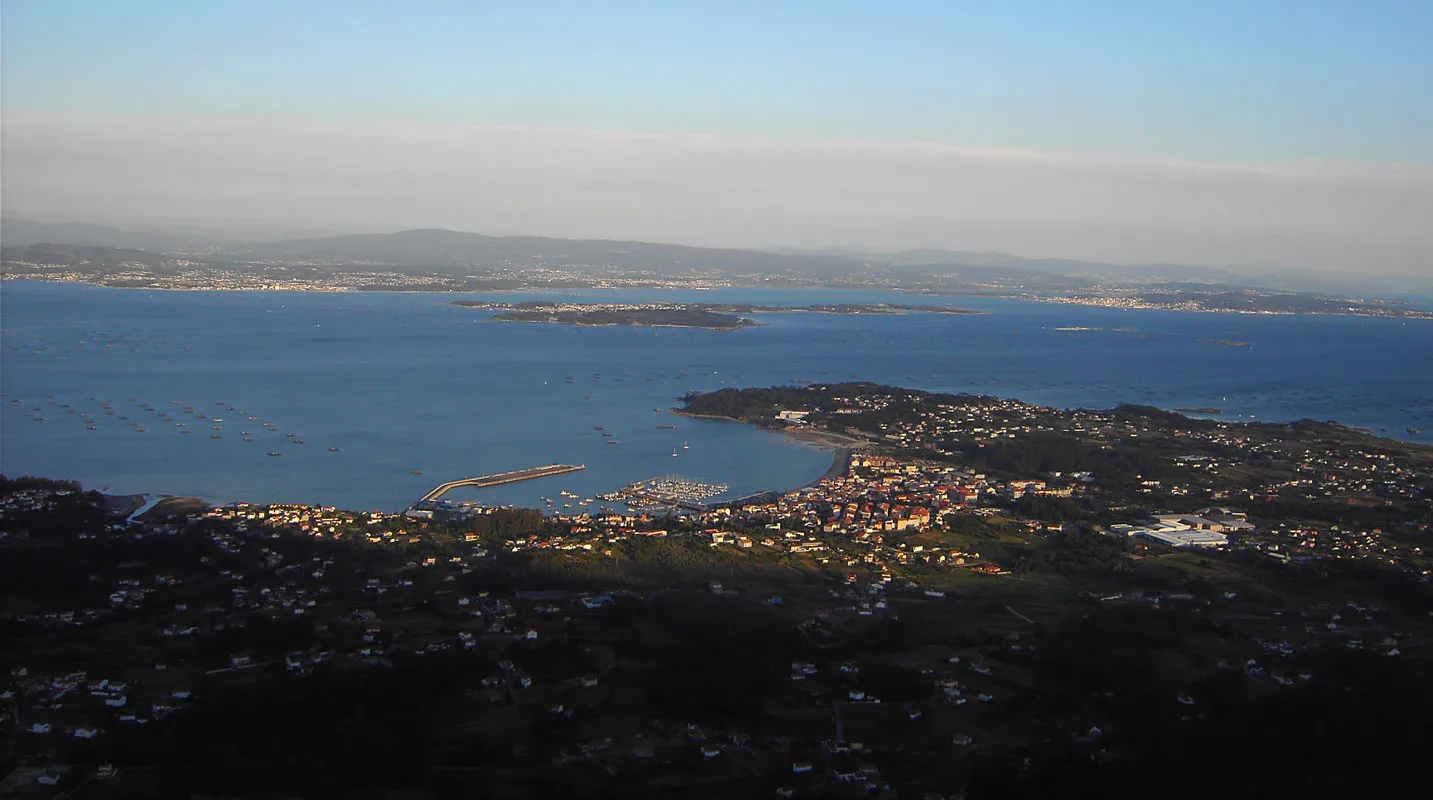
A ría is a former river valley entered by the sea. Galicia’s ancient faults and river systems created the underlying valleys; rising water after the last glaciation flooded the lower land and produced the indented coast seen today. The result is a succession of broad, sheltered waterways rather than a straight ocean shore. Headlands, islands and peninsulas protect the inner water, while rivers carry fresh water and nutrients from inland Galicia.
That geography explains much of the region’s beauty. Vineyards and wooded hills descend towards silver water. Fishing villages face one another across the estuary. At low tide, sand and mud banks appear around shellfish beds; when the tide returns, boats and bateas seem to float almost level with the road.
What is O Salnés?
O Salnés is the coastal district between the Rías of Arousa and Pontevedra. It includes Cambados, Meaño, Meis, Ribadumia, Vilanova de Arousa, Vilagarcía, Sanxenxo, O Grove and A Illa de Arousa, among other municipalities. Pontevedra city sits just beyond its southern edge and provides a natural historic beginning to the day.
O Salnés is one of the principal subzones of the Rías Baixas wine denomination and the area most closely associated with Albariño. It is also a working maritime landscape of small ports, canneries, shellfish gatherers, markets and restaurants. Wine and seafood are not two separate tourist themes here: they developed beside one another and meet naturally at the table.
Albariño country
Albariño thrives in O Salnés’ mild, wet Atlantic climate. Traditionally, vines were trained high on granite posts and overhead pergolas, allowing air to circulate around the grapes and leaving the ground below available for other uses. The wines are usually fresh and aromatic, with the acidity that makes them particularly good with oysters, mussels, clams, octopus and white fish.
Cambados is the historic center of this wine culture. The town gives its name to the Festa do Albariño and brings together wineries, old manor houses, Fefiñáns square and the roofless ruins of Santa Mariña Dozo. During a winery visit, the producer can show how pergola-trained vines, granite soils and Atlantic weather shape the wine before you taste it.
Seafood, shellfish and the bateas
The sheltered rías are among Europe’s most productive marine environments. Fresh and salt water mix with strong tides and nutrient-rich Atlantic currents, supporting mussels, clams, oysters, cockles, scallops, octopus and a wide range of fish. Shellfish gathering remains an important local occupation, much of it carried out on foot at low tide by groups of mariscadoras.
The large square platforms visible across the water are bateas. Each raft supports long ropes hanging below the surface. Mussels attach to the ropes and grow in the moving estuary water until harvest. The Ría de Arousa contains more than 2,300 of these rafts, roughly two thirds of those in the Rías Baixas, making them part of both the scenery and the working economy.
From O Grove, boat excursions can travel among the bateas and explain how mussels, oysters and scallops are cultivated. On land, the peninsula is one of the best places to stop for a seafood lunch. A mariscada may bring several shellfish to the table at once, while a simpler meal of mussels, clams or grilled fish can be equally memorable with a bottle of local Albariño.
Pontevedra
Pontevedra has one of Galicia’s most rewarding pedestrian historic centres. Granite squares, arcades and churches can be explored without traffic dominating the visit. The church of the Pilgrim Virgin, built on a rounded plan often compared to a scallop shell, provides a direct Camino connection. Markets and café terraces give the old city an everyday life that prevents it from feeling like an open-air museum.
Combarro
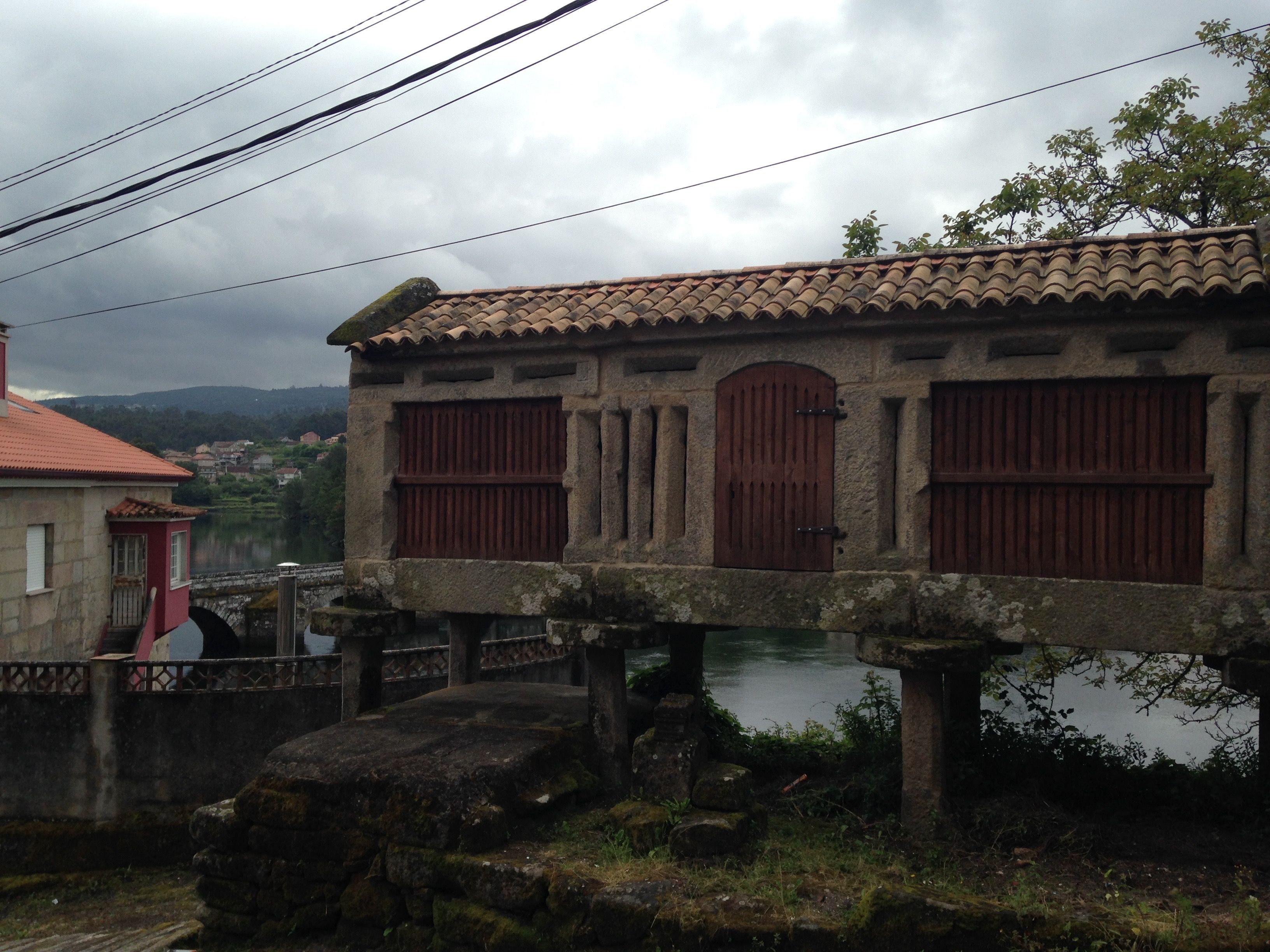
Combarro preserves a compact network of lanes, fishermen’s houses, stone crosses and more than sixty raised granaries. Around thirty of its hórreos stand beside the sea. At low tide their supports rise above the exposed shore; at high tide the estuary comes close to the stone edge.
Combarro is small and popular. A scheduled stop is usually enough to walk the principal lanes, while a private visit can be timed around lunch, photography or the nearby monastery of Poio.
O Grove and the Ría de Arousa
O Grove stands at the entrance to the Arousa estuary and is strongly identified with fishing and shellfish. Its port, market culture and views across the mussel rafts make the maritime economy visible rather than decorative.
The town is also a natural lunch area. Seafood restaurants range from informal places serving shared dishes to more ambitious dining. A fixed group schedule normally gives a defined lunch window; a private route can be planned around a particular reservation.
Cambados
Cambados is one of Spain’s best-known Albariño towns. Fefiñáns square, historic pazos, the wine museum and the roofless ruins of Santa Mariña Dozo give it more than a single wine story. A reserved winery visit can turn the final stop into a deeper introduction to O Salnés rather than simply a walk around the square.
Group and private options
Our group Rías Baixas day tour brings Pontevedra, Combarro, O Grove and Cambados into one easy full-day journey from Santiago. Return transportation and a professional guide are organized for you, leaving you free to enjoy the waterfront lanes, estuary views and Albariño country. It is a sociable and excellent-value way to see four distinctive places in a single day, priced at €59 per person.
Our private Rías Baixas day tour replaces the fixed group timetable with a route selected for your party. We can reserve an Albariño winery, plan lunch around the seafood you want to try, include a boat trip among the bateas or allow longer beside the water in Combarro. Private transportation means those choices determine the schedule.
For one or two travelers, the group excursion is a simple way to experience the essential Rías Baixas. For a family or party of friends, the private day provides more time for wine, food and the coast, and the cost becomes more attractive when shared. Explore the group tour or ask us to design your private day.