The Camino de Santiago leads toward a tomb believed by Christian tradition to contain the remains of Saint James the Greater. The story draws on different kinds of evidence: the New Testament introduces James as an apostle, later traditions connect him to the Iberian Peninsula, and medieval accounts describe the discovery of a tomb in Galicia. Over the centuries, stories of journeys, visions, and miracles became part of the tradition too.
These layers have not all been established in the same way. Distinguishing them allows a traveler to understand both the historical questions and the immense cultural force of the tradition.
James in Christian scripture
James was the son of Zebedee and the brother of John. The Gospels present the brothers among the first disciples called by Jesus, and together with Peter they appear at several significant moments. The title “the Greater” distinguishes this James from another apostle of the same name; it does not describe his moral importance.
The Acts of the Apostles records that King Herod had James killed with the sword. This is the strongest early textual point in the later Santiago story: James was a prominent member of the first Christian community and was martyred in the first century.
Scripture does not say that James preached in Hispania, nor does it describe the transport of his body to Galicia. Those elements belong to later tradition.
The tradition of Spain and Galicia
Christian tradition came to hold that James preached in the Iberian Peninsula before returning to Jerusalem. After his martyrdom, disciples are said to have carried his body by sea to Galicia for burial. Versions of the story differ, and its development occurred across centuries.
For believers, tradition can carry religious truth and continuity without functioning like a modern archaeological report. For historians, the late appearance and evolving form of the accounts require caution. A responsible Camino history can describe what generations believed and built around that belief without claiming that every part has been independently proven.
The maritime transfer later became associated with the Arousa estuary and Ulla River. This tradition gives cultural meaning to the route now known as the Portuguese Spiritual Way and its boat passage, but it should still be named as tradition.
The medieval discovery
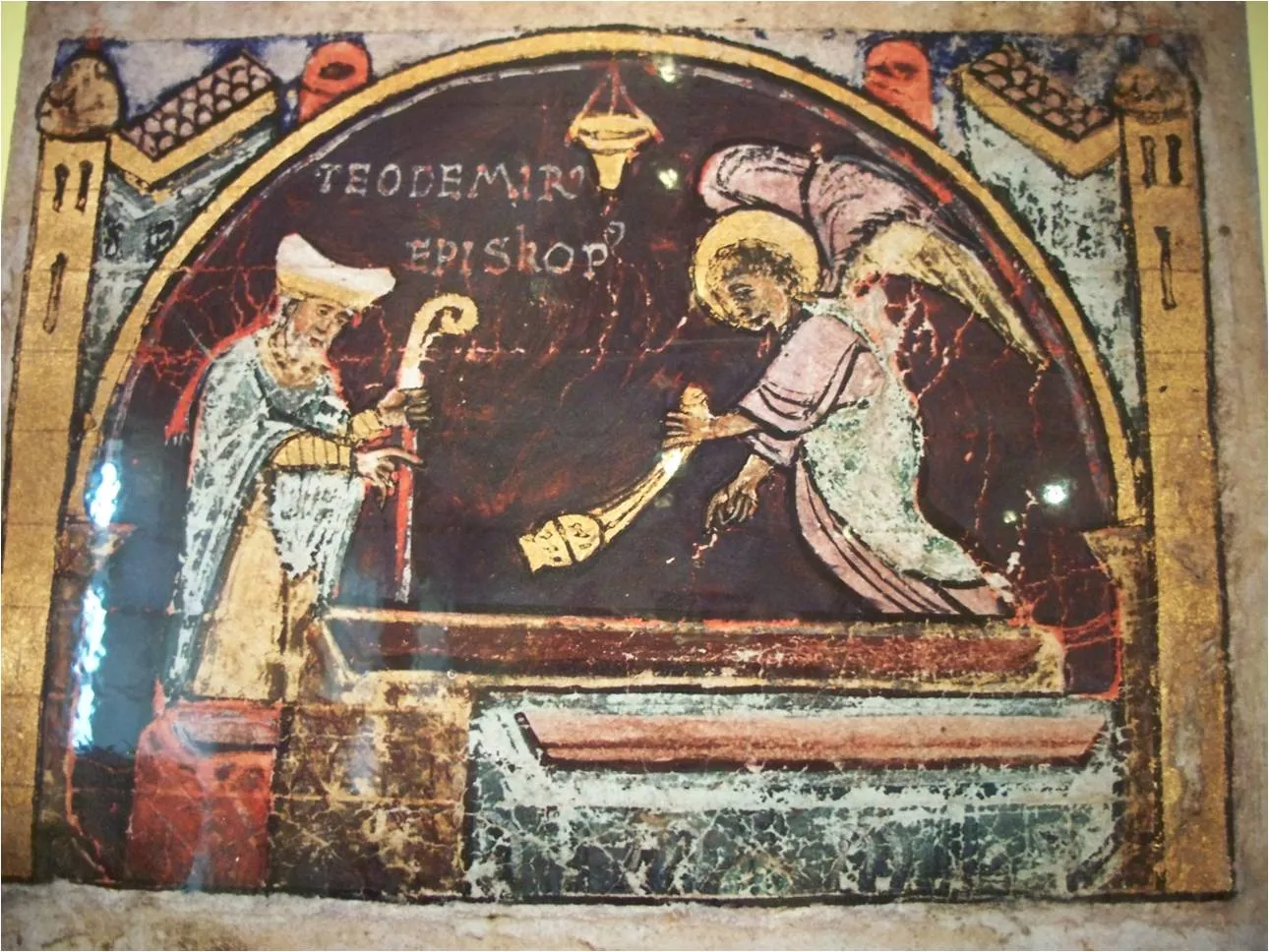
In the early ninth century, a tomb was identified in Galicia as that of Saint James. Medieval narratives connect the discovery with a hermit, signs of light, and Bishop Theodomir of Iria Flavia. Royal and ecclesiastical support helped establish a sanctuary at the site.
The settlement that grew around it became Santiago de Compostela. As devotion spread, pilgrims arrived from across the Iberian Peninsula and Europe. Roads, bridges, hospitals, monasteries, churches, and towns developed in relation to their movement. The pilgrimage became both a religious practice and a channel through which people, art, ideas, and political influence traveled.
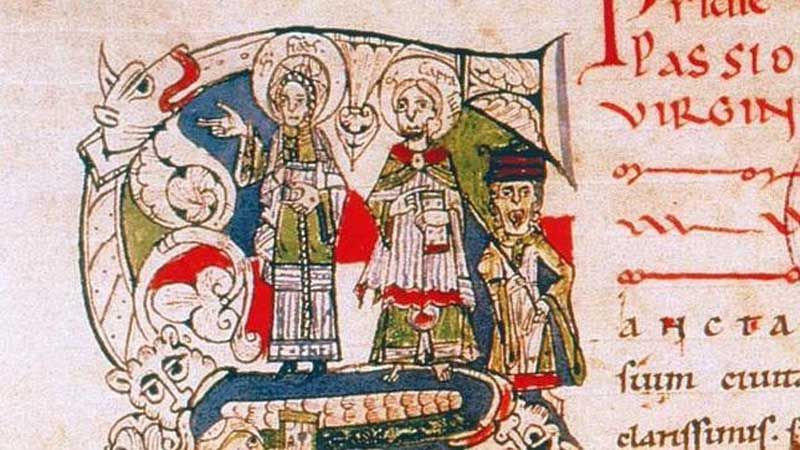
The great Romanesque cathedral begun in the eleventh century gave monumental form to the cult. Figures such as Bishop, and later Archbishop, Diego Gelmírez helped expand Santiago’s ecclesiastical and political position. The twelfth-century Codex Calixtinus gathered liturgical, miraculous, and route-related material associated with Saint James, becoming one of the pilgrimage’s defining medieval manuscripts.
Legend and power
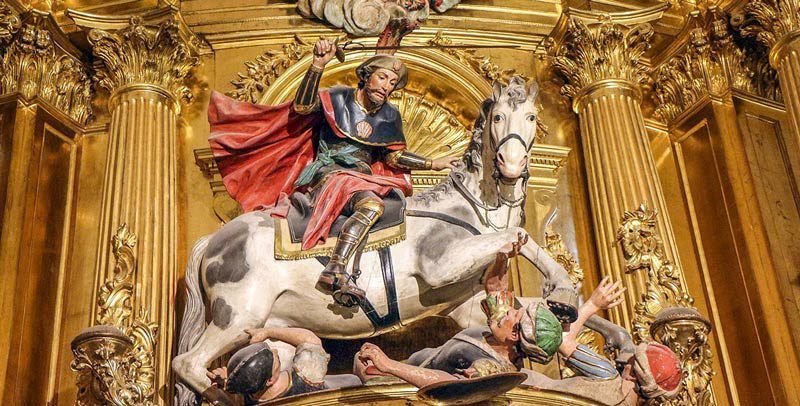
Some later images of Saint James reflect the politics of medieval Christian kingdoms at war in the Iberian Peninsula. The warrior figure often called Santiago Matamoros is not the apostle of the New Testament presented without alteration; it is a later martial construction. Its legacy needs to be approached critically, particularly because imagery formed in one historical conflict can continue to wound or exclude in another context.
Other legends are gentler: stars revealing a burial place, a stone boat crossing the sea, or miraculous protection offered to pilgrims. Such stories shaped art, ritual, and local identity even when they cannot be read as documented events.
Why the story still matters on the Way
The Camino does not require every traveler to reach the same conclusion about the relics or the legends. A practicing Christian may approach Santiago as the tomb of an apostle and a place of prayer. A secular traveler may be moved by the endurance of the pilgrimage and the communities it created. A historian may remain interested precisely because faith, institution, politics, art, and movement are so tightly intertwined.
The important discipline is clarity. Scripture says certain things about James. Later Christian tradition says more. Medieval evidence shows a flourishing cult and pilgrimage centered on the Galician tomb. Archaeology and modern scholarship continue to ask questions that devotion answers differently.
When pilgrims enter Santiago today, they arrive within all these histories at once. The Cathedral is a place of worship, a work of architecture, an institution, and the destination of a network traveled for many reasons. Knowing the layers does not strip the Way of mystery. It reveals how a first-century apostle became Santiago, the saint whose name, city, and roads have shaped Galicia and the imagination of pilgrims for more than a millennium.
Recognizing Saint James on the route
Look for three recurring visual identities. James the apostle may hold a book, emphasizing teaching and witness. James the pilgrim wears a broad hat, shell, cloak, and staff, dressed like the people traveling toward him. The mounted warrior belongs to a much later martial legend and should be read in its political context rather than mistaken for the New Testament figure.
In Santiago Cathedral, the silver-clad seated figure above the high altar presents the saint in authority, while the traditional embrace approaches him from behind. Below, the crypt centers devotion on the reliquary associated with James and his disciples. Whatever a visitor believes about the tradition, these spaces show how text, relic, image, ritual, and movement were brought together in one destination.
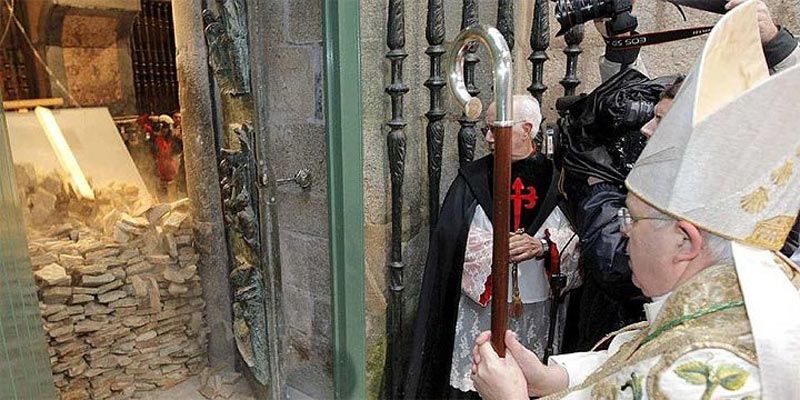
The later martial image requires its own careful reading in Santiago Matamoros, while the Holy Door and Holy Years explain another tradition centered on the Cathedral.