A Camino morning can begin with stiff calves, sleepy ankles and shoulders that remember yesterday’s backpack. Give yourself six minutes before setting off. You can do this routine beside the bed or while waiting for the rest of the group, without lying on the floor or carrying special equipment.
Long static stretches are better once the body is warm. Before walking, begin with controlled movement. The first ten minutes of the stage should also be easy; there is no prize for leaving the hotel at full speed.
1. March gently for one minute
Stand tall and march on the spot. Let the arms swing naturally. Start with low steps, then bring each knee a little higher as the legs warm. Keep the feet quiet rather than stamping.
If balance is uncertain, place one hand on a wall or chair. This is preparation, not a fitness test.
2. Circle each ankle
Hold a wall, lift one foot a few centimetres and draw ten slow circles in each direction. Repeat with the other ankle. Then point the toes away and pull them back towards the shin five times.
The ankle must adapt constantly to cobbles, gravel, tree roots and sloping tracks. A few controlled circles reveal stiffness before you meet uneven ground. They are also useful after sitting through a long breakfast or transfer.
3. Raise and lower the heels
With both feet parallel and about hip-width apart, rise onto the balls of the feet, pause briefly and lower with control. Repeat ten times. Use a wall if needed.
This wakes the calf muscles without forcing them into a cold stretch. Keep the ankles upright; do not let them roll outward. Anyone with a painful Achilles tendon should follow the advice already given by their physiotherapist rather than adding repetitions.
4. Make ten shallow knee bends
Place the feet comfortably apart. Send the hips slightly back and bend the knees only a short distance, as if beginning to sit on a high chair. Keep the knees following the direction of the toes. Straighten without locking them.
Ten small bends are enough. Deep squats are unnecessary before a walking stage, particularly with a knee replacement, recent injury or limited balance.
5. Mobilise the hips
Holding a chair or wall, lift one bent knee and draw a small circle out to the side. Make five circles in each direction, then change legs. Keep the pelvis facing forward and make the circle smaller if the movement pinches.
Next, take ten alternating steps forward and back. This begins to reproduce the movement you are about to use rather than pulling a cold muscle to its limit.
6. Release the upper body
A daypack and walking poles involve the upper body too. Roll both shoulders forward five times and backward five times. Turn the chest gently left and right while keeping the hips facing ahead. Finish by opening and closing the hands ten times, especially if you use poles.
Avoid fast neck circles. Look left and right slowly instead, then bring each ear slightly towards the same-side shoulder without lifting the shoulder.
Start the stage slowly
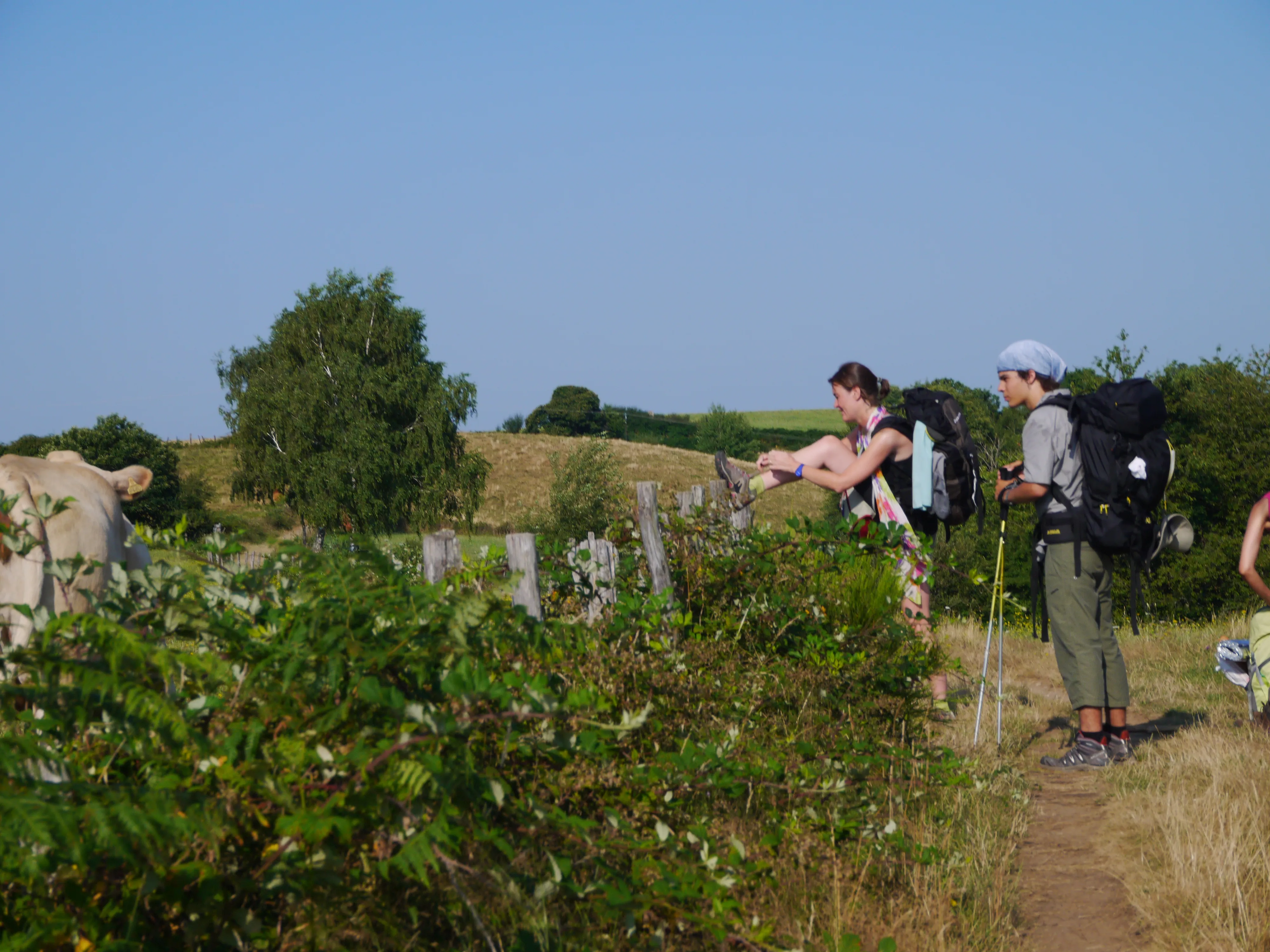
Walk the first five to ten minutes at a conversational pace. Shorten the stride on an immediate climb. Once warm, a brief calf stretch can feel useful: place both hands against a wall, take one foot behind you, keep its heel down and hold for about 20 seconds without bouncing. Repeat on the other side.
Save longer static stretches for the end of the day, when the muscles are warm. Pulling hard on a cold hamstring outside the hotel is not an effective warm-up.
Pain changes the plan
Normal morning stiffness should ease as you move. Sharp pain, swelling, new weakness, numbness or pain that changes your gait deserves attention. Stop and use the assistance information in your journey documents rather than trying to walk it off for another 20 kilometres.
Travelers with a recent operation, joint replacement, recurrent injury, balance problem or cardiovascular condition should ask their clinician which movements suit them. A physiotherapist can adapt the routine before departure, when there is time to practise it.
Warm-up supports a well-planned day; it cannot compensate for a stage that is too long. Our guide to fitness, pace and daily distances explains how we match stages to the traveler, while shorter Camino stages leave time to rest before fatigue changes the way you walk.