Walking uses the same movement thousands of times. The calves shorten, the front of the hips can feel tight and the back may object after hours of carrying a daypack. A gentle yoga sequence gives the body different shapes and slows the mind after arrival.
Do it after a shower or a few minutes walking around town, when the muscles are warm. Use a carpet, yoga mat or folded hotel towel. Shoes come off; socks stay on only if they do not slide.
Begin with six slow breaths
Sit on the edge of the bed or stand with both feet planted. Inhale through the nose without lifting the shoulders. Exhale slowly and allow the jaw and hands to soften. Count to four on the way in and five or six on the way out if that remains comfortable.
Six breaths create a clear break between the walking stage and the evening. There is no need to force an unusually deep breath or hold it.
Cat and cow for the back
Come onto hands and knees, placing a folded towel beneath the knees if needed. Put the wrists below the shoulders and knees below the hips.
On an inhale, let the chest move forward and the tailbone lift slightly. On an exhale, press the floor away and round the back gently. Move through six to eight repetitions. The range can be small. Keep the neck following the spine rather than throwing the head back.
If bearing weight through the wrists is uncomfortable, make the same spinal movement seated: hands on thighs, chest forward on the inhale and back rounded on the exhale.
Low lunge for the front of the hip
From hands and knees, bring the right foot forward between the hands. Keep the left knee on the folded towel. Bring both hands onto the right thigh and lift the torso. Move the pelvis forward only until a stretch appears at the front of the left hip.
Hold for three relaxed breaths, then change sides. The front knee stays above or behind the ankle. A narrow stance can feel unstable, so move the feet slightly farther apart if necessary.
Half split for the back of the leg
Return to the low lunge. Shift the hips back, straighten the front leg only as far as comfortable and bring its toes upward. Keep a slight bend in the knee and lengthen the chest forward rather than collapsing onto the leg.
Hold for three breaths on each side. This should feel like a broad pull through the calf or hamstring, never a sharp line behind the knee.
Calf stretch at the wall
Stand facing a wall. Step the left foot back, point both sets of toes forward and press the rear heel towards the floor. Bend the front knee. Hold for 20 to 30 seconds, change sides, then repeat with the rear knee slightly bent to reach a different part of the calf.
Do not bounce. After a long descent the calves may be sensitive, so use less pressure than you think you need.
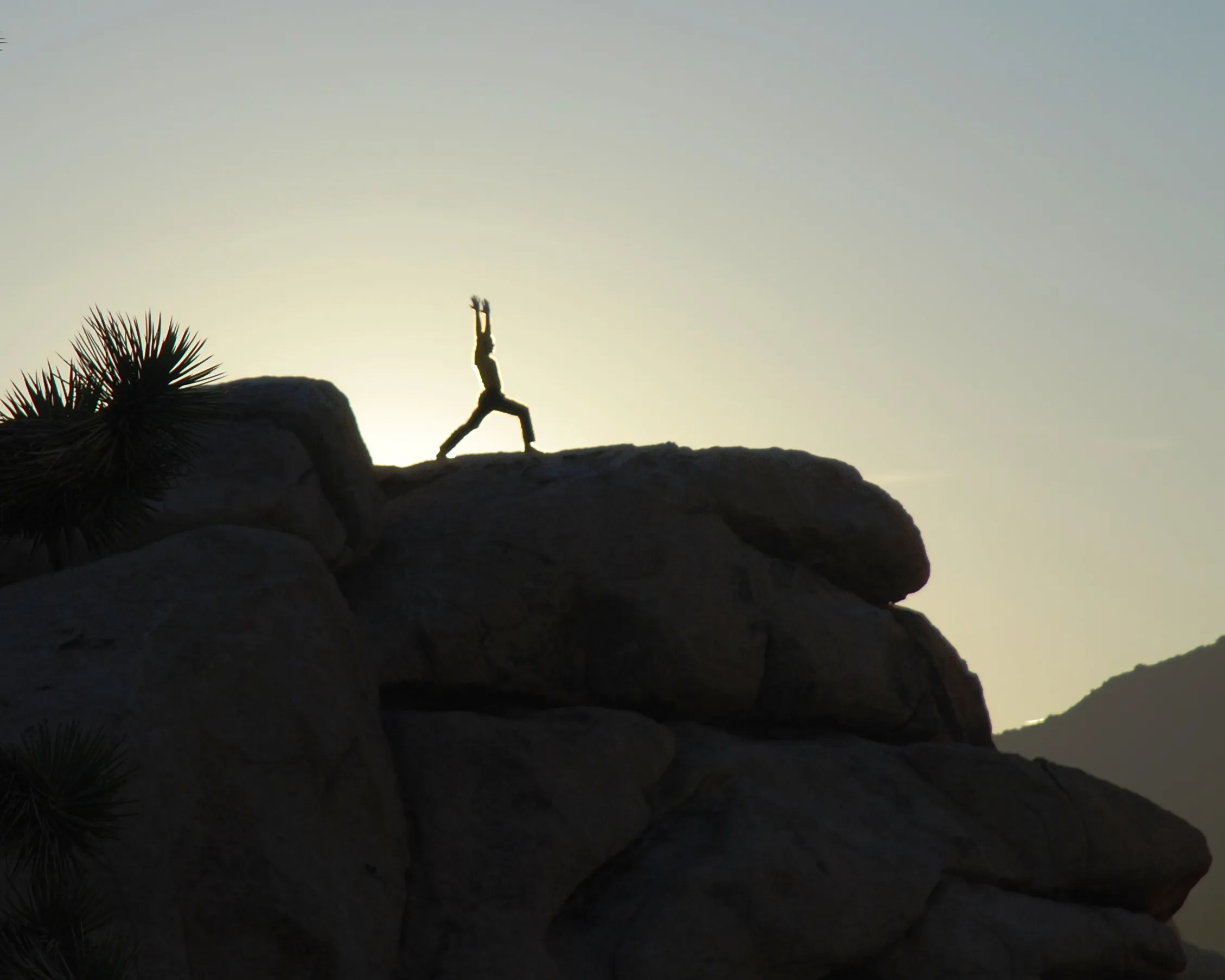
A supported Warrior I
Place one hand against the wall. Step one foot back and keep the stance shorter and wider than a studio yoga pose. Bend the front knee gently, keep both hips facing forward as far as is natural, and raise the free arm.
Stay for three breaths and change sides. This combines balance, hip opening and an upward stretch without asking tired legs to hold a dramatic position. Skip it if the knees or Achilles tendon are painful.
Supine twist for the back and hips
Lie on the back with knees bent and feet on the floor. Let both knees move a short distance to the right while the shoulders remain heavy. Return to the centre and move left. Repeat slowly four times, then rest for three breaths on each side.
Use a pillow beneath the knees if they do not reach the floor comfortably. The twist belongs in the middle back and hips; stop if it produces leg pain, tingling or numbness.
Legs on the bed, not necessarily up the wall
Lie on the floor and rest the lower legs on the bed or a chair, with knees comfortably bent. Stay for two or three minutes and let the weight of the legs release. This position is easier to enter than a full legs-up-the-wall pose and suits most hotel rooms.
If getting down to the floor is awkward, lie on the bed instead and place pillows under the knees.
Finish with the feet
Sit down and circle each ankle ten times in both directions. Spread the toes, then relax them. Use the thumbs to make gentle strokes along the sole, avoiding any blister, hot spot or inflamed area. Put on dry socks before walking around the room.
Keep yoga restorative
An evening on the Camino is a poor time to attempt a headstand, deep backbend or the furthest version of a pose. The purpose is to feel better for dinner and tomorrow’s stage. Work well inside a comfortable range and use the wall whenever balance is uncertain.
Yoga is generally safe for healthy adults when practised appropriately, but strains still occur. Older travelers, pregnant travelers and anyone with osteoporosis, glaucoma, uncontrolled blood pressure, a joint replacement, a recent injury or persistent back pain should take advice from a clinician and a qualified teacher. Stop if a movement increases pain or causes dizziness, weakness, numbness or tingling.
Pair this sequence with the morning Camino warm-up. For the mental side of the practice, try one of our mindfulness exercises for the Camino during an easy, traffic-free section the following day.